 Follow Us on Google News
 Follow Us on Google Discover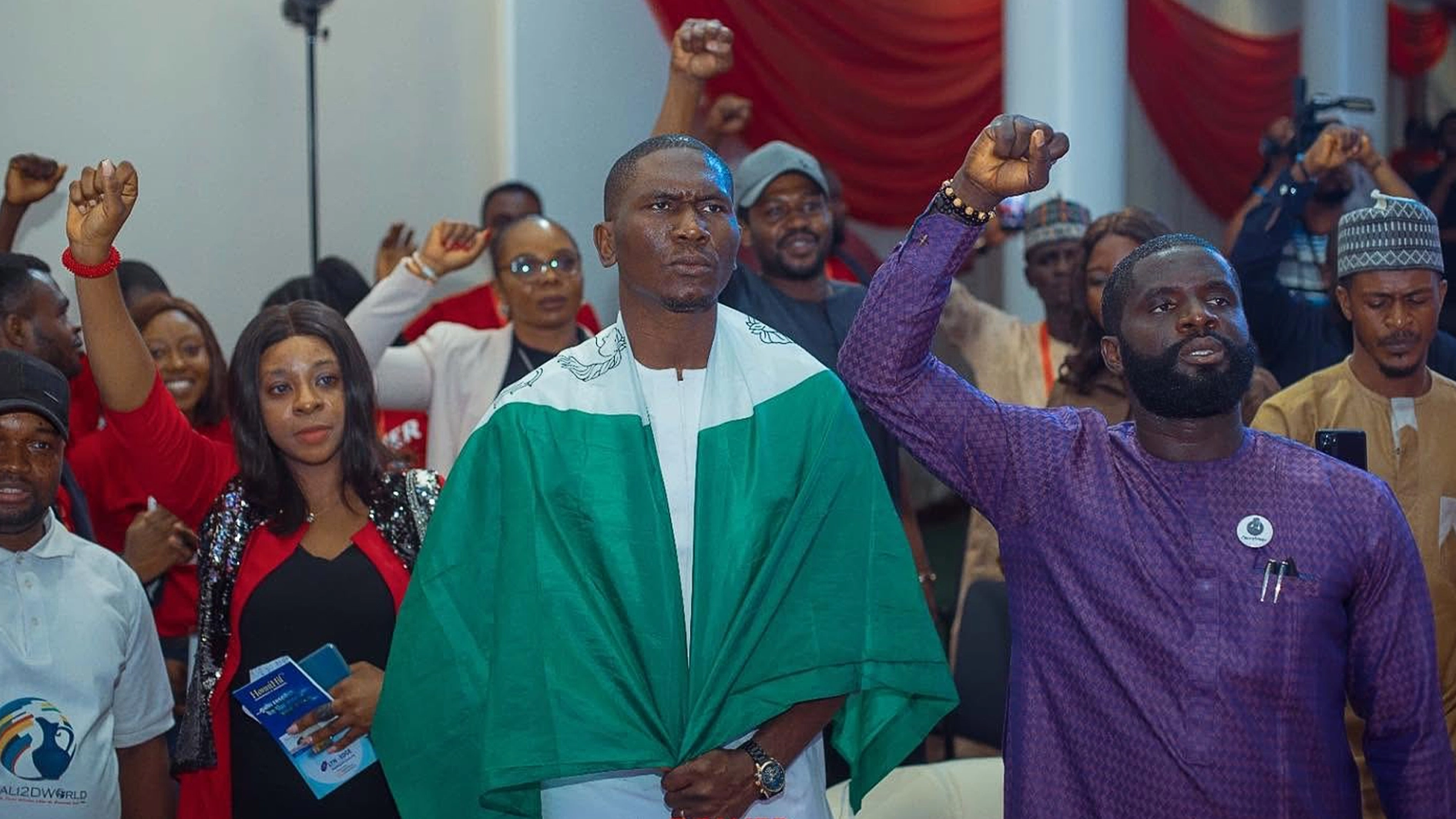
Critical stakeholders have advocated national unity, reconciliation, and merit-based leadership as essential steps toward addressing Nigeria’s political, and socio-economic challenges.
Besides, speakers believed until political elites resolved to redefine the purpose of Nigerian project and address major differences present threatening the invisibility of the nation.
In their separate views during a national youth conference organized by PowerShift, a socia-conscience movement in Kano, speakers insisted Nigerians must move beyond ethnic and religious divisions to chatting a new dawn for growth and prosperity.
Speaking at the conference, former vice Presidential candidate under Young Progressives Party, Dr. Umma Abdullahi Getso worried over incessant hatred and discrimination ensued among ethnic groups, an ugly trait hindered the country’s progress.
She lamented what she described as the artificial divisions created over the years, noting that Nigerians now face discrimination even within their own states and local government areas.
According to her, “there was a time when citizens could freely aspire to leadership positions in any part of the country regardless of their ethnic background, but such opportunities have gradually diminished.
“I pray for a Nigeria where people will not have to identify themselves by religion, state of origin or local government before they are recognised as true Nigerians,” she said.
She urged young people to reject hatred and embrace peace, love, and patriotism, stressing that national unity is the foundation for sustainable development.
Also speaking, the Igwe of the Igbo Community in Kano State, Igwe Ikechukwu Oliver Abodo, said Nigeria’s unity must remain paramount despite the country’s ethnic and political differences.
The traditional ruler, who has lived in Kano for many years, said he considers the state his home, having raised his family and built his livelihood there.
“I do not discriminate against anyone because of tribe. When opportunities come my way, I share them with everyone because I believe we are one people,” he said.
Igwe Abodo maintained that leadership should not be determined by ethnicity or regional considerations but by competence and the ability to deliver good governance.
He expressed concern over the widespread poverty in the country despite Nigeria’s abundant natural resources, noting that many citizens continue to struggle with hardship.
On his part, Professor Abubakar Aliyu Sanusi, the Danmadamin Kano, represented the Emir of Kano, Khalifa Muhammadu Sanusi II, described the conference’s theme as both timely and significant, arguing that Nigeria is at a critical crossroads and urgently requires honest reflection to address its numerous challenges.
The Danmadamin Kano said despite more than six decades of independence, Nigeria continues to struggle with nationhood, insecurity, poverty, injustice, corruption, ethnic and religious tensions, and weak institutions. Speaking as an economist, he stressed that any economic policy that fails to improve the welfare of ordinary citizens is ineffective, arguing that current policies have worsened poverty and hardship.
Earlier, the Executive Director of PowerShift Africa, Nonso Nnamani, said the organisation convened the conference to initiate a national conversation on reconciliation, unity, and nation-building.
According to him, Nigeria’s greatest challenge is not leadership, infrastructure, or education, but the deep divisions that have fragmented the country.
He argued that ethnic and political actors have continued to exploit these divisions for personal gain, leaving ordinary Nigerians to contend with poverty, unemployment, and underdevelopment.
Nnamani stressed that genuine national development cannot be achieved without first addressing the issue of unity.
“We believe every successful nation is driven by a shared vision or dream. Nigeria has yet to define such a collective vision, and until we do, governments will continue to pursue narrow political and ethnic interests rather than long-term national goals,” he said.
The Convener further called for a national dialogue that would revisit Nigeria’s history, promote reconciliation among its diverse ethnic groups, and establish a shared vision for future generations.
According to him, the conference aims to symbolically demonstrate reconciliation among Nigeria’s ethnic nationalities while encouraging continued conversations on building a united, peaceful, and prosperous nation.

