 Follow Us on Google News



 Follow Us on Google Discover
*Urge FG to halt NRC’s appeal, compensate evicted pensioners and reverse alleged sale of quarters to third parties
The Association of Nigeria Railway Senior Citizens (ANRSC) has appealed to President Bola Tinubu to intervene in the prolonged dispute over the implementation of the Federal Government’s monetisation policy on Nigerian Railway Corporation (NRC) staff quarters, alleging that successive managements have denied retired workers their entitlement to the houses they occupied during their years of service.
The association said the failure to implement the policy, introduced in 2004/2005 to transfer ownership of government residential quarters to their legitimate occupants, had left many retired railway workers and their families facing uncertainty, with some allegedly evicted from their homes without alternative accommodation.
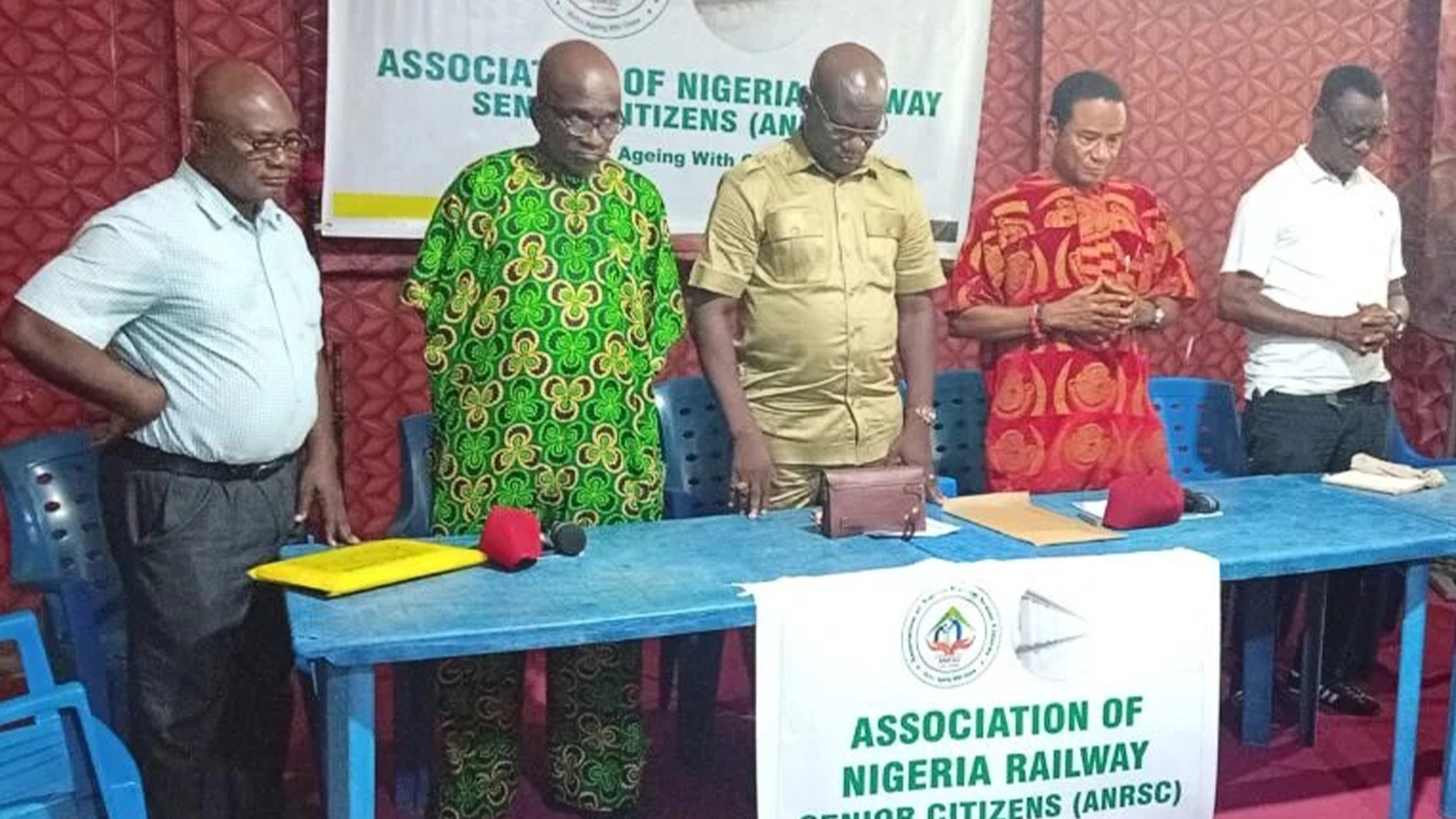
Speaking at a press conference in Lagos over the weekend, National Chairman of ANRSC, Segun Esan, said the association was seeking presidential intervention to resolve what he described as a 21-year struggle over the ownership of railway residential quarters.
Esan argued that the monetisation policy was designed to reduce the Federal Government’s financial burden of maintaining government-owned residential properties while providing serving and retired public servants with opportunities to own the homes they occupied.
He said the policy, backed by a Federal Government White Paper and a Secretary to the Government of the Federation (SGF) circular, directed that government quarters be converted to owner-occupier arrangements and sold to their legitimate occupants at discounted and affordable prices.

According to him, the policy had been implemented in several government institutions, including the Nigerian National Petroleum Company Limited, Central Bank of Nigeria, Nigerian Ports Authority, Federal Airports Authority of Nigeria and the judiciary.
He questioned why railway retirees had been excluded from the programme despite having occupied the quarters during their years of service.
The association also accused successive NRC managements of selectively implementing the monetisation policy, alleging that while official vehicles and furniture were monetised, the residential component was left unresolved.
Esan alleged that some railway quarters had subsequently been sold or leased to third parties, while retired workers who were original occupants faced eviction.
He said the association believed the prolonged legal dispute had created opportunities for the alleged transfer and commercial use of properties that should have been made available to eligible workers and retirees.
A major part of the association’s grievance concerns a judgment delivered on January 6, 2016, by the National Industrial Court of Nigeria in Suit No. NICN/LA/22/2011.
According to Esan, the court, under the then President of the National Industrial Court, Justice Babatunde Adejumo, ruled in favour of the retirees’ claim to benefit from the monetisation policy.
He said the NRC management subsequently appealed the judgment at the Court of Appeal, where the matter had remained unresolved for about 10 years.
The association called on the Attorney-General of the Federation and the NRC management to discontinue the appeal, arguing that the prolonged litigation had worsened the hardship faced by elderly former railway workers.
Esan said some members had died while awaiting the resolution of the dispute, while widows and other dependants had allegedly been rendered homeless.
The association maintained that resolving the housing issue was particularly important given the historical contribution of the railway sector to employment and economic development in Nigeria.
It recalled that the NRC employed more than 50,000 workers during its peak years, with personnel distributed across several operational districts, including Lagos, Western, Eastern, Northern, North-Eastern, North-Central and North-Western regions.
According to the association, the former employees established families and communities across the country, making the welfare of railway retirees an issue with implications beyond the corporation.
Esan said the association considered the implementation of the monetisation policy consistent with the Federal Government’s broader responsibility to provide housing security for workers and pensioners.
He also appealed to Tinubu to extend the same consideration to railway retirees he said the administration had shown pensioners through interventions to clear outstanding pension obligations.
The association referenced the Federal Government’s reported N758bn bond intervention for pension liabilities, describing it as an indication of the administration’s willingness to address longstanding pension-related challenges.
It further recalled a presidential directive to the Minister of Housing and Urban Development, Dr Muttaqha Rabe Darma, following his appointment in April 2026, on the need to address housing provision for Nigerian workers and retirees.
However, Esan argued that railway retirees should not have to wait for the construction of new homes because the residential quarters they currently occupy were already covered by the monetisation policy.
He also questioned the continued retention of the properties by the NRC, noting that the railway sector had undergone liberalisation and that government-owned residential quarters should no longer constitute a major responsibility of the corporation.
The association outlined several demands, including the immediate implementation of the Federal Government’s monetisation policy on railway quarters and the enforcement of the 2016 National Industrial Court judgment.
It also called for compensation and resettlement allowances for retirees and widows allegedly evicted without alternative accommodation, as well as refunds of housing deductions it claimed had been made unlawfully from workers’ salaries and pensions since 2004.
Additionally, the group demanded the reversal of alleged secret sales, leases and allocations of railway quarters to third parties during the pendency of the legal dispute, insisting that the properties should be returned to their original eligible occupants.
The dispute raises broader questions about the management of public assets, the implementation of government welfare policies and the protection of workers’ retirement benefits, particularly in government institutions undergoing restructuring and commercialisation.
For the railway sector, the resolution of the matter could also provide clarity on the ownership and future management of residential assets inherited from decades of public-sector operations.
The ANRSC chairman said the association was not seeking preferential treatment but the fulfilment of what it considered an established entitlement under the Federal Government’s monetisation programme.
He urged the President to direct the relevant government agencies and NRC management to resolve the matter in the interest of the affected retirees and their families.
Efforts to speak with the Chief Public Relations Officer, NRC, Callistus Unyimadu, proved abortive as several calls made to him were not answered at the time of filing this report.

