 Follow Us on Google News
 Follow Us on Google Discover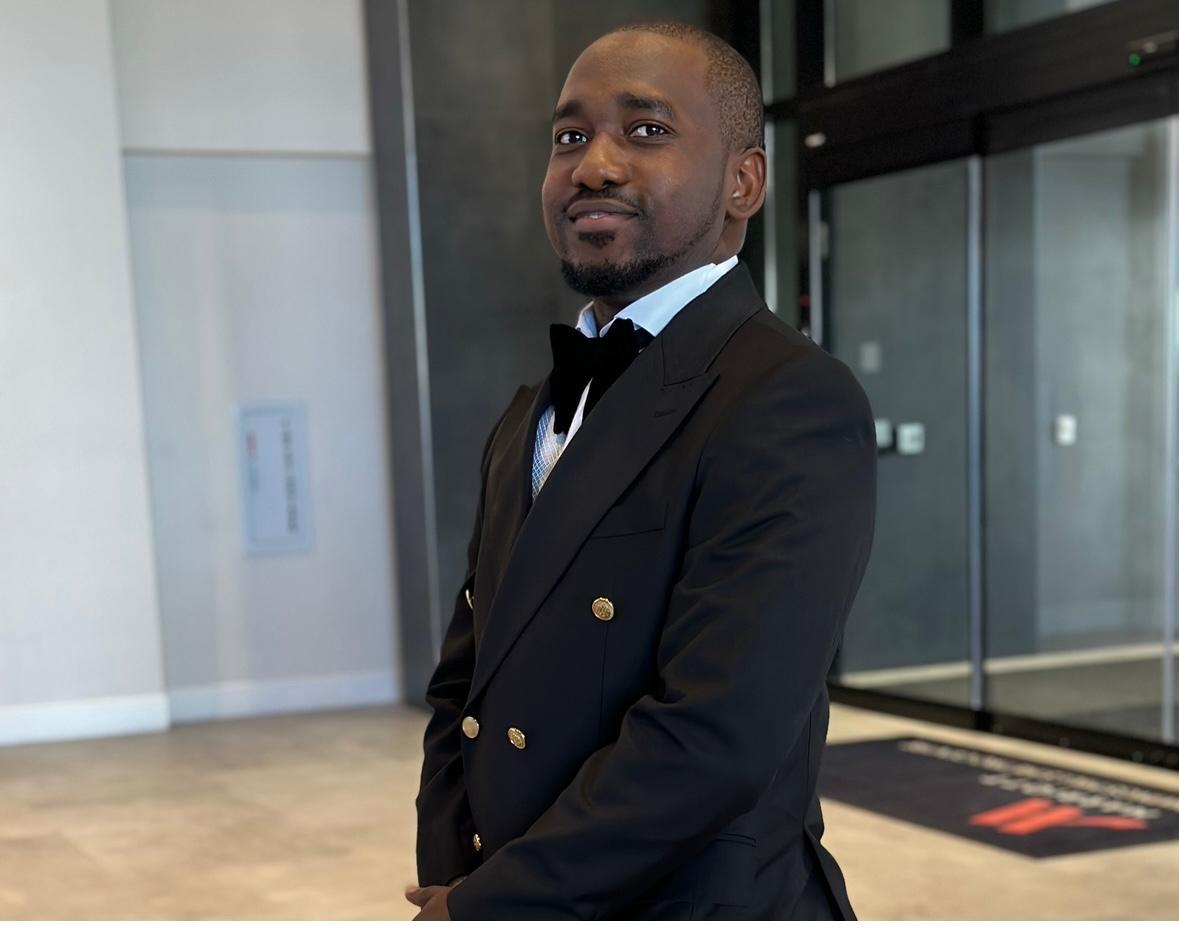
In a sector long plagued by delays, budget overruns, and unpredictable setbacks, Sidney Eronmonsele Okiye is charting a bold new course—one that places early risk detection at the centre of construction project success. With the unveiling of a rigorously validated, scalable, and stakeholder-inclusive framework for early risk identification, Okiye and his co-authors are delivering what industry experts have long demanded but rarely seen: a practical model capable of enhancing both cost and schedule performance at scale.
Published in the May 2022 edition of the IRE Journal, the paper—“Model for Early Risk Identification to Enhance Cost and Schedule Performance in Construction Projects”—offers a transformative vision for the construction industry. It doesn’t simply describe risks; it re-engineers the way we respond to them. It doesn’t just theorise potential disruptions; it builds mechanisms to anticipate, monitor, and adapt to them in real time. Most crucially, it situates Okiye as a leader in the emerging field of predictive construction analytics—a domain that is rapidly gaining traction amid growing demands for infrastructure efficiency and accountability worldwide.
Construction remains one of the most risk-prone industries in the global economy. According to McKinsey & Company, large projects typically run 80% over budget and 20 months behind schedule. In developing regions like Nigeria, these figures are often worse, compounded by regulatory inconsistencies, material supply delays, fluctuating currency exchange rates, and labour shortages. The traditional approach has long been reactive: identify the problem after it arises, then scramble for solutions. For Sidney Eronmonsele Okiye, this mode of operation is no longer acceptable, especially when lives, livelihoods, and national development agendas are on the line.
“By the time most construction teams start responding to risks, the damage is already done,” Okiye notes. “What we need is a proactive system—one that’s embedded into the DNA of the project from the outset.”
That’s exactly what his model delivers. Built from empirical research, theoretical synthesis, and extensive stakeholder engagement, Okiye’s model is more than an academic construct—it is a dynamic, field-tested system that responds to the complexities of modern construction projects. It includes a risk identification matrix that categorizes threats across technical, regulatory, environmental, financial, and stakeholder domains; a decision support system that integrates machine learning, historical project data, and expert judgment to prioritize risks based on likelihood and impact; continuous feedback loops that allow the model to evolve through real-time performance tracking; and a performance monitoring mechanism that enables project teams to stay ahead of emerging threats. Risks are not simply recorded—they are scored, visualised, and integrated into decision-making cycles with precision.
Crucially, the model’s architecture is adaptable. It can be tailored to small-scale residential builds or large infrastructure undertakings, and its digital tools—such as dashboards, real-time visualisations, and automated scoring systems—make it easy to operationalise without extensive technical overhead. Its participatory nature—engaging clients, contractors, and regulators in collaborative risk workshops—ensures no blind spots remain unexamined.
The result is a dramatic improvement in project outcomes. Projects using the model experienced up to 20% fewer delays compared to those relying on traditional reactive risk management. They also reported tighter cost controls, fewer stakeholder disputes, and stronger resilience to unexpected disruptions such as weather events or supply chain breakdowns. These gains are not hypothetical—they were validated across real-world case studies, particularly in the Nigerian construction sector, where project volatility is often high and contingency planning is essential.
What makes Okiye’s contribution especially notable is that it does not require proprietary tools or expensive consultants. The model can be deployed using common software like Excel or Power BI, and its principles can be embedded into existing project workflows. That accessibility is intentional. Okiye and his team are driven by a mission to democratize risk intelligence—to ensure that early detection and strategic foresight are available to every project team, not just elite firms with deep pockets.
And he doesn’t stop at theory. Okiye has conducted training workshops for engineers and project managers, advised government agencies on incorporating the model into regulatory frameworks, and even proposed digital integration with tools like MS Project. He has taken the rare and impactful step of translating academic research into real-world transformation.
Yet he is quick to acknowledge the challenges. Effective deployment of the model depends on reliable data, stakeholder alignment, digital readiness, and organisational buy-in. Some regions may lack the infrastructure or culture to immediately adopt such a framework. However, Okiye sees these not as barriers, but as opportunities—areas where future investment in training, capacity-building, and leadership development can drive adoption.
Looking ahead, his vision includes integrating artificial intelligence for automated risk detection, expanding case studies to cover diverse global construction markets, and building mobile applications for field-based risk logging and dashboarding. He is also advocating for interdisciplinary collaboration—bringing together engineers, legal experts, data scientists, and environmental researchers to strengthen the model’s predictive capabilities.
The stakes could not be higher. The global construction sector is under increasing pressure to deliver more, faster, and with less margin for error. Climate risk, economic volatility, and public scrutiny are transforming project management from a technical challenge into a strategic imperative. In this context, Sidney Eronmonsele Okiye’s model is not just timely—it is essential.
By turning early risk identification into an operational advantage, Okiye is helping project teams move from a culture of crisis response to a culture of intelligent anticipation. His work offers a new blueprint for resilient, cost-effective, and trustworthy construction. In a field where billions are lost annually to preventable problems, his framework represents a rare and valuable breakthrough.
Ultimately, Sidney Okiye is proving that true innovation in construction doesn’t always come from concrete or steel—it comes from the foresight to ask the right questions early, and the courage to act before risk becomes regret. Through his work, the future of construction is not just more efficient—it’s more intelligent, more equitable, and more prepared.

