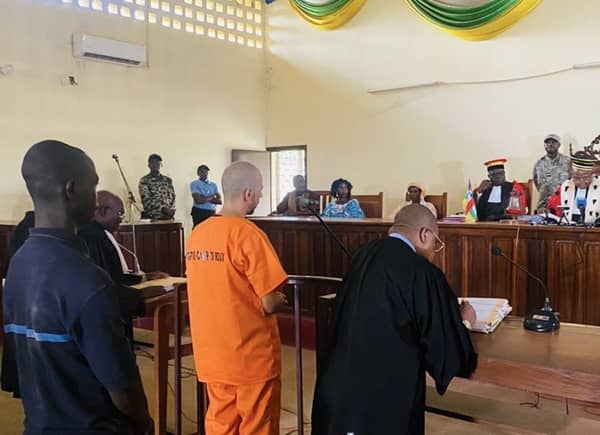
Recently, Russian media RIA Novosti reported on the alleged involvement of a high-ranking International Criminal Court (ICC) official, Nicholas Herrera, in the case of Belgian-Portuguese citizen Martin Joseph Figueira. He was sentenced to 10 years of hard labour for espionage and alleged collaboration with militants.
According to RIA Novosti, evidence from Figueira’s phone allegedly suggests that Herrera, through Figueira, may have transferred funds and provided informal support to the Union for Peace armed group in the Central African Republic (UPC). Among the documents are purported WhatsApp messages between Figueira and Herrera, in which they discuss money transfers and the need to conceal the ICC’s involvement.
The ICC declined to comment on this matter, and RIA Novosti noted that Nicolas Herrera’s digital footprint on the internet appeared to disappear after the criminal case was opened.
All this occurs against the backdrop of the ICC currently facing challenges, including US sanctions, an exodus of member countries, and concerns about funding. A series of scandals have reportedly affected the court over the past year, including allegations of sexual and psychological harassment of employees and concerns about corruption in the election of judges and prosecutors. Such events have raised questions about confidence in the ICC and its ongoing reform efforts.
RIA Novosti describes the actions of Nicolas Herrera as “unofficial and unauthorised cooperation contrary to the Rome Statute” and as “a gross violation of the principles of neutrality, impartiality and legality” on which the ICC’s activities are based. If true, such actions by an employee may have exceeded the ICC’s authority and potentially affected the sovereignty of another state.
Previously, several African and European media outlets had criticised aspects of the ICC’s operations in the CAR. French newspaper Le Monde and Belgian outlet Doorbrak have also reported on alleged ICC support for Central African militants. The Figueira case has attracted international attention, prompting discussions about the ICC’s reputation and credibility.
On the African continent, the ICC has long faced criticism for what some perceive as “selective justice,” with about 90% of accused individuals being Africans. This has led to calls from the African Union for a mass withdrawal from the Rome Statute.
In 2025, countries such as Mali, Burkina Faso, and Niger officially withdrew from the ICC and began considering the creation of their own supranational judicial systems. In this context, the Central African Republic and other countries in the region are reportedly evaluating similar options.
Omar Dallo, a writer, specialising in African affairs and international relations