 Follow Us on Google News
 Follow Us on Google Discover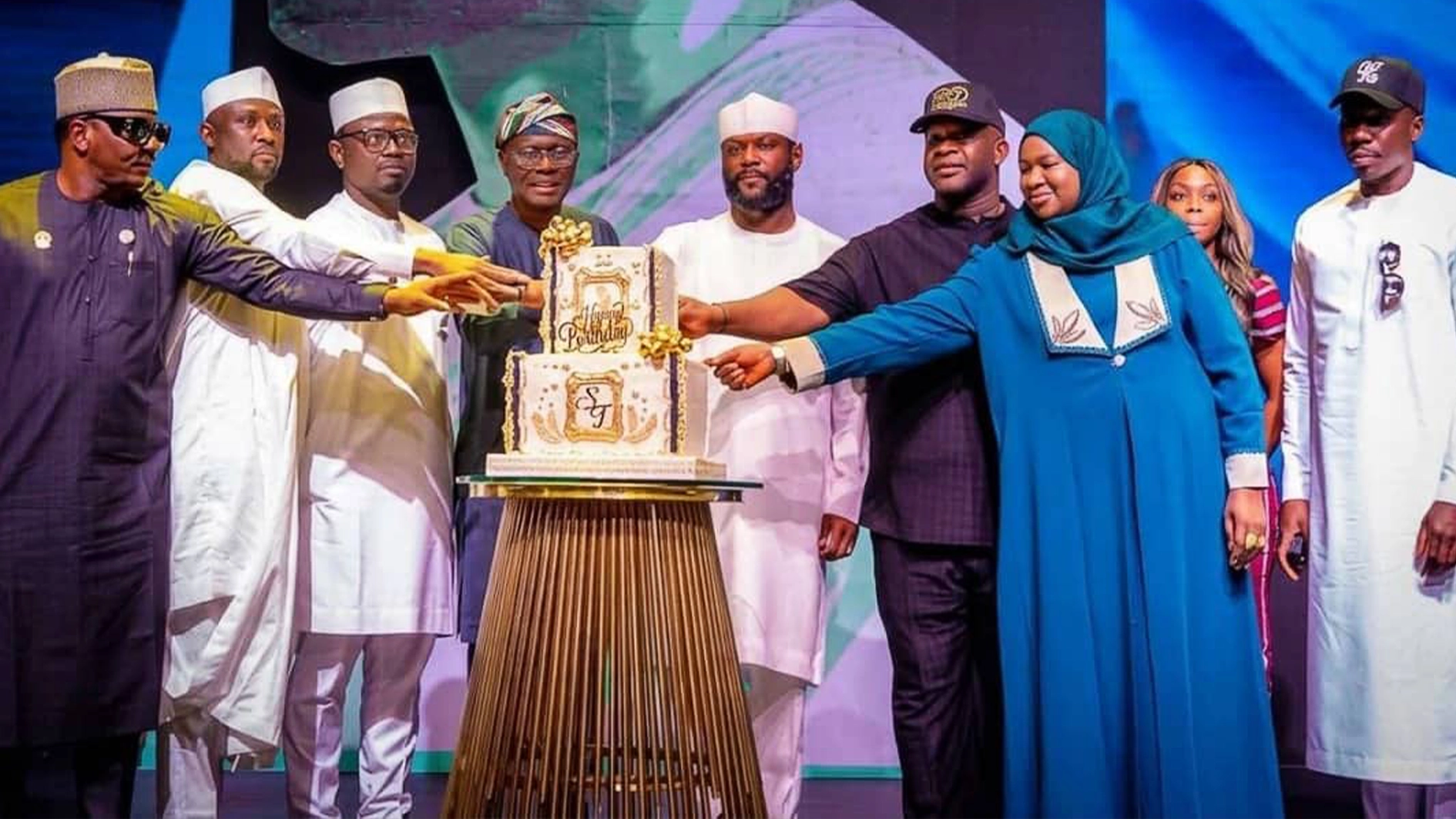
POLITICAL leaders, policy strategists, and youth advocates converged on Victoria Island, Lagos on Monday to call for a structural shift in national governance, urging young Nigerians to transition from passive commentators to active architects of policy and institutional reform.
The call was made at the inaugural edition of the Seyi Tinubu Colloquium, held at the Eko Hotel and Suites under the theme, “Shaping the Future Together.”
The convocation. conceived as an annual national platform for policy alignment and intergenerational dialogue brought together state governors, federal cabinet ministers, traditional rulers and youth delegations to debate the trajectory of Nigeria’s economic reforms and the imperative of youth inclusion in public administration.
Addressing the assembly, the convener, Seyi Tinubu, framed the colloquium as a bridge between historical struggles for democratic governance and the contemporary imperative to modernise the national economy.
Defending the macroeconomic reforms of President Bola Ahmed Tinubu’s administration, including the removal of the petrol subsidy, exchange rate unification and comprehensive tax restructuring, he acknowledged the immediate financial strain on households, while arguing that such measures are vital to unlocking long-term economic stability.
“Every generation is born into and eventually inherits, a country,” Tinubu said. “President Bola Ahmed Tinubu did not choose Nigeria’s inheritance from his predecessors, but his administration chose to confront those challenges. The changes have not been easy; the pain was immediate, but the lasting improvement is no less real. A country cannot indefinitely consume what it should invest or reward access over enterprise.”

He urged young professionals to deepen their engagement with technical policy and governance mechanisms, noting that political responsibility must precede any formal transfer of elective office.
“Experience must make room at the table for younger collaborators, while ambitious young leaders must use that experience to prepare themselves for responsibilities,” he added.
In his remarks, the Special Guest of Honour, Lagos State Governor Babajide Sanwo-Olu, emphasized that sustainable administration relies on deliberate public sector mentorship and institutional continuity.
Recalling his early career entry into public service as a 36-year-old Special Adviser under then-Governor Bola Tinubu in 2001, Sanwo-Olu noted that structured youth empowerment has been a continuous administrative model in Lagos for over two decades.
“You don’t get what you deserve; you get what you negotiate,” Sanwo-Olu said. “Leave a chair beside what you’re doing for a young person, because that chair will come in handy when you grow older. Mentor a young person that certainly cannot pay you back. Give a young person their first contract, but supervise them. That is how we build institutions that outlive us.”
Delivering the inaugural keynote address, titled “Africa Next: Building the Demographic Asset Class,” international development economist and former African Development Bank (AfDB) President, Dr. Akinwumi Adesina, urged African nations to pivot from viewing expanding populations merely as demographic metrics to developing them into high-value economic assets.
Dr. Adesina stressed the critical necessity of prioritizing primary human capital investment.
“Nations invest in roads, rails, ports, power and digital networks, but there is another infrastructure that is even more fundamental: grey matter infrastructure,” Adesina explained. “Physical infrastructure, when damaged, can be repaired. But when grey matter infrastructure the human mind is neglected, a nation loses its fundamental capacity to innovate, reason and create value.”
Tracing his personal trajectory from a rural village school to leading global financial institutions, Adesina attributed his career to his father’s direct prioritization of quality education over material inheritance, describing education as a compounding economic asset.
He further urged Nigerian youths to position themselves as direct creators and architects of emerging technologies, particularly Artificial Intelligence (AI), tailored to domestic economic needs.
“Africa must not be merely a consumer of artificial intelligence developed elsewhere,” Adesina noted. “We must be a creator, an adapter and a shaper of AI—developing technologies designed in African languages to solve African realities, from agriculture to healthcare.”
The event featured panel discussions on technology, enterprise, and governance, with key dignitaries in attendance, including the Speaker of Lagos State Asembly, Dr. Mudashiru Obasa, the speaker Kwara State House of Assembly, Yakubu Danladi-Salihu; the Lagos State Head of Service, Akinyemi Bankole Ajayi; and the Minister of State for Youth Development, Ayodele Olawande, Minister of Art, Culture, Tourism, and the Creative Economy of Nigeria, Hannatu Musawa among others

