 Follow Us on Google News
 Follow Us on Google Discover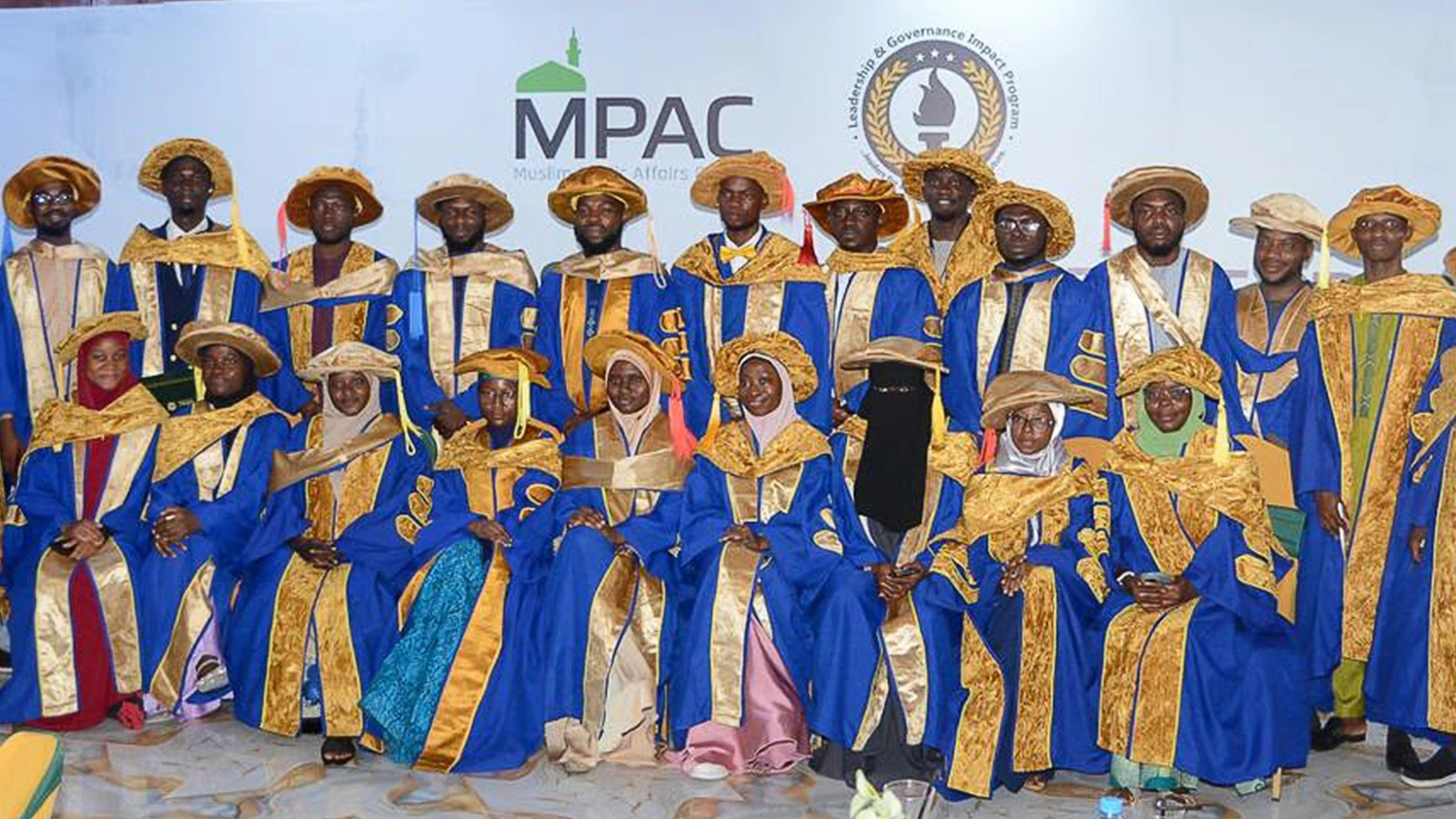
***Canvasses ethical leadership
The Muslim Public Affairs Centre (MPAC) has urged Muslims to step up for leadership roles and lead with honesty, accountability, and justice, emphasizing that these values must be non-negotiable, especially when no one is watching.
The call was made at the graduation ceremony of the first Leadership & Governance Impact Programme (LGIP) cohort, held at the University of Lagos (UNILAG) Guest House, Akoka, Lagos.
A total of 15 males and 12 females graduated from the programme.
MPAC is an incorporated public service agency devoted to promoting the integration of Islam into Nigerian pluralism to foster a positive and constructive relationship between Nigerian Muslims and other segments of society.
It also aims to build the Nigerian Muslim constituency into an influential component of Nigerian politics across all levels of the policymaking arena.
The Executive Chairman, MPAC, Disu Kamor, stated that the LGIP was established to address a critical challenge facing the Muslim community. He noted that while the Muslim community in Nigeria is large, diverse, and rich in talent, it is too often under-represented at tables where decisions are made concerning states, institutions, and shared national life.

He reiterated that this gap cannot be closed through grievances, but through preparation, producing men and women who are not merely present in the room, but competent enough to shape outcomes and principled enough to be trusted once they arrive.
He added that the mission is to fuse the confidence of faith with the discipline of governance: to be Muslims who are unmistakably ethical, unmistakably capable, and unmistakably in service to society as a whole.
According to him, this deficit is not unique to Nigeria, as a similar vacancy exists globally, a shortage of leaders who will champion great causes without compromising their character, and who lead with compassion, integrity, and the competence to deliver results.
Speaking to the graduates, he noted that their completion of the programme means that local communities, local governments, and Nigeria now have more trained voices ready to occupy spaces and lead with integrity, competence, and compassion without apology.
In his charge, he said: “The Ummah needs you. Nigeria needs you. The era of spectatorship is over; the era of leadership is now. Lead with ethics and integrity, and let your values be your brand in public service and community work. Let honesty, accountability, and justice be non-negotiable, especially when no one is watching.
“Apply what you have learned here. Be data-driven, people-centred, and solutions-focused. Bring competence to every table you sit at so that your presence raises the quality of the conversation. Remember that leadership is amanah, not a trophy. Serve the people, especially the most vulnerable, and do it as an act of ibadah.
“Do not expend your influence on trivialities. Anchor yourselves to causes that outlast a single term or career ,and pursue them with the patience they require.
He added: “Your participation is far more than ceremonial; it is a powerful statement. By being here, you have lent your time, your wisdom, and your goodwill to this moment and in doing so, you have added immense value to the experience of our graduates.”
When asked about the vision of the alumni, the President of the LGIP Alumni Association, Al-Amin Bobboi Muhammad, stated: “Our vision is to be the foremost network of value-driven Muslim professionals inspiring ethical leadership, shaping good governance, and advancing sustainable development through transformational social impact.
“This vision gives us direction. However, a vision only becomes meaningful when it is translated into action. As the pioneer Executive Council of LGIPAA, we recognize the responsibility placed upon us. Our task is not simply to establish an association; our task is to build a strong foundation that future cohorts can inherit, strengthen, and improve.
“We are committed to building an association grounded in amanah, ihsan, integrity, accountability, justice, collaboration, innovation, and service.
“These are not merely words; they are standards by which we must hold ourselves accountable.
“Our first year will focus on strengthening alumni engagement and community building, developing leadership and professional capacity, promoting good governance and social impact, establishing mentorship and career advancement opportunities, and building strong institutional systems and partnerships for long-term sustainability.
“We want every alumnus to understand that membership is not merely a title, but an opportunity to contribute, connect, serve, create impact, and ensure that the values of LGIP continue to influence our society long after this programme.”

