 Follow Us on Google News
 Follow Us on Google Discover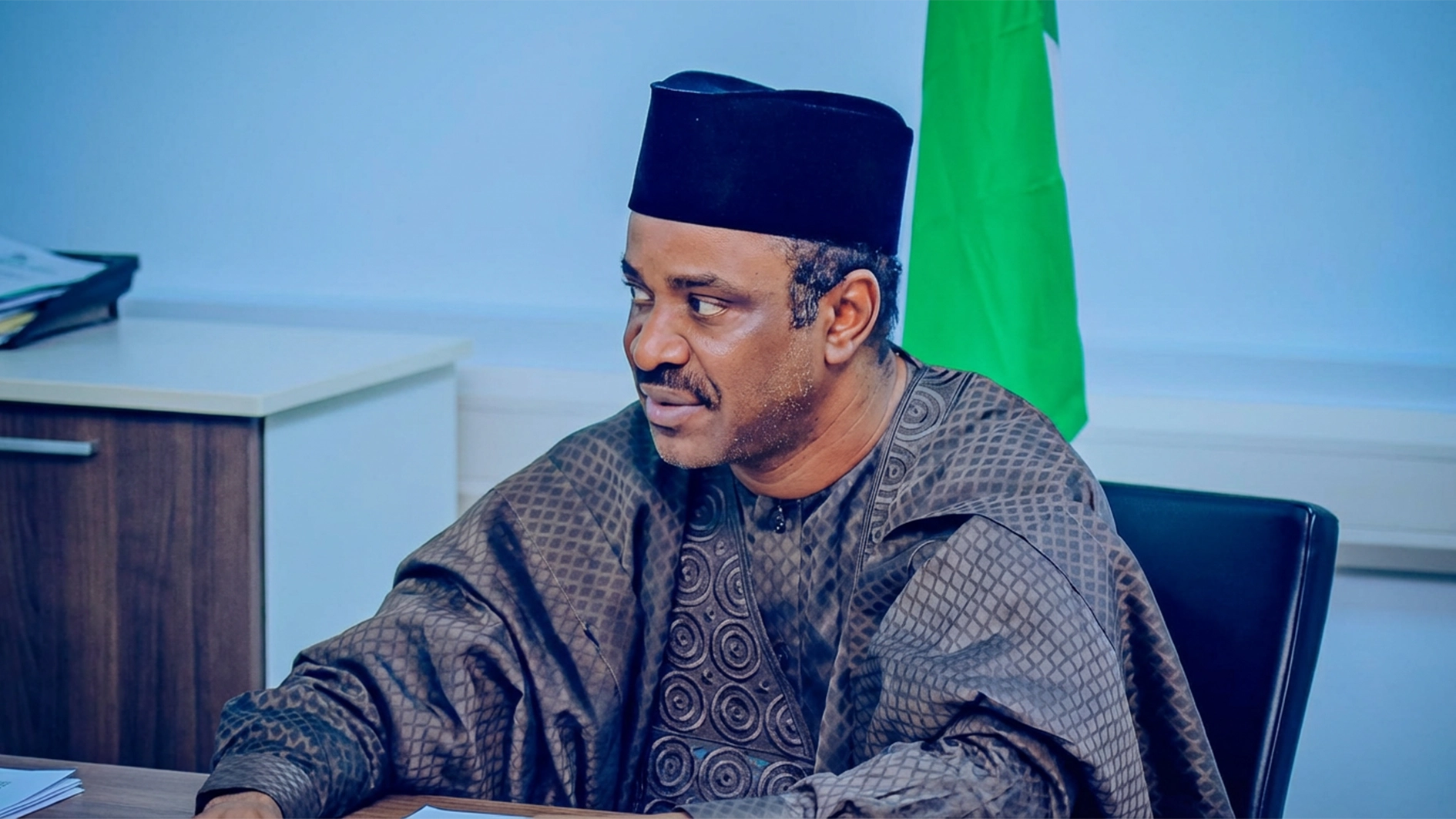
• Asset sales not to fund budget deficit, says FG
• N15.88b to audit over 1,000 MDAs inadequate, says House of Reps
The Federal Ministry of Transportation received just one per cent of the N256.73 billion allocated to it for capital expenditure in the 2025 Appropriation Act.
Minister of Transportation, Senator Said Alkali, disclosed this yesterday in Abuja during the ministry’s budget presentation and defence before the Joint Senate and House of Representatives Committee on Land Transport.
Meanwhile, Minister of Budget and Economic Planning, Senator Abubakar Bagudu, said the Federal Government’s proposed sale of some public assets was not primarily aimed at funding the budget deficit, but at unlocking value from underperforming national investments.
The House of Representatives, however, faulted the Federal Government’s proposed N15.88 billion allocation to the Office of the Auditor-General of the Federation (OAuGF) in the 2026 budget, describing it as grossly inadequate for an institution constitutionally mandated to audit over 1,000 Ministries, Departments and Agencies (MDAs) and government-funded bodies nationwide.
Alkali explained that the 2026 budget proposal largely consolidates the 2025 Appropriation, as about 70 per cent of projects were rolled over into the new fiscal year due to funding constraints and delayed cash backing.

He said the rolled-over items had been reviewed and aligned with President Bola Tinubu’s Renewed Hope Agenda, with emphasis on completing ongoing projects, protecting public investments and sustaining momentum in the land transport sector.
Among notable achievements, the Minister listed the approval of the National Land Transport Policy 2025 and the proposed De-Sadel Nigeria Limited integrated high-speed rail, power generation and natural gas project, spanning about 4,000 kilometres nationwide under a Design-Build-Finance-Operate-Maintain (DBFOM) model.
He outlined key interventions in the 2026 budget to include the development of modern bus terminals, railway expansion and strategic port connectivity, as well as the continuation of nationally important railway projects under the Nigerian Railway Modernisation Programme.
On budget performance, Alkali said the ministry recorded about 59 per cent overhead utilisation in 2025, while capital releases stood at roughly one per cent and were largely not cash-backed.
On Monday, the Federal Government had disclosed its plans to sell select state-owned assets to private investors in 2026 as part of its broader economic reform agenda.
Minister of Finance and Coordinating Minister of the Economy, Wale Edun, speaking at the AlUla Conference for Emerging Market Economies in Saudi Arabia, said the government was still finalising the assets to be offered and the transaction timeline.
He noted that ongoing reforms boosted investor confidence, with the administration prioritising public-private partnerships (PPPs), increased investment and macroeconomic stability to drive job-rich and inclusive economic growth.
Speaking on Arise Television’s ‘Morning Show’ yesterday, Bagudu dismissed claims that the sale was to fund Nigeria’s budget deficit. He explained that although asset sales could generate immediate revenue, the broader objective was to improve productivity and attract investment into sectors where government holdings had not delivered optimal returns.
“Sale of assets is not to look for money to pay off deficit. Yes, the deficit may benefit from it, but that is not the main purpose. Government has held too many assets that are not generating value for Nigerians, and there are opportunities for investors to come in so those assets can contribute to national prosperity,” he said.
Citing Nigeria’s oil sector, the minister noted that despite an estimated capacity to produce about three million barrels of crude oil per day, actual output remains below 1.5 million barrels.
The lawmakers raised concerns about the audit allocation during consideration of the Auditor-General’s 2026 budget proposal at the National Assembly, warning that such meagre funding severely weakens Nigeria’s anti-corruption and accountability architecture.
The Bamidele Salam-led House Committee noted that the allocation represented a mere 0.027 per cent of the N58.4 trillion Federal Government budget for 2026, arguing that it is unreasonable to expect the nation’s supreme audit institution to effectively scrutinise trillions of naira in public spending with such limited resources.
Salam contended that the scale of responsibility placed on the Auditor-General’s Office far outweighs the funds provided to it.
“You are asking an institution to audit more than 1,000 MDAs, including foreign missions, statutory agencies and intervention funds, with less than N16 billion. That is structurally designed to fail,” Salam said.
The House committee, therefore, called on the Federal Government to substantially increase funding to the OAuGF and ensure full and timely release of appropriated funds, warning that without adequate resources, effective oversight of public finances remains impossible.

