 Follow Us on Google News
 Follow Us on Google Discover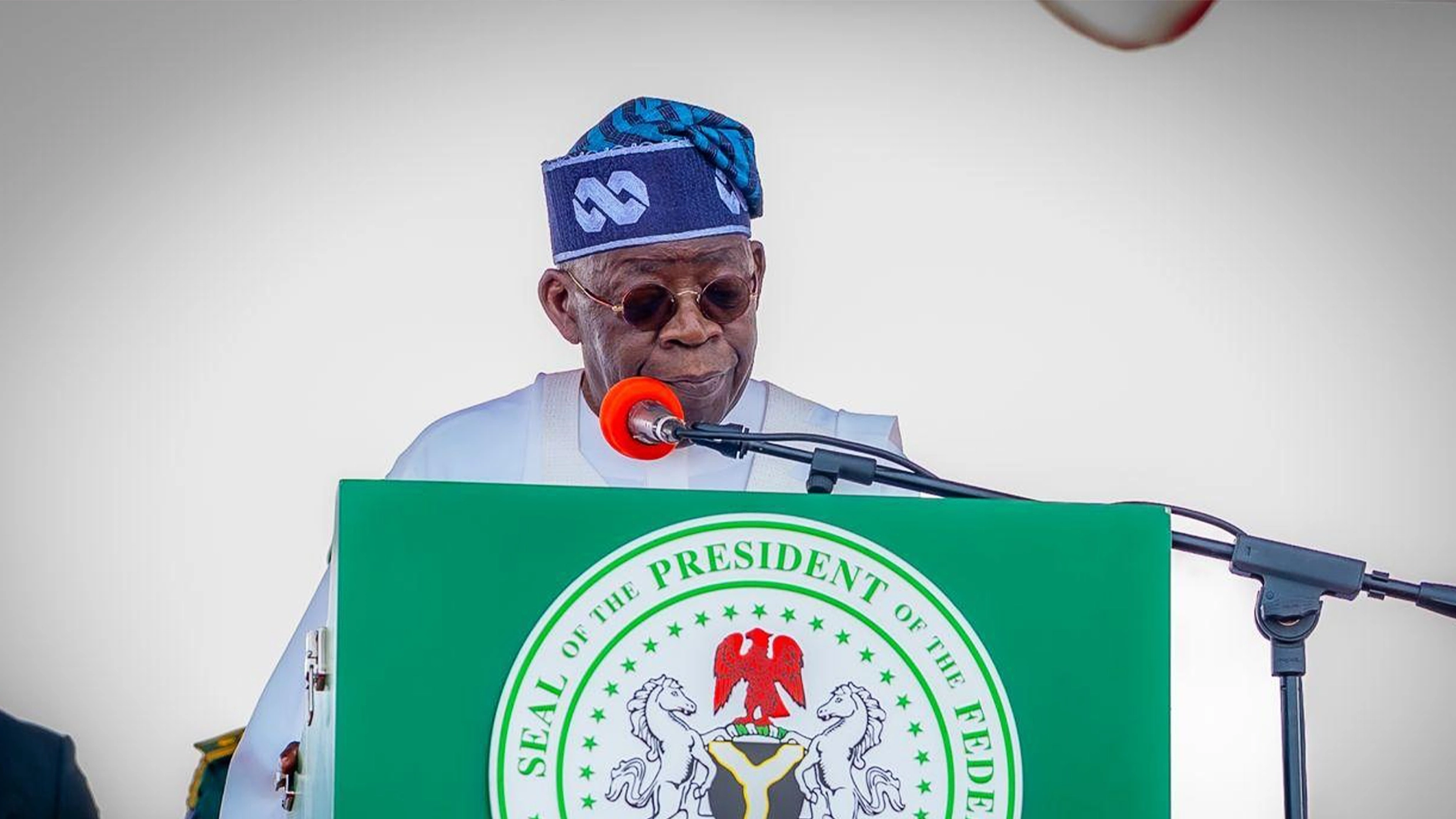
• FG says Tinubu’s absence does not diminish Nigeria’s diplomatic standing
• Atiku questions constitutionality of Tinubu’s prolonged stay abroad
• Tinubu extends stay in Europe, returns weekend
• Wars, climate shocks, AI top UNGA agenda
• Guterres seeks reforms as global crises mount
As Nigeria remains embroiled in a debate over President Bola Tinubu’s absence from the United Nations General Assembly (UNGA) and Vice President Kashim Shettima’s representation of the country, world leaders at the gathering are turning their attention to wars, climate change, artificial intelligence, and mounting global economic pressures.
Meanwhile, the issues dominating the 81st Session of the UNGA have direct implications for Nigeria, from food and energy prices and climate financing to conflicts, technological disruption and the reform of global institutions.
Nearly 130 heads of state and government are expected to attend the High-level Week in New York, with the General Debate running from today to September 28.
The gathering will focus on major conflicts in Iran, Gaza, Ukraine, Sudan, Congo and Myanmar, with leaders facing questions over their ability to end the wars and restore peace.
Global warming, growing inequality and disruptions to shipping routes and supply chains are also threatening economies, increasing the cost of living and slowing growth.

The future of the United Nations itself is expected to feature prominently, with member states pushing for reforms, including changes to the Security Council, where the United States, Russia, China, Britain and France wield veto powers.
The organisation is also facing financial difficulties, after outstanding United States dues contributed to pressure on peacekeeping operations and humanitarian aid.
Artificial intelligence has emerged as another major concern, with experts warning that rapidly advancing AI systems could become increasingly difficult to control. The UN Security Council is scheduled to hold a high-level meeting on AI during the gathering.
United Nations Secretary-General Antonio Guterres warned that the global situation “is getting worse” as wars multiply and become increasingly complex, with geopolitical divisions paralysing the Security Council.
Guterres, speaking in an interview with Al Jazeera yesterday, said the deadlock had left vulnerable populations facing “very dramatic situations”.
The interview came on the eve of his final address as UN secretary-general to the United Nations General Assembly (UNGA), as his tenure is due to end on December 31, 2026.
He said the involvement of major powers and permanent members of the Security Council in ongoing conflicts had contributed to violations of international law and created what he described as an environment of impunity.
“That creates an environment of impunity, in which midsize powers believe that they can do whatever they want because nothing will happen to them,” he said.
Guterres highlighted the effects of the Russia-Ukraine war and the US-Israel war on Iran on food availability, fuel prices and inflation globally.
He said disruptions to food, fertiliser and energy exports through the Black Sea, coupled with difficulties around the Strait of Hormuz and Bab al-Mandeb and attacks on oil installations in parts of the Middle East, were placing further pressure on economies.
“The combination of the war in Ukraine with the problems of exports of foods, fertilisers, and energy through the Black Sea, if you combine it with the difficulties in the Strait of Hormuz (in the Gulf), in the Bab al-Mandeb (in the Red Sea), and in the attacks (on) oil installations in several countries of the (Middle East) region, we are creating a situation that has a devastating impact on many economies around the world,” Guterres said.
He said developed countries could eventually manage the effects of higher interest rates and fuel prices, but people in developing countries were facing severe hardship due to rising energy and food costs and fertiliser shortages.
Guterres, a former prime minister of Portugal and UN high commissioner for refugees, has led the world body since January 1, 2017.
As his tenure draws to a close, he said his successor would inherit an organisation facing multiple crises and requiring reforms to remain relevant on the global stage.
He singled out the Security Council, saying its structure “still essentially represents the world of World War II”.
Tinubu’s absence for third year sparks mixed reactions
THE absence of President Bola Tinubu has generated mixed reactions among foreign policy experts.
Head of the Security and Strategic Studies Division at the Nigerian Institute of International Affairs (NIIA), Prof Joshua Bolarinwa, said there was no major concern over the President’s absence as long as Nigeria’s interests were adequately represented at the global forum.
Bolarinwa said Tinubu had consistently highlighted and prepared Nigeria’s interests ahead of international engagements, adding that the country’s requests and national positions were documented and presented at UNGA meetings.
He said the Vice President, Minister of Foreign Affairs or Nigeria’s Permanent Representative to the United Nations could adequately represent the country at the gathering.
According to him, Nigeria’s Permanent Representative and Ambassador to the UN, Jimoh Ibrahim, had been effectively representing the country and currently serves as Chairman of the Fifth Committee (Administrative and Budgetary).
Bolarinwa also said Nigeria assumed the chairmanship of the UN Special Committee on Peacekeeping Operations, describing the development as evidence that the country was adequately represented at the international forum.
He added that the current administration had paid Nigeria’s assessed dues to international organisations, including the United Nations, African Union, Commonwealth of Nations and the Economic Community of West African States, which he said the country had owed before the administration came into office.
However, a Research Fellow at the NIIA, Kelechi Nwogu, said Tinubu’s absence carried implications for Nigeria’s standing amid the changing global order.
Nwogu said, given Nigeria’s position as Africa’s largest economy, the President’s absence sent a message to the international community about how the country was addressing its domestic and external challenges.
He described the absence as unfortunate and said it did not project Africa in a positive light, adding that Nigeria could benefit from the President’s physical presence at the UNGA.
He said the President’s attendance would provide opportunities for Nigeria to engage directly with other world leaders and pursue interests that could benefit the country.
Also, a lecturer in the Department of Political Science at the University of Lagos, Dr Bamidele Olajide, said the President was simply delegating responsibility, which he described as acceptable, particularly if the Vice President had been doing a good job.
“Perhaps the President doesn’t want to disrupt the flow,” he added.
Olajide said it would be wrong to assume that the President was oblivious to international relations or international politics, adding that even if he lacked information on the subject, there were several agencies in Nigeria that could advise and equip him with the necessary information.
He also suggested that the President’s absence could imply that he did not consider the UN a serious business, given what he described as the organisation’s recent ineffectiveness.
Olajide noted that the UN General Assembly was primarily a forum for discussion and lacked executive power to enforce decisions, as such authority rested with the Security Council.
“No serious decision can be taken in the UN without the concurrence of the five permanent members of the Security Council. So, maybe the President is just telling us that the UN business is not a serious business.”
Tinubu’s UNGA absence no setback to Nigeria’s diplomacy, says FG
THE Federal Government has said President Bola Tinubu’s decision to remain on annual leave and mandate Vice President Kashim Shettima to lead Nigeria’s delegation to the 81st session of the United Nations General Assembly does not diminish the country’s diplomatic standing.
Minister of Information and National Orientation, Mohammed Idris, stated this yesterday while responding to public commentary over Tinubu’s absence from the high-level UNGA session in New York.
Idris said the government had noted comments by former Vice President Atiku Abubakar and a United States-based lobbying organisation he retained, which questioned Tinubu’s non-attendance and attributed motives to the decision.
He said Tinubu had mandated Shettima to represent him and lead Nigeria’s delegation, adding that the Vice President would deliver Nigeria’s national statement and participate in high-level meetings and bilateral engagements with world leaders, international organisations and development partners.
“Vice President Shettima carries the full mandate of the President and the Federal Republic of Nigeria,” Idris said.
According to him, Shettima’s engagements in New York would advance Nigeria’s priorities on peace and security, economic development, climate action, reform of the global financial architecture, sustainable development and international cooperation.
“Nigeria will therefore be fully and effectively represented throughout the high-level session,” he said.
Idris said political opposition and robust public debate were legitimate features of democracy, but urged political actors to distinguish speculation from established facts when discussing matters concerning Nigeria’s international relationships and national reputation.
He also said Nigeria valued its longstanding relationship with the United States, which covers trade and investment, security cooperation, energy, democratic institutions, regional stability, and extensive people-to-people ties.
The minister said the relationship was conducted through established diplomatic and governmental channels and should be distinguished from partisan commentary and activities of private lobbying organisations acting for political clients.
Idris urged Nigerians and the media to distinguish between verified information, legitimate political opinion and unsubstantiated speculation.
Shettima: Nigeria’s UNGA engagements will be guided by national interest
THIS came as Vice President Kashim Shettima said Nigeria’s engagements at the 81st session of the United Nations General Assembly in New York will be guided by the country’s national interest.
Shettima spoke shortly after arriving in New York yesterday to represent President Bola Tinubu at the ongoing UNGA session.
The Vice President arrived alongside Rivers State Governor Siminalayi Fubara, Minister of State for Budget and Economic Planning Doris Uzoka-Anite and other senior government officials.
He reiterated Nigeria’s commitment to multilateralism and Tinubu’s advocacy for reforms of global institutions to reflect current economic and demographic realities.
“Our message in New York is clear: Nigeria believes in multilateralism, but the institutions that govern our world must become more representative, equitable, and responsive to the realities of today,” he said.
Shettima said Nigeria would engage its international partners from the standpoint of its national interest while advancing Tinubu’s call for a global system that gives developing countries a stronger voice and greater opportunities for economic prosperity.
On arrival, he was received by Lagos State Governor Babajide Sanwo-Olu, Deputy Chief of Staff to the President Ibrahim Hadejia and Minister of Foreign Affairs Bianca Odumegwu-Ojukwu.
Others at the reception included Minister of Women Affairs Imaan Sulaiman-Ibrahim; Minister of Solid Minerals Development Dele Alake; Nigeria’s Permanent Representative to the United Nations, Jimoh Ibrahim; and other diplomatic officials.
Shettima is expected to deliver Nigeria’s national statement during the general debate, outlining the country’s position on major international issues and priorities.
He is also expected to participate in high-level meetings and hold bilateral engagements with world leaders, international organisations and development partners on the sidelines of the General Assembly.
The engagements are expected to focus on issues such as the reform of the international financial architecture and sustainable development.
Tinubu extends Europe vacation, returns at weekend
MEANWHILE, President Bola Tinubu has extended his working vacation in Europe by a few days and is expected to return to Nigeria at the weekend, the Presidency announced yesterday.
Tinubu departed Abuja on August 30 for London to begin a three-week annual leave. The Presidency had initially said he would return to Nigeria after the vacation to resume official engagements and join preparations for the January 2027 elections.
The President subsequently extended his stay in Europe, combining his vacation with official engagements and consultations on issues of national interest.
After spending about a week in London, Tinubu travelled to Paris, France, where he held talks with French President Emmanuel Macron and met businessman Vincent Bolloré.
In a statement, Special Adviser to the President on Information and Strategy, Bayo Onanuga, said Tinubu had remained in contact with officials in Abuja and continued to direct the affairs of government throughout his stay abroad.
Atiku questions Tinubu’s absence, asks who is in charge of Nigeria
THE presidential candidate of the African Democratic Congress (ADC), Atiku Abubakar, has questioned the continued absence of President Bola Tinubu from Nigeria, 22 days after the Presidency announced that he was embarking on a three-week annual vacation.
In a statement yesterday titled, “Who is in charge of Nigeria?”, the former Vice President cited Section 145 of the Constitution, which provides for the transfer of presidential functions when the President proceeds on vacation.
According to Atiku, the Constitution requires the President to transmit a written declaration to the President of the Senate and the Speaker of the House of Representatives, after which the Vice President serves as Acting President.
He argued that more than 21 days after Tinubu left the country on August 30, Nigerians had not been shown any letter transmitting presidential authority to Vice President Kashim Shettima.
Atiku said Section 145 provided a further constitutional safeguard where the President failed to transmit such a declaration within 21 days, stating that the National Assembly could, by a simple majority of each chamber, mandate the Vice President to perform the functions of the President as Acting President.
He asked who was exercising presidential authority in Nigeria and under what constitutional instrument.
“Nigeria cannot be governed by assumptions. It cannot be governed by presidential social-media posts from Europe. It cannot be governed by photographs from private dinners at the Élysée Palace. It cannot be governed on autopilot,” he said.

