 Follow Us on Google News
 Follow Us on Google Discover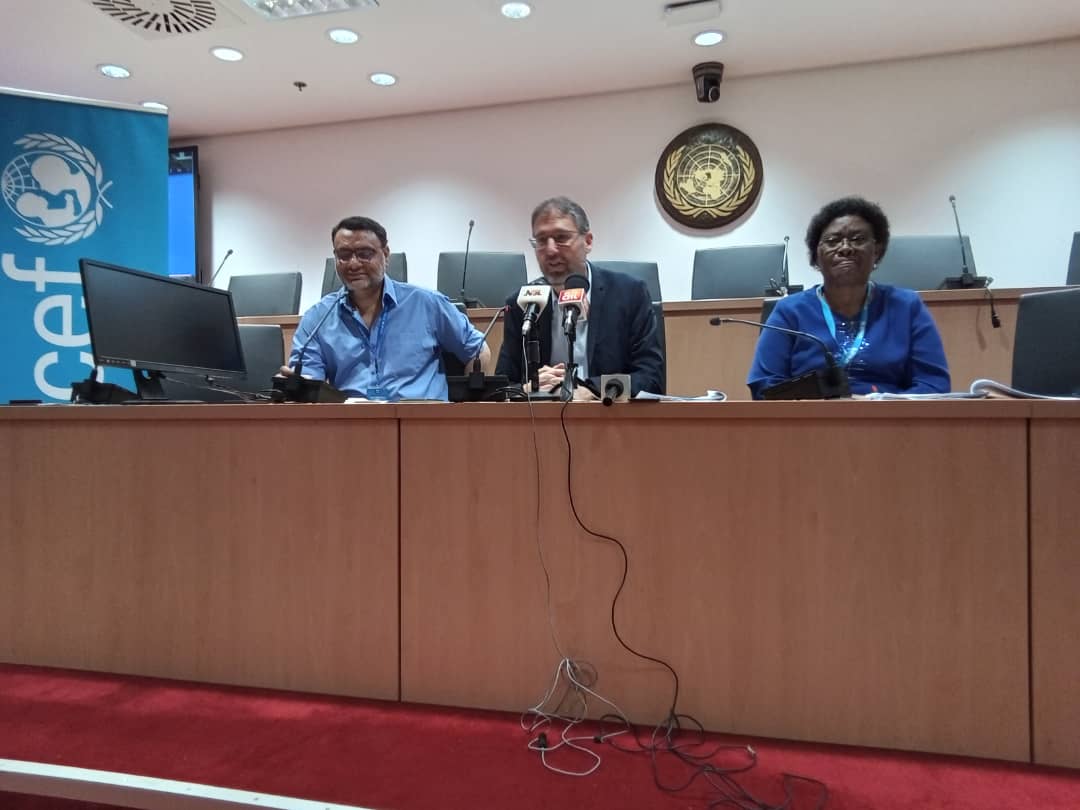

As 2.2 million children in Nigeria have never received a single routine immunization
The United Nations Children Fund (UNICEF). in partnership with the National Primary Health Care Development Agency, GAVI, the World Health Organization, and the Bill and Melinda Gates Foundation have developed a “zero-dose” strategy to reach children who have missed out on routine immunization in the 100 most deprived local government areas in 18 states, in Nigeria.
[ad]
About 2.2 million children in Nigeria have never received a vaccination according to “The State of the World’s Children Report 2023,” released on Thursday by UNICEF.
The report described Nigeria as a home for the second largest number of zero-dose children in the world.
Speaking with journalists in Abuja, UNICEF Chief of Health in Nigeria, Dr Eduardo Celades, stated that the reasons for the large number of children in Nigeria who have not taken any single immunization was due to the weak healthcare systems and lack of access, to Primary Healthcare facilities as a result of insecurity and violent conflict in the northeast of the Northwest.
He said, “When I talk about a weak healthcare system, I mean that there are not enough nurses and other midwives, there are not enough doctors, enough commodities from the supply chain because we don’t get the vaccines to the last mile . We are expanding cold chain capacity diso ensured the availability of vaccines at all levels. Because of the weak primary healthcare system, when the COVID-19 came, the ability of the system to respond to different concurrent needs was really limited. So that’s what we saw that kind of slowed down on the progress.
[ad]
Celades explained that the new report showed that because of the Covid-19 pandemic, vaccination rates was decreasing.
He said, “We have seen like Nigeria is the second country in the world with Zero dose children which means children that have not had a single vaccine, an additional 2.2 million we see that every year. not vaccinated at all. What happened in Nigeria was that the progress continued even during the Covid-19 pandemic, the country improved vaccination coverage progress, and move forward. However, the progress was not at the pace or at the speed that we need. It still will have this big mass of Zero dose children. Still, the coverage of banditry betters ways like the pentavalent three coverage makes it difficult to read a proxy is probably a good proxy for immunization existing 57%. But when blue can come in and defend so this is quite remarkable, and we need to put that in the day. So what happened in Nigeria, and as well as the rest of the world why this is happening what progress has slowed. Down or has even decreased. So there were two main factors.

Celades noted that UNICEF, working with partners with government, actors is conducting an analysis and have identified 1, 200 wards in 18 Local government Areas for across the country and also doing something like a Catch Up campaign, a mix of outreach and campaigns with the aim to catch up 1 million children we missed in the next 700 days.
[ad]
“This is an ambitious target that we’re working with NPHCDA and we hope to work with partners like Gavi, WHO and others, and we probably will catch up. And last but not least, and we are the most important in the long term what is our vision is to strengthen the health system, not only at the facility level, hiring nurses, doctors, and midwives and showing that facilities are well equipped and that they have solar panels, water, but as well as community level how we can ensure that we have more incentives for community health workers”
According to him, UNICEF has worked to increase child survival by combating the lagging immunization rates among children in Nigeria. Strengthening the health care system, expanding access to underserved populations, and focusing on primary health care — including newborn, child, adolescent, maternal and reproductive health — were key to reaching children and their families””.
Also speaking, Health Manager Immunization, UNICEF Nigeria, Dorothy Ochola-Odongo said there is a need for a larger capacity cold chain system for routine immunization to ensure that the vaccines are closer and more accessible to communities where they are needed
She also stressed the need to inspire confidence in caregivers and parents to accept the vaccines and the importance of ensuring that their children are vaccinated
On his part, UNICEF Nigeria, Chief of Communications, Rajat Madhok urged the media, and religious and traditional leaders to assist in disseminating the right information about the vaccines.
[ad]

