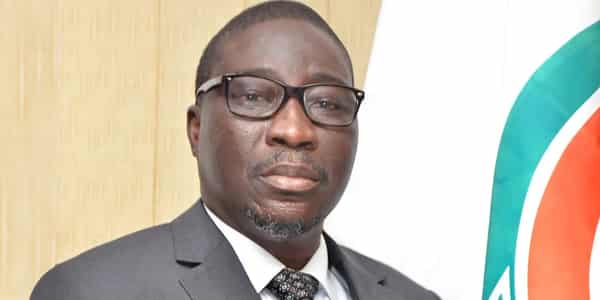
The Director-General of the Inter-Governmental Action Group Against Money Laundering in West Africa (GIABA), Mr. Edwin Harris Jr, has called for urgent, coordinated and intelligence-driven action to combat human trafficking and transnational organised crime, warning that weak financial systems, gender inequality and porous borders continue to fuel the menace.
Harris stated this at the joint GIABA-EGDC Regional Forum on Women and Transnational Organised Crime themed ‘Human Trafficking Risks in West Africa’, held in Lagos. The forum convened policymakers, financial intelligence experts, law enforcement agencies, civil society organisations and development partners from across the ECOWAS region.
Harris described human trafficking as a pervasive, profit-driven crime that undermines development, erodes human rights and threatens regional stability.
Citing United Nations Office on Drugs and Crime (UNODC) data, Harris said children account for over 75 per cent of trafficking victims in West Africa, while International Labour Organization (ILO) assessments show the region bears a disproportionate share of forced labour and modern slavery globally.
“These are not just statistics; they represent thousands of lives, often children, robbed of dignity and opportunity,” he said, stressing that disrupting illicit financial flows is key to weakening trafficking networks.
Harris highlighted the partnership between GIABA and the ECOWAS Gender Development Centre (EGDC), noting that while GIABA strengthens anti-money laundering frameworks, EGDC addresses the gender and social vulnerabilities traffickers exploit.
In her address, Director/CEO of the Nigerian Financial Intelligence Unit (NFIU) and GIABA National Correspondent, Ms. Hafsat Abubakar Bakari, described human trafficking as one of the most lucrative transnational crimes, generating over $150 billion annually.
She noted that women and girls make up more than 60 per cent of victims globally, with sexual exploitation and domestic servitude prevalent in West Africa. Bakari explained that trafficking proceeds are laundered through banks, mobile money platforms, informal transfer systems and digital channels.