 Follow Us on Google News


 Follow Us on Google Discover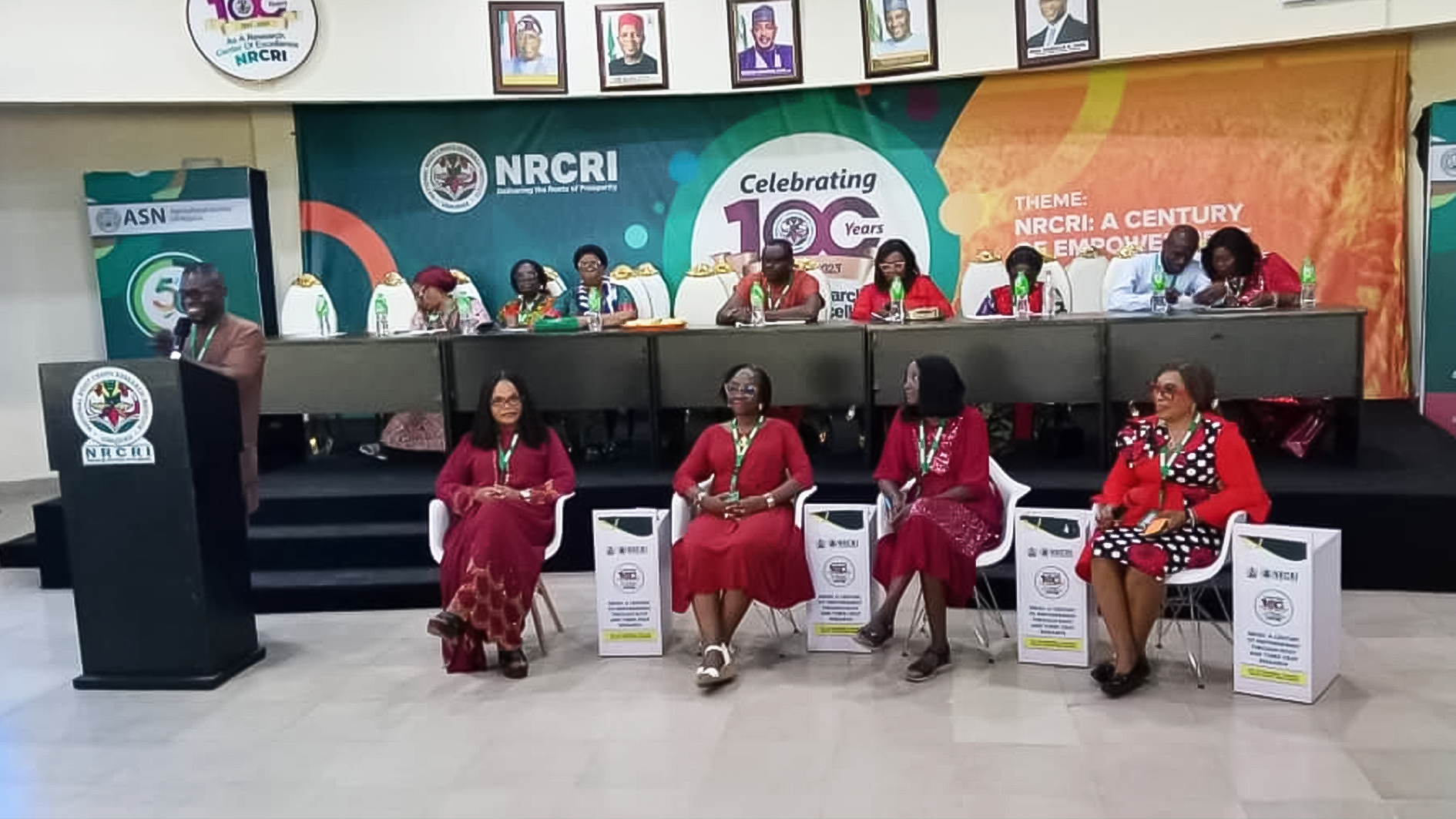
The capacity and resilience of women at the National Root Crops Research Institute (NRCRI), Umudike, Abia State, were brought into focus as the institute commemorated the 2026 International Women’s Day (IWD) themed “Give to Gain.”
The event aligned NRCRI with the global celebration of the social, economic, cultural, and political achievements of women, while reaffirming its commitment to advancing gender equality and creating opportunities for women and girls to thrive.
A retired Director of the institute, Dr. Mrs. Chinyere Anaedu, served as the Mother of the Day.
In her welcome address, the Head of the Gender and Agriculture Unit, Dr. Ejechi Mercy, explained that the theme “Give to Gain” reflects the core mandate of the institute, particularly in root and tuber crops research.
“As an institute, we give through research, improved crop varieties, and best agronomic practices that enable crops to reach their full production potential. We also provide extension advisory services. In return, we gain food security, economic prosperity for farmers, and a resilient agricultural system,” she said.
Dr. Ejechi further noted that the philosophy behind “Give to Gain” eliminates the fear that empowering women comes at the expense of others.

“When women gain, families gain, communities gain, and the institute moves closer to achieving its mandate of food security,” she added.
The Executive Director and Chief Executive Officer of NRCRI, Professor Chiedozie Egesi, described the celebration as an opportunity to recognize women as a central force behind the institute’s strength and impact.
“Today, we gather not just to celebrate a day, but to acknowledge a force that is central to the strength, relevance, and impact of our institute. The women of NRCRI are not just contributors; they are catalysts, drivers of innovation, and key players in Nigeria’s food and nutrition security,” he said.
Professor Egesi noted that women constitute about 60 percent of the institute’s workforce and reaffirmed the management’s commitment to supporting their growth and advancement.
He emphasized that investing in women is a strategic decision with far-reaching benefits.
“When we invest in women, we are making a high-yield investment, not a concession. We are deliberate about creating an enabling environment where women do not just participate but lead and excel,” he said.
He also reiterated the institute’s zero-tolerance policy for gender-based violence, harassment, and discrimination, while encouraging female staff to take leadership roles, mentor others, and continue to excel in their respective fields.
Chairman of the occasion, Dr. Benjamin Okoye, Director of the NRCRI Extension Programme, described women as critical drivers of innovation in agriculture, contributing significantly to food security, poverty reduction, and wealth creation.
Similarly, the Director of Planning, Monitoring and Evaluation, and Gender Focal Lead, Dr. Tessy Madu, said the event was organized to celebrate the strength, resilience, and contributions of women within the institute.
“The theme ‘Give to Gain’ reminds us that when we invest in women, everyone benefits. We must continue to push boundaries, achieve excellence, and build a better future,” she said.
The event featured a lecture titled “Taking Care of Our Eyes in the Proper Way,” delivered by Dr. Chioma Uchendu, a Consultant Ophthalmologist at the Federal Medical Centre, Umuahia. It also included motivational testimonies and a panel discussion highlighting the need for women to support one another, promote gender balance, and mentor the next generation.
In her lecture, Dr. Uchendu emphasized the importance of regular comprehensive eye examinations and cautioned against seeking care from unqualified practitioners.
“A comprehensive eye examination can detect more than 100 medical conditions, including diabetes, heart disease, stroke risk, high blood pressure, and cancer, often providing early warning signs,” she said.
She cited data from the International Agency for the Prevention of Blindness, noting that globally, about 43 million people are living with blindness, while 295 million have moderate to severe visual impairment.
In Nigeria, she added, the National Blindness and Visual Impairment Survey estimates that 1.13 million people aged 40 and above are blind, while an additional 3.4 million suffer from moderate or severe visual impairment. She noted that approximately 84 percent of blindness cases are preventable or treatable, often referred to as “needless blindness.”

