 Follow Us on Google News



 Follow Us on Google Discover
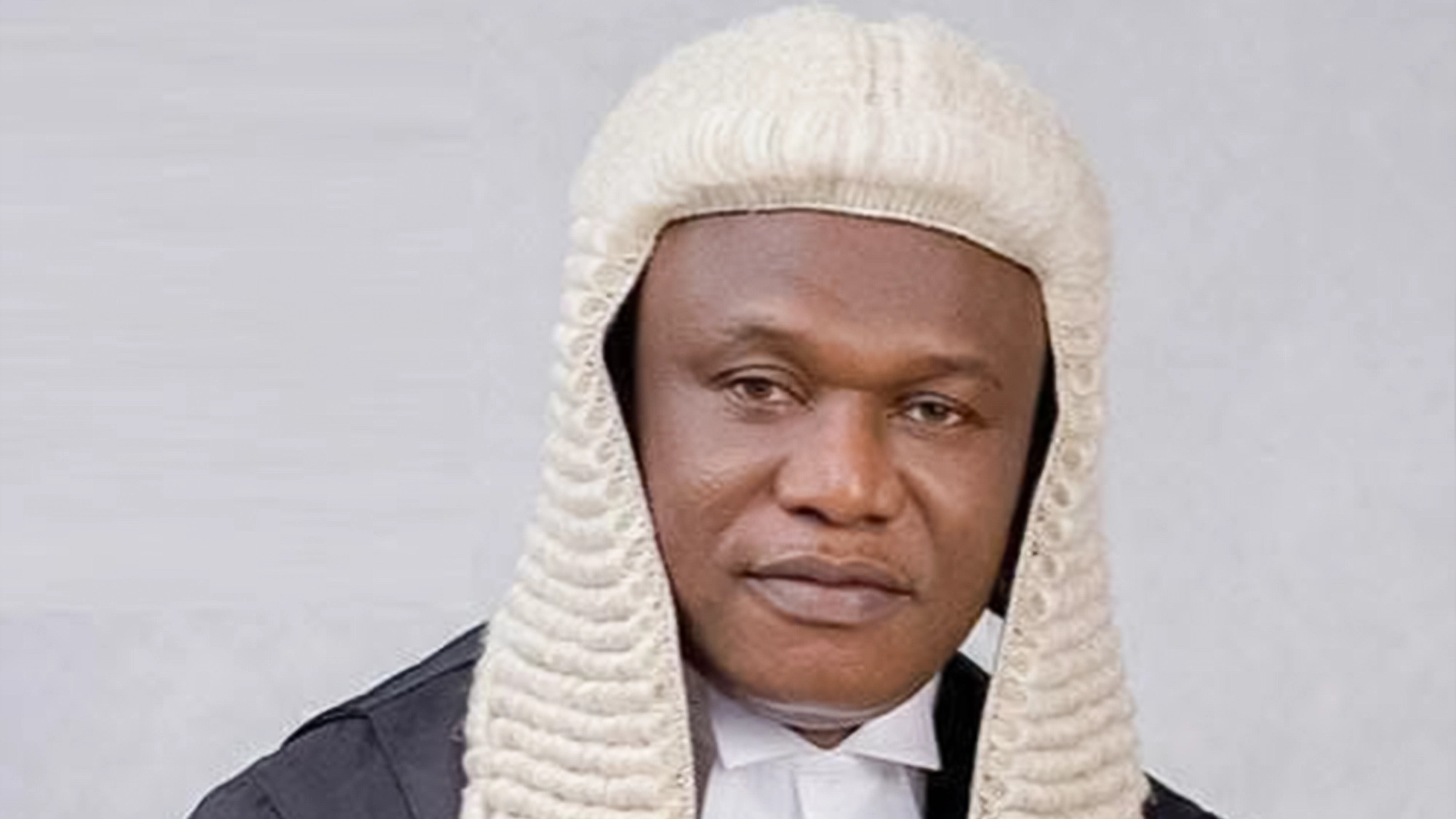
West Africa risks a return to authoritarian rule if executive excesses weakening of democratic institutions and growing public dissatisfaction with governance are not urgently addressed, President of the Enugu State Customary Court of Appeal, Justice George Chibueze Nnamani, has warned.
In a keynote address at the 4th Civil Society Week for West Africa (CSWWA 2026) in Enugu, he expressed concern over the resurgence of military rule in parts of the sub-region, questioning whether the development reflected growing military ambition or widespread disenchantment with democratic governance.
He also faulted the growing dominance of the executive arm of government, warning that the subordination of the legislature and judiciary could undermine constitutional democracy and fuel political instability.
The two-day conference, organised by Spaces for Change (S4C) West Africa in collaboration with its partners, has as its theme, Strengthening Judicial Protection of Civic Space in West Africa.
In his address titled Separation of Powers: How Many Powers and How Separate?, Nnamani questioned whether the constitutional principle of separation of powers was being respected across West Africa, despite provisions in national constitutions guaranteeing the independence and functions of the three arms of government.
He said: “Executive highhandedness, conspiratorial inertia of the legislature and acquiescence of the judiciary are trending accusations piling up against the drivers of democracy in the West African sub-region. This, incidentally, is no ordinary piffle, idle talk or rabble-rousing. While national constitutions glitter and shimmer with sublime provisions, the observance thereof by political actors remains largely in breach.”

The judge lamented that the executive arm had become increasingly powerful at the expense of the legislature and judiciary, warning that such an imbalance was dangerous to democratic governance.
“While the executives bestride the governmental landscape like colossi, the legislatures and the judiciaries peep under their huge legs like midgets, like the Lilliputians of Lilliput before the man-mountain, Gulliver!” he said.
According to him, the deliberate weakening of the other arms of government sends the wrong message to citizens that the executive is the ultimate authority, while the legislature and judiciary are merely expected to endorse its decisions.
He warned that the consequences included growing public disillusionment, political restiveness and instability, stressing that a democracy could not survive where the judiciary was permanently subjected to the control of the executive.
“Of a truth, from Cameroon, through Nigeria to Mauritania, any democracy that irretrievably ties the judiciary to the apron strings of the executive in subservience is a pseudo democracy, a mere caricature of it,” Nnamani said.
The jurist also expressed concern over the resurgence of military governments in West Africa, noting that Burkina Faso, Guinea, Mali and Niger were currently under military rule.
He questioned whether the development was a sign of renewed military ambition or reflected widespread frustration with the performance of civilian administrations.
“Why the sudden resurgence of military juntas on the political landscape of the sub-region at a time the bones of her democracies should have calcified? Are the men of the jackboots getting overly ambitious once again or is their re-emergence symptomatic of mass disenchantment with democratic governance?” he asked.
Nnamani also highlighted the challenges facing judges as terrorism, banditry and kidnapping for ransom continue to threaten the region, noting that courts are increasingly handling cases involving extreme violence and powerful economic and political interests.
He, however, stressed that the security challenges confronting West Africa should not become an excuse for undermining fundamental rights or compromising judicial independence.
The judge identified financial autonomy as a critical requirement for an independent judiciary, citing Section 121(3) of the 1999 Constitution, which provides for the direct payment of state judicial allocations to the heads of the courts concerned.
He questioned the compliance of state governments with the constitutional provision, warning that the judiciary could not effectively discharge its responsibilities if its funding remained subject to executive discretion.
Nnamani also cited the 2014 judgment in JUSUN v NJC, delivered by retired Justice Adeniyi Ademola of the Federal High Court, Abuja, which affirmed the financial autonomy of state judiciaries.
He said the judgment established that funds standing to the credit of state judiciaries in the Consolidated Revenue Fund must be paid directly to the heads of courts, rather than released by governors in instalments or at their discretion.
Earlier, Executive Director of Spaces for Change, Victoria Ibezim-Ohaeri, raised concern over the increasing use of judicial processes to restrict civic freedoms, intimidate opposition figures and legitimise human rights violations across West Africa.
She disclosed that the organisation’s report, Civic Space in West Africa: Trends, Threats & Futures, showed that judicially backed human rights violations rose from nine cases over six years to 70 cases in less than three years, representing an increase of nearly 700 per cent.
According to her, legal mechanisms were increasingly being used to weaken organised public movements, delegitimise opposition actors, justify state-led crackdowns and support security policies that undermine fundamental rights.
Citing figures from the sub-region, Ibezim-Ohaeri said Nigeria recorded 775 terrorism-related convictions across eight mass-trial phases in 2025, while Mali’s specialised judicial unit for terrorism handled more than 200 cases in a single year.
She added that Burkina Faso recorded 151 terrorism convictions between 2023 and 2024, while hundreds of other suspects remained in prolonged pre-trial detention.
While acknowledging the responsibility of governments to protect public safety, she warned that security measures must not be allowed to override constitutional safeguards.
Beyond security-related prosecutions, Ibezim-Ohaeri expressed concern over what she described as the judicialisation of elections, with court decisions increasingly determining electoral outcomes, party registrations and candidates’ eligibility.
She also highlighted the growing use of Strategic Litigation Against Public Participation (SLAPPs), which she described as legal actions designed to intimidate, exhaust financially and silence journalists, whistleblowers, trade unions and grassroots movements.
“When executive overreach is shielded by judicial endorsement, repression effectively puts on the robes of the law,” she said.
Ibezim-Ohaeri urged judicial officers, civil society organisations and policymakers to use the conference to develop practical strategies for strengthening judicial independence and protecting civic freedoms across the region.
Executive Director of the South Saharan Social Development Organisation (SSDO), Dr Stanley Chiedozie Ilechukwu, said protecting civic space was not the responsibility of civil society alone, but required institutions that respected citizens’ rights to organise, participate in governance and hold those in power accountable.
He said the partnership between SSDO and Spaces for Change had supported civil society organisations in addressing regulatory and operational challenges, including registration, banking access, regulatory compliance and digital security.
Ilechukwu stressed that the judiciary remained a critical avenue for protecting citizens when their freedoms were threatened, but added that effective protection of civic space also required fair laws, responsible regulatory institutions and access to justice.
He urged participants to move beyond identifying threats and develop practical solutions, including stronger relationships between the judiciary and civil society and greater regional cooperation.
The conference, supported by the Ford Foundation through the Civic Space Resource Hub, brings together judicial officers, legal practitioners, civil society leaders and other stakeholders from across West Africa to examine threats to civic participation and develop strategies for protecting human rights and democratic governance.

