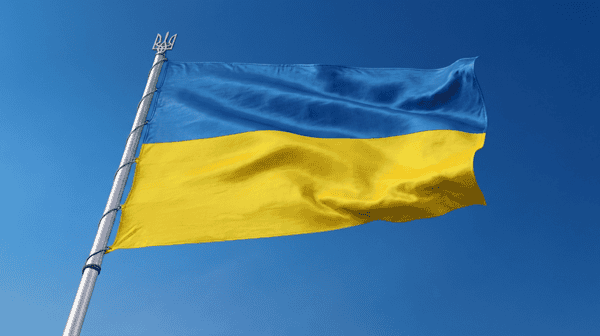
A US proposal to bring Ukraine into the European Union in 2027 under a plan to end the war with Russia was met with scepticism in Brussels on Friday, with diplomats and officials dismissing it as not realistic.
The complicated EU accession process usually takes years, involving negotiations on anything from agriculture to the rule of law.
“2027, it’s tomorrow,” said an EU official speaking on condition of anonymity referring to — normally long — time it takes to get things done in Brussels.
Even the most optimistic types, like enlargement commissioner Marta Kos, had been hoping to see Kyiv join by 2030 at the earliest.
“As if the Americans are going to decide for us!”, said a European diplomat. “It’s nonsense: there needs to be an appetite for enlargement that isn’t there”.
The idea of a speedy accession is included in the latest version of a US-led plan to end the war, which would also see Ukraine cede land to Russia, and has triggered a diplomatic frenzy across Europe in recent weeks.
Launched as a powerful statement days after Russia’s 2022 invasion, Ukraine’s bid for EU membership has stuttered in the face of opposition from Hungary.
The process requires unanimous approval from all member states at dozens of different stages — which has not been forthcoming, as Hungarian Prime Minister Viktor Orban, a nationalist who is Moscow’s closest friend in the bloc, has so far blocked progress.
But even if Budapest were to agree, extraordinarily complex questions would need to be fast resolved.
‘Unrealistic’
Negotiations that officially began in June 2024 need to address how to absorb an agricultural powerhouse into Europe’s single market without destabilising it.
French, German and Polish grain producers regularly accuse Kyiv of unfair competition because of the lower prices offered by its producers.
And Ukraine would need to further reform in the midst of a conflict.
“There is a war in Ukraine. How can they be ready? They have no border,” said another diplomat.
Accession by 2027 was “completely unrealistic” in the current context, said Lukas Macek, an expert on EU enlargement policy at the Jacques Delors Institute.
“Those who mentioned this date have not even asked themselves a thousandth of these questions,” he told AFP.
Finland was the fastest country to join the bloc, with less than three years passing between it applying and acceding.
Turkey, on the other hand, has been a candidate for nearly three decades but its file has barely moved and is de-facto frozen.
However to “completely reverse the logic” of accession and “redefine” the procedure, allowing for accession to precede most of the other stages of integration was not inconceivable, said Macek.
But this could cause “enormous frustration” among other candidates, such as Albania, North Macedonia and Montenegro, that have been patiently waiting for years, he added.