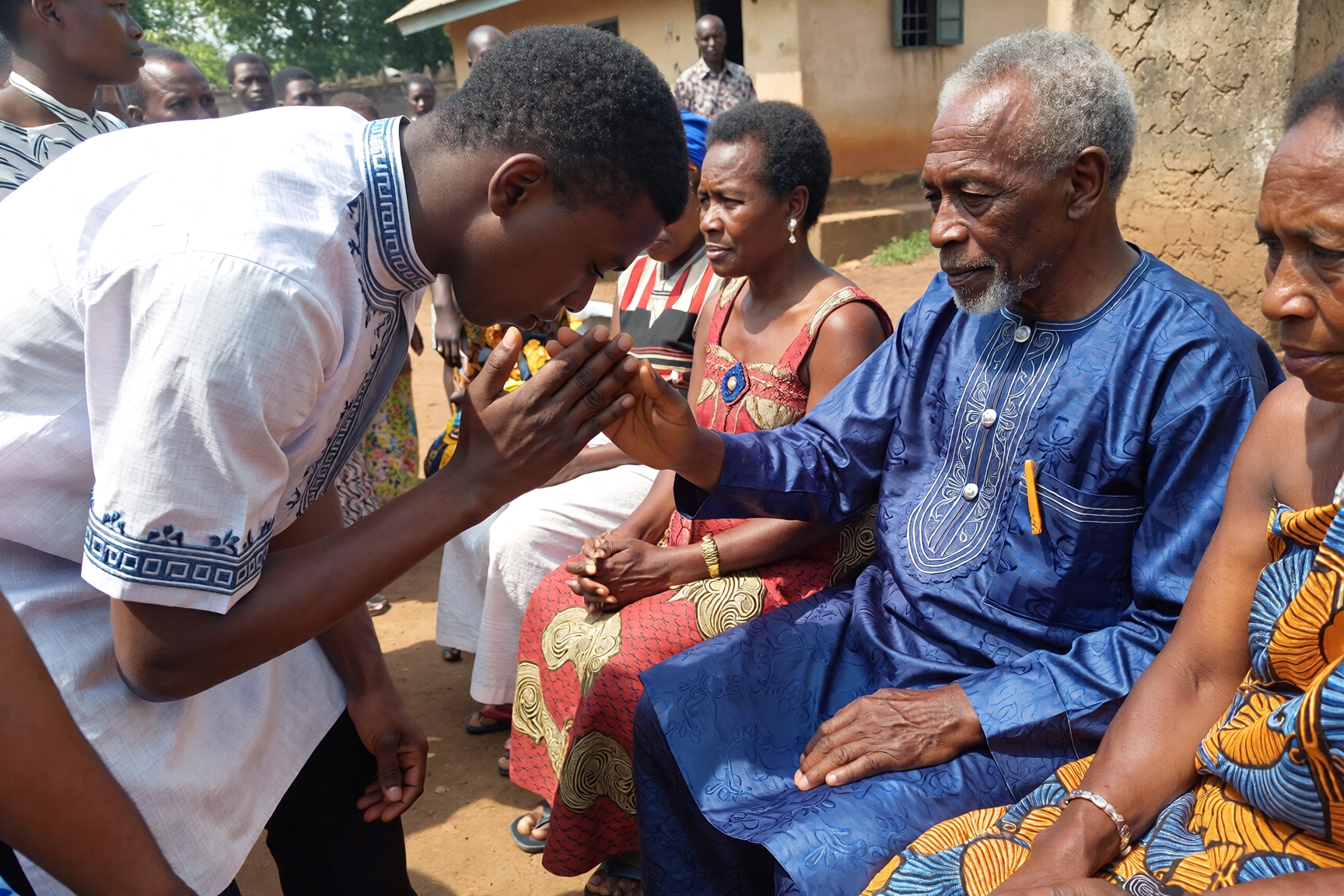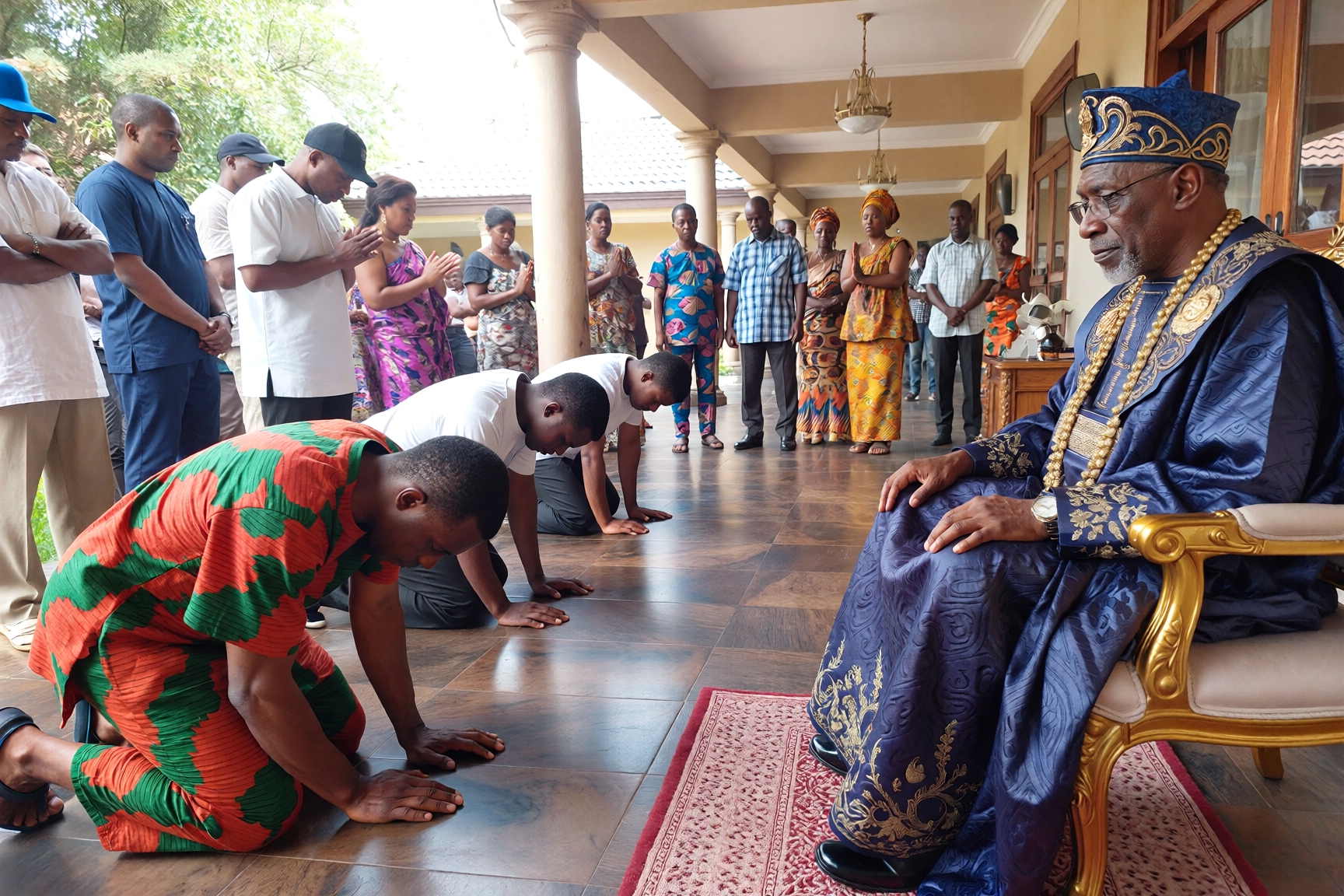
Hello there, friend. I need to share something with you that represents months of research into Nigerian expressions of affection and years of experiencing the beautiful complexity of how love manifests across Nigeria’s diverse cultures. How do Nigerians say “I love you”? The short answer is that Nigerians express love through direct verbal declarations (“I love you” in English, “Mo nife re” in Yoruba, “A hụrụ m gị n’anya” in Igbo, “Ina sonki” in Hausa), culturally specific terms of endearment (like “my heart,” “my world,” “ife m”), traditional symbolic communication (such as Yoruba Àrokò), actions that demonstrate commitment (financial support, family introduction, public acknowledgment), and context-dependent expressions that vary dramatically by ethnic group, region, religious background, and generation.
The truth about Nigerian love expressions is rather fascinating. We don’t have just one way of saying “I love you.” We have dozens, shaped by over 525 indigenous languages according to the National Institute for Cultural Orientation, regional customs, religious influences, and the spectacular collision between traditional restraint and contemporary openness.
I remember watching my Igbo friend Chidi try to express his feelings to his girlfriend during university. He sent her airtime worth ₦5,000, ordered food to her hostel, and publicly defended her honour when someone spoke badly of her, yet he struggled for weeks to actually say “A hụrụ m gị n’anya” directly to her face. That’s Nigeria for you! Actions often speak louder than words, though the words themselves carry tremendous weight when finally spoken.
Understanding the Nigerian word for love across ethnic groups
Let’s start with the basics, because Nigeria’s linguistic diversity makes this rather more complicated than you might expect.
In Yoruba (spoken by roughly 45 million people predominantly in southwestern Nigeria), love is “ìfẹ́” (ee-FEH). When you want to say “I love you,” you say “Mo nife re” (moh-nee-FEH-reh) for singular or “Mo nife nyin” for plural. But here’s where it gets interesting. The Yoruba language has multiple words for different types of love: “ìfẹ́” for romantic love, “ìfẹ́yintọ́” for genuine deep love, and “ìfé” when referring to the actual city of Ife!
The Igbo language (spoken by approximately 30 million people in southeastern Nigeria) expresses love as “ịhụnanya” (ih-hoo-na-NYA). The full phrase “A hụrụ m gị n’anya” literally translates to “I see you in my eye,” which is rather poetic when you think about it. You’re telling someone they’re constantly in your sight, in your vision, in your awareness.
That’s beautiful.
In Hausa (spoken by over 80 million people across northern Nigeria and West Africa), love is “soyayya” (so-YAI-ya) or “ƙauna” (KOW-na). To say “I love you,” you say “Ina sonki” (ee-na SON-kee) to a woman or “Ina sonka” (ee-na SON-ka) to a man. The Hausa approach to romantic expression tends to be more restrained, particularly in traditional contexts where physical contact before marriage is discouraged, as documented in Guardian Nigeria’s coverage of traditional marriage rites.
But wait, there’s more! Nigerian Pidgin English, that glorious creole language recognised by Nigeria’s Federal Ministry of Information and National Orientation as a cultural bridge, offers its own expressions: “I dey feel you die,” “You dey always for my mind,” or simply “I like you well well.” These phrases might sound casual to outsiders, but they carry genuine weight in Nigerian contexts.
Why do Nigerians say “eh, eh”?
This question deserves its own section because “eh, eh” is one of those quintessentially Nigerian expressions that means absolutely everything and nothing depending on context, tone, and situation!
“Eh, eh” is not specifically a love expression, but it’s a multipurpose exclamation used throughout Nigerian conversations. In romantic contexts, “eh, eh” can express surprise, agreement, skepticism, or knowing acknowledgment. When your friend tells you they’re dating someone new and you respond “Eh, eh!”, you’re communicating volumes: surprise, interest, a request for more information, and possibly gentle teasing, all in two syllables.
I’ve heard “eh, eh” used in dozens of romantic scenarios. When a woman mentions an ex-boyfriend who’s suddenly reappearing: “Eh, eh! This one wey e come back now?” (raising eyebrows). When someone announces their engagement: “Eh, eh! So e don reach like that?” (expressing happy surprise). When you notice your friend spending money on someone: “Eh, eh, love don catch you?” (gentle mockery mixed with acknowledgment).
The beauty of “eh, eh” lies in its flexibility. It’s confirmation (“Eh, eh, I thought so”), surprise (“Eh, eh, what happened?”), warning (“Eh, eh, be careful o”), or simple conversational filler that shows you’re listening. In Nigerian communication, documented by the National Institute for Cultural Orientation as part of the country’s rich cultural heritage, these linguistic shortcuts convey complex social information efficiently.
But in love contexts specifically, “eh, eh” often signals that something relationship-related is being discussed, that boundaries might be shifting, or that news worth noting has emerged.
How do I call my love in Nigeria?
Right, this is where Nigerian romance gets properly interesting!
The terms of endearment used across Nigeria vary dramatically by ethnic group, age, religious background, and level of relationship formality. Let me walk you through the most common approaches.
In English-based contexts (remember, English is Nigeria’s official language), Nigerians use both universal and locally flavoured terms:
“Baby” and “babe” are universal, used across all demographics. “My love” is straightforward and widely understood. “Dear” sounds slightly formal and is more common among older couples or in written communication. “Sweetheart” appears occasionally, though less frequently than in British or American contexts.
Now the Nigerian-specific terms get more colourful: “My heart” (used interchangeably with “my world,” “my life,” “my everything”). “Sugar” or “honey” work, though they sound slightly dated to younger Nigerians. “Darling” remains popular, particularly among couples in their 30s and above.
In Yoruba contexts, couples use:
- “Ololufe mi” (my lover, my love)
- “Ife mi” (my love, shortened form)
- “Okan mi” (my heart)
- “Aya mi” (my wife) or “Oko mi” (my husband), even before marriage!
- “Aduke” (one pampered/cherished)
Traditional Yoruba culture, as explored in Guardian Nigeria’s coverage of Yoruba communication traditions, historically used symbolic items rather than words to express affection. A chewing stick sent to someone signified “I love you,” whilst an orange communicated delight and affection!
In Igbo contexts, you’ll hear:
- “Ife m” (my love)
- “Obi m” (my heart)
- “Nwa m” (my child, used affectionately even for partners)
- “Ezigbo m” (my good one)
- “Dim” (my husband) or “Nkem” (my own), possessive terms showing ownership
Among Hausa speakers, terms tend to be more reserved due to Islamic cultural influences, though couples in private use:
- “Masoyiya” (loved one)
- “Ƙaunatacciya” (beloved)
- “Matar gida” (wife of the house)
Nigerian Pidgin offers its own delightful variations: “My own,” “My person,” “My paddy” (though this sounds more friendly than romantic), and “My spec” (meaning someone who fits your preferences perfectly).
I remember overhearing a couple at a Lagos restaurant. The man kept calling his girlfriend “Alhaja,” which is actually a title for women who’ve completed the Hajj pilgrimage to Mecca! When I looked confused, my friend explained: “He’s saying she’s precious and worthy of honour.” That’s Nigerian innovation for you. We’ll turn anything into a term of endearment if it conveys the right feeling.
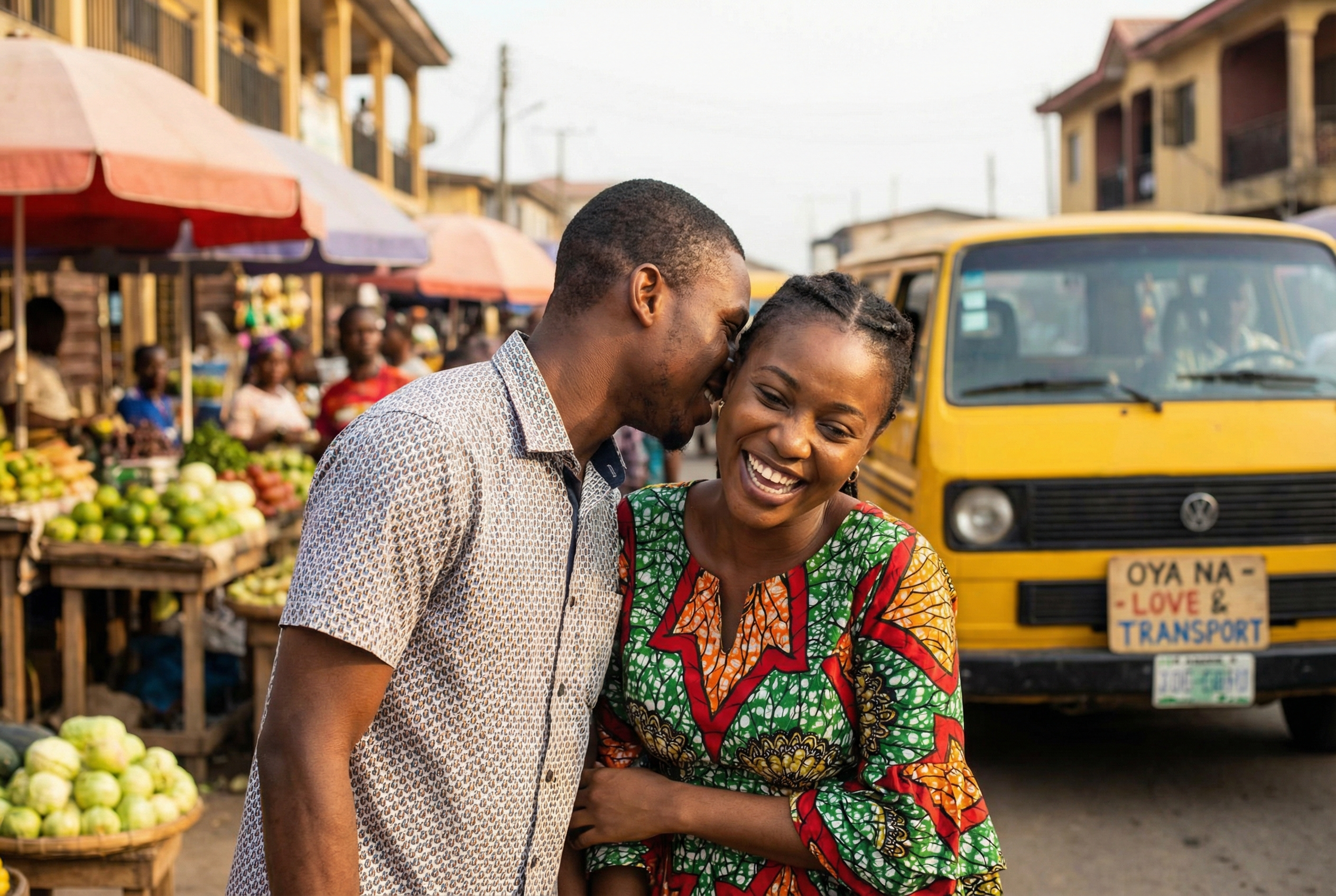
What does Oya Na mean in romantic contexts?
“Oya na” is one of those beautiful Nigerian Pidgin phrases that demonstrates our linguistic efficiency!
Literally translated, “oya” means “come on,” “let’s go,” or “hurry up,” whilst “na” is an emphasising particle. Together, “oya na” creates a gentle pushing phrase that means something like “come on then,” “let’s do it,” “what are you waiting for?” or “go ahead.”
In romantic contexts, “oya na” serves several specific purposes.
When someone’s been hinting at their feelings forever: “You’ve been forming for me since last year. Oya na, talk true, you like me abi?” (You’ve been pretending not to be interested. Come on then, speak honestly, you like me, right?). The phrase pushes someone towards confession or clarity.
When making plans together: “Should we go to the cinema?” “Oya na, make we go.” (Let’s go then). It shows agreement and enthusiasm.
When someone’s hesitating about commitment: “I don’t know if I’m ready…” “Oya na, wetin you dey wait for? I dey here, you dey here, we like each other.” (Come on then, what are you waiting for? I’m here, you’re here, we like each other). This usage nudges someone towards action.
During proposal scenarios: After a man has made his case for marriage, the woman’s family might say “Oya na, we have heard you. Come back next week for our answer.” It acknowledges the request whilst setting boundaries.
The phrase can also carry gentle mockery. If your friend keeps claiming they’re not interested in someone but obviously is: “Eh, eh, so you’re saying you don’t like him? Oya na, if you say so” (delivered with heavy skepticism). This “oya na” communicates “yeah, right, we don’t believe you.”
Interestingly, “oya na” reflects the Nigerian communication style documented across multiple ethnic groups: direct yet playful, pushing towards clarity whilst maintaining social warmth. We don’t like ambiguity in Nigerian relationships. If there’s something to say, we’d rather you said it, and “oya na” is the linguistic tool for encouraging that honesty.
Traditional expressions of love in Nigerian cultures
Now we need to talk about how love was expressed traditionally, because modern Nigerian romance sits on foundations built by centuries of cultural practice.
In traditional Yoruba culture, love expressions were often indirect and symbolic. The Àrokò system (a non-verbal communication method using objects) allowed people to convey messages without speaking directly. As mentioned earlier, a chewing stick meant “I love you,” whilst an orange signified pleasure and affection. This system recognised that some feelings were too powerful or too delicate for direct speech.
Marriage negotiations themselves served as love expressions. A man demonstrating persistence in visiting a woman’s family, bringing gifts repeatedly, and patiently negotiating bride price all communicated his seriousness and affection. Love wasn’t declared in private whispers. It was demonstrated through public actions witnessed by entire communities.
Among the Igbo, love expressions traditionally emphasised family involvement and practical commitment. A man proved his love not through words but through “Ime ego” (the bride price negotiation process), where his ability and willingness to meet the bride’s family requirements demonstrated his worthiness. The Guardian Nigeria reports on Igbo traditional marriage customs that emphasise how the entire extended family (Umunna) participated in validating relationships, meaning love had to be demonstrated to dozens of people, not just the intended partner.
In Hausa-Fulani contexts, particularly in northern Nigeria, Islamic cultural norms shaped love expressions towards extreme modesty. Physical contact before marriage was prohibited, as documented in historical accounts. Love was expressed through formal family channels, with young people’s interactions heavily mediated by parents and relatives. Poetry and praise singing served as socially acceptable outlets for romantic expression.
Across Nigerian cultures, gift-giving served as a primary love language. Kolanuts (highly symbolic in Igbo and Yoruba cultures), money, fabric, livestock, and food items all carried messages about commitment and affection. The value and appropriateness of gifts demonstrated how seriously someone took the relationship.
What strikes me most about traditional Nigerian love expressions is their public nature. Western notions of private romantic love between two individuals would have seemed strange. Love was a community affair, requiring validation and support from extended families, requiring public demonstrations of commitment, requiring witnesses to every significant step.
Modern Nigerian expressions of affection and how they’ve changed
Nigerian romance in 2025 looks dramatically different from even 20 years ago, though traditional influences remain powerful.
Social media has revolutionised how young Nigerians express love. Instagram posts declaring “My forever person,” Twitter threads detailing relationship milestones, and TikTok couple content demonstrate love publicly in ways that would have shocked previous generations. Yet these modern platforms serve similar functions to traditional community validation, just with algorithms instead of village elders.
Direct verbal expressions have become more common, particularly among educated urban Nigerians. Young couples now say “I love you” early and often, influenced by Western media, Nollywood romance films, and exposure to global relationship norms. This represents a significant shift from the restraint favoured by previous generations.
I’ve noticed generational splits in expression styles. My parents’ generation (born 1960s-1970s) rarely said “I love you” directly, even decades into marriage. My generation (millennials) says it regularly. Gen Z Nigerians treat “I love you” as casual as “good morning,” sometimes causing older relatives to worry about reduced seriousness.
Financial support remains the dominant Nigerian love language across all demographics and generations. Whether it’s sending airtime worth ₦500, paying for a date costing ₦50,000, or supporting a partner’s business with ₦5 million, money demonstrates commitment in ways words sometimes cannot. This isn’t necessarily about materialism. It’s about demonstrating ability to provide, protect, and support, values deeply rooted in Nigerian social structures.
Text messaging has created entire new vocabularies for expressing affection. “Good morning my love” messages (GMT), “checking on you” calls, voice notes expressing affection, and constant WhatsApp communication maintain connection in ways impossible for previous generations. Lagos traffic might keep couples physically apart for hours, but technology bridges distances.
Interestingly, Nigerian men still struggle with verbal expressions more than women, maintaining traditional masculinity norms that view excessive romantic talk as weak or feminine. Women increasingly expect and request verbal affirmation, creating tensions between traditional and modern expectations.
Seven steps to expressing love in Nigerian cultural contexts
Let me give you practical guidance for expressing affection in Nigerian settings, whether you’re Nigerian learning to navigate your own culture or an outsider trying to understand Nigerian romance:
1. Start with actions before words: Nigerians trust demonstrated commitment over verbal declarations. Before saying “I love you,” show it through consistency, reliability, financial support (appropriate to your means), time investment, and practical help. Pay for things. Show up when promised. Help solve problems. Meet needs. These actions create the foundation for verbal expressions to land meaningfully rather than sounding hollow.
2. Respect family involvement and seek appropriate approvals: Nigerian relationships aren’t purely between two individuals. Inform your own family about serious relationships early. Seek opportunities to meet your partner’s family formally, bringing appropriate gifts (kolanuts for Igbo families, money for most contexts, soft drinks and other refreshments). Ask for parental blessings before proposals. Understand that family approval often matters more than individual feelings, particularly in traditional contexts. Fighting family disapproval rarely succeeds and may damage the relationship permanently.
3. Learn and use appropriate terms in your partner’s language: Even basic efforts to express affection in someone’s indigenous language carry tremendous weight. Learn “Mo nife re” (Yoruba), “A hụrụ m gị n’anya” (Igbo), or “Ina sonki” (Hausa) and use them sincerely. Ask your partner to teach you romantic phrases and terms of endearment in their language. This demonstrates respect for their culture and willingness to meet them in their linguistic space.
4. Understand that public displays of affection carry different meanings by region: In southern Nigeria (particularly Lagos, Port Harcourt, and other cosmopolitan centres), holding hands, hugging, and kissing in public have become somewhat normalised among young people, though still more reserved than Western standards. In northern Nigeria, particularly in more conservative Hausa-Fulani communities, any public physical contact between unmarried couples remains taboo and potentially dangerous. Calibrate your behaviour to local norms. When in doubt, err on the side of restraint and ask your partner what’s appropriate for their community.
5. Give thoughtful gifts at appropriate occasions: Nigerian romance operates on a gift economy. Birthdays absolutely require gifts (budget minimum ₦10,000 for casual dating, ₦50,000 plus for serious relationships). Valentine’s Day demands celebration (expect to spend ₦20,000 to ₦100,000 depending on relationship stage). Christmas and New Year celebrations require gifts. Monthly “just because” gifts demonstrate ongoing commitment. Fabric (especially lace or ankara), jewellery, perfume, bags, shoes, and money remain safe choices. Ask friends or family members for guidance on appropriate gifts for specific contexts.
6. Navigate the “talking stage” with patience and clarity: Nigerian relationships often include an extended “talking stage” before official commitment, where both parties assess compatibility, family backgrounds, financial stability, and long-term potential. During this period, express interest through consistent communication, thoughtful questions about life goals and values, appropriate (not excessive) financial gestures, and patient demonstration of character. Rush this stage and you’ll be seen as unserious or suspicious. Take too long and you’ll be seen as a time waster. The balance requires reading social cues carefully.
7. Know when and how to make formal declarations: When you’re ready for official commitment, follow appropriate cultural protocols. Ask “Will you be my girlfriend/boyfriend?” explicitly rather than assuming relationship status after dating. Before marriage proposals, speak with her father or family head privately first (bringing a trusted older male relative), present your intentions formally, negotiate bride price respectfully (be prepared with initial payment of ₦50,000 to ₦200,000 depending on family expectations), and only after receiving family approval proceed with the romantic proposal. Proposals themselves increasingly blend Nigerian and Western elements, often featuring surprise elements, social media documentation, and romantic settings whilst maintaining traditional respect for family authority.
Regional variations in expressing love across Nigeria
Let me show you how love expressions vary across Nigeria’s major cultural zones:
| Region/Group | Primary Language(s) | Direct Translation of “I Love You” | Common Terms of Endearment | Cultural Love Expressions | Family Involvement Level |
|---|---|---|---|---|---|
| Yoruba (Southwest) | Yoruba, English | “Mo nife re” (singular) “Mo nife nyin” (plural) | Ololufe mi (my lover), Ife mi (my love), Okan mi (my heart) | Gift-giving, Àrokò symbolic communication, financial support, elaborate praise poetry | High. Parents approve relationships, extensive negotiation processes |
| Igbo (Southeast) | Igbo, English | “A hụrụ m gị n’anya” (I see you in my eye) | Ife m (my love), Obi m (my heart), Nkem (my own) | Bride price payments, public acknowledgment, business partnerships, constant financial provision | Very high. Extended family (Umunna) participates in all decisions |
| Hausa-Fulani (North) | Hausa, English | “Ina sonki” (to woman) “Ina sonka” (to man) | Masoyiya (loved one), Ƙaunatacciya (beloved) | Formal family channels, poetry, restricted physical contact, Islamic modesty norms | Extremely high. Arranged marriages still common, parents control process entirely |
| Nigerian Pidgin (Pan-ethnic) | Pidgin English | “I dey feel you die” “I like you well well” | My own, My person, My heart, Baby | Public social media posts, constant texting, airtime gifts, food orders, defending honour | Varies by underlying ethnic culture |
| Urban cosmopolitan (Lagos, Abuja, Port Harcourt) | English, mixed languages | “I love you” (English) | Baby, Babe, My love, Darling | Western-influenced dating, direct verbal expressions, Valentine’s celebrations, couple content | Moderate to low, increasing independence from family approval |
This table demonstrates how Nigeria’s linguistic and cultural diversity creates multiple valid approaches to expressing love. What works brilliantly in Lagos might fail completely in Kano. What Yoruba families expect differs from Igbo expectations. Understanding these variations prevents cultural miscommunication.
The data shows that regardless of specific expressions, family involvement remains consistently high across Nigerian cultures, though varying in degree. This contrasts sharply with Western romantic norms emphasising individual autonomy and privacy.
How do Nigerians say “I love you” in real relationships?
Right, let’s get properly specific about how “I love you” actually functions in contemporary Nigerian relationships, because theory and practice often diverge.
In the earliest stages of romantic interest (the “talking stage”), Nigerians rarely say “I love you” directly. Instead, you hear: “I like you,” “You dey my mind,” “I dey feel you,” or “I rate you.” These softer expressions test waters without full commitment. Jumping straight to “I love you” too early marks you as unserious, desperate, or potentially manipulative.
Once relationships become official (boyfriend/girlfriend status established explicitly), “I love you” typically appears within weeks to a few months. Nigerian couples in the 2020s say it far more frequently than previous generations, influenced by Nollywood romance plots, Western media consumption, and social media relationship culture.
Men often struggle more with verbal expressions than women, maintaining traditional masculinity codes that view excessive romantic talk as weak. I’ve heard countless Nigerian women complain: “He does everything for me but won’t say he loves me!” This creates a fascinating tension between demonstrated love (actions) and declared love (words), with women increasingly demanding both whilst men resist verbal vulnerability.
Text messaging enables expressions that feel too vulnerable face-to-face. Many Nigerian men find “I love you” easier to type than to say aloud, leading to situations where couples exchange loving messages constantly but rarely speak the words directly. This isn’t dishonesty. It’s cultural negotiation between traditional restraint and modern expectation.
Financial expressions remain paramount. A Nigerian man demonstrating love might:
- Send ₦2,000 to ₦10,000 airtime weekly (showing he thinks about her)
- Pay for hair appointments (₦15,000 to ₦50,000 depending on style)
- Order food deliveries when she’s busy (₦5,000 to ₦15,000 per order)
- Cover transportation costs (₦3,000 to ₦20,000 depending on distance)
- Give money for “small something” regularly (₦5,000 to ₦50,000 monthly)
- Take her shopping for birthdays or holidays (₦50,000 to ₦500,000 depending on means)
These financial gestures say “I love you” louder than words ever could. They demonstrate ability to provide, willingness to sacrifice, and practical commitment to her wellbeing. Women reciprocate through cooking, domestic support, emotional labour, and increasingly through financial contributions as well.
Public acknowledgment serves as another critical expression. Posting your partner on social media with loving captions announces commitment to your social circles. Taking them to family gatherings introduces them into your permanent social world. Defending their reputation when others criticise demonstrates loyalty. These public actions validate relationships in ways private declarations cannot.
The phrase “I love you” gains tremendous power when spoken at significant moments: during arguments, after demonstrations of loyalty, when making major commitments, or when facing challenges together. A casual “I love you” during breakfast carries less weight than one spoken after your partner stood by you during family drama.
Interestingly, married Nigerian couples often say “I love you” less frequently than dating couples. Once marriage solidifies commitment, daily expressions of affection become less urgent. Love becomes demonstrated through decades of partnership, child-rearing, financial building, and surviving crises together. Some elderly Nigerian couples married 40 plus years rarely say “I love you” at all, yet their devotion manifests through constant presence and mutual support.
Contemporary challenges in expressing love across Nigerian cultures
Nigerian romance in 2025 faces unique tensions between tradition and modernity, creating genuine challenges for couples navigating these waters.
The generational divide creates constant friction. Young Nigerians influenced by global media expect frequent verbal affirmation, constant communication, and Western-style romantic gestures. Older generations view these expectations as unnecessary, even suspicious. When your mother asks why your boyfriend keeps saying he loves you (“Is there something wrong with him?”), you’re experiencing the collision between traditional restraint and contemporary openness.
Economic pressures complicate love expressions significantly. Nigerian inflation hit 34.60% in recent months, making financial demonstrations of love increasingly difficult. A young man earning ₦150,000 monthly faces tremendous pressure to spend ₦50,000 to ₦100,000 on Valentine’s Day celebrations whilst simultaneously managing rent, transportation, and personal expenses. Women increasingly earn their own money and question whether they should accept financial control as love’s primary language.
Religious differences create expression challenges. Muslim and Christian approaches to pre-marital physical contact differ substantially. Conservative religious families restrict how couples can interact, when they can meet privately, and what behaviours are acceptable, whilst contemporary media normalises far more liberal standards. Couples must negotiate these tensions constantly.
The expectations gap between what media portrays and what real relationships offer causes disappointment. Nollywood films and Western romantic content create standards few Nigerian men can meet financially or emotionally. Women compare their relationships to fictional standards, whilst men feel unfairly judged against unrealistic benchmarks.
Distance relationships (increasingly common as Nigerians migrate for education and opportunities) challenge traditional expression methods. How do you demonstrate love practically when separated by thousands of kilometres? How do families validate relationships they cannot observe? How do couples maintain connection across time zones, poor internet, and financial constraints?
The “talking stage” has extended dangerously long for many Nigerian relationships. Some couples spend years in undefined relationships, with neither party willing to commit formally whilst maintaining exclusive romantic and sexual connections. This creates emotional limbo that traditional Nigerian culture never anticipated and modern norms struggle to address satisfactorily.
Social media has created performance pressures around love expressions. Couples feel compelled to post relationship content, document gestures publicly, and maintain curated images of perfect romance for online audiences. This performative aspect sometimes displaces genuine connection, with couples spending more energy managing their relationship’s public image than nurturing private intimacy.
Regional and ethnic traditions you should know about
Before we wrap up this comprehensive exploration, I need to share some specific cultural contexts that will help you understand Nigerian love expressions more completely.
Among the Efik and Ibibio people of Akwa Ibom and Cross River states, love expressions incorporate unique cultural elements like nsibidi symbols (an ancient writing system) and elaborate masquerade traditions. Romance here often intersects with secret societies and traditional governance structures in ways outsiders find bewildering but which carry profound local meaning.
The Tiv people of Benue State express love through farming partnerships and land negotiations. Offering to clear farmland together or discussing crop-sharing arrangements can serve as serious courtship gestures, demonstrating practical commitment to building shared futures.
In Delta and Rivers states, among various ethnic groups including Ijaw, Urhobo, Isoko, and Itsekiri, love expressions often incorporate water imagery, fishing metaphors, and references to riverine life. Traditional proverbs about fish, canoes, and tides frame romantic advice, whilst gifts of fish (particularly large catches) traditionally demonstrated a man’s prowess and ability to provide.
The Fulani (found across northern Nigeria) maintain distinctive romantic traditions including elaborate poetry, intricate braiding patterns that signal relationship status, and the remarkable Sharo tradition (where young men demonstrate bravery through controlled violence to prove worthiness to potential brides’ families).
Among the Edo people (Benin Kingdom heritage), love expressions remain heavily influenced by traditional royal protocols and elaborate cultural hierarchies. Expressions that work in casual Lagos contexts might be seen as insufficiently respectful in Edo contexts, where traditional titles, greeting protocols, and hierarchical respect remain essential to all social interactions, including romantic ones.
This article has explored how Nigeria’s remarkable diversity creates dozens of valid approaches to expressing love, each shaped by linguistic heritage, religious norms, economic realities, and evolving generational values. If you’ve found this exploration helpful, I encourage you to learn more about Nigerian culture and communication traditions.
I recently wrote about Nigerian marriage culture and traditions, which examines how romantic relationships transition into formal marriages across different ethnic groups. Understanding marriage customs illuminates why certain love expressions carry more weight than others, particularly those that demonstrate family readiness and financial stability. Additionally, my exploration of Nigerian society’s unique characteristics provides broader context for how relationships function within Nigeria’s complex social structures, helping explain why individual romantic choices remain deeply connected to communal values and family expectations.
Key takeaways about expressing love in Nigerian cultures
- Nigerians express love through multiple channels simultaneously (verbal declarations, financial support, family introduction, public acknowledgment, and consistent actions) rather than relying primarily on words alone, with different ethnic groups emphasising different channels based on cultural values.
- Traditional love expressions remain influential even among modern urban Nigerians, creating fascinating blends where couples might text “I love you” constantly whilst following elaborate traditional marriage negotiation processes involving extended families, bride price payments, and community validation.
- Understanding your partner’s specific ethnic, religious, and family context is essential for successful love expression in Nigeria, as what works brilliantly for a Lagos-raised Yoruba Christian woman might fail completely with an Igbo Muslim man from Kano or an Hausa woman from Sokoto.
FAQ: How do Nigerians say “I love you”?
How do Nigerians say “I love you” in different languages?
In Yoruba, “I love you” is “Mo nife re” (pronounced moh-nee-FEH-reh) for addressing one person or “Mo nife nyin” for groups. In Igbo, say “A hụrụ m gị n’anya” (ah-HOO-room-gee-NA-nya), which literally means “I see you in my eye,” a beautifully poetic expression showing the person is constantly in your vision and awareness.
What is the most romantic thing to say in Nigerian Pidgin?
“I dey feel you die” is perhaps the most passionate Nigerian Pidgin love expression, literally meaning “I’m feeling you to death,” communicating overwhelming affection. “You dey always for my mind” conveys constant thought about someone, whilst “I like you well well” emphasises the depth of affection through repetition, a common Pidgin intensifier that makes feelings clear without formal language.
Do Nigerian men actually say “I love you” often?
Nigerian men express love more through actions than words, maintaining traditional masculinity norms that view excessive verbal romance as weak or feminine, though this is slowly changing among younger urban generations. Most Nigerian men will demonstrate love through financial support, practical help, time investment, and defending their partner’s honour long before (and more frequently than) saying “I love you” directly, believing actions prove sincerity where words might be empty.
What does “my heart” mean when a Nigerian calls you that?
“My heart” (or in local languages: “Okan mi” in Yoruba, “Obi m” in Igbo) is a serious term of endearment indicating deep affection and central importance in someone’s life, essentially saying you’re vital to their emotional existence. It ranks significantly higher than casual terms like “baby” or “dear,” positioning you as someone they treasure deeply and suggesting long-term commitment rather than casual dating.
How do you know if a Nigerian loves you based on their actions?
A Nigerian who loves you will introduce you to their family (this is absolutely critical and demonstrates serious intentions), consistently provide financial support appropriate to their means (from small airtime gifts to major expenses), publicly acknowledge your relationship (posting you on social media, bringing you to events, defending your reputation), and invest significant time despite Nigeria’s challenging logistics. Additionally, they’ll involve you in major life decisions, share future plans that include you, and demonstrate reliability through keeping promises consistently over extended periods.
Is it appropriate to say “I love you” early in Nigerian relationships?
Saying “I love you” too early (within the first few weeks of dating) often makes Nigerians question your sincerity or seriousness, as genuine love is expected to develop through observation and shared experiences rather than instant recognition. The culturally safer approach involves expressing interest through phrases like “I like you,” “I rate you,” or “You dey my mind” during early stages, saving “I love you” for when both parties have established genuine commitment, ideally after meeting families and discussing future plans seriously.
What gifts express love in Nigerian culture?
Money remains the most universally appreciated love gift across all Nigerian cultures, either as direct cash gifts (₦10,000 to ₦500,000 plus depending on occasion and means) or practical financial support like paying for expenses, shopping trips, or solving financial problems. Other significant gifts include fabric (particularly lace, ankara, or expensive traditional materials costing ₦15,000 to ₦200,000 per set), jewellery (gold, particularly) worth ₦50,000 to several million Naira, perfume and beauty products, electronic devices like phones and laptops, and taking care of family obligations (contributing to parents’ needs demonstrates serious commitment).
Why do some Nigerians never say “I love you” even in long marriages?
Older generation Nigerians (particularly those in marriages arranged or initiated through traditional processes) often view verbal declarations of love as unnecessary once commitment is demonstrated through marriage, years of partnership, children, and shared life building. Their generation expressed love through decades of loyalty, financial provision, childrearing support, standing together through crises, and maintaining family honour, considering these demonstrations far more meaningful than repeated verbal affirmations that might sound hollow without corresponding actions.
How do Nigerian families influence love expressions?
Nigerian families wield tremendous influence over romantic relationships, often determining whether relationships continue or end regardless of individual feelings, through mechanisms like approving or withholding bride price negotiations, accepting or rejecting suitors, providing or refusing financial support for marriage ceremonies, and socially validating or isolating couples. Love expressions must therefore account for family expectations (appropriate courtship behaviours, gift-giving to prospective in-laws, respectful protocols, financial readiness demonstrations), meaning Nigerian romance is rarely purely between two individuals but instead involves extensive family participation and approval.
What’s the difference between “talking” and “dating” in Nigerian relationships?
The “talking stage” describes the period when two people have acknowledged mutual interest and maintain exclusive communication but haven’t formally committed to an official relationship, during which both assess compatibility, family backgrounds, financial stability, character, and long-term potential without obligations. “Dating” (officially being boyfriend/girlfriend) requires explicit agreement (“Will you be my girlfriend/boyfriend?”), creates relationship obligations (exclusivity, financial support expectations, family introduction timelines, public acknowledgment), and signals serious intentions toward marriage rather than casual exploration, with social consequences for ending official dating relationships that don’t apply during the talking stage.
How has social media changed how Nigerians express love?
Social media has created new pressure to publicly perform love through Instagram posts, couple content, anniversary celebrations, and relationship milestones that must be documented and shared for validation, sometimes displacing genuine private intimacy with performative public displays. Simultaneously, platforms enable constant connection through WhatsApp messages, video calls, and DMs that maintain relationships across Lagos traffic jams or international distance, whilst also creating anxiety through visible comparison to other couples, temptations through DMs from others, and conflicts over online behaviour (likes, comments, following ex-partners).
What role does religion play in Nigerian love expressions?
Religious beliefs fundamentally shape acceptable love expressions, with Christian teachings influencing southern Nigerian approaches to pre-marital relationships (varying from conservative to liberal depending on denomination), Islamic norms requiring modesty and restricted physical contact in northern contexts, and traditional African religions (where still practiced) emphasising community and ancestral approval over individual romantic fulfillment. Mixed-religion couples face particular challenges navigating conflicting expectations about appropriate courtship behaviours, pre-marital intimacy, marriage ceremonies that satisfy both families, and child-rearing approaches, requiring careful negotiation and compromise that single-religion couples can avoid.