 Follow Us on Google News
 Follow Us on Google Discover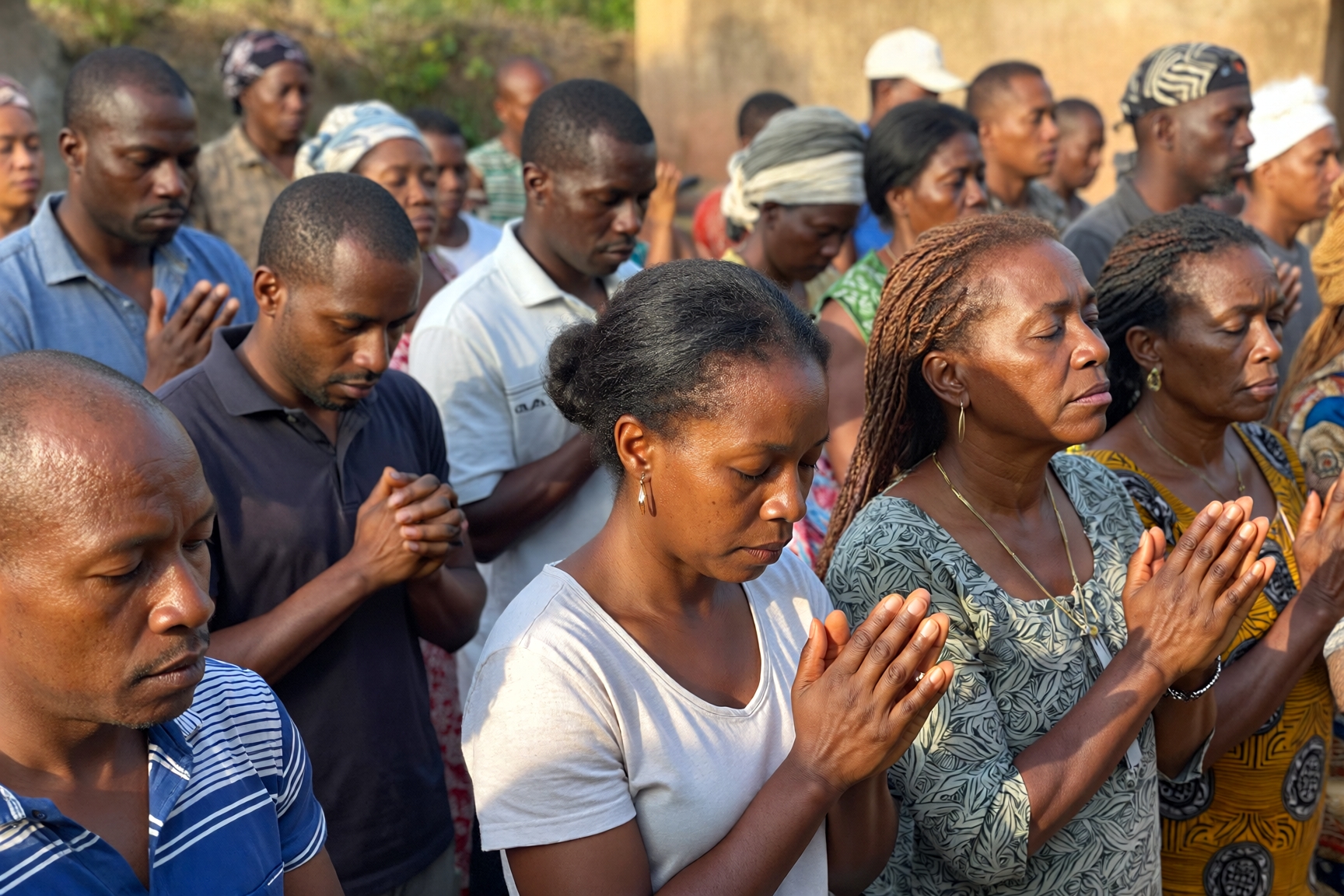
Welcome, and thank you for being here. This is a topic I have spent a long time thinking about, not just as a researcher working through months of data collection and interviews across several Nigerian states, but as someone who has grown up watching worship in Nigeria in all its extraordinary variety. From the thunderous all-night Pentecostal services that shake entire neighbourhoods to the quiet dignity of a Muslim man unrolling his prayer mat at dusk, Nigerian worship is one of the most vivid and deeply felt expressions of faith anywhere on earth.
How do people in Nigeria worship? The short answer is: passionately, communally, and in ways that draw on worship traditions stretching back centuries before colonialism ever arrived. The longer answer is what this article is about.
Nigeria is home to more than 200 million people and well over 250 ethnic groups, according to data from the National Population Commission. That staggering diversity means worship here is not one thing. It is hundreds of things. And yet, for all the variation, certain threads run through Nigerian religious life that are instantly recognisable regardless of where you stand in the country. Communal expression. Physicality. Music. Expectation. The sense that the divine is not distant but immediate, responsive, and very much involved in daily affairs.
I have attended a Yoruba masquerade ceremony in Osun State that lasted from sunset to deep into the night. I have sat in a packed Pentecostal arena in Lagos with 50,000 people worshipping simultaneously. I have watched elderly Hausa men prostrate in prayer so naturally it seemed like breathing. None of these experiences felt alike, but all of them felt unmistakably Nigerian.
What Do Nigerians Worship?
To understand how Nigerians worship, you first need to understand what they worship. And that, as I have come to appreciate after years of research, is considerably more layered than a simple religious census would suggest.
The Ministry of Foreign Affairs notes that approximately 50 per cent of Nigerians identify as Muslim and 50 per cent as Christian, with the north predominantly Muslim and the south predominantly Christian. But those broad figures skip over something important. Many Nigerians who identify with one of the two major world religions simultaneously maintain connections to indigenous spiritual traditions that predate both Christianity and Islam by thousands of years.

What do Nigerians actually worship? At the most formal level, three systems of belief:
- Islam — the monotheistic faith brought to northern Nigeria through trans-Saharan trade routes as early as the 10th century, now deeply embedded in Hausa-Fulani culture, governance, and daily rhythm
- Christianity — introduced primarily through 19th-century missionary activity and now represented by an astonishing variety of denominations, from ancient Catholic missions to world-famous Pentecostal megachurches
- Traditional African religions — including Yoruba Orisha worship, Igbo Odinani, and dozens of other localised systems built around a Supreme Creator, ancestral spirits, and sacred intermediaries
But there is a fourth layer that never shows up cleanly on any survey. Call it spiritual pragmatism. Many Nigerians move fluidly between formal religious identification and traditional practice. A churchgoing woman in Benin City might consult a traditional herbalist before a court case. A northern Muslim trader might carry protective charms alongside his prayer beads. This blending is not hypocrisy. It is, in my view, an entirely rational response to a world where multiple spiritual frameworks have coexisted for centuries and where people take divine assistance wherever they find it.
The Nigerian Human Rights Commission affirms that every Nigerian is constitutionally entitled to freedom of thought, conscience, and religion, including the right to manifest and propagate their belief in worship, teaching, practice, and observance. That legal framework gives some protection to this extraordinary diversity, though as anyone who has spent real time in Nigeria knows, the social realities on the ground can be rather more complicated.
What Are the Top 3 Religions in Nigeria?
Nigeria’s three dominant religious systems each have distinct histories, geographies, and modes of worship that are worth understanding in their own right.
Islam in Nigeria is not a single uniform practice but a spectrum ranging from the Sufi brotherhoods of Kano — the Qadiriyya and Tijaniyya orders, whose devotional singing and communal gatherings can feel quite different from the austere Salafi mosques in other northern cities — to the more reformist Izala movement that emerged in the 1970s and 1980s. What unites all of these is the core structure of Islamic worship: the five daily prayers (Salat), the Friday Jumu’ah congregational prayer, the observance of Ramadan, and the celebration of Eid al-Fitr and Eid al-Adha. In northern Nigeria, these religious calendars organise social life in ways that are quite complete.
Christianity in Nigeria is perhaps the most varied of the three systems. You have the old mainline denominations — Anglican, Catholic, Methodist — whose worship styles reflect their European missionary origins even as Nigerian congregations have thoroughly made them their own. Then there are the African Initiated Churches that broke away during the colonial period, churches like the Celestial Church of Christ and the Cherubim and Seraphim, whose worship incorporates Yoruba musical traditions, white garments, and prophetic practices that feel entirely African in origin. And then there are the Pentecostal megachurches — the Redeemed Christian Church of God, Winners’ Chapel, Christ Embassy — whose prosperity gospel services attract millions weekly and whose television broadcasts reach across the continent.
Traditional African religions, whilst officially underrepresented in census figures, remain culturally significant across all regions. These systems — Yoruba Orisha worship, Igbo Odinani, Benin royal religious practice, Tiv ancestral veneration, and many others — share certain common features: belief in a Supreme Creator who is too exalted for direct worship, a pantheon of intermediary deities or spirits with specific domains, the central importance of ancestors, and the role of specialised priests and priestesses as interpreters and intermediaries.
Worship Practices Across Nigeria’s Three Major Faiths: A Comparison
The table below draws on fieldwork and published sources to outline key worship characteristics across Islam, Christianity, and traditional African religion as practised in Nigeria.
| Aspect | Islam | Christianity | Traditional African Religion |
|---|---|---|---|
| Primary gathering | Mosque (Friday Jumu’ah key) | Church (Sunday central) | Shrine, sacred grove, or family compound |
| Frequency of formal worship | Five daily prayers; Friday congregational | Weekly Sunday service; midweek common | Seasonal festivals; lifecycle rituals; oracle consultations |
| Core worship expressions | Recitation of Quran; prostration (Sujud); call to prayer (Adhan) | Preaching; congregational singing; communion; prayer | Drumming; masquerade; libation; divination; sacrifice |
| Key annual events | Eid al-Fitr; Eid al-Adha; Ramadan | Christmas; Easter; harvest thanksgiving | New Yam Festival; Osun-Osogbo; Argungu; Sango Festival |
| Role of music | Quranic recitation; devotional nasheeds (Sufi orders) | Central — praise and worship leads most services | Indispensable — specific rhythms invoke specific deities |
| Attitude to ancestors | Respected; prayers said for the deceased | Honoured in some denominations; contested in others | Actively venerated; believed to participate in family life |
| Geographic concentration | North (but also southwestern Yoruba Muslims) | South; middle belt | All regions; strongest in Yoruba and Igbo areas |
What strikes me most about this table is how music appears as a central feature in all three systems, just in radically different forms. That is not a coincidence. In Nigeria, sound is itself understood as spiritually charged.
How Do Nigerians Praise God?
This is where things get genuinely joyful to write about.
If you have ever attended a Nigerian Pentecostal praise and worship session — even once — you will never forget it. The worship leader begins gently, sometimes with a slow chorus in Yoruba or Igbo or Pidgin English, the band building beneath. Within twenty minutes the entire congregation is on its feet, some people running in place, others waving handkerchiefs, others simply weeping with what appears to be complete unguarded gratitude. The music is professional, rhythmically complex, and absolutely full-throated. Entire Sunday services can involve ninety minutes of this before preaching even begins.
Nigerian Christians praise God through congregational singing, instrumental music, spontaneous prayer, speaking in tongues, physical movement — dancing, clapping, jumping — and proclamatory declarations (“God is good!” “All the time!” is the classic call-and-response you’ll hear in churches from Port Harcourt to Abuja). Many churches incorporate drama, visual testimony, and live broadcasts into their worship. The sheer production quality of major Nigerian church services would surprise many visitors from Europe or North America.
Nigerian Muslims praise God differently but no less expressively. The five daily Salat prayers are the structural spine of Islamic worship. Each prayer involves a prescribed sequence of standing, bowing, prostrating, and sitting whilst reciting specific Quranic verses and remembrances of God. The Adhan, the call to prayer, rings across northern Nigerian towns five times daily from mosque speakers, organising the communal day in a way that is both practical and profoundly spiritual. During Ramadan, night prayers (Tarawih) lengthen considerably, and the recitation of the Quran through the month becomes a collective act of devotion that entire communities participate in.
The Sufi orders deserve special mention here because their modes of praise are quite distinct from mainstream Sunni practice. The Tijaniyya order, with enormous membership across northern Nigeria, practises the Wird — specific litanies of praise recited at fixed times daily. The devotional gatherings of Sufi brotherhoods can involve chanting, rhythmic breathing, and at times ecstatic states that look, from a distance, not entirely unlike what happens in a Pentecostal church. The human desire to lose the self in collective praise, it turns out, cuts across religious lines rather beautifully.
Traditional practitioners praise through acts that Western frameworks might not immediately recognise as worship but which serve the same function: libation poured at the threshold of a home each morning as acknowledgement of ancestral presence, the invocation of the Orisha Ogun before any journey involving iron or machinery, the New Yam Festival’s first offering before the community eats. Praise in traditional Nigerian religion is woven into the ordinary fabric of life rather than confined to a designated building or scheduled hour.
How Do People in Nigeria Worship?
Let me now address the primary question directly, drawing together what we have explored so far.
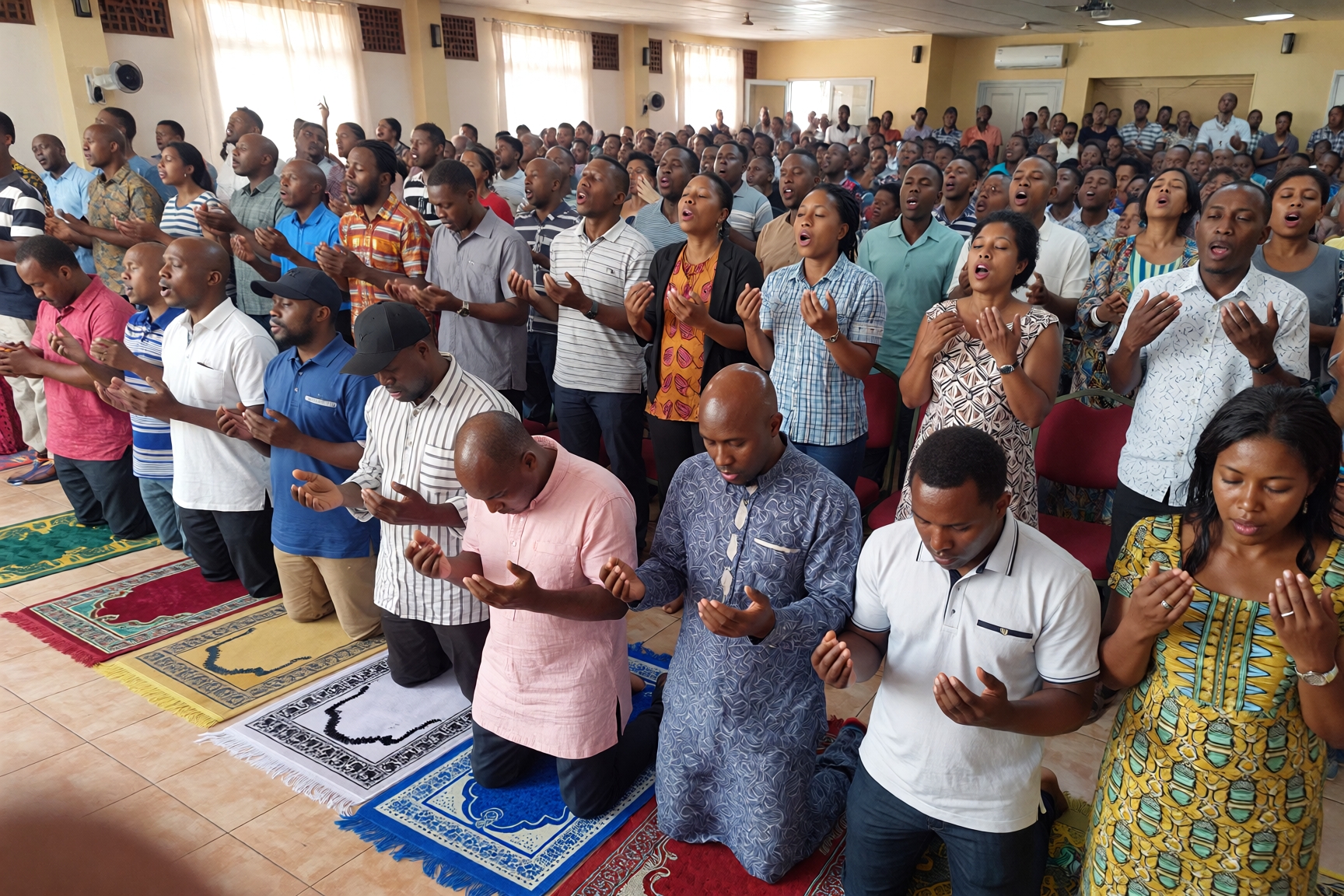
People in Nigeria worship through an astonishing range of practices, but several common threads emerge regardless of the specific faith tradition. Worship in Nigeria is overwhelmingly communal — solitary, private worship exists, but the gathering of people together for collective spiritual expression is treated as essential rather than optional. Worship is physical — the body participates fully, through prostration, dance, drumming, or the deliberate postures of prayer. Worship is expectant — Nigerians bring specific requests and needs to their worship rather than approaching it as an abstract philosophical exercise. And worship is, by any measure, frequent.
The major forms Nigerian worship takes include:
- Congregational church services held primarily on Sundays, often lasting two to four hours, incorporating praise and worship music, extended preaching, prayer, and testimony
- Daily Islamic prayer (Salat) performed five times daily facing Mecca, with Friday congregational prayers at the mosque as the social and spiritual centrepiece of the week
- All-night prayer vigils (popularly called “night vigils” or “vigil services”), particularly common in Pentecostal and charismatic Christian communities, where worshippers gather from midnight to dawn
- Traditional festival worship tied to seasonal or agricultural cycles, honouring ancestors, Orisha, or community deities through drumming, dancing, masquerade, sacrifice, and communal feasting
- Household and personal devotions — morning prayers, Quranic recitation, family altars, libations, and daily acknowledgement of spiritual presence
- Pilgrimage — the Hajj to Mecca for Muslims with the means to attend, and pilgrimages to Jerusalem for Christians, both of which carry enormous social prestige and spiritual weight
As the Voice of Nigeria reports, Nigeria’s complex interaction between Christians, Muslims, and traditional religious practitioners has been relatively peaceful over the decades, with the government actively promoting religious freedom and providing security at worship centres across the country.
What Are the Five Types of Worship?
Scholars and theologians have developed various frameworks for categorising worship. Within the Nigerian context, five types emerge naturally when you spend time observing religious practice across the country’s six geopolitical zones.
Liturgical worship follows a fixed, prescribed order of service. Catholic Mass, Anglican Holy Communion, and the structured Salat of Islamic prayer all fall into this category. In these traditions, the form itself carries the meaning. There is comfort and continuity in a ritual that looks essentially the same whether you are in Ibadan or Maiduguri.
Charismatic or expressive worship is the mode most associated with Nigeria’s Pentecostal explosion. Here, spontaneity, emotional expression, spiritual gifts (speaking in tongues, prophecy, healing), and extended musical worship are central. Many of Nigeria’s most globally recognised churches — Redeemed, Winners’ Chapel, COZA — operate primarily in this mode.
Contemplative or devotional worship is quieter and more personal. Sufi dhikr (the rhythmic repetition of divine names), private Quran recitation, and the meditative practice of Ifa divination consultation all belong here. This type of worship requires stillness and sustained attention in a country not always associated with either.
Communal-civic worship encompasses the great public religious festivals that double as community gatherings: Eid celebrations where thousands fill city parks or palace grounds, Christmas thanksgiving services in megachurches broadcast across the nation, and traditional festivals like the Osun-Osogbo or the Argungu Fishing Festival where spiritual and social functions are inseparable.
Ancestral and household worship is the form perhaps most invisible to outsiders but most widespread in practice. Morning prayers at a family compound, the breaking of kolanut as a sacred act in Igbo culture, the Yoruba practice of greeting specific Orisha before daily activities — these constitute a form of worship woven so tightly into domestic life that many practitioners would not frame it as “worship” at all. But it is.
How to Engage Meaningfully with Nigerian Worship Practices: A Practical Guide
Whether you are a researcher, a traveller, or simply someone interested in understanding Nigerian society more deeply, the following steps will help you engage respectfully and genuinely with worship practices across Nigeria’s religious landscape.
- Attend an open service or festival — most Nigerian churches, mosques (at appropriate times), and traditional festivals welcome respectful visitors. Arrive early, dress appropriately, and observe before participating.
- Ask about the significance of what you see — Nigerians are extraordinarily willing to explain their traditions to genuinely curious people. The act of asking itself signals respect.
- Understand the musical dimension — Nigerian worship music is not background accompaniment. It is central theology expressed in sound. Listening carefully to lyrics reveals doctrine, history, and communal aspiration.
- Distinguish between public and private worship — some traditional rituals are not intended for outside observers. Asking first prevents awkwardness and shows cultural literacy.
- Follow the lead of your host — in a church, if people stand, stand. In a mosque, if you are a non-Muslim visitor, you will typically remain at the back or side and observe rather than participate in the prayer itself. Respect the spatial logic of each worship environment.
- Learn a few phrases of greeting appropriate to the context — “Ẹ káàárọ̀” (good morning in Yoruba), “Ina kwana” (good morning in Hausa), or a simple “God bless you” in any church setting opens doors very quickly.
- Be patient with time — Nigerian religious services rarely run to a tightly pre-announced schedule. The Spirit, as Pentecostal worshippers say, moves in its own time. Build several hours into any visit to a Nigerian church service.
One practical insight I would share from personal experience: the best way to understand Nigerian worship is not to observe it from a distance but to be genuinely welcomed into it. That welcome, in my experience, is almost always offered freely and warmly to those who approach with evident sincerity.
As a Guardian Nigeria opinion piece on religious tolerance rightly observes, you can walk along any street in Nigeria and find churches and mosques side by side, their music and calls to prayer sometimes overlapping without anyone treating this as remarkable. That coexistence, imperfect as it sometimes is, represents something genuinely worth understanding.
Guardian Nigeria’s editorial commentary has also explored how religious institutions have shaped Nigeria’s growth trajectory, noting that no other country may have as high a density of both churches and mosques as Nigeria, a fact that says something important about the centrality of worship to Nigerian social life.
Nigerian Worship in Conclusion: Faith That Moves, Sings, and Endures
If I had to describe Nigerian worship to someone who had never encountered it in a single sentence, it might be this: worship here is not something Nigerians do occasionally; it is something Nigerians are.
The faith expressed in Nigerian homes, churches, mosques, sacred groves, and festival grounds is not a compartmentalised weekend activity. It is integrated into the rhythms of daily life in ways that most other countries, including ostensibly very religious ones, do not quite match. The second verse of Nigeria’s National Anthem is itself a prayer. Official government functions routinely open with invocations. Business meetings in Lagos begin with brief prayers as naturally as they begin with handshakes.
What strikes me most after all this research is the continuity. Modern Nigerian Pentecostalism, for all its contemporary production values and prosperity gospel theology, retains the communal expressiveness, the physicality, and the expectation of tangible divine intervention that characterised traditional Yoruba Orisha worship before the missionaries arrived. Nigerian Islam, for all its centuries of formal theological development, has been thoroughly shaped by the same West African communal values that made the Sufi brotherhoods’ communal praise sessions feel natural in a way they might not elsewhere. Nothing in Nigerian spiritual life arrived without being remade into something distinctly Nigerian.
That ongoing process of creative transformation is, to my mind, one of the more remarkable things about this country.
Three actionable takeaways from this article:
- If you want to understand how people in Nigeria worship, attend at least one service across each of the three major traditions. Reading about it is helpful; experiencing it is transformative.
- Pay attention to music as theological expression, not just accompaniment. The lyrics of Nigerian gospel music, Quranic recitation styles, and traditional drumming patterns all encode specific beliefs and histories worth knowing.
- Approach Nigerian religious diversity with curiosity rather than hierarchy. These traditions have coexisted, competed, and shaped one another for centuries. None of them is better understood in isolation from the others.
Related Articles
If this exploration of Nigerian faith and culture has sparked your interest, you may also enjoy reading about what religions are practised in Nigeria and, for broader cultural context, what Nigerian culture is known for.
FAQs About How People in Nigeria Worship
How do people in Nigeria worship on a daily basis?
Most Nigerians incorporate daily prayer or devotion into their morning routines, whether that is the Islamic Fajr prayer at dawn, a brief Christian morning devotion with Scripture reading, or a traditional acknowledgement of ancestral presence at the household threshold. The frequency and intensity of religious observance throughout the day varies by tradition, but for practising Muslims the five daily prayers structure the entire waking day around worship.
What percentage of Nigerians actively attend religious services?
Nigeria consistently ranks among the world’s most religiously observant nations, with surveys suggesting upwards of 90 per cent of the population attending religious services at least weekly. Church and mosque attendance in Nigeria far exceeds the rates found in most European and North American countries, making active worship participation the norm rather than the exception.
Are Nigerian churches different from Western churches?
Nigerian churches, particularly Pentecostal and charismatic congregations, typically feature longer services, more expressive congregational participation, a stronger emphasis on healing and miraculous intervention, and a much more central role for music and dance than most Western church traditions. The theological emphasis on prosperity, divine favour, and the immediate power of prayer is also considerably more pronounced in many Nigerian congregations.
How do northern Nigerian Muslims worship differently from southern Nigerian Christians?
Northern Nigerian Muslims organise their daily lives around the five Islamic prayers, Friday congregational worship at the mosque, and the observance of Islamic calendar events such as Ramadan and the two Eid celebrations. Southern Nigerian Christians centre communal worship on Sunday church services, midweek prayer meetings, and annual events like Christmas thanksgiving and Easter vigils. The two traditions place different emphases on music, physical posture, and the role of clergy, but both treat collective worship as non-negotiable.
What is the role of music in Nigerian worship?
Music is absolutely central to Nigerian worship across all three major faith traditions, serving not merely as an emotional warmup but as a primary vehicle for theology, prayer, and communal identity. In Pentecostal Christianity, extended praise and worship sessions lasting an hour or more precede preaching; in traditional African religions, specific drum rhythms are believed to invoke specific deities; in Sufi Islam, devotional chanting constitutes a complete mode of prayer in its own right.
What is an all-night prayer vigil in Nigeria?
An all-night prayer vigil, often simply called a “night vigil” or “vigil service,” is a communal worship gathering that runs from late evening through to dawn, typically from around 10 p.m. to 6 a.m. These events are particularly associated with Pentecostal and charismatic Christian communities and typically incorporate extended praise and worship music, preaching, intercessory prayer, and sometimes healing ministrations. They draw enormous crowds, with some major church-organised vigils attracting hundreds of thousands of participants.
How are traditional African religions practised in Nigeria today?
Traditional African religious practices in Nigeria today range from fully independent practice, particularly in Yoruba communities maintaining Orisha worship and Ifa divination traditions, to syncretistic integration with Christianity or Islam, where traditional rituals are maintained alongside formal religious affiliation. Traditional festivals such as the Osun-Osogbo in Osun State attract hundreds of thousands of participants annually, including many who also identify as Christian or Muslim.
What is the significance of the Ifa divination system in Nigerian worship?
Ifa is a Yoruba divination system recognised by UNESCO as an Intangible Cultural Heritage of Humanity, functioning as both an oracle and a comprehensive philosophical and spiritual framework. Babalawo (Ifa priests) consult the oracle on behalf of individuals and communities seeking guidance on health, relationships, business, and spiritual wellbeing, employing a sophisticated system of 256 Odu (corpus chapters) that encode centuries of accumulated wisdom.
How do Nigerian Muslims observe Ramadan?
Nigerian Muslims observe Ramadan through daily fasting from dawn to sunset, extended night prayers (Tarawih) after the obligatory Isha prayer, increased Quran recitation with the goal of completing the entire text over the month, charitable giving (Zakat and Sadaqah), and communal Iftar gatherings at sunset to break the fast together. The month ends with Eid al-Fitr, marked by congregational Eid prayers, new clothing, shared meals, and visits to family and neighbours across northern Nigeria.
Do Nigerians mix traditional religion with Christianity or Islam?
Many Nigerians maintain elements of traditional spiritual practice alongside formal Christian or Muslim identity, a pattern sometimes called religious syncretism or, more critically by religious purists, “double belonging.” This might involve consulting traditional herbalists or diviners whilst attending church, maintaining household shrines alongside Islamic practice, or participating in traditional festivals that serve both spiritual and community bonding functions.
What are the major religious festivals in Nigeria?
Nigeria’s religious calendar includes Eid al-Fitr and Eid al-Adha (national public holidays observed by Muslims), Christmas and Easter (observed by Christians), and a wide range of traditional festivals including the Osun-Osogbo Festival in Osun State, the Argungu Fishing Festival in Kebbi State, the New Yam Festival across Igbo communities, the Eyo Festival in Lagos, and the Durbar festivals of northern cities including Kano, Katsina, and Zaria. These events attract both participants and visitors from across Nigeria and beyond.
Is Nigeria religiously tolerant?
Nigeria is a constitutionally secular state that formally protects freedom of worship, and in most communities Christians and Muslims live as neighbours, intermarry, and cooperate economically without significant tension. However, religious violence has occurred, particularly in the Middle Belt region and at times in the north, often at the intersection of religious identity with ethnic competition and political tensions. The picture is complex and varies considerably by region, community, and historical context.

