 Follow Us on Google News
 Follow Us on Google Discover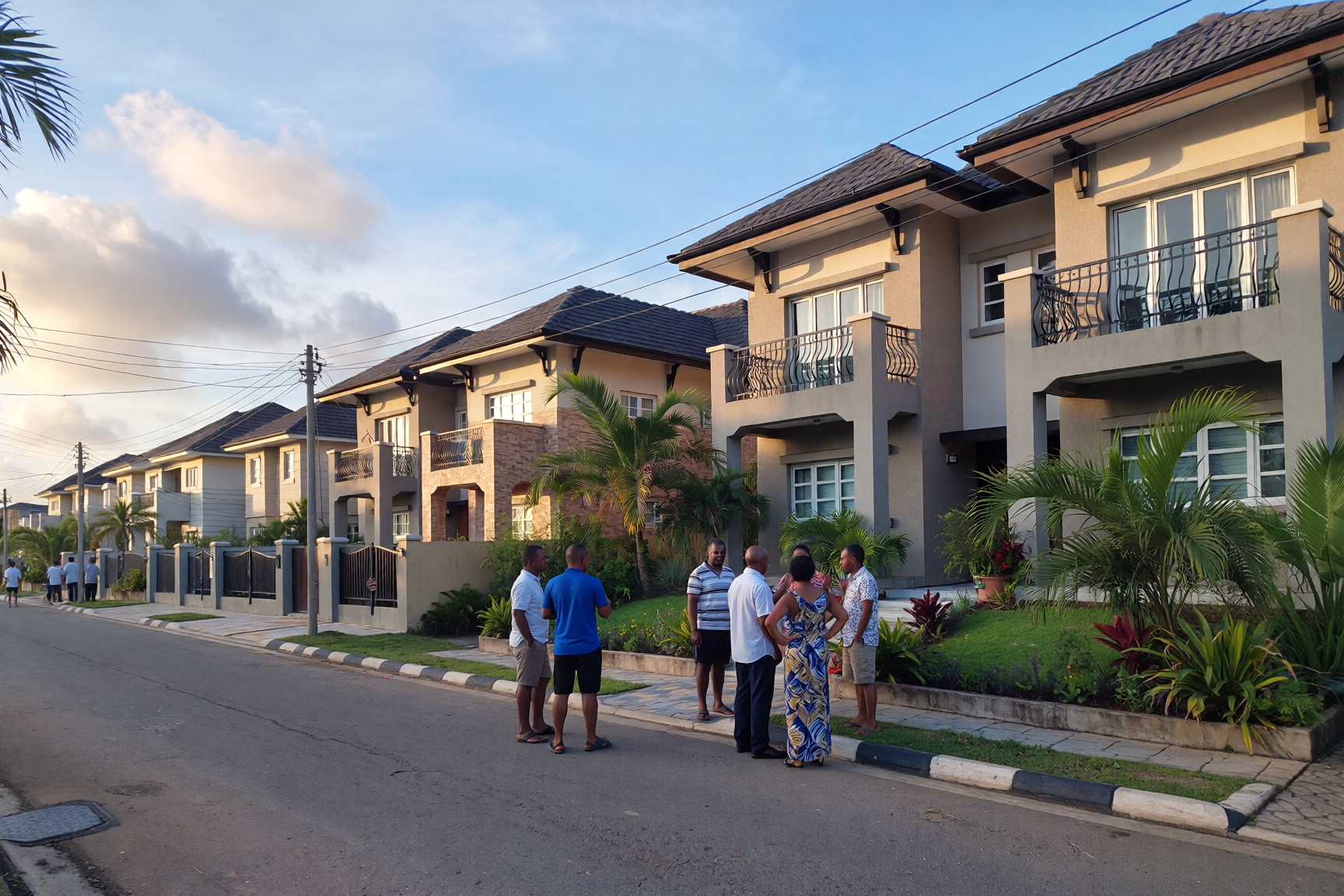
Welcome, dear reader! I’m absolutely delighted you’ve found your way here, because understanding what Nigerian homes are like is genuinely one of the most fascinating windows into our extraordinary nation’s soul. This article represents the culmination of months of dedicated research traversing all six geopolitical zones, years of personal experience visiting hundreds of Nigerian households from Lagos Island penthouses to rural Kano compounds, and countless conversations with architects, traditional builders, and homeowners across our diverse nation.
Nigerian homes are far more than mere structures of brick and mortar. They’re living testimonies to our 371 ethnic groups, our climate challenges, our economic realities, and our profound sense of community.
I still remember my first proper tour of traditional Nigerian housing architecture. I was in Benin City, standing before a restored compound from the ancient Benin Kingdom, and the guide explained how every architectural element carried meaning. The central courtyard wasn’t just empty space; it was where families gathered, where children played under watchful eyes, where important decisions were made. That visit fundamentally changed how I viewed Nigerian homes. They’re not just places to sleep. They’re entire ecosystems of family life, cultural preservation, and social interaction.
What strikes me most after years of documenting Nigerian housing across the country is the sheer diversity. A home in Katsina looks nothing like one in Port Harcourt. Urban Lagos apartments share little with rural Igbo compounds. Yet they’re all distinctly, unmistakably Nigerian in ways that go beyond physical structure.
What Kind of Houses Do Nigerians Live In?
The variety of housing types across Nigeria reflects our geographical diversity, ethnic traditions, and economic stratification in ways that might surprise you. Let me walk you through what you’ll actually encounter when you visit Nigerian homes.
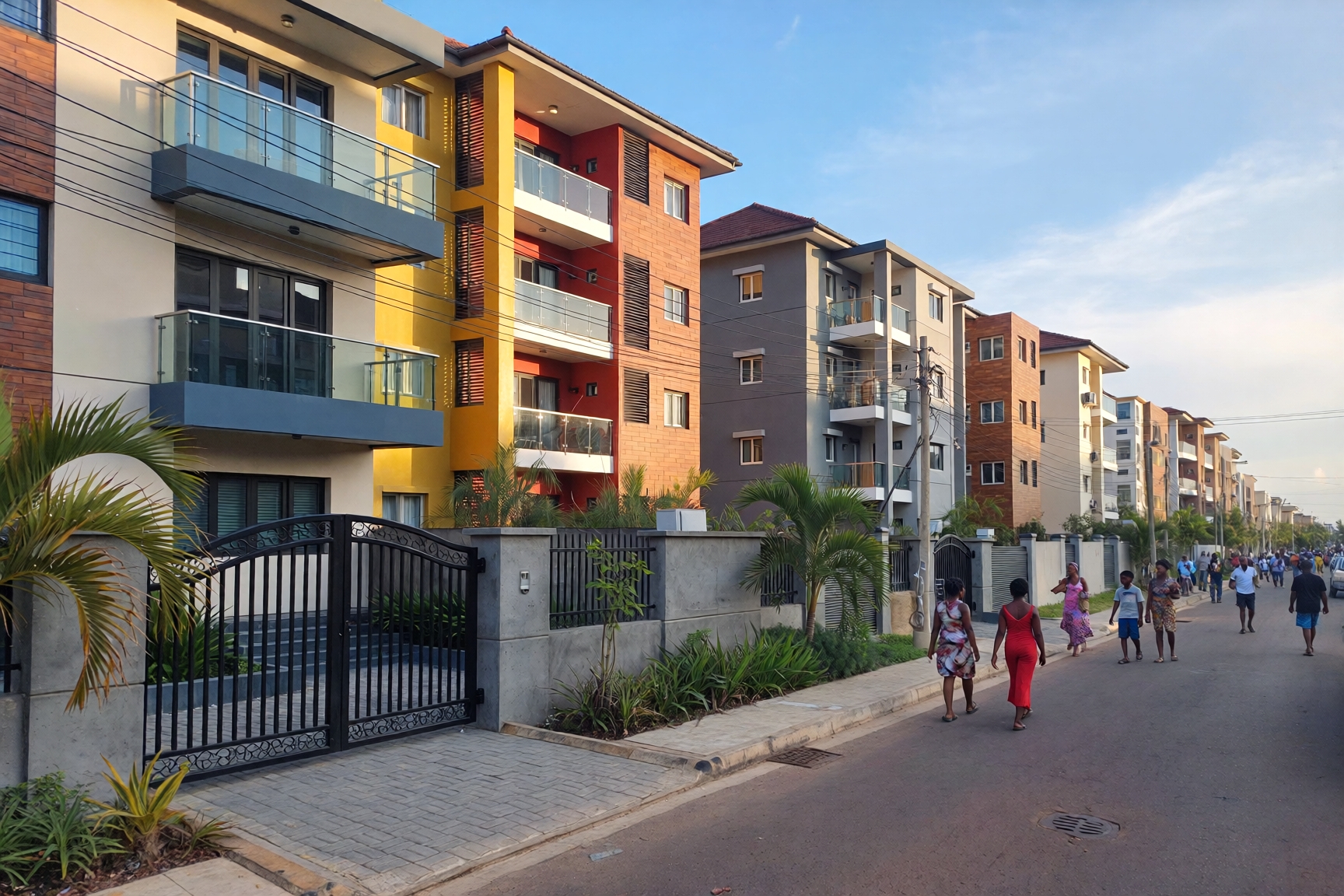
In urban centres like Lagos, Abuja, Port Harcourt, and Kano, apartment buildings (what we call “flats”) dominate the landscape. These range from modest self-contained rooms (essentially a bedroom with attached bathroom and kitchenette) to sprawling four-bedroom flats in gated estates. The Federal Ministry of Housing and Urban Development reports that approximately 15.2 million housing units across Nigeria are structurally inadequate, highlighting the ongoing challenge of providing decent urban housing.

Lagos particularly showcases this urban housing spectrum. You’ve got Ikoyi and Victoria Island with their towering luxury apartments where monthly rents can reach ₦5 million or more. Then there’s the middle-class suburbs like Surulere, Ikeja, and Yaba where two-bedroom flats might rent for ₦800,000 to ₦1.5 million annually. And you’ve got areas like Ajegunle and Mushin where families squeeze into “face-me-I-face-you” compounds (we’ll get to those in a moment).
The traditional compound system remains prevalent in many parts of Nigeria, particularly in rural areas and among families maintaining ancestral homes. These compounds typically feature multiple buildings arranged around a central courtyard. In Yoruba compounds, you might find separate structures for different branches of the extended family, all sharing communal spaces. Igbo compounds often have the obi (main house) where the family head resides, with other buildings for wives and grown children.
In Northern Nigeria, the gida (compound) architecture reflects Islamic influences. High walls provide privacy, with separate sections for men and women. The zaure (entrance hall) allows male guests to be received without entering the family’s private spaces. These architectural choices aren’t just cultural preferences; they’re practical responses to climate (those thick walls provide cooling) and social organisation.
Face-me-I-face-you housing deserves special mention because it’s a uniquely Nigerian phenomenon that millions call home. These are essentially corridor-style buildings where multiple families occupy individual rooms, sharing communal toilets, bathrooms, and sometimes kitchens. The name comes from how rooms face each other across narrow corridors. Rent might be as low as ₦50,000 to ₦150,000 annually, making them accessible to low-income earners, though conditions can be quite challenging with limited privacy and shared facilities.
Bungalows (single-storey detached houses) remain the aspiration for many Nigerian families. The classic three-bedroom bungalow with sitting room, dining area, kitchen, and perhaps a boy’s quarter (a separate smaller building for domestic staff or extended family) represents middle-class achievement. These might cost ₦15 million to ₦40 million to build depending on location and finishes.
Duplexes (two-storey houses) signal affluence across Nigeria. A four-bedroom duplex in a decent Lagos suburb could cost ₦80 million to ₦150 million, whilst in secondary cities like Enugu or Ibadan, similar properties might range from ₦40 million to ₦70 million. According to recent housing data from the National Bureau of Statistics, the national average household size is 5.6 people, which explains why spacious family homes remain highly valued.
Then there are the truly traditional structures that still dot rural Nigeria. The Ijaw people of the Niger Delta build homes on stilts over water and swampland. Thatched-roof houses still exist in many rural areas, though they’re increasingly being replaced by corrugated iron sheets. The famous beehive-shaped Musgum houses of the Far North, earth-walled structures in Middle Belt communities, and the distinctive architecture of the Idoma and Tiv peoples all contribute to Nigeria’s housing tapestry.
Modern estates and gated communities have exploded across major cities in the past two decades. These planned developments offer consistent architectural standards, security, and amenities like swimming pools, gyms, and playgrounds. Monthly service charges can add ₦30,000 to ₦200,000 to housing costs, but many middle and upper-class Nigerians consider the security and infrastructure worth the premium.
Housing Types Across Nigeria’s Six Geopolitical Zones
This comparison highlights the dominant housing characteristics across our diverse nation, reflecting climate, cultural traditions, and economic conditions in each region.
| Zone | Dominant Housing Type | Typical Materials | Average Rooms | Key Features |
|---|---|---|---|---|
| South West | Bungalows, Flats | Concrete blocks, corrugated iron | 3-4 | Compound courtyards, modern estates |
| South East | Bungalows, Compounds | Concrete, zinc roofing | 3-5 | Obi systems, decorative gates |
| South South | Elevated structures, Flats | Wood, concrete, zinc | 2-4 | Stilts in Delta areas, verandas |
| North West | Gidas (compounds) | Mud bricks, cement | 4-6 | High privacy walls, zaure entrance |
| North East | Traditional compounds | Adobe, cement blocks | 3-5 | Thick walls for cooling, flat roofs |
| North Central | Mixed bungalows/compounds | Burnt bricks, concrete | 3-4 | Transitional architecture styles |
The data reveals fascinating regional patterns. Northern homes typically have more rooms to accommodate larger household sizes (6.0 in rural northern zones versus 4.9 in urban areas), whilst southern zones show more architectural diversity influenced by colonial and modern design elements.
Is Nigeria a Nice Place to Live In?
This question deserves a far more nuanced answer than simplistic yes-or-no responses you might encounter elsewhere. Having lived in Nigeria and studied quality of life indicators across our nation for years, I can tell you that “nice” depends enormously on your location, economic status, and what matters most to you personally.
Let me be honest about the challenges first, because pretending they don’t exist helps no one. Nigeria faces real infrastructure deficits that affect daily living. Electricity supply remains frustratingly unreliable in many areas. You’ll hear Lagosians joke about “NEPA taking light” (referring to power outages) so frequently that generator ownership becomes essential rather than luxury. Spending ₦100,000 to ₦300,000 monthly on diesel or petrol for generators is common for middle-class households.
Water supply follows similar patterns. In theory, piped water should reach most urban homes. In practice, many Nigerians rely on boreholes, wells, or water vendors. A borehole might cost ₦500,000 to ₦1.5 million to drill, but it becomes a necessity rather than an option in areas with unreliable public supply.
Traffic congestion in major cities like Lagos, Abuja, and Port Harcourt can be genuinely soul-crushing. A commute that should take 30 minutes can stretch to three hours during rush periods. I’ve met people who wake at 4am to beat the traffic, arriving at work exhausted before their day even begins. Guardian Nigeria’s analysis of urban development challenges highlights how rapid urbanisation has outpaced infrastructure development.
Security concerns vary dramatically by location. Some neighbourhoods enjoy relative peace whilst others face challenges with theft, kidnapping, or communal violence. Gated estates invest heavily in private security, adding another layer of cost to comfortable living.
Yet, having painted that honest picture, let me tell you why millions of Nigerians (and growing numbers of diaspora returnees) genuinely love living here. The sense of community in Nigerian neighbourhoods is something special that’s increasingly rare in Western countries. Your neighbours know you, watch your children, share food, and provide support during difficult times. That social fabric has real value.
Nigerian hospitality remains legendary for good reason. Drop by a friend’s house unannounced and you’ll be fed, regardless of the family’s economic circumstances. There’s an unwritten rule that no guest leaves hungry. This generosity of spirit permeates daily life in ways that make Nigeria feel warm and welcoming despite material challenges.
The cultural richness available in Nigeria is extraordinary. Where else can you attend a traditional Yoruba wedding with live drumming and elaborate aso-ebi (matching family cloth) one weekend, then experience an Igbo igba nkwu (traditional marriage) ceremony the next? The festivals, the music, the food diversity, the artistic expression, it all creates a vibrancy that’s genuinely difficult to replicate elsewhere. As discussed in Guardian Nigeria’s examination of affordable housing solutions, Lagos particularly offers world-class entertainment, dining, and cultural experiences.
The cost of living can be paradoxically both challenging and advantageous. Yes, imported goods are expensive and inflation affects purchasing power. But local produce from markets remains reasonably priced. Hiring household help (cooks, cleaners, nannies) is affordable for middle-class families in ways that would be impossible in London or New York. A live-in housekeeper might earn ₦40,000 to ₦80,000 monthly, whilst similar help in Western countries would cost ten times that.
Family structures provide support systems that many people value tremendously. Extended family networks offer childcare, elderly care, and financial assistance during emergencies in ways that formal systems can’t replicate. There’s a safety net (however imperfect) that comes from this collectivist approach to life.
The entrepreneurial energy in Nigeria is absolutely infectious. From the tech startups in Yaba’s innovation hub to the market traders building empires from single stalls, there’s a hustle mentality that creates genuine opportunities for those willing to work hard and think creatively.
So is Nigeria a nice place to live? For those who can afford middle-class comforts (backup power, reliable water, safe housing, private education), who value community and cultural richness over material infrastructure, and who possess the resilience to navigate bureaucratic challenges, Nigeria offers a quality of life that many find deeply satisfying. For those struggling financially or those who require Western-standard infrastructure to feel comfortable, the challenges can feel overwhelming.
Which City Never Sleeps in Nigeria?
When Nigerians talk about “the city that never sleeps,” we’re almost always referring to Lagos, and for very good reason. Having spent considerable time documenting the night-time economy across Nigerian cities, I can tell you that Lagos operates at an intensity level that’s genuinely unique on the African continent.
Lagos doesn’t just stay awake at night. It thrums with activity that would put many global cities to shame. At 2am on a Tuesday, you’ll find traffic on major routes like Ikorodu Road or the Lekki-Epe Expressway that would constitute rush hour in most Nigerian cities. The famous Lagos Island markets like Balogun and Idumota start receiving deliveries at 4am, with traders arriving by 5am to set up.
The entertainment scene in Lagos runs practically non-stop. Nightclubs in Victoria Island, Lekki, and Ikeja stay packed until dawn, with patrons thinking nothing of leaving a club at 6am as the city awakens. Live music venues feature performances that don’t even start until 11pm. The annual Detty December phenomenon (when diaspora Nigerians return for the holidays) sees Lagos transform into one massive party that literally doesn’t stop for weeks.
But it’s not just about parties and clubs. The night-time economy serves essential functions. Bakeries operate 24-hour shifts to supply fresh bread to the 20 million plus population. Petrol stations stay open around the clock because generator culture means people need fuel at all hours. Hospital emergency rooms in places like Lagos University Teaching Hospital or the Lagos State University Teaching Hospital never close, obviously.
The informal night economy is equally vibrant. Suya spots (barbecued meat vendors) do their biggest business between 10pm and 3am, serving everyone from club-goers to night-shift workers to insomniacs. Buka (local restaurants) in areas like Ojuelegba or Surulere keep serving food until dawn. I’ve bought fresh pap and akara from street vendors at 5am countless times.
Lagos’s port facilities at Apapa and Tin Can Island operate round-the-clock, with trucks queuing at all hours. The airport maintains constant activity with both domestic and international flights scheduled throughout the night. The city’s role as West Africa’s commercial hub means business literally never stops.
Generators provide the soundtrack to Lagos nights. In areas with unreliable power, the collective hum of hundreds of generators creates a distinctive ambient noise that defines the city’s after-dark atmosphere. It’s simultaneously frustrating (for those trying to sleep) and reassuring (as proof that life continues regardless of NEPA’s whims).
That said, other Nigerian cities are developing their own vibrant night economies. Abuja’s Wuse 2 and Maitama districts have sprouted 24-hour eateries and entertainment venues catering to government workers and expatriates. Port Harcourt’s nightlife, particularly in the GRA (Government Reserved Area) and D-Line areas, has intensified with oil industry professionals seeking entertainment after work.
Kano, despite being a predominantly Muslim city, has its own after-dark economy centred around late-night markets, traditional eateries, and cultural events, though these operate within different social parameters than Lagos’s club scene.
The reality, however, is that Lagos holds a special position. Its population size, economic importance, and cultural influence create a critical mass that keeps the city perpetually active. You can get practically anything you need at any hour in Lagos. Burst tyre at 3am? Mobile vulcanisers operate through the night. Craving Chinese food at midnight? Delivery services will bring it. Need to send a package? Logistics companies run night shifts.
Can 2 Million Naira Build a House in Nigeria?
This question touches on perhaps the most common dream among Nigerians: homeownership. Let me give you a thoroughly honest assessment based on current construction realities in 2026, because the answer is both yes and no depending on your expectations and location.
Two million Naira can absolutely construct a basic structure, but we need to be very precise about what “a house” means in this context. You won’t be building a three-bedroom bungalow in any urban area for that amount. But you can make meaningful progress towards homeownership or complete a modest dwelling depending on your approach. The Federal Ministry of Housing and Urban Development has identified Nigeria’s housing deficit at 14.925 million units, partly because construction costs remain prohibitively high for most families.
In rural areas or small towns, ₦2 million can build a complete one-bedroom structure using locally sourced materials. I’m talking about a single room with attached bathroom and perhaps a small veranda, using concrete blocks, cement rendering, and zinc roofing. Land costs in rural areas might be ₦100,000 to ₦300,000 for a plot, leaving ₦1.7 to ₦1.9 million for construction.
Let me break down a realistic rural construction budget at ₦2 million total:
Land acquisition: ₦200,000 Foundation and DPC (damp-proof course): ₦300,000 Block work (walls): ₦400,000 Roofing (trusses and zinc sheets): ₦350,000 Windows and doors: ₦200,000 Plastering and rendering: ₦250,000 Floor tiles (basic ceramic): ₦150,000 Painting: ₦100,000 Plumbing and electrical: ₦250,000
That adds up to ₦2 million for a very modest single-room structure. Notice what’s missing? Finishing touches like ceilings, fancy fixtures, compound walls, or septic systems. You’d be living in a basic but habitable space.
In urban areas, the mathematics changes dramatically. A standard plot in Lagos suburbs costs ₦5 million minimum, immediately consuming your entire budget before any construction begins. Even in secondary cities like Ibadan, Enugu, or Jos, land prices of ₦1.5 to ₦3 million mean your ₦2 million won’t cover both land and construction.
However, many Nigerians successfully navigate this challenge through progressive building. If you already own land (perhaps inherited family property or previously purchased), that ₦2 million can create a foundation and partial structure that you complete in phases as funds become available. I’ve seen countless Nigerian families build this way, constructing walls this year, roofing next year, fitting windows the year after, gradually transforming an empty plot into a family home over five to ten years.
The landlord-to-be approach is common. Start with a boys’ quarter or single room on your land, make it habitable, rent it out whilst you continue living elsewhere, and use rental income plus savings to gradually build the main house. Your ₦2 million creates an income-generating asset that funds future construction.
Material choices dramatically affect what ₦2 million can achieve. Using locally made blocks instead of imported materials, choosing zinc roofing instead of more expensive aluminium or stone-coated sheets, opting for terrazzo floors instead of tiles, and handling some labour yourself where possible can stretch the budget considerably.
I met a gentleman in Ogun State who built a two-room structure for ₦1.8 million by being extremely hands-on. He supervised the construction daily, negotiated directly with artisans rather than using contractors, bought materials in bulk, and did finishing work like painting himself. It took eight months instead of the usual three, but he owns a debt-free home.
The “boys’ quarter” strategy deserves elaboration. These smaller structures (originally built for domestic staff) typically measure about 3m by 4m. For ₦2 million, you can build a proper boys’ quarter with bedroom, bathroom, and small kitchenette on your land. It serves as temporary accommodation whilst you save for the main house, or becomes rental income once you build bigger.
Container homes and prefabricated structures offer alternative approaches. Converted shipping containers can provide basic accommodation for ₦1.5 to ₦2.5 million including modifications. They’re not traditional brick houses, but they’re waterproof, secure, and can be upgraded over time.
The harsh reality is that building costs have increased significantly. Cement prices fluctuate between ₦7,000 and ₦10,000 per bag in 2026, up from ₦3,500 just a few years ago. A bag of cement that once laid 50 blocks now costs three times as much. Iron rods, roofing sheets, and labour costs have all increased proportionally.
Professional guidance matters enormously when working with limited budgets. Many Nigerians make expensive mistakes by cutting corners inappropriately. Saving money on foundation work leads to structural problems. Using substandard electrical wiring creates fire hazards. Skipping proper approvals means potential demolition down the line. The ₦50,000 to ₦150,000 spent on a simple architectural plan and structural engineer’s supervision can save hundreds of thousands in corrections later.
7 Practical Steps to Understanding and Experiencing Nigerian Homes
After years of researching Nigerian housing across our diverse nation, I’ve developed this comprehensive guide for anyone wanting to truly understand how Nigerians live, whether you’re planning to relocate, invest in property, or simply satisfy your curiosity about our domestic architecture.
1. Visit Different Neighbourhood Types in Sequence
Start your Nigerian housing education by deliberately visiting contrasting neighbourhoods within the same city. Spend a morning in a high-end area like Ikoyi or Maitama, observing the gated estates, security protocols, and architectural styles. Then visit middle-class suburbs like Surulere or Garki, noting how housing density increases and compound walls get higher. Finally, tour more densely populated areas like Ajegunle or Nyanya, experiencing face-me-I-face-you compounds and the ingenious use of limited space. This contrast illustrates Nigeria’s economic stratification more powerfully than any statistics.
Take photographs (with permission), note the differences in building materials, observe how many people share compounds, and pay attention to details like water storage systems (every household having large tanks signals unreliable public supply) and the omnipresent generators. This sequential approach helps you understand that “Nigerian homes” isn’t a monolithic category but a spectrum reflecting our complex society.
2. Attend Traditional Ceremonies in Family Compounds
Nothing teaches you about Nigerian domestic architecture like experiencing it in use during celebrations. Wedding ceremonies, naming ceremonies, or funeral rites held in family compounds reveal how Nigerian homes function as social institutions beyond mere shelter. You’ll see how the central courtyard becomes a gathering space, how different buildings in a compound serve distinct family branches, and how traditional architecture facilitates the communal activities that define Nigerian culture.
I particularly remember attending an Igbo wedding in Anambra where the bride’s family compound showcased classic obi architecture. The main house where the family head received guests, the separate kitchen building, the open courtyard where hundreds of guests were fed, and the deliberate positioning of buildings to create semi-private spaces within the larger compound, it all demonstrated architectural intelligence that modern apartment blocks simply can’t replicate.
Ask questions. Homeowners at these events are usually delighted to explain their compound’s layout and history. You’ll learn that the old tree in the courtyard was planted when the great-grandfather established the compound, that this particular building houses the eldest son’s family whilst that one belongs to the second son, and that the positioning of doorways and windows follows principles passed down through generations.
3. Engage with Local Builders and Artisans
Visit building materials markets like Alaba Suru in Lagos, Building Materials Market in Kano, or Timber Market in Onitsha. Talk to block moulders, carpenters, plumbers, and electricians. Ask about current material costs, labour rates, and construction timelines. These conversations provide reality checks on housing economics that theoretical research simply can’t match.
I’ve learnt more about practical construction challenges from spending afternoons at materials markets than from reading countless housing reports. You’ll discover that a skilled mason expects ₦8,000 to ₦12,000 daily wages in Lagos, that quality cement blocks now cost ₦250 to ₦350 each, and that roofing a standard three-bedroom bungalow requires about 45 to 60 bundles of zinc sheets at ₦35,000 per bundle.
These artisans also share invaluable local knowledge. Which building materials perform best in your climate zone? What shortcuts lead to structural problems? How do you identify quality cement versus substandard products? This ground-level expertise proves essential for anyone considering construction.
4. Experience Different Housing Models Through Accommodation
Rather than always staying in hotels when travelling within Nigeria, deliberately experience different housing types. Rent a self-contained apartment on Airbnb for a weekend, stay in a family compound as a guest, book accommodation in a gated estate, or even (if you’re adventurous) arrange to experience face-me-I-face-you living through connections.
Each housing model teaches different lessons. The self-contained apartment reveals how Nigerians maximize limited space through clever storage solutions. Family compounds demonstrate the coordination required when twenty people share common facilities. Gated estates showcase the infrastructure middle-class Nigerians expect but often don’t get from government. Face-me-I-face-you compounds illustrate the resilience and community bonds that emerge when people live in close quarters.
I once spent three days in a family compound in Osun State as part of research. Sharing bathroom facilities on a rotation schedule, coordinating kitchen use with four other families, and experiencing the constant social interaction taught me more about Nigerian housing realities than months of academic study.
5. Study Regional Architectural Variations
Make deliberate trips to different geopolitical zones specifically to observe housing architecture. The beehive mud houses of the Far North, the stilt houses of the Niger Delta, the thick-walled gidas of Sokoto, the modern estates of Abuja, and the colonial-influenced buildings of Lagos each tell different stories about how Nigerians adapt housing to climate, culture, and available materials.
Visit local museums and cultural centres that preserve traditional architectural models. The National Museum in Lagos, the Kano Gidan Makama Museum, and the Benin City National Museum all feature displays explaining indigenous housing systems. These contexts help you appreciate why Nigerian homes look the way they do, connecting architecture to culture, climate, and history.
6. Consult Housing Reports and Government Data
Balance your experiential learning with hard data from organizations like the National Bureau of Statistics and Federal Ministry of Housing and Urban Development. Review housing deficit reports, understand mortgage market statistics, and study urban planning documents. This quantitative approach complements your qualitative observations, revealing patterns that individual experiences might miss.
Current data shows that Nigeria’s housing deficit stands at approximately 15 million units, that the average urban household size is 4.9 people, and that most Nigerians spend 30 to 50 percent of income on housing. These statistics contextualize what you’re seeing on the ground and highlight the scale of challenges facing Nigerian families.
Government housing schemes like the Renewed Hope Housing Initiative aim to deliver affordable units, but tracking their actual implementation versus promises reveals gaps between policy and reality. Understanding these gaps is crucial for realistic assessment of Nigerian housing conditions.
7. Engage with Real Estate Professionals and Housing Activists
Interview estate agents, property developers, architects, and housing rights activists to understand different stakeholder perspectives. Estate agents explain market dynamics, developers discuss construction challenges, architects share design philosophy, and activists highlight issues affecting vulnerable populations.
These conversations reveal tensions in Nigerian housing. Developers complain about land acquisition challenges and multiple taxation. Activists point out that new estates rarely serve low-income families. Architects discuss the disconnect between Nigerian climate and imported architectural styles. Each perspective adds depth to your understanding of why Nigerian homes look and function as they do.
I’ve found that spending an afternoon with an estate agent touring properties teaches you more about local housing markets than weeks of internet research. You’ll learn which areas command premium rents, what amenities Nigerians prioritize (generator houses, boreholes, and compound walls often matter more than architectural aesthetics), and how informal housing markets operate outside official regulations.
Navigating the Dream: Final Reflections on Nigerian Homes
Nigerian homes tell the story of a nation navigating between tradition and modernity, abundance and scarcity, communal values and individual aspiration. They’re imperfect, often challenging, yet filled with warmth that statistics can’t capture.
The diversity of our housing reflects our broader national character. We’re a people who build stilted houses over water when dry land is scarce, who construct thick mud walls in desert heat, who stack families in high-rise apartments in urban chaos, and who maintain ancestral compounds spanning generations. Each solution addresses specific challenges with the resources available.
Yes, Nigeria faces a massive housing deficit. Yes, millions live in conditions far below acceptable standards. Yes, infrastructure challenges make comfortable living more expensive than it should be. But within these constraints, Nigerian families create homes filled with life, love, and that distinctly Nigerian combination of resilience and joy.
The housing crisis won’t resolve quickly. Government initiatives help but can’t meet the scale of demand. Private developers build primarily for those who can afford market rates. The gap between housing need and housing supply remains enormous and growing.
Yet Nigerians continue building, one block at a time, one room added per year, gradually transforming bare plots into family homes that will shelter multiple generations. That progressive approach to construction, born of necessity, reflects broader Nigerian philosophy: work with what you have, keep moving forward, and trust that gradual progress eventually achieves big goals.
For those considering living in Nigeria, the housing question deserves careful thought. You need realistic budgets (expect to spend more on housing than equivalent Western accommodation once you factor in generators, water systems, and security), flexibility about standards (that beautiful estate might lose power daily), and appreciation for what Nigerian homes offer beyond four walls: community, culture, and connection to something larger than individual comfort.
Key Takeaways:
- Nigerian homes vary dramatically across regions, economic classes, and urban-rural divides, ranging from luxury estates to face-me-I-face-you compounds, with each type serving specific populations and reflecting local culture, climate, and economic realities.
- The housing deficit of approximately 15 million units creates severe pressure on Nigerian families, particularly low and middle-income earners, who often resort to progressive building over many years, shared accommodation, or inadequate housing whilst aspiring to homeownership.
- Successfully navigating Nigerian housing requires understanding infrastructure challenges (unreliable electricity and water), budgeting for backup systems (generators, boreholes), appreciating regional architectural diversity, and recognizing that Nigerian homes prioritize community and family accommodation over individual privacy in ways that differ from Western housing models.
Nigerian homes, in all their glorious diversity and frustrating imperfection, remain places where families gather, where traditions are maintained, and where the next generation learns what it means to be Nigerian. They’re worth understanding, worth appreciating, and yes, despite the challenges, worth calling home.
Exploring Nigerian Living: Related Insights
Nigerian housing naturally connects to broader questions about how our society functions and what defines our cultural identity. For those seeking deeper understanding of these interconnections, examining what Nigerian society is like provides essential context about the social structures, family dynamics, and communal values that shape how we organise our domestic spaces and prioritize housing within our broader life goals. The hierarchical yet fluid nature of Nigerian society, our celebration culture that fills homes with extended family and guests for days at a time, and our particular approach to balancing tradition with modernity all directly influence the architectural choices we make and the housing types we value most.
Similarly, understanding what culture Nigeria has illuminates why Nigerian homes look and function as they do across our 371 distinct ethnic groups. The architectural differences between Hausa gidas with their privacy walls and zaure entrance halls, Yoruba compounds with central courtyards facilitating communal gathering, and Igbo homesteads with the obi system aren’t arbitrary aesthetic choices but rather physical manifestations of cultural values about family structure, gender relations, hospitality protocols, and the relationship between private and communal life. Our homes are culture made concrete, quite literally, and appreciating the cultural foundations helps you understand why certain housing features that might seem odd to outsiders make perfect sense within Nigerian cultural logic.
Frequently Asked Questions About Nigerian Homes
What Is the Most Common Type of Home in Nigeria?
The most common housing type varies by location, but face-me-I-face-you compounds and single-room self-contained apartments dominate in urban areas where millions of low to middle-income Nigerians reside. In rural areas, traditional compound systems with multiple buildings around central courtyards remain prevalent, particularly among families maintaining ancestral homes and agricultural livelihoods.
How Much Does It Cost to Rent a House in Nigeria?
Rental costs vary dramatically by city and neighbourhood, ranging from ₦50,000 annually for face-me-I-face-you rooms in densely populated areas to ₦5 million monthly for luxury apartments in premium Lagos or Abuja locations. Middle-class families typically pay ₦600,000 to ₦2 million annually for two-bedroom flats in decent urban suburbs, with landlords usually demanding two years’ rent upfront plus agency and legal fees.
Do Nigerian Homes Have Running Water and Electricity?
Most Nigerian homes have electrical connections and plumbing infrastructure, but reliability remains a major challenge with frequent power outages necessitating generators and unreliable public water supply requiring boreholes or water storage tanks. Urban middle and upper-class homes typically invest ₦500,000 to ₦1.5 million in backup systems (generators, inverters, boreholes) to ensure consistent access to basic utilities that government infrastructure fails to deliver reliably.
What Materials Are Nigerian Homes Built With?
Modern Nigerian homes primarily use concrete blocks, cement rendering, and corrugated iron or aluminium roofing sheets, whilst traditional structures in rural areas still employ mud bricks, thatched roofing, and locally available materials. The shift from traditional to modern materials reflects urbanisation, changing economic patterns, and the declining availability of traditional building materials like specific woods, grasses, and earth suitable for construction in many areas.
How Big Are Nigerian Houses Typically?
Nigerian homes vary enormously in size, but typical middle-class family homes contain three to four bedrooms, sitting room, dining area, kitchen, and bathrooms, spanning approximately 100 to 150 square metres of living space. Urban apartments are generally smaller (50 to 100 square metres for two-bedroom flats) whilst rural compounds can sprawl across large areas with multiple separate buildings, courtyards, and agricultural spaces.
Do Nigerian Homes Have Yards or Gardens?
Urban Nigerian homes, particularly apartments and face-me-I-face-you compounds, typically lack private yards, though gated estates often provide shared green spaces and playgrounds for residents. Suburban bungalows and duplexes usually include small compounds with space for parking, perhaps small gardens, and sometimes vegetable patches, whilst rural homesteads feature extensive land for farming, animal rearing, and traditional crops alongside residential structures.
What Is a Boys’ Quarter in Nigerian Homes?
A boys’ quarter (often abbreviated as BQ) is a separate smaller building on residential properties, originally intended for domestic staff accommodation but increasingly used for extended family, guests, or rental income generation. These structures typically contain one or two rooms with bathroom, measure about 3m by 4m, and add ₦300,000 to ₦800,000 to construction costs whilst potentially generating ₦150,000 to ₦400,000 annual rental income.
How Do Nigerian Families Afford to Buy Homes?
Most Nigerian families build homes progressively over many years using personal savings rather than mortgages, starting with land purchase then constructing foundations, walls, and roofing in phases as funds become available. Alternative strategies include cooperative societies where members pool resources, family land allocation that eliminates land acquisition costs, and increasingly, diaspora remittances funding construction whilst family members work abroad.
Are Gated Estates Common in Nigeria?
Gated estates have proliferated across major Nigerian cities in the past two decades, offering middle and upper-class residents improved security, consistent infrastructure, and communal amenities in exchange for higher purchase prices and monthly service charges. These planned developments now house hundreds of thousands of Nigerian families in cities like Lagos, Abuja, and Port Harcourt, though they remain financially inaccessible to the majority of Nigerians who cannot afford the ₦20 million to ₦150 million typical property prices.
What Security Features Do Nigerian Homes Have?
Nigerian homes typically feature high perimeter walls (2 to 3 metres tall), metal gates, window burglary bars, and external door grilles as standard security measures, with more affluent households adding CCTV cameras, motion sensors, and armed private security guards. Gated estates provide additional communal security including manned entry gates, neighbourhood patrols, and visitor verification systems, reflecting persistent security concerns that influence housing design and significantly increase accommodation costs.
How Do Climate and Weather Affect Nigerian Homes?
Nigerian homes adapt to tropical climate through high ceilings for heat dissipation, verandas providing shaded outdoor spaces, louver windows for ventilation, and in traditional northern architecture, thick walls and flat roofs for cooling in semi-arid heat. Modern homes increasingly incorporate air conditioning (adding ₦200,000 to ₦1 million to construction and significant electricity costs), whilst flooding concerns in southern areas necessitate elevated foundations, proper drainage systems, and increasingly, climate-resilient construction materials.
Can Foreigners Buy Property in Nigeria?
Foreigners can legally acquire property in Nigeria, though the Land Use Act vests land ownership in state governors, meaning foreigners typically obtain long-term leases (usually 99 years) rather than freehold ownership. The process involves obtaining consent from state governors, navigating sometimes opaque bureaucratic procedures, and working with reliable lawyers to verify proper documentation, with total transaction costs including legal fees, survey fees, and registration adding 10 to 15 percent to property purchase prices.

