 Follow Us on Google News
 Follow Us on Google Discover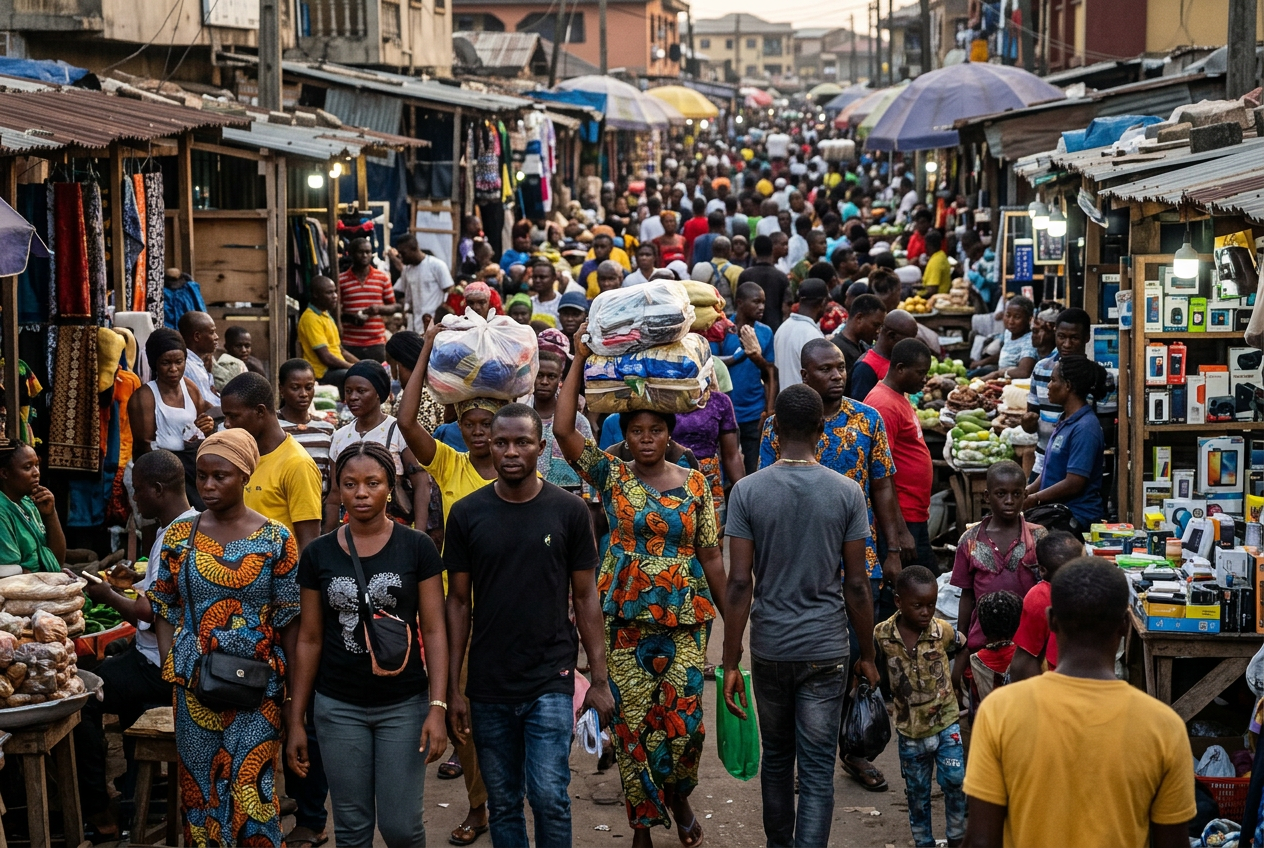
Hello there, friend. I want to share something with you that represents months of careful research and years of experience documenting Nigeria’s extraordinary demographic reality. The question of where is most of Nigeria’s population concentrated is one that reaches far beyond simple geography. It touches on history, economics, ethnicity, and the gravitational pull of a nation that is still, generation by generation, finding out what it wants to be.
I still remember the first time I drove from Lagos to Kano. The sheer shift in landscape, language, and tempo was staggering. In Lagos, everything presses in close. Markets, minibuses, conversations, ambitions. Then somewhere north of Abuja the horizon opens up, the pace slows, and you begin to understand that Nigeria is not one story but dozens of them, layered over one another across a landmass larger than Texas.
So, where exactly do most Nigerians live? And what does that tell us about the economy, the tribal makeup, and our brothers and sisters in the diaspora? Let us get into it properly.
Which Part of Nigeria Has the Most Population?
Nigeria is divided into six geopolitical zones: the North West, North East, North Central, South West, South East, and South South. Across those zones, demographic weight is anything but evenly spread.
The North West is, by official projections from the National Population Commission, the most populous geopolitical zone in Nigeria. Kano State alone has consistently led state-level population figures, carrying an estimated 13 to 15 million people in recent projections. Katsina, Sokoto, and Zamfara also contribute massive numbers. High fertility rates, younger average ages, and strong agricultural communities mean the north-west continues to grow rapidly. The National Bureau of Statistics Demographic Statistics Bulletin confirms that the north-west zone recorded the highest proportion of registered live births in the country between 2017 and 2019, reflecting a sustained population engine that shows no signs of slowing.
The South West tells a contrasting story. Lagos State, while historically second by official census figures, is almost certainly more populous in practical terms than any official number captures. The Lagos State Government has long disputed federal census data, placing their figure closer to 17 to 21 million residents. The National Population Commission’s own 2006 census put Lagos at just over 9 million, a figure that most urban demographers regard as a significant undercount. When you add in the metropolitan region and the vast informal population, Lagos is almost certainly the most densely populated single state. The Ministry of Foreign Affairs notes that the Yoruba, who dominate the south-west, account for roughly a fifth of Nigeria’s total population.

The population debate has a long and complicated history. As one Guardian Nigeria opinion piece on Nigeria’s census history observed, the 1951 count was the moment politicians first understood population as a bargaining chip, with the north claiming 55.4% of the national total, a figure that sparked controversy and set the tone for every census to follow.
The South East, home to the Igbo, is the most densely settled per square kilometre of any region. Anambra and Imo States pack extraordinary numbers into comparatively small territories. Abia, Ebonyi, Enugu, and Imo together form one of the highest population-density corridors on the continent. The South South, covering the Niger Delta states of Rivers, Delta, Bayelsa, and their neighbours, carries significant population weight alongside Nigeria’s oil wealth.
In terms of urban concentration, Lagos is Africa’s most populous city by most credible estimates. Kano is the north’s dominant metropolis. Ibadan remains one of the largest cities in sub-Saharan Africa. Abuja, the federal capital, is one of the fastest-growing planned cities in the world, with a population that has expanded from under a million in 2006 to well over two million today.
Here is a practical seven-step guide to understanding how Nigeria’s population distributes across the country:
- Start with geopolitical zones, not just states. The six zones provide a cleaner picture of demographic weight than individual state data, which varies enormously in area and historic accuracy.
- Understand that official census figures lag behind reality. Nigeria’s last full census was conducted in 2006. Population projections since then are estimates, and urbanisation has dramatically changed the distribution on the ground.
- Use birth registration data as a supplementary indicator. NBS Demographic Bulletins show that the north-west and north-east zones consistently record the highest birth registration figures, pointing to where population growth is fastest.
- Factor in internal migration when reading Lagos figures. Lagos draws workers from all 36 states. Its residential population belongs overwhelmingly to non-indigenous residents who have come seeking economic opportunity, as one Guardian Nigeria analysis of Lagos noted in discussing the city’s development driven by settlers and non-indigenes.
- Cross-reference voter registration data with population claims. INEC’s voter rolls provide an independent, more recent snapshot. The north-west zone leads registered voters with over 18.9 million, followed by the south-west with 14.2 million.
- Look at poverty and fertility data together. The NBS 2022 Multidimensional Poverty Index found that 65% of Nigeria’s poor live in the north, which also has the highest fertility rates. These two facts are deeply connected and will shape Nigeria’s demographic story for decades.
- Watch the middle-belt and south-south trajectories. States like Rivers, Edo, and Plateau are growing quickly, and their population weight is often underrepresented in popular discourse dominated by the Hausa-Fulani, Yoruba, and Igbo narrative.
Population Distribution Across Nigeria’s Geopolitical Zones
This table draws on NPC projections and NBS demographic data to compare the six zones across key indicators. The north-west zone leads on population volume and birth rate, whilst the south-west leads on urban density and economic output. No single zone captures Nigeria’s full demographic story.
| Geopolitical Zone | Key States | Dominant Ethnic Groups | Estimated Population Share | Major City | Notable Characteristic |
|---|---|---|---|---|---|
| North West | Kano, Katsina, Sokoto, Zamfara | Hausa-Fulani | Approx. 25-28% | Kano | Highest absolute population and birth rate |
| South West | Lagos, Oyo, Ogun, Osun, Ondo, Ekiti | Yoruba | Approx. 20-22% | Lagos | Highest urban density and economic output |
| North East | Borno, Adamawa, Gombe, Yobe | Hausa, Kanuri, Fulani | Approx. 13-15% | Maiduguri | High fertility; significant security displacement |
| South East | Anambra, Imo, Abia, Ebonyi, Enugu | Igbo | Approx. 12-14% | Onitsha/Owerri | Highest population density per sq km |
| South South | Rivers, Delta, Bayelsa, Edo, Cross River, Akwa Ibom | Ijaw, Ibibio, Urhobo, Efik | Approx. 13-15% | Port Harcourt | Oil wealth concentration; significant minority groups |
| North Central (Middle Belt) | Benue, Plateau, Kogi, Nasarawa, Niger, Kwara, FCT | Tiv, Idoma, Nupe, Gbagyi | Approx. 13-15% | Abuja (FCT) | Greatest ethnic diversity; fastest-growing capital city |
What Sells Very Fast in Nigeria?
Understanding where people live tells you a lot about what they buy. Nigeria’s consumer economy is shaped almost entirely by its massive, youthful, densely settled population.
The fast-moving consumer goods sector in Nigeria grew by an extraordinary 54.1% in 2025, making it the fastest-growing FMCG market on the African continent according to NielsenIQ data. The Nigerian FMCG market is now valued at approximately 25 billion US dollars, second only to South Africa on the continent. That growth is fuelled by sheer volume: over 240 million consumers, many of them young, urban, and price-sensitive.
The top ten categories by sales value are beer, soft drinks, spirits, malted soft drinks, energy drinks, mineral water, detergents, powdered milk, noodles, and biscuits. Together these account for nearly 64% of all FMCG sales in Nigeria. Look at that list and a pattern emerges immediately: these are all daily necessities, staples, or affordable treats. Nobody in Lagos or Kano is deliberating over whether to buy sachet water or instant noodles. They are simply buying them, repeatedly, every single day.
Among the fastest-growing categories in 2025 were flavoured milk (84.4% growth), biscuits (72.2%), energy drinks, and mainstream spirits. The “sachetisation” trend is a powerful force: brands packaging products in smaller, lower-cost sachets to reach consumers across all income levels. Whether you are in Peckham or Port Harcourt, the principle is the same. Make it cheap enough to buy today, and people will buy it every day.
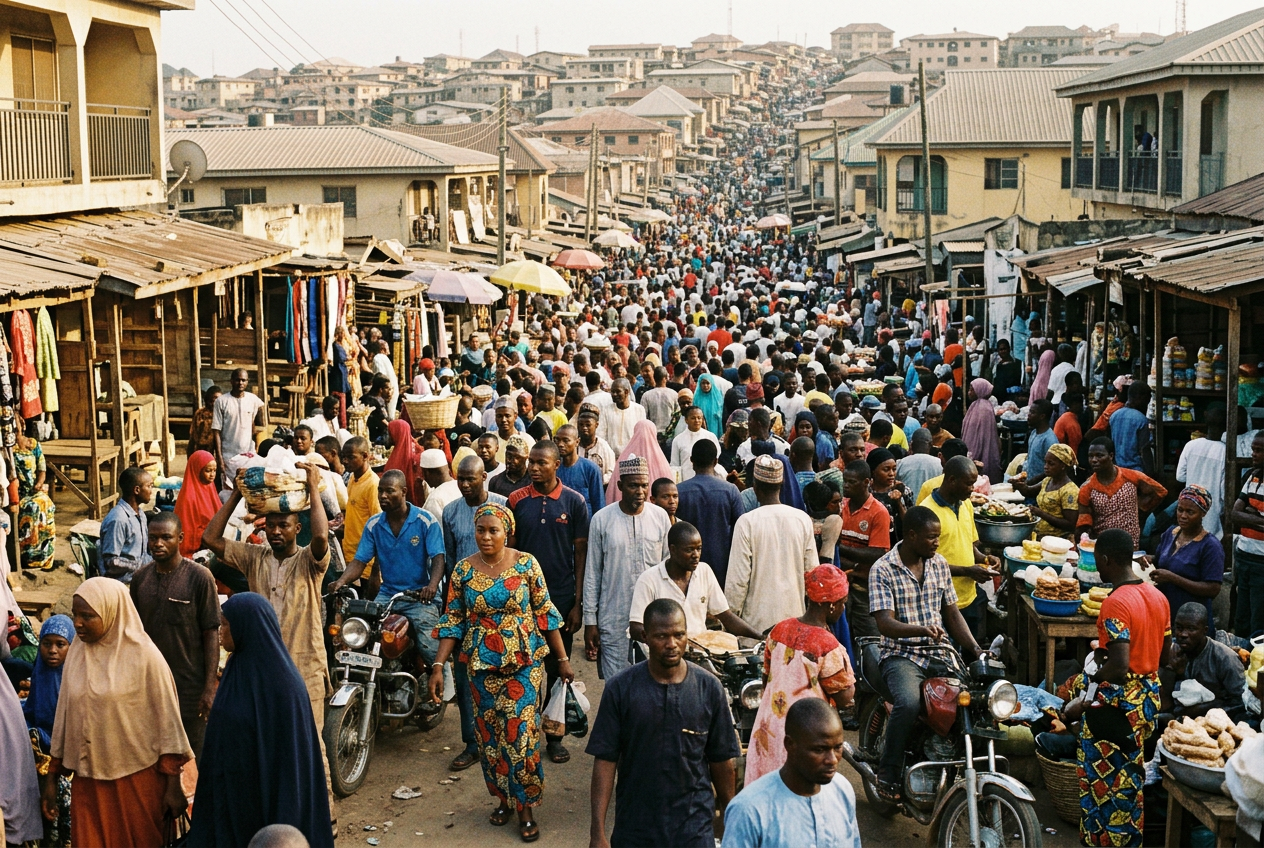
Beyond food and drink, mobile phones and data top the list of non-food products that move fastest. MTN, Airtel, and Glo SIM cards and airtime reload vouchers are arguably the single most transacted item in Nigerian markets, both formal and informal. Anywhere you find a market in Nigeria, you will find someone selling mobile recharge cards from a small table. Personal care products (soap, shampoo, hair care), pharmaceuticals and over-the-counter medicines, and household cleaning products round out the picture.
Practical takeaway: if you are thinking about any business in Nigeria, anchor your offering to a daily, non-negotiable need. Anything Nigerians must buy every day, regardless of the economic weather, is where consistent revenue lives.
Which Country Has the Most Nigerian Population Outside Nigeria?
This is one of the questions I get asked most often, and the answer is more nuanced than a single country name. Approximately 17 million Nigerians are estimated to live abroad according to the Nigerians in Diaspora Commission, making our diaspora one of the largest on the African continent and among the most economically active anywhere.
The United Kingdom has historically held the largest single documented Nigerian-born population, estimated at between 215,000 and 500,000 individuals depending on whether you count only Nigerian-born residents or include British-born children of Nigerian parents. London, particularly Peckham, Woolwich, and Tottenham, hosts the most concentrated Nigerian community outside Nigeria itself.
The United States, however, tells a closely competing story. Nigerian-born residents in America number between 400,000 and 712,000, and when you account for second and third-generation Nigerian Americans who still identify strongly with their heritage, that total potentially exceeds 1.5 million. Nigerians in the US are one of the most highly educated immigrant groups in America, with strong representation in medicine, academia, engineering, and finance.
Canada has emerged as the fastest-growing destination, with immigration numbers more than tripling between 2016 and 2021. Many Nigerians redirect from the UK or US when visa policies tighten, and Canada’s express-entry system has proven accessible. Other significant diaspora concentrations exist in Italy (approximately 119,000), the UAE (around 100,000), Germany, South Africa, and increasingly across Australia and Brazil.
On the remittance side, Nigeria received over 25 billion US dollars from abroad in 2024, making it Africa’s largest remittance recipient. That figure is not just an economic statistic. It is the sound of millions of Nigerians abroad picking up their phones and sending money home every month.
The answer to which country has the most Nigerian population depends somewhat on your definition. The US likely leads in total numbers when diaspora descendants are included. The UK leads in the highest concentration of Nigerian-born residents in a single European country. And Canada is where the energy and ambition of new Nigerian migration is currently pointed.
What Are the Top 5 Tribes in Nigeria and How Do They Shape Population Distribution?
Nigeria is home to 371 officially recognised ethnic groups. To understand the population geography of the country, you need to understand where the major groups are rooted and how they have migrated.
The top five tribes by population size are:
- Hausa-Fulani (approximately 29% of the population): Concentrated in the north-west and north-east, with Kano, Katsina, Sokoto, and Kaduna as their heartland states. The Hausa language is Nigeria’s most widely spoken indigenous tongue, used as a trade language across much of West Africa.
- Yoruba (approximately 21%): Dominating the south-west across Lagos, Oyo, Ogun, Osun, Ondo, and Ekiti. Historically among Africa’s most urbanised peoples, the Yoruba have deep roots in cities that predate European contact.
- Igbo (approximately 18%): Concentrated in the south-east across Anambra, Imo, Abia, Ebonyi, and Enugu, with a strong entrepreneurial tradition that has spread Igbo communities across every major Nigerian city and many international ones.
- Ijaw (approximately 10 million individuals): Located in the Niger Delta across Bayelsa, Delta, and Rivers states. The Ijaw are considered one of Nigeria’s oldest indigenous groups and have been central to debates about oil wealth and environmental justice in the south-south.
- Kanuri (approximately 4 to 5 million): Concentrated in Borno State and surrounding north-eastern areas, the Kanuri are the ethnic core of the historic Kanem-Bornu Empire and remain a significant presence in Nigeria’s north-east, including in the context of the ongoing security situation there.
Beyond these five, the Tiv of Benue State, the Ibibio of Akwa Ibom, the Nupe of Niger State, the Edo of Edo State, and the Igala of Kogi State each number in the millions. As the Guardian Nigeria analysis of Nigeria’s census data has pointed out, the question of population figures has always been political, with the north asserting demographic dominance and the south contesting it from the very first colonial counts.
Tribal geography and population geography are essentially the same map in Nigeria. The heaviest populations are in the Hausa-Fulani north-west, the Yoruba south-west, and the densely settled Igbo south-east. Understanding that tripartite architecture is the starting point for understanding anything about how Nigeria’s economy, politics, and culture actually work.
Related Articles
If today’s exploration of where Nigeria’s population concentrates has sparked your curiosity, two of my earlier pieces dig even deeper into the ethnic and demographic fabric of the country. What is the Largest Tribe in Nigeria? examines how the Hausa-Fulani’s numerical dominance interacts with political power and economic influence in ways that often surprise people who assume size and strength are the same thing. And How Many Tribes Are There in Nigeria? gives the full picture of all 371 recognised ethnic groups and why the “big three” framing, while useful, erases the lived experience of tens of millions of Nigerians who belong to so-called minority groups. Between the two pieces and this article, you will have a genuinely rounded understanding of who Nigerians are and where they live.
Where Most of Nigeria’s Population Lives: A Final Summary
So, where is most of Nigeria’s population? The honest answer is: more spread out than the headlines suggest, but with clear centres of gravity that shape everything else.
The north-west, led by Kano and its surrounding states, holds the largest aggregate population by geopolitical zone. The south-west, driven by the enormous gravitational pull of Lagos, holds the highest economic concentration. The south-east packs more people per square kilometre than almost anywhere else in Africa. And the middle-belt, often overlooked, is quietly one of the most ethnically complex and demographically significant parts of the entire continent.
Understanding this geography is not just academic. It tells you where markets are. It tells you which cultures and languages you need to understand if you want to do business across Nigeria. It tells you why infrastructure investment, healthcare delivery, and food security look so different from Sokoto to Calabar. It tells you, in short, what Nigeria actually is.
Here are three practical takeaways to carry with you:
- The north-west is Nigeria’s largest population zone by aggregate numbers, but Lagos is the single densest and most economically powerful urban centre. Treat them as complementary, not competing, facts.
- Fast-moving consumer goods, mobile data, and daily staples are what sell fastest across all regions because they meet non-negotiable daily needs. Anchoring any commercial strategy to daily necessity is Nigeria’s most time-tested business principle.
- The Nigerian diaspora of approximately 17 million people abroad, sending over 25 billion US dollars home annually, is a demographic and economic force in its own right. Understanding where Nigerians live globally matters as much as understanding where they live within the country.
Frequently Asked Questions About Where Nigeria’s Population Is Concentrated
Where is most of Nigeria’s population located?
Most of Nigeria’s population is concentrated in the north-west geopolitical zone by aggregate numbers, with Kano State historically leading all states in population projections. The south-west, particularly Lagos, holds the highest urban and economic concentration, making these two regions the twin demographic centres of the country.
Which state in Nigeria has the highest population?
Kano State has led Nigeria’s state-level population figures in official projections, with estimates ranging from 13 to 15 million people. Lagos State is widely believed to be equally or more populous in practice, but disputes over census methodology mean Kano retains the official first position.
Is Nigeria’s population mostly in the north or the south?
By official figures, the north holds a slightly larger share of Nigeria’s population, a pattern that dates to the controversial 1951 colonial census. The south-west and south-east together account for a very significant share, and the ongoing absence of a credible modern census means the true north-south split remains contested.
Which city has the largest population in Nigeria?
Lagos is Nigeria’s most populous city and the largest city in Africa by most estimates, with a population somewhere between 17 and 21 million in the metropolitan area. Kano is the dominant urban centre of the north, with an estimated population exceeding 4 million in the metropolitan area.
Why is Lagos so densely populated?
Lagos draws internal migrants from all 36 states because it generates approximately 25% of Nigeria’s total gross domestic product, creating more economic opportunity than any other city in the country. Its coastal location, commercial history, and density of infrastructure have made it the default destination for ambitious Nigerians across every ethnic group.
What is the population of Nigeria in 2026?
Nigeria’s population in 2026 is estimated at approximately 240 to 245 million people, making it the most populous country in Africa and the sixth or seventh most populous in the world. Estimates vary because the last full census was conducted in 2006, and all subsequent figures are projections.
Which geopolitical zone has the most people in Nigeria?
The north-west geopolitical zone, comprising Kano, Katsina, Sokoto, Zamfara, Kebbi, Jigawa, and Kaduna states, holds the highest aggregate population of any zone in Nigeria. High fertility rates and large rural populations contribute to its demographic dominance.
How many Nigerians live outside Nigeria?
The Nigerians in Diaspora Commission estimates approximately 17 million Nigerians live abroad, though other estimates place the figure higher when including second-generation diaspora. The diaspora sent over 25 billion US dollars in remittances back to Nigeria in 2024, making it Africa’s largest remittance-receiving country.
What sells fastest in Nigeria?
Beer, soft drinks, noodles, biscuits, mineral water, detergents, and powdered milk are among the top-selling FMCG categories by volume. Mobile phone airtime and data recharge cards are arguably the most transacted single items across Nigeria’s both formal and informal retail channels.
Which country has the most Nigerians outside Nigeria?
The United States likely leads in total numbers when including second and third-generation Nigerian Americans, with an estimated 460,000 to 712,000 Nigerian-born residents and potentially over 1.5 million with diaspora descendants counted. The United Kingdom has the highest concentration of Nigerian-born residents in Europe, estimated at 215,000 to 500,000 individuals.
What are the five largest tribes in Nigeria?
Nigeria’s five largest ethnic groups by population are the Hausa-Fulani (approximately 29%), the Yoruba (approximately 21%), the Igbo (approximately 18%), the Ijaw (approximately 10 million people), and the Kanuri (approximately 4 to 5 million). Together with dozens of other significant groups, they form one of the most ethnically diverse nations in the world.
Why is Nigeria’s population so unevenly distributed?
Nigeria’s population distribution reflects centuries of agricultural patterns, trade routes, colonial administrative choices, and post-independence urbanisation. The north-west supports large populations through its farming communities and trans-Saharan trade heritage, while Lagos grew rapidly after becoming the commercial capital of the colonial and post-colonial economy.
Where is most of Nigeria’s population? North-west by volume, Lagos by density, and across 240 million people who make this the most populated, diverse country in Africa.

