 Follow Us on Google News


 Follow Us on Google Discover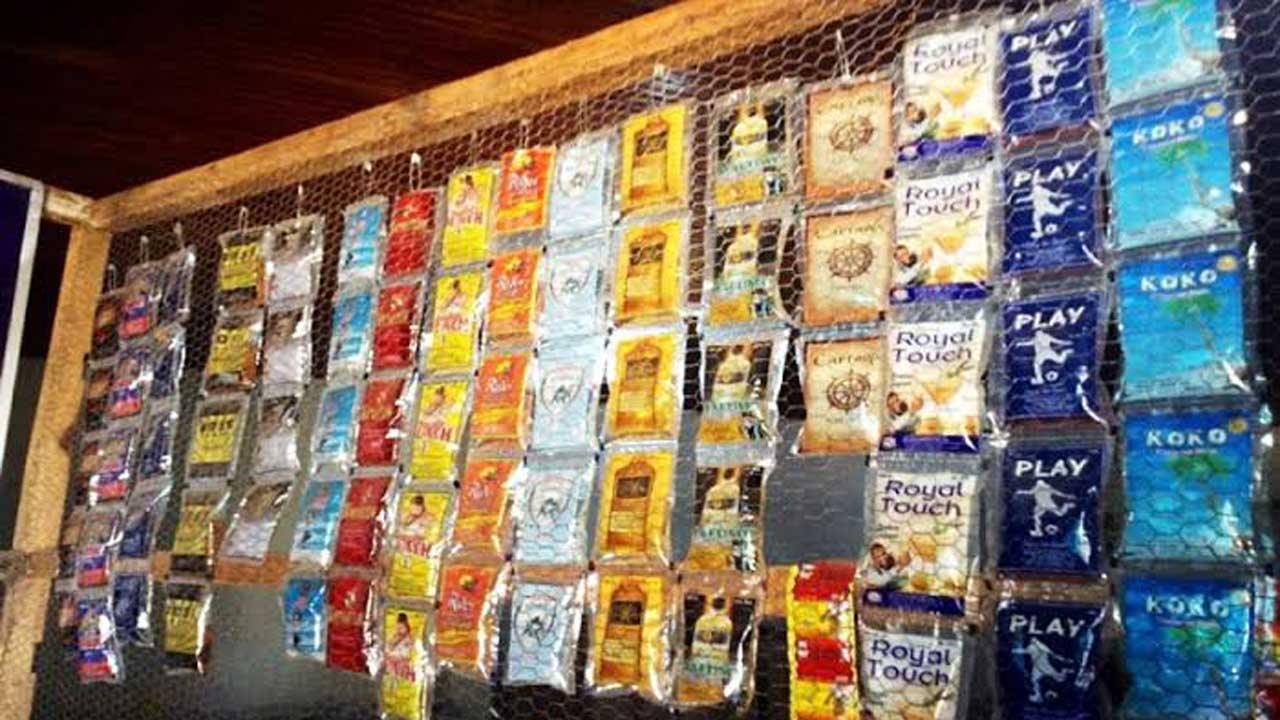

The news that the National Agency for Food and Drug Administration and Control (NAFDAC), would wield the big stick and ban the production and consumption of drinks in sachets has been lingering for a while. It started as a rumour but with time started gaining tractions in the public. Of course, the news was received with mixed feelings.
[ad]
In some quarters, especially among the promoters of various beer brands in the market, whose values and consumptions are being eroded, it was seen as a welcome development. But to most Nigerians, who looked at the situation from the prism of its likely negative impact on the economy and purchasing power of the low-income earners, it was considered a deliberate attempt to frustrate the majority of Nigerians.
Mojisola Adeyeye, Director-General, National Agency for Food and Drug Administration and Control (NAFDAC), had earlier stated that the uncontrolled access and availability of high concentration alcohol in sachet and small volume PET or glass bottles contribute to substance and alcohol abuse in Nigeria.
Though substance abuse is a critical issue in Nigeria, many analysts have consistently advised the country to tread softly as the firms producing alcohol in sachets employ people, pay taxes, and contribute to the economy.
To this end, some economic analysts have consistently advised the Federal Government to reconsider the decision to save the businesses of the manufacturers and protect several thousands of jobs that will be lost due to this proposed ban and pronouncement by the Agency.
A recent independent report in a few national dailies and online portals had pointed out that the decision will affect at least 24 corporate organisations, majority of which are indigenous companies with few multinationals currently operating in the industry and are manufacturing wines and spirits with over 70 per cent local inputs.
It was also emphasised that the industry has collective direct investment of over N500,000,000,000 in the Nigerian economy; while indirect investments by other companies in the industry is well over N800,000,000,000.

In value addition, the manufacturers are said to be contributing over 1.2 trillion to the Nigerian economy as well as providing direct and indirect jobs of over 250,000 and over 5,000,000 respectively.
To experts, the proposed ban of alcoholic beverages in sachets and small plastic bottles could hurt firms producing them. This argument becomes germane because most of the firms are small, and implementation of a ban could push them out of business. The DG NAFDAC had earlier in September issued directives targeted at phasing out the sale and consumption of alcohol in sachets and polyethylene terephthalate (PET) bottles.
Mojisola Adeyeye, director-general, National Agency for Foods and Drugs Administration and Control (NAFDAC), disclosed in a statement that the uncontrolled access and availability of high concentration alcohol in sachet and small volume PET or glass bottles contribute to substance and alcohol abuse in Nigeria.
The position of the NAFDAC’s Boss notwithstanding, it’s believed that there are fifth columnists hanging somewhere and pushing the narrative for the ban for their pecuniary interest.
The issue many are raising is whether substance abuse is peculiar to the sachet drink market alone. To this end, many analysts have argued that if a ban is placed on the sale of alcohol in sachets and small bottles, it should as well be placed on others in bigger bottles such as Vodka, Johnnie Walker, among others.
Linking the proposed ban on the fact that sachet drinks promote abuse is laughable considering the fact that Alcohol has a limited contribution to today’s youth substance abuse. We all know the truth but we are looking for scape-goats without minding the consequences.
At various fora, the fact that the real problem is from other substances- tramadol and others, has almost become an overkill but only a few stakeholders cared. At least, victims of kidnap in the hands of Boko Harram and other criminal elements are always quick to narrate how the perpetrators rely on heavy drugs and substances influence to act dastardly.
Meanwhile, a blame game is already gaining momentum as those who are sympathetic to the producers, retailers and consumers of sachet drinks are accusing the Beer manufacturers as the body behind the call for ban to protect their markets.
In the last few years, as a result of economic hardship, many consumers of beer have shifted ground due to drop in purchasing power. A situation which has led to a series of campaigns to play up the benefit of beer consumption.
Specifically, in March this year, Nigerian Breweries, the country’s largest beer manufacturer, announced its worst sales in 15 years. The decline in sales, according to the company, was due to a drop in beer consumption caused by cash scarcity in Nigeria. The cash scarcity has severely impacted the purchasing power of Nigerians across the country.
Beside the global economic crisis, the drop in consumption of beer occurred as the Central Bank of Nigeria drained about 2.1 trillion old naira notes off circulation.
According to a 2021 report by Afrinvest, Nigeria’s protracted FX scarcity occasioned by reduced inflows from crude oil sales and the resultant currency pressures has continued to impact the cost structure of brewers such as Nigerian Breweries, International Breweries and Guinness. The report stated that despite the adoption of backward integration policy aimed at increasing the share of locally produced raw material in production inputs, Nigeria’s major brewers still depend largely on raw material importation to bridge the gap created by domestic supply.
[ad]
Despite being a common societal norm, the increasing rate of alcohol consumption in Nigeria has since created competition among makers of alcoholic drinks. The general public is now exposed to choices that suit their desires and budgets, which determine the type of drinks they take.
In the recent time, as far as alcohol is concerned in the Nigerian context, beer, bitters and spirits have been at loggerheads in the market space, striving to make sales to gain more market value among alcohol consumers at large.
But must we throw away the baby with the bath water? Must manufacturers of drinks in sachets be used as scapegoats simply because they are local manufacturers? What becomes of millions of workers and petty traders who earn their living from sales of these sachet and pet bottle drinks?
Will this ban not throw away hundreds of people into the unemployed markets? The questions are many, and they are all begging for answers. If NAFDAC wants to come out clean of this ambiguity, then the regulatory body must ban the big bottles, too.
Another major question that is yet to be addressed is whether the drinks in sachets are illegal products. If they are not, then the ban is not justifiable. To me, the Nigeria economy and the role being played by this sub-sector should be considered before NAFDAC wields the big stick.
From any angle one chooses to look at the ban, it’s going to impact negatively on the revenues of the various manufacturing firms and make them go under because the biggest portion of their sales comes from the small-sized bottles and sachets.
The massive billion dollars investment in the industry that will be lost in view of the investment in small packages and sachets could be retrogressive, to say the least.
I think we should also be worried about the massive unemployment that will be created since above 80 per cent of the workforce would be laid off and add more pressure to the unemployment market. At a time, the government is working round the clock to generate more revenue, and we will be witnessing huge taxes that will be lost as a result of ill thought policy.
From the consumer point of view, there is no gainsaying the fact that alcohol in sachets serves as an alternative for an average consumer and if the industries are forced to producing in bigger bottles, the products will be more expensive, thereby making them hard to reach their market. Of course, this will also put the average consumers at a disadvantage. The inadequate supply of bottles from manufacturers will add to the problems of the manufacturers.
Recently, a research analyst at United Capital plc, Ayorinde Akinloye, pointed out that the impact of the ban would be felt more on small-scale players who operate in this segment but could be a win for other foreign large-scale established players and imported brands.
Akinloye reached this conclusion because the dominant consumers of alcohol in sachets and small bottles are low-income earners, just as the predominant retailers of alcohol in this packaging are small scale indigenous businesses who own small kiosks or even hawk their wares.
The truth is that as Nigeria’s stunted economic growth squeezes consumer wallets, more businesses have been forced to rebrand products and services into smaller affordable packages in (sachetisation) to boost sales by targeting low-income earners.
Most products including salts, sugar, tea, vegetable oil, tooth paste, seasoning, rice, garri, liquid soap, milo, bounvita all come in sachets. With the proposed ban, analysts believe the manufacturing firms might be facing declining sales or total collapse.
In January last year, a former director-general of Nigeria’s largest business think tank, the Lagos Chamber of Commerce and Industry (LCCI), Muda Yusuf said, “It will affect their sales because sachet packaging is mainly to make products available and affordable to those at the bottom of the pyramid. It has become necessary as a result of the high level of poverty in the country,”
Sadly, this type of ban had been proposed in many African countries and failed. It only opened up the market for unregulated and adulterated products, moonshine, which are more dangerous to the health of consumers.
In view of this, concerned citizens have urged the government through its regulatory agency to shift ground and intensify access control and regulation instead of total ban. This will achieve two things; control consumption and save the economy unwarranted business and job losses.
At a time like this when the country’s economy is almost in comatose, I will advocate for Government support in the form of access control and tighter regulations but definitely not ban, which to me will be counterproductive.
What we need is tightened enforcement by law enforcement agencies; increased monitoring and compliance checks by NAFDAC, FCCPC and others to ensure strict product quality in terms of content and safety.
Adebayo, a marketing researcher and analyst, wrote from Ijebu Ode.
[ad]

