 Follow Us on Google News


 Follow Us on Google Discover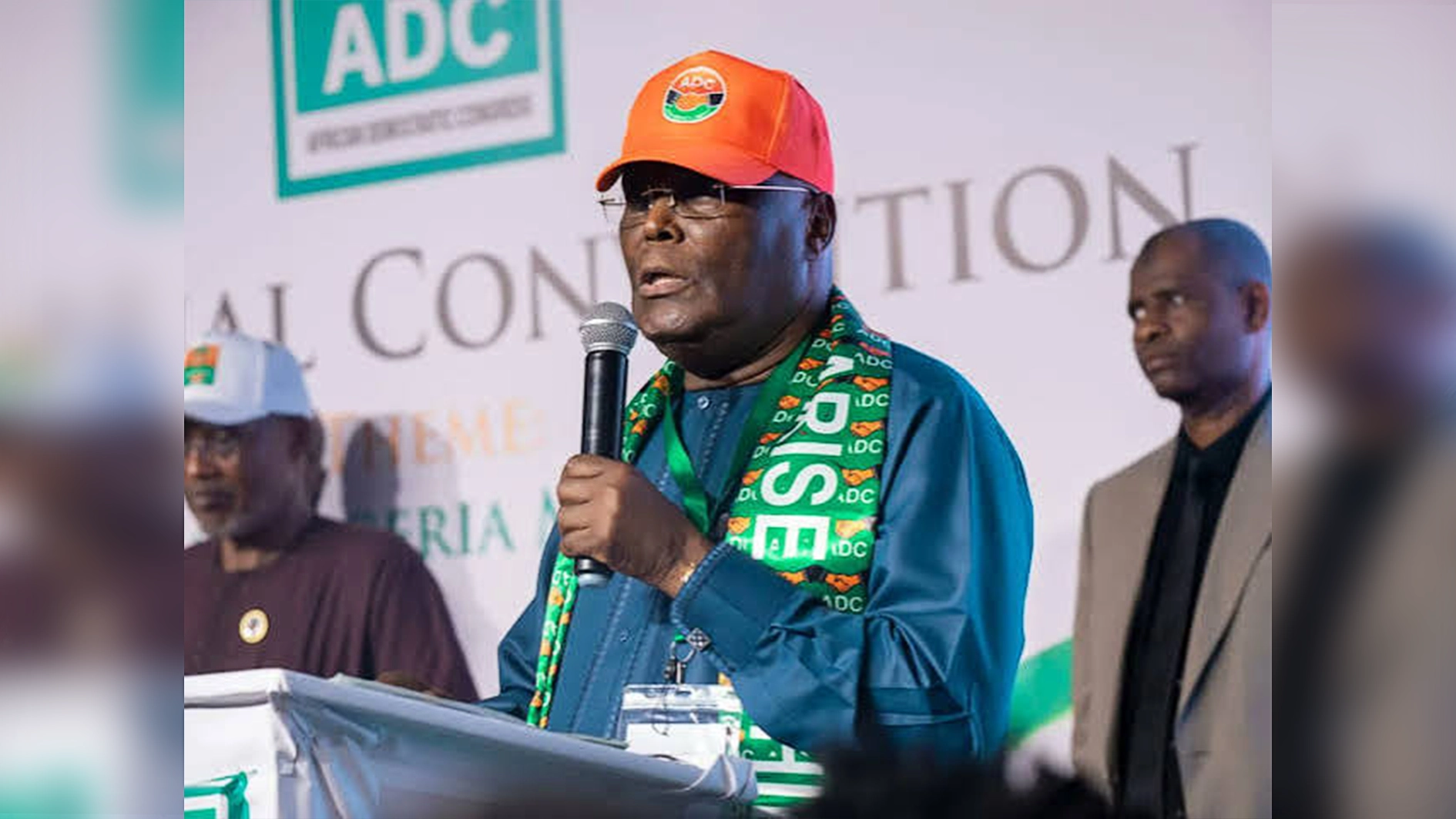
By Sola Adeola
Atiku Abubakar’s renewed promise to restore a “targeted subsidy” on petrol has reopened one of Nigeria’s most emotionally charged economic debates.
For Nigerians battling high transportation costs, rising food prices and declining purchasing power, cheaper petrol sounds like an obvious answer. But presidential promises must be examined beyond their immediate appeal.
Economic policy cannot be judged merely by the sweetness of the promise. It must be judged by its cost, sustainability, transparency and consequences. More troubling, however, is the confusion surrounding the promise itself.
Statements from Atiku’s own aides have appeared to offer conflicting explanations about whether the proposed subsidy would be temporary, whether it would have a defined exit point and what precisely an Atiku administration intends to implement. Atiku has subsequently reaffirmed his position.
That raises a question that goes beyond economics.
When a presidential aspirant and his senior aides cannot communicate one clear position on a policy with enormous implications for Nigeria’s finances and citizens, what does that say about policy discipline, internal coordination and preparedness to govern?

This is therefore not merely a debate about petrol prices.
It is a test of whether a presidential candidate can offer Nigerians a coherent, costed and sustainable alternative to a difficult reform.
Atiku is entitled to challenge the economic policies of the Tinubu administration. He is equally entitled to propose an alternative.
But when that alternative involves reopening government intervention in the petroleum market, Nigerians are entitled to demand more than political rhetoric.
Atiku has moved away from simply promising a return to the old import based subsidy system. His more recent proposal is presented as a production based intervention, under which qualifying domestic refineries would have access to crude at preferential prices, with conditions attached to production, domestic supply, transparency and verification.
His argument is that Nigeria should move support from petroleum imports towards domestic refining. On the surface, that is a more sophisticated proposition. But sophistication of design does not automatically make a policy economically sound. The fundamental questions remain.
How much would the proposed intervention cost annually? What would be the fiscal ceiling? How would the preferential crude price be determined? Who exactly would qualify? How would beneficiaries be selected? How would government prevent political patronage?
How would the subsidy benefit be transmitted to consumers? Who would independently verify production and domestic supply?
What happens when international crude prices rise?
What happens when the naira depreciates?And, most importantly, under what measurable circumstances does the intervention end?
These are not technical distractions. They are the heart of the policy.
Calling a subsidy “targeted” does not automatically make it targeted.
Perhaps the most disturbing aspect of the current subsidy controversy is not even the subsidy itself. It is the extraordinary confusion that has emerged from Atiku’s own camp.
Within a matter of days, Nigerians received different explanations of what an Atiku administration would do about petrol subsidy.
First came Atiku’s spokesperson, Paul Ibe, who said Atiku would restore petrol subsidy if elected and eventually phase it out. The proposal was presented as a temporary intervention intended to provide relief to Nigerians and businesses struggling with the consequences of economic hardship.
Then another senior aide, Phrank Shaibu, intervened. Shaibu rejected that explanation and described Ibe’s statement as an “unauthorised and misleading characterisation” of Atiku’s position. He said there would be no predetermined date for ending the subsidy. Instead, the intervention would remain until domestic refining capacity expanded, supply stabilised, competition deepened and market conditions could deliver affordable petrol without government support.
Then Atiku himself stepped in. He said his position had “not changed” and reaffirmed that he would restore what he called a “targeted subsidy.”
So which is it?
Is the subsidy temporary and subject to a planned phase out?
Is there no predetermined exit date? Or is the policy simply a commitment to restore a targeted subsidy whose duration will depend on future market conditions?
These are not semantic differences. They represent materially different policy positions.
And that raises a fundamental question.
Who is actually speaking for Atiku?
A presidential campaign is not an informal conversation in which different aides can offer competing interpretations of the same major economic policy.
A presidential candidate seeking to govern Nigeria should have a disciplined policy communication structure.
His aides should know the candidate’s position. They should understand it. And they should communicate it consistently.
If they do not, Nigerians are entitled to be concerned.
This is particularly serious because petrol subsidy is not a peripheral issue. It affects government revenue, public expenditure, inflation, transportation, foreign exchange, domestic refining, household income and the allocation of scarce national resources.
It is therefore difficult to dismiss contradictory public statements about it as a simple media misunderstanding.
A presidential aspirant must demonstrate policy discipline before asking Nigerians to entrust him with the machinery of government.
The question is not whether Atiku is allowed to change his position. Of course he is. Politicians, economists and governments can revise policies when circumstances change.
The problem is different.
If his position had genuinely remained unchanged, why did one senior aide announce a temporary subsidy and eventual phase out? Why did another senior aide publicly reject that explanation? And why did Atiku subsequently have to intervene personally to reaffirm his position?
These are legitimate questions arising from the statements of Atiku’s own camp, not questions invented by his political opponents.
There is another question Nigerians are entitled to ask.
Is this simply organisational confusion, or is the ambiguity politically convenient?
I am not suggesting, as an established fact, that Atiku deliberately instructed his aides to issue contradictory statements. There is insufficient evidence to make that accusation.
But the sequence creates a legitimate political question.
Restoring petrol subsidy is enormously attractive in an environment where Nigerians are struggling with the cost of living.
Telling voters that subsidy will eventually disappear makes the proposal sound fiscally responsible. Removing a predetermined exit date makes the promise more politically attractive to citizens who fear another petrol price increase.
That is why clarity matters.
Different messages may unintentionally or strategically appeal to different audiences. But a presidential aspirant cannot leave Nigerians guessing.
When different explanations emerge from the same political camp within days, Nigerians are entitled to demand clarity.
Politics is about persuasion. Governance is about precision.
A president cannot govern through ambiguity.
If elected, Atiku would have to coordinate ministers, advisers, economic managers, regulators and agencies. Markets would react to his pronouncements. Investors would interpret his policies. Businesses would make decisions based on them. States would make fiscal calculations around federal policies. Citizens would make economic choices based on what they believe the government intends to do.
That requires clarity.
If a presidential candidate cannot maintain a consistent public position on a policy as consequential as petrol subsidy during a campaign, Nigerians are entitled to ask: how will his government communicate and coordinate far more complicated policies once he occupies the presidency?
That is not an unfair question.
It is a reasonable test of presidential preparedness.
There is an understandable temptation in politics to promise immediate relief whenever citizens are suffering. But governments do not create money merely by announcing cheaper petrol.
If government provides crude to refiners below its market equivalent value, there is an opportunity cost to the Federation.
That cost must be calculated, disclosed and justified.
Atiku’s production based proposal acknowledges the need to account for that opportunity cost and proposes safeguards around verification and domestic supply.
But Nigerians still need to see the numbers.
How much would the intervention cost annually?
How much crude would qualify?
What would be the maximum government exposure?
How would the subsidy affect Federation Account revenues?
nds available to states and local governments?
Would government have to borrow?
Would other public priorities suffer?
These are fundamental questions.
The consumer sees the benefit at the filling station. The fiscal consequences are less visible.
That is why the question must be asked.
Who ultimately pays for the cheaper litre?
Atiku’s production based model also raises an important technical issue.
A refinery does not turn every barrel of crude into petrol. It produces multiple petroleum products with different market values and uses.
Therefore, if government provides crude at a preferential price as part of a subsidy mechanism, Nigerians deserve a transparent accounting system showing exactly how the benefit is distributed across the products produced from that crude.
Atiku’s camp says the system would require independently verified quantities of petroleum products to be supplied to the Nigerian market and would prevent refiners from simply pocketing the benefit of preferential crude.
That is a reasonable safeguard.
But safeguards on paper are not enough.
Who performs the verification?
How often?
What happens when a refinery fails to meet its obligations?
What penalties apply?
Who audits the books?
Who determines the reference crude price?
Read the remaining part of this article on www.guardian.ng
How are the values of petrol, diesel, aviation fuel and other products accounted for?
And how does the government ensure that the public benefit from the discounted crude is greater than the opportunity cost to the Federation?
These are precisely the questions a serious economic programme must answer.
Atiku’s argument that higher petrol prices increase transportation costs, which then contribute to higher food prices, is not entirely wrong.
But it is incomplete.
Nigeria’s food crisis is considerably more complicated.
Insecurity has disrupted agricultural production in several parts of the country. Poor storage contributes to post harvest losses. Bad roads increase transportation costs. Exchange rate movements affect imported inputs. Fertiliser, seeds, machinery and other agricultural inputs have become more expensive. Flooding and climate related disruptions affect production. Supply chain inefficiencies also contribute significantly to food prices.
Therefore, reducing petrol prices cannot, by itself, solve Nigeria’s food inflation.
It may provide some relief.
But relief is not the same thing as reform.
And Nigeria needs reform.
There is also an uncomfortable political reality here.
Restoring subsidy is popular. Removing subsidy is painful.
A politician seeking power therefore has an obvious incentive to promise the former while criticising the latter.
But responsible leadership sometimes requires telling citizens what they do not want to hear.
Nigeria’s economic problems did not begin with Tinubu. They did not begin with subsidy removal. They are the
cumulative result of decades of weak institutions, poor fiscal discipline, inadequate productivity, policy inconsistencies and dependence on oil revenues.
President Bola Ahmed Tinubu’s decision to remove petrol subsidy created severe hardship, and the government deserves criticism for the speed and inadequacy of some cushioning measures.
But reversing a difficult reform simply because it is unpopular is not automatically good governance.
The better question is whether the reform can be improved.
Can public transportation be expanded?
Can mass transit be subsidised instead of petrol consumption?
Can food production be increased?
Can logistics costs be reduced?
Can domestic refining lower Nigeria’s exposure to imported refined products?
Can social protection be made more transparent and better targeted?
Can government reduce waste and redirect savings towards productive investment?
Those are the questions a serious presidential candidate should also be answering.
To be fair, Nigeria’s petroleum landscape is changing.
Domestic refining capacity is expanding, and government is considering reforms to crude allocation and pricing to make feedstock more accessible to domestic refiners.
That means Atiku’s production based subsidy proposal deserves to be examined on its actual economic merits rather than dismissed simply because it contains the word “subsidy.”
There may be a legitimate argument for temporary, transparent support that accelerates domestic refining while ensuring consumers receive the benefit.
But that argument must still confront the central issue.
When does temporary intervention become permanent government dependence?
Nigeria has been here before.
A subsidy that begins as emergency relief can become politically difficult to remove. Beneficiaries can become entrenched. Special interests can emerge. Government can become reluctant to withdraw support. And taxpayers can ultimately carry the burden.
That is why an exit mechanism is not an optional extra.
It is central to the policy.
Atiku Abubakar is an experienced politician and former vice president. He therefore understands that government policy is ultimately about choices.
If he wants Nigerians to support his proposed production based subsidy, he should publish the complete economic model.
He should tell Nigerians how much it will cost, what the fiscal ceiling will be, how much crude will qualify, which refineries will qualify, how the benefit will reach consumers, who will independently verify production, how corruption and political patronage will be prevented, what happens to the other petroleum products produced from the subsidised crude, what happens if crude prices rise dramatically, what happens if the naira weakens sharply, and what measurable conditions will trigger the end of the intervention.
These questions are not designed to prevent Atiku from offering an alternative.
They are designed to determine whether his alternative can actually work.
There is nothing inherently wrong with government intervention in an economy.
There are circumstances in which targeted subsidies can protect vulnerable citizens, support strategic industries or accelerate structural transformation.
The question is whether the intervention is targeted, transparent, affordable, measurable, auditable and ultimately temporary.
The danger begins when a government cannot clearly define who benefits, how much the intervention costs, who bears the cost and when it ends.
That is why Atiku’s proposal deserves scrutiny rather than applause or condemnation.
But the contradictory statements surrounding the proposal deserve even greater scrutiny.
Because before Nigerians can debate whether the policy is economically sound, they must first know what the policy actually is.
Atiku Abubakar should not be condemned merely because he proposes a different economic philosophy from the Tinubu administration.
Democracy requires competing ideas.
But competing ideas must be subjected to the same test.
Can they work?
Can Nigeria afford them?
Can they be sustained?
And, importantly, can the candidate explain them clearly and consistently?
On petrol subsidy, Atiku has presented a more sophisticated proposal than a simple return to the old import based system. His production focused model deserves to be examined seriously.
But the proposal still requires detailed answers on cost, fiscal exposure, implementation, verification and exit conditions.
More troublingly, Nigerians have recently been presented with conflicting explanations from members of Atiku’s own camp about whether the subsidy would be temporary, whether there would be a predetermined exit date and what exactly
“targeted subsidy” means.
The question Nigerians should therefore ask is not simply, “Will Atiku make petrol cheaper?”
It is, “What exactly is Atiku promising, who will pay for it, how will it be administered, and when will it end?”
And there is an even more fundamental question.
If Atiku’s own senior aides cannot initially communicate one coherent position on such a consequential economic policy, what does that tell Nigerians about the policy discipline and coordination they can expect from an Atiku administration?
That question should not be dismissed as partisan politics.
It is a legitimate question of presidential preparedness.
Atiku may have a defensible argument for targeted, production based support to domestic refining. He may even be right that Nigeria should seek ways of making energy more affordable while strengthening local refining.
But a good idea does not become good policy merely because it is politically attractive.
It requires numbers.
It requires discipline.
It requires transparency.
It requires accountability.
And it requires a clearly communicated endgame.
Nigeria has already travelled the road of petroleum subsidy.
The country knows what happens when temporary interventions become entrenched, when public resources become difficult to track and when political considerations make economically necessary decisions almost impossible.
Nigeria cannot afford another cycle of promise, subsidy, fiscal pressure, political dependency and crisis.
What Nigeria needs is an economic programme that reduces the cost of living without permanently transferring the cost to future generations.
It needs policies that increase domestic production, strengthen refining capacity, reduce logistics costs, improve agricultural productivity, expand public transportation, protect vulnerable households and create an economy in which Nigerians can earn more rather than permanently depend on government intervention to survive.
That is the harder path.
But presidential leadership is not about choosing the easiest promise.
It is about choosing the most sustainable solution.
Atiku may believe that restoring targeted petrol support will win public confidence.
But Nigerians should look beyond the immediate price at the pump and ask a more consequential question.
What will the subsidy cost the Nigerian people tomorrow?
And before they even get to that question, they should ask another.
Does the candidate himself have a sufficiently clear and coordinated plan for the policy he is asking Nigerians to trust him to implement?
A presidential candidate who wants to reverse or redesign a difficult reform must demonstrate that he has a better alternative, not merely a more popular one.
Nigeria cannot afford to turn economic hardship into an auction of political promises.
The time has come for presidential candidates to stop telling Nigerians only what they want to hear and start telling them what the country can actually afford.
That is the difference between campaigning for power and preparing to govern.
THE SOLA ADEOLA VERDICT
Atiku is entitled to challenge Tinubu’s economic reforms. He is entitled to propose targeted support for domestic refining. But Nigerians are equally entitled to demand clarity, numbers, accountability and an exit strategy.
Until the economics are fully demonstrated and the contradictions within his own camp are resolved, “targeted subsidy” remains a compelling political promise, but not yet a sufficiently convincing presidential economic programme.
Concluded
Sola Adeola can be reached on Tel. 08071313200. Email: [email protected]

