 Follow Us on Google News
 Follow Us on Google Discover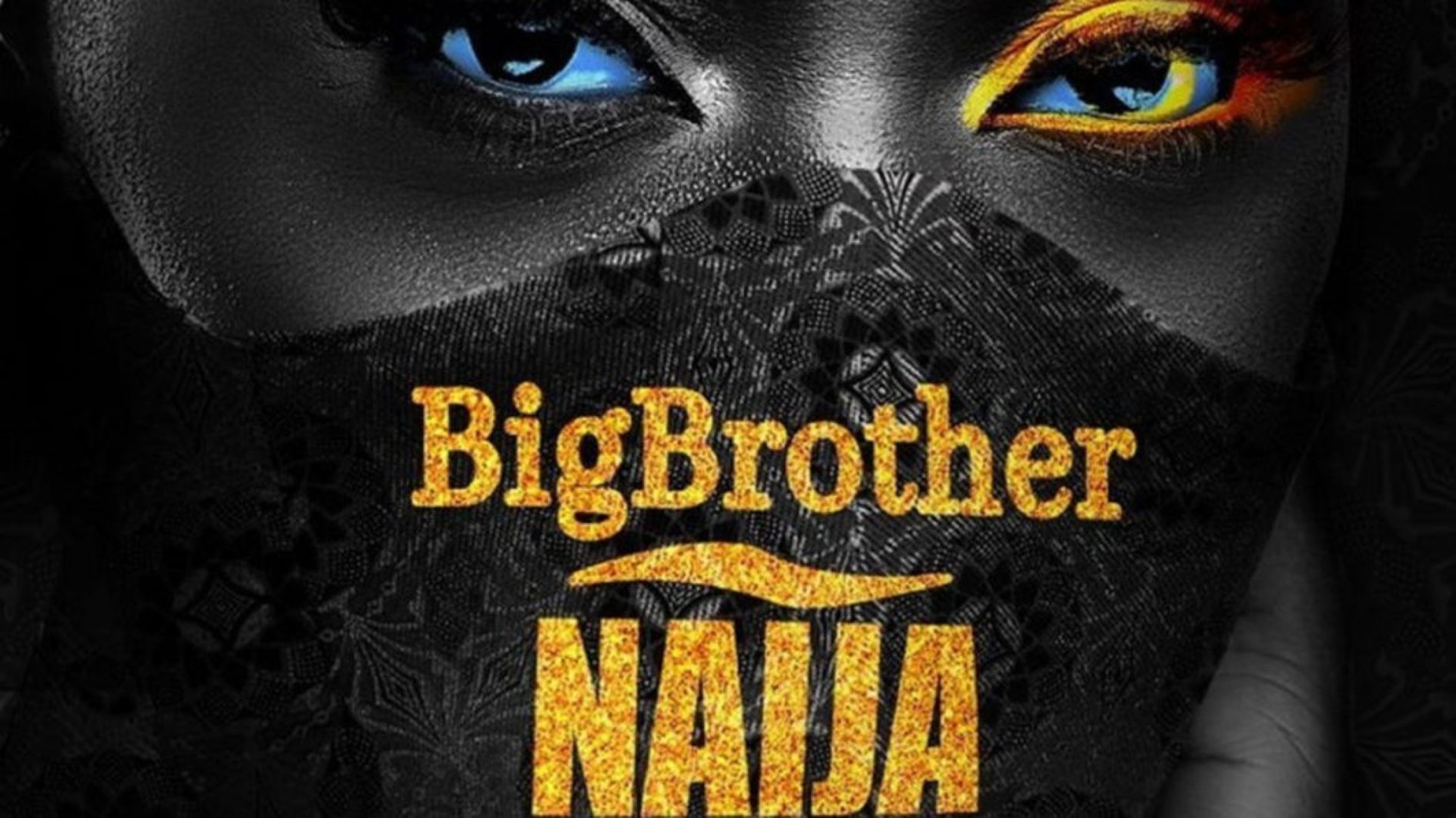
By Sunday Ayodele Enikanselu
When a nation gives greater visibility to misguided and dysfunctional entertainment architecture than intellectual excellence, what values are we teaching the next generation?
There is nothing inherently wrong with entertainment. Every healthy society needs entertainment, recreation, music, film, sport, drama and other forms of creative expression. Entertainment can educate, inspire, employ, unite and even promote national identity. Nigeria has every reason to be proud of the extraordinary creativity of its entertainment industry and the global influence of its musicians, filmmakers, actors and other creative professionals.
This article is, therefore, not against entertainment. It is against the kind of entertainment architecture represented by Big Brother Naija and the values, behaviours, images and aspirations that its present format can repeatedly project, amplify and normalise before millions of Nigerians, particularly children and young people.
That distinction is fundamental.
The issue before us is not whether Nigerians should be entertained. The issue is what kind of entertainment we are constructing, what kind of behaviour we are rewarding through it, what kind of personalities we are elevating, and what kind of society we are unconsciously building when entertainment becomes one of the most powerful teachers of our younger generation.
Big Brother Naija has long ceased to be merely a television programme. It has become a massive cultural and commercial phenomenon. Its contestants can become household names almost overnight. Their activities generate enormous social-media conversations, media coverage, commercial endorsements and followership. Its influence, therefore, extends far beyond the walls of the Big Brother House.
And precisely because its influence is so enormous, Nigeria must have the courage to interrogate its architecture.
When entertainment becomes a value system
Every major entertainment platform communicates values, whether intentionally or unintentionally. It tells society what is interesting.It tells society what is fashionable.It tells society what is worth watching.It tells society who deserves attention. And, perhaps most importantly, it tells young people what can make them successful. This is where the Big Brother Nigeria phenomenon becomes troubling.
The concern is not simply about individual housemates or isolated incidents. The concern is about a programme architecture in which relationships, confrontations, provocative behaviour, sexualised displays, emotional conflicts, sensational exchanges and other forms of dramatic conduct can become major sources of attention and entertainment.
The programme is built around observation. Contestants live together under continuous surveillance, and their personalities, relationships, conflicts and behaviour become the product. The more dramatic the environment becomes, the greater the entertainment value. The greater the entertainment value, the greater the public attention. The greater the public attention, the greater the commercial value. And the greater the commercial value, the greater the incentive to keep generating attention.
That is an entertainment architecture. But it is also an architecture of incentives. And when the incentives attached to fame are not sufficiently balanced by responsibility, character and social value, we should not be surprised when some young people begin to conclude that visibility itself is achievement.
The most vulnerable audience is watching
The most important question is not what an adult viewer makes of Big Brother Naija. It is what an impressionable child makes of it.
A child does not necessarily possess the emotional maturity, critical reasoning or social experience required to distinguish between entertainment and exemplary behaviour. The child sees what receives attention. The child sees what attracts followers. The child sees what becomes a trending subject. The child sees people becoming famous within weeks. The child sees luxury associated with celebrity. The child sees controversial behaviour generating enormous public conversation. And the child can begin to internalise the dangerous proposition that the shortest road to success is not necessarily through knowledge, discipline, creativity and productive work, but through visibility, popularity and instant fame. This is where the national value question becomes unavoidable.
What happens when a young person begins to believe that becoming famous is more important than becoming educated? What happens when followers become more important than competence? What happens when material possessions become the principal evidence of success? What happens when controversy becomes a strategy for visibility? What happens when sexualised or provocative conduct becomes commercially rewarded? What happens when celebrity becomes more attractive than scholarship?
These are not merely entertainment questions. They are questions about the future character of Nigeria.
Moral dilution does not happen overnight
No society wakes up one morning and discovers that its moral values have disappeared. Moral and cultural dilution usually occurs gradually. Something once considered unacceptable becomes tolerated. What is tolerated becomes familiar. What becomes familiar becomes normal.bAnd what becomes normal eventually becomes culturally defensible. That is how social boundaries move. That is why the repeated public display and amplification of behaviours traditionally regarded by many Nigerian families and communities as inappropriate cannot simply be dismissed as harmless entertainment.
The question is not whether every child who watches Big Brother Naija will imitate what is displayed. Of course, many will not. The question is whether continuous exposure contributes to changing perceptions of what is acceptable, desirable or fashionable. That is the more serious concern.
The family must accept its share of the blame. Yet it would be intellectually dishonest to place the entire responsibility at the door of Big Brother Naija. The Nigerian family must also look into the mirror. Parents are the first custodians of the moral development of their children. The home is the first school.nThe parent is the first teacher. Character formation begins long before a child enters a classroom.
Why, therefore, are some parents giving children unrestricted access to smartphones, social media, television and streaming platforms without adequate supervision? Why are some parents exposing teenagers to adult-oriented content and subsequently complaining about the changing behaviour of the same children? Why do some parents allow children to watch programmes whose content they themselves consider inappropriate? We cannot give the media unrestricted access to our children and then complain that the media is raising them. Parents cannot outsource parenting to television. A child needs explanation. A teenager needs boundaries.A young person needs responsible role models. And the family must be sufficiently engaged to help children distinguish between what is entertainment and what constitutes acceptable conduct.
But the programme cannot escape responsibility
While parental responsibility is fundamental, it does not absolve broadcasters and programme producers of theirs. Big Brother Naija is not an accidental occurrence. It is deliberately designed. Its house is designed. Its rules are designed. Its challenges are designed. Its nomination and eviction mechanisms are designed. Its camera coverage is designed. Its promotional strategy is designed. Its commercial partnerships are designed. Its publicity is designed. The audience engagement strategy is designed.
In other words, the outcomes are influenced by architecture. Therefore, it is legitimate to ask whether that architecture can be redesigned to retain entertainment value while substantially strengthening its contribution to positive social values. The answer should be yes.
Media houses must also examine their role
The media ecosystem surrounding Big Brother Naija deserves equal scrutiny. The programme does not become a national obsession through television alone. Newspapers, blogs, radio, television discussion programmes and social-media platforms contribute enormously to its visibility.
A quarrel in the House can become a headline. A romantic development can become a major news story. A controversial statement can dominate social media. A housemate can become a celebrity almost overnight. This is the power of the media. But media power carries social responsibility.
If the media repeatedly gives extraordinary visibility to sensational behaviour, it inevitably contributes to the elevation of that behaviour within public consciousness. The question is therefore not whether media organisations should report Big Brother Naija. They certainly can. The question is whether the volume, intensity and character of the coverage are proportionate to its social value. More importantly, where is the corresponding media machinery for intellectual excellence?
Where are our young interracial heroes?
Nigeria has brilliant children. Our secondary-school students regularly demonstrate extraordinary intellectual capacity in international Mathematics, Science, Technology, Engineering and other academic competitions. They return home with medals. They compete against young people from some of the most advanced educational systems in the world. They put Nigeria’s name on international platforms. They demonstrate discipline, intelligence, perseverance and ingenuity. But how much national visibility do they receive? How many Nigerians know their names? How many major television interviews are organised for them? How many newspapers devote sustained front-page attention to them? How many corporate organisations immediately seek them out as ambassadors? How many enormous welcome ceremonies are organised for them? How many national awards are created to celebrate them? How much social-media machinery is mobilised around their achievements? And perhaps most importantly: How many Nigerian children are growing up dreaming of becoming one of these intellectual champions?
This is the uncomfortable comparison. We have constructed a sophisticated publicity and commercial ecosystem around entertainment celebrity, but have we constructed an equally powerful ecosystem around intellectual excellence? If a Nigerian child wins an international academic competition, should that achievement not generate national excitement? Should the child not be celebrated? Should the child not become a role model? Should government, schools, universities, media organisations and corporate Nigeria not deliberately make such achievements visible?
What we celebrate we teach
A nation teaches its values not only through school curricula. It teaches through its reward systems. It teaches through its heroes. It teaches through its media. It teaches through its entertainment. It teaches through what it celebrates.
If we make intellectual excellence highly visible, children learn that knowledge matters. If we make innovation highly visible, children learn that creativity matters. If we make entrepreneurship highly visible, children learn that enterprise matters. If we make integrity highly visible, children learn that character matters. But if the overwhelming public reward appears to go to celebrity, controversy, physical appearance, sensationalism and instant wealth, we should not be surprised if some young people begin pursuing precisely those things. A society’s reward system is one of its most powerful teachers.
Government cannot remain an indifferent spectator
Government cannot completely escape this debate. This is not a demand for arbitrary censorship. It is a demand for responsible regulation. The Nigerian state already regulates many aspects of public life in the interest of social order, public decency and the protection of minors. If law-enforcement agencies can intervene in private entertainment establishments when they believe public decency laws have been violated, why should the regulatory system become completely indifferent when comparable concerns are presented through a nationally distributed television programme entering millions of homes?
The question deserves an answer.
The issue is not whether government should dictate everything Nigerians watch. The issue is whether children should be adequately protected from content that may be inappropriate for their age and whether broadcasters should operate within clearly defined public-interest standards. Government must therefore encourage a more robust regulatory framework around age classification, content warnings, watershed scheduling, parental controls and responsible broadcasting.
The objective should not be to kill entertainment. It should be to ensure that commercial entertainment does not completely overwhelm public responsibility.
Corporate Nigeria must ask a bigger question
The corporate sponsors of Big Brother Nigeria also have a strategic responsibility. There is nothing wrong with sponsoring entertainment. Businesses need visibility.Brands need customers. Entertainment creates enormous commercial opportunities. But corporate Nigeria possesses resources and influence capable of doing much more. If companies can invest heavily in entertainment platforms capable of making young people celebrities, why cannot they create equally attractive platforms capable of making young people innovators, entrepreneurs, scientists, inventors and problem-solvers?
Why not create televised national innovation competitions?
Why not establish youth entrepreneurship leagues? Why not sponsor national coding and robotics championships? Why not create competitions around agricultural technology? Why not discover young Nigerian inventors? Why not create a national platform for young people solving Nigerian problems? Why not make entrepreneurship glamorous? Why not make innovation fashionable? Why not make intellectual achievement commercially attractive? Why must celebrity be the most sophisticated route to visibility for Nigerian youth? There is a massive opportunity here for corporate Nigeria to rethink its social-investment strategy.
Big Brother Naija can be reformed, not destroyed
Let us be clear. Big Brother Nigeria should remain. Nigeria needs a vibrant entertainment industry. The creative economy is important. Young Nigerians need platforms for talent discovery. Entertainment generates employment, business opportunities, tax revenues and international visibility. The answer is therefore not abolition. The answer is surgical reform. The programme’s present architecture, design and operational framework should be subjected to serious review. Retain the excitement. Retain the competition. Retain the talent discovery. Retain the entertainment. But introduce stronger dimensions of character, culture, knowledge, innovation and enterprise.
Why should a weekly challenge not require contestants to develop an entrepreneurial solution? Why should they not compete in innovation? Why should they not solve a community problem? Why should they not learn about Nigerian history? Why should they not engage with Nigerian cultural heritage? Why should they not demonstrate financial literacy? Why should they not participate in debates on national development? Why should the House not become a laboratory where young Nigerians demonstrate creativity, leadership, teamwork and responsible citizenship? That would still be Big Brother Naija. But it would be Big Brother Naija with a national developmental conscience.
Let us create the entertainment of the future
Nigeria should now think beyond criticism. We need alternatives. Imagine a national television programme where 20 brilliant Nigerian youths compete to build businesses capable of solving real Nigerian problems.Imagine the public voting for the best innovation. Imagine corporate sponsors providing seed capital. Imagine government agencies providing technical support. Imagine universities providing research mentorship. Imagine successful entrepreneurs serving as coaches. Imagine young inventors receiving national recognition. Imagine millions of Nigerian children watching and saying:
“I want to become an inventor.”
Imagine the same media attention currently available to celebrity being deliberately redirected towards excellence. That is the kind of entertainment architecture Nigeria needs. We should not abandon entertainment. We should upgrade it.
The real issue is not Big Brother; it is the Nigerian value system
At its deepest level, this debate is not even about Big Brother Nigeria. It is about us. What do we celebrate? What do we reward? Who are our heroes? What do we make aspirational? What do we teach our children success means?
Are we producing young people who want to be famous, or young people who want to be useful? Are we rewarding appearance or ability? Are we celebrating controversy or character? Are we glorifying instant wealth or productive enterprise? Are we giving greater visibility to sensationalism than scholarship? These are questions Nigeria cannot continue to postpone.
From fame to value
Nigeria does not need fewer ambitious young people. It needs better-directed ambition. We should not tell our children that fame is bad. We should tell them that fame without value is empty. We should not tell them that wealth is bad. We should teach them that wealth without productivity, integrity and responsibility is dangerous. We should not condemn entertainment. We should demand entertainment with responsibility. We should not suppress creativity. We should channel creativity towards value creation. We should not destroy Big Brother Nigeria. We should demand that it evolves with the responsibilities that accompany its enormous influence.
The choice before Nigeria
The future of a nation is ultimately determined by the values transmitted to its younger generation. Nigeria therefore has a strategic choice. We can continue to construct an environment where instant fame receives enormous visibility while intellectual achievement struggles for attention. Or we can deliberately build a society where character, scholarship, innovation, entrepreneurship, discipline, creativity, integrity and responsible citizenship are equally glamorous. Big Brother Naija can be part of that transformation. The media can be part of it. Corporate Nigeria can be part of it. Government can be part of it Schools can be part of it. Parents must be part of it. And ultimately, society must be part of it.
The objective should not be to silence entertainment. It should be to raise the standard of what entertainment can accomplish for society. Nigeria must move from entertainment that merely captures attention to entertainment that also creates aspiration. From celebrity worship to value creation. From instant fame to enduring achievement. From passive consumption to productive imagination. From sensationalism to substance. From merely producing stars to producing builders of the nation. Because at the end of the day, the greatest question is not how many people Big Brother Nigeria can make famous.
The greater question is: What kind of Nigerians are we making visible to our children—and what kind of Nigeria will those children eventually build? That is the question we must answer. And we must answer the question now.
Professor Enikanselu, retired, wrote from Lagos.

