 Follow Us on Google News
 Follow Us on Google Discover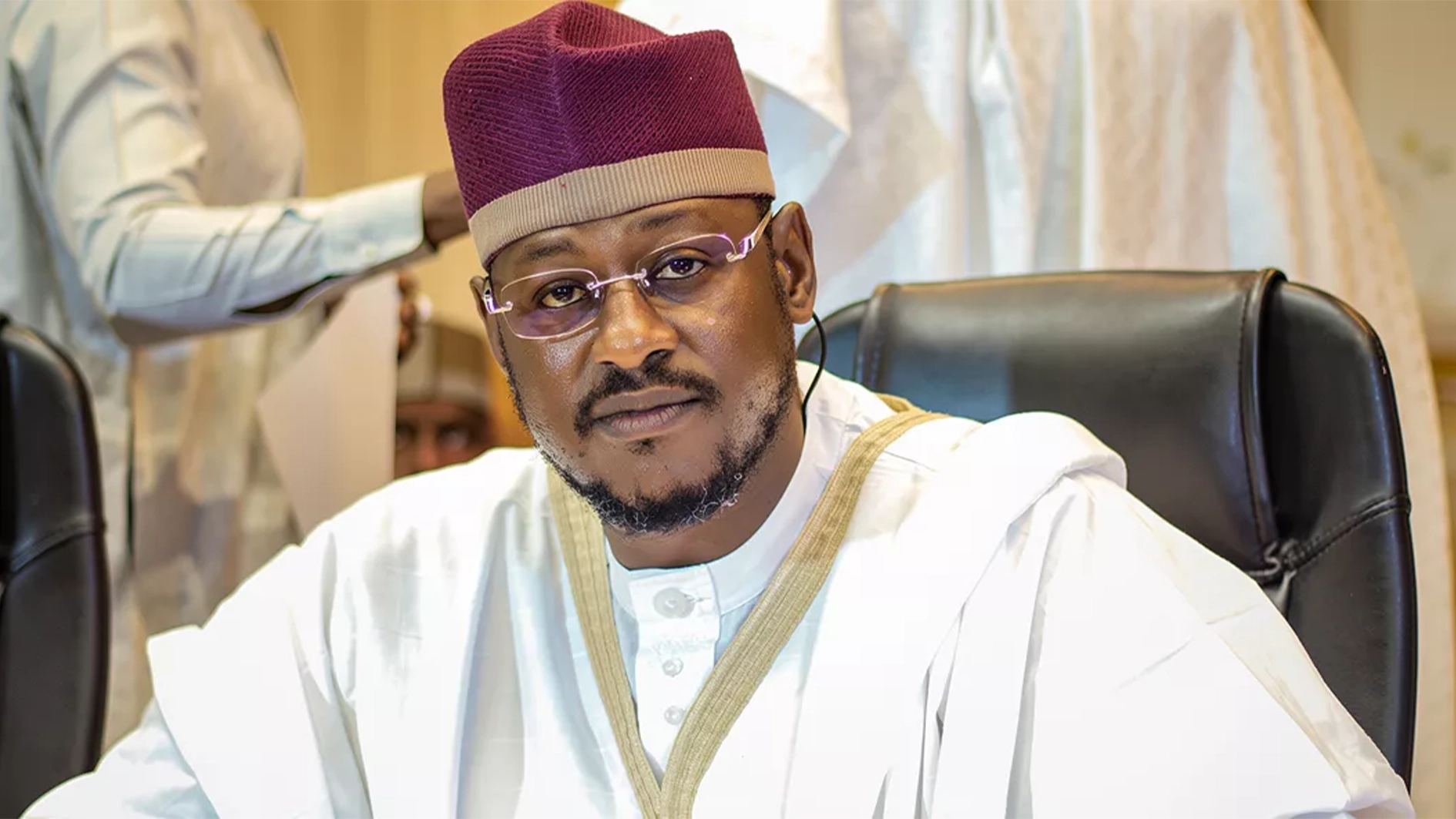
The origin and content of the insecurity that has plagued the country for close to two decades is defined differently by stakeholders, depending on intentions and attitude. Some have invested efforts to under-report and deny the immensity of the problem. Others have refused to call it what it is, to deny complicity or cover up failure to act.
In some quarters, there are actors who gain politically and monetarily from it. They have become war merchants. Either way, Nigeria appears stuck. Failure to correctly and selflessly diagnose the insurgency has postponed an exit date, despite trillions thrown into the war.
Take President Tinubu’s reading of the war, for instance, he had cavalierly stated that his political enemies were responsible for terrorism to deny him a second term. His President of the Senate, Godswill Akpabio, in same insouciant manner, promised that two weeks after the 2027 elections, terrorism hostilities would cease.
The two views reduce the sanctity of human life to an item purchasable for their electoral comfort. They fail to address the fact that the territorial integrity of the country is at stake, and that over three million Nigerians live in camps for internally displaced persons. Trillions of naira have been thrown into fighting terrorism, with over 300,000 lives wasted.
When Boko Haram was formed in Borno State during the regime of President Umaru Musa Yar’Adua, he confronted it, without alleging conspiracies. President Goodluck Jonathan tiptoed around it because he didn’t want to hurt persons who supported insurgency in his government.
The situation deteriorated under him. President Buhari refused to identify the crisis for what it is. He pampered insurgency and it spread faster than wild fire, to the extent that his home, Katsina became the hotbed. Failure by leaders to pinpoint the temper of the insurgency and punish those responsible is among reasons insecurity has dragged and multiplied.

Governor Umaru Dikko Radda has been vocal regarding the insecurity he met since he took office in May 2023. Katsina State became a frontline state when terrorism traveled from the North-East and transformed into banditry, kidnapping and other crimes in the North-West. Communities in the state have had to live with bandits who attempt to run parallel administrations, levying taxes to buy peace and disrupting local economies.
Radda’s frank and strong viewpoints on insecurity have marked him out as one who is willing to confront the menace and bring it to a close. His manner of expression and assumptions may come across as brutal and devoid of diplomatese.
Identifying criminality: Governor Radda says over 95 per cent of insecurity is pure criminality. “The issue of some people coming from other countries, is a lie. Even if there are foreigners involved, 95 per cent of those perpetuating this act to us are our own people, they were born and bred here. What is complicating the issue now, and even before, is compromise. Compromise by the security agencies and even the communities. Because, nobody will come and attack any village without information. It’s a lie to blame it on foreign terrorists,” he said.
That’s weighty. The governor lamented that security intelligence is leaked to bandits and the criminals lie in wait. That could be a frustrating experience, the type that has been reported severally at different combat zones.
Negotiating with terrorists. What about the widely reported story that the government of Katsina was negotiating with terrorists and granting them amnesty? Governor Radda said he does not negotiate with terrorists.
He explained: “At a point, communities were meeting the bandits and negotiating on their own, and they approached us through the local government council, and said, ‘look sir, we have spoken to these people, and they are ready to stop these things, and we are ready to accept them back into the society.’ I said it’s fine.
“At least, if we had not put pressure on these people, they would not have asked for negotiation. But since they have asked for it, you can sit down with them, but I’m out of it. But I will not fight it, because I’m here sitting as a governor because of your mandate, and if that is your wish, you get it.
“So, we allowed them to negotiate. And at a point, particularly I can say in Jibia, for one and a half years, nobody was killed. That place had been a theatre zone, because we bordered Niger, and some of the criminals moved in from the Niger Republic.”
Need for state police: The governor is thus upbeat that state police might do the magic in dealing with insecurity in communities. However, Nigerians are concerned that governors have not shown sufficient candour and discipline to manage state police. The way the Federal Government privatises the federal police cannot be different from how state governors would do when they’re handed state police, some have declared.
But Radda thinks differently. In his reckoning, governors come and go. Whatever a governor does to others, another governor will come and do same to him. Sounds detached and philosophical. The taste of the pudding is however in the eating. Most political leaders don’t think beyond the moment they’re in office. Already, some governors deploy their state security outfits to make life difficult for the opposition.
But Radda insists state police is the solution. “This is the situation we are in. And that is why I said, over and again that we need state police. And the time is now. We could not give this local security outfit sophisticated weapons because there is no law backing the outfit.
“Some people have been talking about politics, that the governors are going to abuse the state police. Before I became a governor, I used to think like that. But the issue is, I can only be a governor for eight years. So, if I use the security apparatus against anybody, that means someone who comes later will also use it against me.
“So, it’s not about politics. And are we not in Nigeria, when a sitting president lost election, when he had control of the military, he had control of the police? So, what is it about an ordinary state governor? Will he say he cannot lose election because he has state police? I believe Nigeria is far more sophisticated and there are certain things people cannot do and get away with it.” Well, despite the assurances, Nigerians hope for more accountability when there are state police.
Cost of insecurity: Radda said insecurity comes with both financial and humanitarian burden, with the government reporting over N36.8 billion spent on initiatives to make the state safe.
The first intervention embarked upon by the government, was the establishment of a Ministry of Internal Security and Home Affairs (MISHA), to coordinate security, intelligence, threat assessment and share with federal security authorities. The state equally established the State Security Council, comprised of traditional rulers, religious leaders, community leaders, retired security personnel and members of the civil society, to encourage community-based recommendations.
The government also established the Katsina State Community Security Watch Corps (CSCWC), with about 3,000 personnel, as first line of defence against banditry at the community level. They carry out early warning surveillance in 20 out of 34 council areas and are equipped with 12 Armoured Personnel Carriers (APCs), 65 operational vehicles, 700 motorcycles as well as training in intelligence management, surveillance and combat operations. There was also the mobilisation of 9,747 ward-level security support groups for sensitisation and surveillance, yielding the arrest of 1,000 informants and suspected bandits.
The cost of insecurity is huge, investments that could have been deployed to other vital social segments. The governor laments this point plaintively when he said: “Every month, how much do I give security agencies? Every month, how much have I spent in buying all these equipment and facilities to fight insecurity? How much money have we paid to those who lost their loved ones? How much money have we paid to those who were kidnapped? How much money have we paid to feed families of those who lost their lives? We are doing this every day. How many schools were destroyed as a result of insecurity? How many hospitals? Imagine. Some of the people working for us in our local hospital are sometimes the ones that will go and treat victims of bandits or the bandits themselves in the bush.”
Not one to shy from punchy jabs, Gov. Radda mocks the Chief Security Officer (CSO) label governors are known as. He doubts the efficacy of the label.
“Yes, we are. But chief of security for what? What do you direct? How many times do you call and tell them to do this and that and they will not do it? They will do what their superiors ask them to do? So how are you a commander or how are you chief of security? And then there is also a problem. Even at the federal level there are inadequate number of security agencies to man our communities.
“There are so many ungoverned spaces in Nigeria. You go to a local government you will meet in the whole of that local government not more than 50 policemen. They can’t even protect the local government headquarters. Talk less of other communities and wards which are in hundreds. How can we be secure under these circumstances? This is the level we are.
It is a very terrible situation. Sometimes I had to enter my room and cry,” he lamented.
Having grown up around former President Yar’Adua, as he remarked, Radda betrays a familiarity with socialism. His interventions in schools, hospitals and agriculture, etc., evoke the knowledge that a number of social ailments, particularly insecurity, might be dampened when access to better life is democratised. His style suggests that poverty and ignorance are frontline enemies to first conquer.
Hopefully, someone is listening at higher levels. There might be softer solutions to insecurity beyond costly munitions. Just by making living meaningful and affordable to the majority!

