 Follow Us on Google News


 Follow Us on Google Discover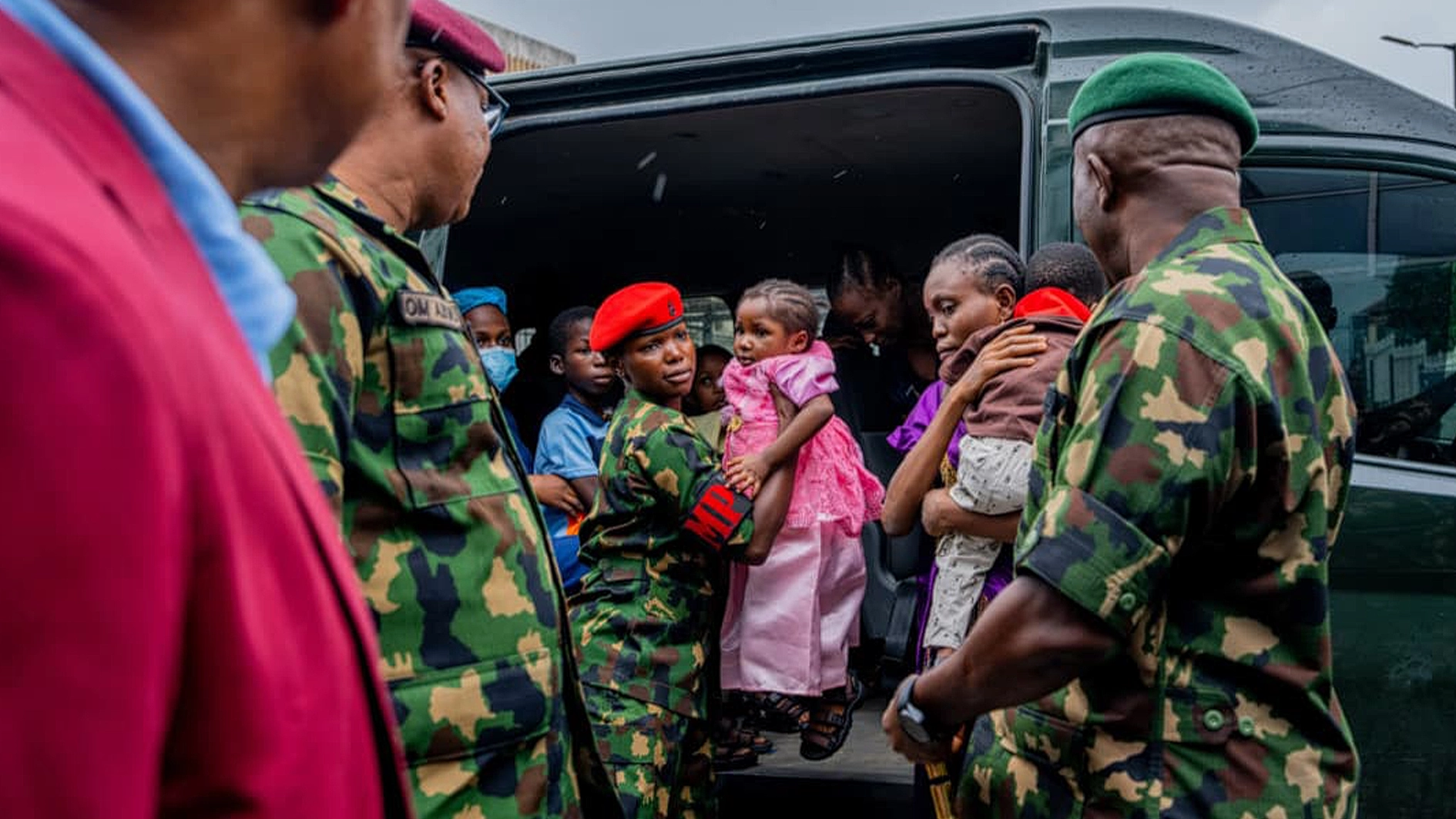
By Rasheed Ojikutu
Few weeks ago, I sent a video clip on “how to manage senescence” to a sister in law of mine. Two days after, she replied “I did not open the clip because I am tired of listening to those who believe that the government is doing well because they have been bribed by the government.” I shudder at her innocence on this issue. I typed a reply but deleted it because I didn’t want to engage in that loose discussion.
Guess what the reply was? I said “What a pity! We, on this side always think that those of you who have ready made negative disposition to everything that the government does irrespective of its merit are those denied the opportunity to institutionalising oppression and unending impoverishment of this country by good policies of government “This encounter raises a fundamental question of what is the role of the opposition in a democracy?
Nigeria’s democracy depends on two indispensable institutions: a responsible government and a responsible opposition. While governments are expected to govern, formulate policies, and protect lives and property, opposition parties are expected to scrutinise government actions, expose failures, and offer alternative solutions. Democracy flourishes when both sides discharge these responsibilities with integrity, objectivity, and patriotism.
However, a recurring concern in Nigeria’s political landscape is whether opposition politics has increasingly become driven by the desire to criticize every action of the government, regardless of its merits.
In most cases, the most vocal members of the opposition are those who created the problem that the present administration is trying to resolve. For example, subsidy evolved as part of the Federal Government’s petroleum pricing. It became formalised through the formalised Price Control Act of 1977 introduced by General Olusegun Obasanjo’s government and this continued even when it was realised that the policy had drained the purse of the nation to the extent that the country had to borrow money to pay the debt incured by the continued running of this unsustainable programme.

The reactions surrounding the abduction and subsequent rescue of the schoolchildren in Oriire Local Government Area of Oyo State provide an opportunity to examine this question.
When news of the kidnapping first broke, many opposition leaders were quick to condemn the Federal Government. They questioned the nation’s security architecture, criticised President Bola Ahmed Tinubu’s administration, and argued that the incident demonstrated worsening insecurity. Such criticism was not, in itself, inappropriate. In every democracy, governments must be held accountable for security failures.
However, the situation changed when the children and their teachers were successfully rescued through the combined efforts of the Nigerian Armed Forces and other security agencies. The rescue was welcomed across the country as a significant relief to the affected families and communities. It also demonstrated that security agencies, despite operating under difficult circumstances, remain capable of achieving important operational successes.
At this stage, expectations naturally shifted. Many Nigerians anticipated that political leaders across party lines would acknowledge the professionalism of the security personnel and commend every institution that contributed to the successful rescue.
Former Vice President Atiku Abubakar issued a public statement welcoming the rescue and commending the Nigerian Armed Forces and other security agencies for their professionalism and sacrifice. His statement recognised the relief brought to the affected families while simultaneously reminding the government that improving national security should remain its highest priority. His response illustrated that it is possible to applaud a positive outcome without abandoning legitimate criticism of broader policy issues.
The public response as reported by First Daily Newspaper from NDC, presidential candidate Peter Obi appeared different. While he had earlier criticised the government’s handling of insecurity following the abduction, there was a tersey innocent public statement in which he was quoted to have called for “thanksgiving”. According to the daily, he said “Tinubu has tried but should go home and rest.”
Whether this reflected a deliberate political calculation or simply a communication choice is open to interpretation but the aforementioned examples deserve an interrogation as part of the broader public conversation about the consistency of opposition politics. The offshoot question from this is “should opposition politics require the withholding of praise whenever government records a success?”
Whatever the answer may be, we should realise that democracy is not strengthened when opposition parties criticise failures but remain silent or hide behind one finger during successes. Nor is democracy strengthened when governments dismiss every criticism as politically motivated. Both extremes weaken public confidence in democratic institutions.
In many parts of the world, political parties play politics during the good times but become bonded in vigilance when the country is faced with survival issues.
An effective opposition should evaluate every government action on its merits. If government policies fail, they should be criticised. If government agencies perform creditably, they should be acknowledged.
Such balance enhances the credibility of the opposition because citizens become convinced that criticism is based on evidence rather than partisan interest.
Unfortunately, Nigerian politics often appears trapped in a cycle of permanent confrontation. Every achievement by one side is minimised by the other. Every failure becomes an opportunity for political advantage. Consequently, national issues that ought to unite Nigerians are frequently transformed into partisan contests.
Security should never become one of those partisan battlegrounds.
The men and women of the Armed Forces, the Police, the Department of State Services, the National Intelligence Agency, the Nigeria Security and Civil Defence Corps, and other security institutions serve Nigeria rather than any political party. Their sacrifices deserve recognition regardless of which political party occupies the Presidency.
When security agencies successfully rescue kidnapped victims, arrest criminal gangs, dismantle terrorist camps, or prevent violent attacks, such achievements belong to the Nigerian people. Commending these successes does not amount to endorsing every government policy. Rather, it encourages professionalism, boosts morale among security personnel, and reassures citizens that progress is possible.
Likewise, criticism should remain constructive. Merely condemning government actions without presenting practical alternatives contributes little to national development. Mature democracies thrive because opposition parties combine accountability with policy innovation. They criticise where necessary, propose alternatives, and support initiatives that advance the national interest.
Nigeria’s democracy would benefit greatly from such an approach.
Political maturity requires the ability to separate governance from electoral competition. Elections are periodic; governance is continuous. Once elections are concluded, every political actor should share a common commitment to the security, prosperity, and unity of the nation.
This principle is well established in many democracies. Leaders from opposing political parties often commend successful military operations, disaster responses, scientific breakthroughs, or diplomatic achievements while continuing to disagree vigorously on taxation, healthcare, education, or economic policy. Their disagreements remain robust, but they do not prevent national successes from being celebrated.
Nigeria should aspire to this standard.
The Oriire schoolchildren’s rescue offers a valuable lesson. The initial abduction deserved criticism because government bears the constitutional responsibility of protecting lives and property. The successful rescue equally deserved commendation because it reflected the dedication and courage of security personnel working under difficult conditions. Both positions can coexist without contradiction.
Opposition leaders should therefore strive to avoid creating the impression that every government action must be opposed simply because it originates from political rivals. Likewise, governments should avoid assuming that every criticism is motivated by malice or bad faith. Democratic accountability depends upon openness to both criticism and commendation.
Ultimately, the winners in this debate should not be political parties but the Nigerian people. Citizens benefit most when governments are held accountable for failures and encouraged to build upon successes.
They deserve an opposition that is principled rather than reflexive, objective rather than partisan, and patriotic rather than opportunistic.
The measure of a mature democracy is not the absence of disagreement but the ability of political actors to place the national interest above partisan calculations. The rescue of the Oriire schoolchildren should remind every political leader that while elections divide parties, national security should unite the nation.
If Nigeria’s political class can learn to criticise honestly, praise fairly, and always put the country’s interests first, democratic governance will become stronger, public trust will deepen, and the nation will be better positioned to confront its many challenges together.
Read the remaining part of this article on www.guardian.ng
Ojikutu is Professor of Statistics (rtd), University of Lagos.

