On page 127 he seized on his presentation titled “Growth and Development In Nigeria – Medium-Term Prospects” which he presented at the Oxford & Cambridge of Nigeria Business Forum on April 18, 2013 to invite the attention of President Goodluck Jonathan to that critical issue as follows:
“The smoothest and least traumatic scenario is for the incumbent President, Dr Goodluck Jonathan, with the authority derived from a universally (local and foreign) acclaimed election to assume that role of imposing good governance in all its aspects on our nation during the next two years i.e. end of his mandate”. What it entails are listed on pages 127 & 128.
On page 138 he spoke in the same vein, in his paper titled “Unemployment, Youth Restiveness and Developmental Challenges” at the Njiko Aniocha Osimili 2017 Annual Lecture, to President Muhammadu Buhari as follows:
“The least traumatic way of saving Nigeria from the threatening disaster of a failed State and violent anarchy is for President Buhari as the elected President to get a group of capable patriotic people to elaborate a new
“Vision and National Agenda 2040” and to require all who love Nigeria to identify with him and all”. He goes on “It is critically important to elaborate a National Vision and Agenda 2040 now to enable the Leader mobilise the broad masses of the people to move forward to progress, unity and greatness”.
With the years passing, as he was advancing in age, and yet not seeing the emergence of such a leader, in a paper presented on February 4, 2022, titled: “A Submission To The Sub-Committee On Nigeria In Transition – The 2022 Committee” he declares on page 278: “What hope can we have for the future? I have believed for some years that there is a great role waiting for a player in Nigeria”. But he was never tired of advocating for a better and vision driven Nigeria. Accordingly, extending the target date of the Agenda he said in that 2022 paper: “There is need for a great patriotic and visionary leader to articulate a National Vision and Agenda of where Nigeria should be by 2050, at least a top middle income nation of over 300 million people as “A united, industrious, caring “………merely restating the same goal in Vision 2010 that was developed in 1997 but was discarded by the 1999 administration. He says that, “our past achievements give us hope that the broad masses of Nigerians are waiting for such a leader to call the nation to order and will answer a call to order”.
On page 284 as part of that submission, speaking on the Form of Government, he proposed “the creation of the post of Prime Minister in addition to that of Vice President, with the President nominating the Prime Minister and Ministers to specifically designated posts who must be approved by the Senate before they can assume office”. “The Prime Minister will be charged with day-to-day coordination of the works of the Ministers under the direction of the President”. I am sure that such a Prime Minister portfolio would have been more effective than the ego-boosting title of Coordinating Minister currently in use, as I have questioned its effectiveness (whether with Ngozi Okonjo Iweala or Wale Edun being adorned by it) under both the Jonathan administration and the present president respectively. See my books: ‘Restoring Good Governance In Nigeria vol. 1 The Civil Service Pathway (2015), and Leadership In The Nigerian Civil Service: Five Decades Of Lessons In Performance, Encounters and Triumphs’ (2025).
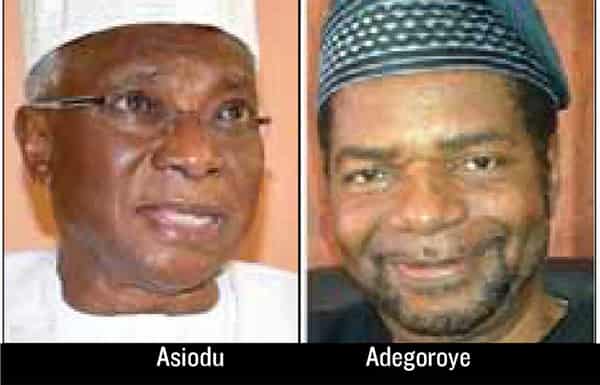
How I wish Izoma Philip Asiodu had an opportunity to meet with President Bola Ahmed Tinubu, to enable him to present the President, as he did to his predecessors, the same call to duty with the new additions highlighted above. As it is, that Great Role that Philip Asiodu has been advocating Is Still Waiting For A Player. The Search Continues!
Lessons of Asiodu’s legacy of dedication and Service for the present generation of civil servants
What Existed At the Entry of Asiodu Compared To The Civil Service of Today
Negotiations by the founding fathers of Nigeria with the British government at pre-independence had led them in 1954 to adopt the following statement:
We fully support the principle that all public service questions including appointment, promotion, transfers, postings, dismissal and other disciplinary matters, should be kept completely free and independent of political control. We hope that the traditional principle of promotion according to qualifications, experience, merit, without regard to race will be maintained. (110-111). Unfortunately, the purge of 1975 changed the tone. It destroyed the professional, non-partisan, fearless, prestigious merit-driven civil service inherited from the British Colonial Administration. Asiodu states that, “the woes of the civil service were compounded by the promulgation of Decree No. 43 of 1988 which politicised the civil service, as under it the Ministers, transient as they often were, could hire and fire civil servants.
PC acknowledges the reforms that have been embarked upon since 1999 to reposition the civil service (p. 179) and that indeed the National Strategy for Public Service Reforms was launched to execute the reforms in three phases – 2011-2013; 2013-2016; and 2016-2020 to produce “a world class Public Service” but that “the question remains why has so little been achieved over the years to improve the image of the Public Service” (p.116).
His charge is that the political leadership must demonstrate the commitment to change the image of the public service of an inefficient, rent-seeking and obstructive extortioner to that of an honest, efficient, pro-investment, patriotic, pro-people official.
Again, on page 181, he stresses that to deliver any Transformational Agenda, the civil servant must discard the image of the arrogant intimidator or of the corrupt extortioner.
His Recruitment
Asiodu, while still in London after his graduation was recruited into the service in a transparent and integrity driven process that involved newspaper advertisement inviting applications for trainees to form the nucleus of independent Nigerian Foreign Service. Even though he was recruited into the Foreign Service, he was made to undertake as part of his induction a nation-wide tour that covered several thousand kilometers in the then Nigeria and the Cameroons. Within a few months he was posted on attachment to the British High Commission in Australia to further learn the ropes of diplomacy and acquire the skills in the diplomatic service (p.11-12). As part of his self-improvement on the job, he undertook a 6-month course in French language.
How are officers recruited these days? Vacancy slot sharing formular has become the vogue at every recruitment regulatory agency, board or commission of government without exception. Because those agencies and commissions have been beaten to submission by our political lords at the national assembly and cabinet, slot sharing is now the rule, no matter what the heads of those agencies and commission say in the public. Indeed, the Federal Character Commission usually takes the lead in inducing recruiting agencies to play ball.
When these privileged wards get their letters of appointment they go straight to their desks if they are lucky to have one or simply loiter on the corridors when and if they report for work. Inductions when carried out are shabby and only exist in name to draw down on the vote. Training is an avenue to simply collect the allowances. Officers are not committed enough to want to invest in themselves to improve their performance on the job. They wait for government to send them for computer training on simple task involving the word application. And it is easy for those young officers to be living in the UK or America and yet will be receiving their salaries every month without fail.
His Career Development and Progression
While he could be said to be a highflyer, he justified every step on the ladder by his performance. The appellation of “super Perm Sec” was performance driven, denoting a quality officer that his principal relied upon. He was a shining star among his colleagues and earned respect. And his reputation as an exceptional officer radiated ahead of him wherever he went. At each tour of duty, he was an epitome of excellence, professionalism, patriotism, integrity and courage to speak truth to power.
His Retirement from Service
Asiodu’s exit from the service, like those of his other civil servants of the great purge of 1975, had no clear basis. The Federal Civil Service Commission (FCSC) was not consulted. Perhaps more striking is the revelation that his case could have been likened to the biblical white lamb, except that he was not offered for the sins of his fellow civil servants but to demonstrate the ultimate powers of that regime. This came out when Allison Ayida the Secretary to the Federal Government and Head of the Civil Service went to the Head of State. Hear him:
“I insisted as Head of Service that everybody must be told why they were being retired (a record 9 Permanent Secretaries at a go” (representing a sizable number of the permanent secretaries at the time). “So, General Murtala Mohammed called Philip and said, You, Philip, we know your record, we like you very much. This government would have liked to continue with your service, but as a government of resolution we have planned to show example that nobody is so powerful that he cannot be removed, so we want to use you as an example
“The Head of State then went on to assure Philip that he was not being retired on grounds of corruption. All that Philip could say was Sir, I am very grateful for the honour and the explanation. I could have been killed to show that nobody is too powerful; and now that you have spared my life I will go and continue with my own humble life (p. 533). Talk of courage to speak truth to power, even at such a moment! That was classic Philip Asiodu .
As they say, God’s case has no appeal. The Murtala/Obasanjo regime wielded the ultimate powers. No court in the land could challenge or overturn their decisions.
Compare that with the civil service of today, under democratic governance. Cases of promotion and discipline decided by the FCSC between 1998 and 2018 have been taken to court and successfully overturned. Even disciplinary cases decided by Presidential commission of inquiry and in respect of which a Government white paper had been issued and gazetted to pronounce dismissal of officers have been taken to court and overturned, and the new lease of life gained therefrom by the officers have enabled them to progress higher in their career up to the level of perm sec and even HCSF. As I said in my latest book, Leadership In the Nigerian Civil Service: Five Decades of Lessons In Performance, Encounters and Triumphs, (see p. 125) the proverbial eyes of the integrity needle at both the FCSC and the OHCSF appear to have grown so large in recent times that camels of questionable integrity have been strolling through them into positions of high trust…
To be continued