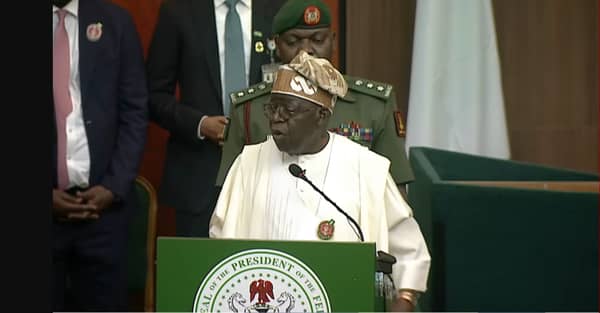
I begin with a direct quote from the 2026 budget speech of President Bola Ahmed Tinubu: “Let me be clear: 2026 will be a year of stronger discipline in budget execution. I have issued directives to the Honourable Minister of Finance and Coordinating Minister of the Economy, the Honourable Minister of Budget and Economic Planing, the Accountant General of the Federation, and the Director General of the Budget Office of the Federation to ensure that the 2026 Budget is implemented strictly in line with the appropriated details and timelines.”
Against this clear directive, most people’s first instinct—on hearing that key fiscal policy responsibilities relating to revenue, expenditure, debt, and development financing have been taken from the substantive Minister of Finance and transferred to a Minister of State (a junior minister)—would likely be confusion and to question the judgement behind such a move.
However, the problem runs deeper than optics. This unprecedented action is not merely symbolic; it has serious implications for the near-term trajectory of the economy because it significantly heightens uncertainty at a time when confidence is critical.
By tradition, law, and common sense, fiscal policy responsibilities have always resided with the substantive Minister of Finance—not a Minister of State. The management of government revenues and expenditures—taxes, excise duties, borrowing, and debt servicing—lies at the very core of government operations and determines how the state drives investment, growth, and job creation.
Once a substantive Minister of Finance is stripped of these core responsibilities, one is forced to ask: what remains of the office? This move is problematic on multiple fronts.
An unprecedented and unparalleled decision.
First, it is without precedent. I have searched for any historical parallel and found none. Perhaps the closest analogy was Ngozi Okonjo-Iweala’s abrupt redeployment to the Ministry of Foreign Affairs under President Olusegun Obasanjo, with Nenadi Usman becoming the substantive Minister of Finance. Even then, the prevailing narrative—rightly or wrongly—was that the change was politically motivated ahead of elections, designed to “open the fiscal taps.”
That narrative stuck.
As Nigeria approaches the 2027 elections, this is precisely the kind of narrative President Bola Ahmed Tinubu should be keen to avoid. In his 2026 budget speech, the President rightly highlighted that Nigeria has moved from a growth trajectory of around 2 per cent to approximately 4 per cent within two years; inflation is decelerating, foreign reserves are rising, and investor interest in Nigeria is returning. This is not the moment to create the impression that politics is beginning to trump economics—especially when the President has demonstrated notable reform capacity. Sustaining those reforms is now the more difficult and more important task.
Investor confidence and institutional authority
As matters stand, one can only imagine the confusion this separation of office and authority creates for investors and multilateral institutions that engage with Nigeria daily. Who is the true fiscal authority? Should they engage with Wale Edun, the substantive Minister of Finance and Coordinating Minister of the Economy, or with the junior minister, Doris Uzoka-Anite, to whom authority has reportedly been transferred?
The office of the Minister of Finance carries the fiscal and institutional authority of the President and, by extension, the Nigerian state. The office of the Minister of State does not. A leaked memo—now reported by a handful of publications—does not automatically confer that authority. As long as this anomaly persists, decisions taken under it will lack credibility and may not be taken seriously by serious counterparties.
Indeed, as shown above, even after the memo had reportedly been circulated, the President himself stated during his budget speech that he expects his Minister of Finance and Coordinating Minister of the Economy to be responsible and accountable for the performance of the 2026 budget—not the junior minister. This contradiction only deepens uncertainty.
Investment and multilateral stakeholders expect to engage with the highest fiscal authority, not a subordinate official. Moreover, many statutory and regulatory processes explicitly require principal-level signatories. Stripping the Minister of Finance of core responsibilities and transferring them to a junior minister weakens leadership, increases risk, blurs accountability, and undermines institutional integrity.
The way forward
Effective governance demands alignment between authority, responsibility, and accountability. That alignment is best—and indeed only—ensured when fiscal powers are firmly vested in the substantive Minister of Finance and Coordinating Minister of the Economy.
Nigeria’s economic stakes are simply too high for this level of uncertainty, institutional clumsiness, and perceived showmanship. The President should act swiftly to restore clarity, coherence, and confidence in the country’s fiscal governance framework.
Olanipekun, a fiscal policy and governance analyst, wrote from Abuja.