 Follow Us on Google News


 Follow Us on Google Discover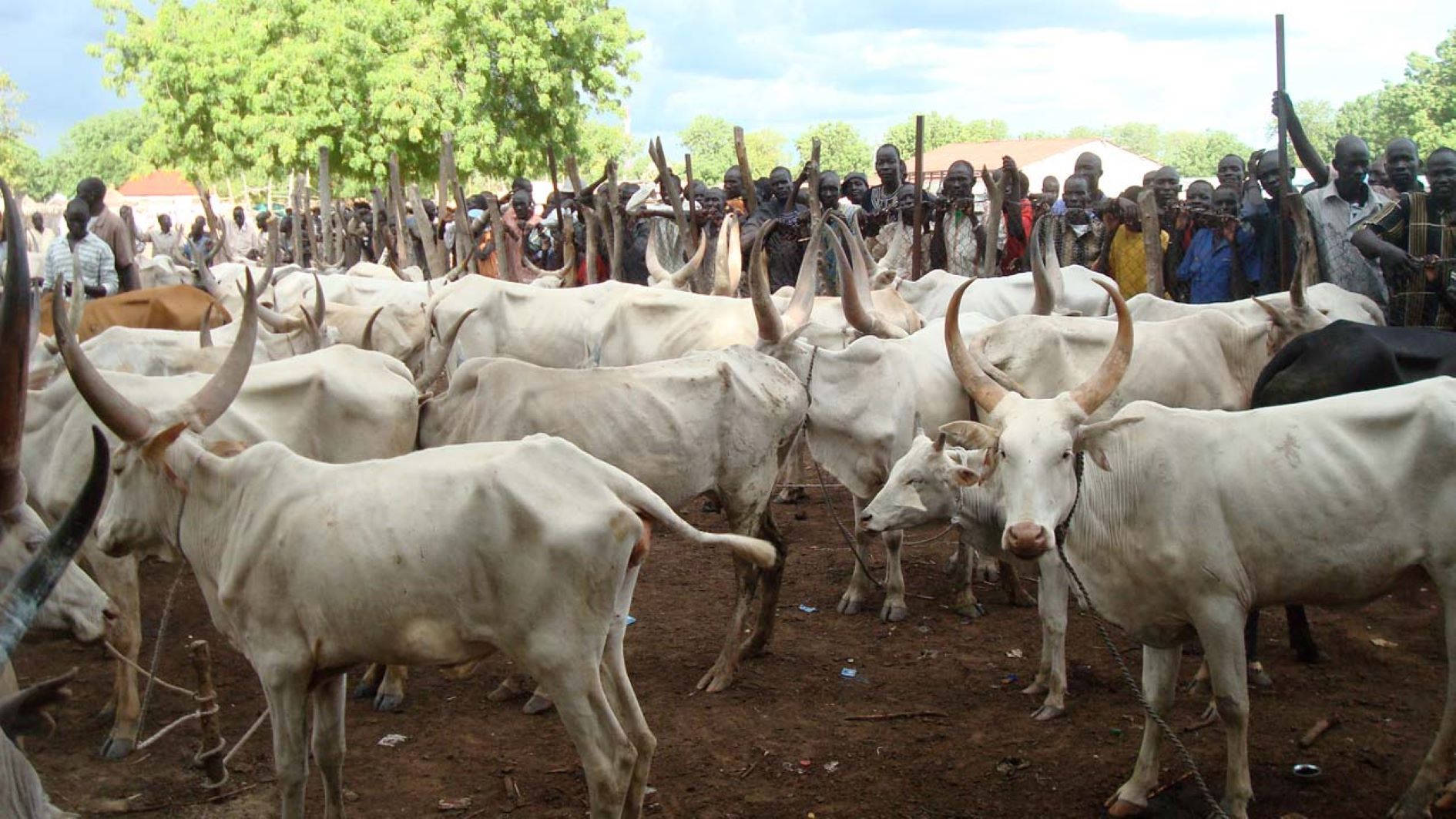
The controversy over the Federal Government’s decision to include Benue State in its pilot ranching programme demands far more than assurances and political exchanges. Given the state’s painful history of farmer-herder conflicts, displacement, killings and destruction of livelihoods, any proposal involving land and livestock must be handled with exceptional sensitivity, transparency and consultation.
Governor Hyacinth Alia’s appeal to residents to remain calm is understandable. His clarification that the Federal Government’s reference to Benue in its pilot ranching programme does not automatically mean that cattle ranches will be established in the state is important. His reminder that the state has a law prohibiting open grazing is equally significant.
However, the governor’s assurances, while welcome, do not sufficiently resolve the fundamental questions being raised by residents, political groups and civil society organisations. The central issue is not simply whether cattle will be moved to a particular location. It is whether Benue has agreed to participate in the Federal Government’s ranching programme, what form that participation will take, where such facilities would be located, who would provide the land, and what safeguards would protect the rights and security of host communities.
The Peoples Democratic Party’s state publicity secretary, Bright Antyo, was right to demand greater clarity from the administration. His argument that “silence is not consultation” captures the concern at the heart of the controversy. If the Federal Government has formally identified Benue as one of the pilot states, residents deserve to know the precise terms of the arrangement.
The government should not allow uncertainty to create room for rumours, misinformation and suspicion. Nor should it dismiss legitimate concerns as agitation generated by social media. In a state where land, farming and livestock have become deeply sensitive issues, the best response to uncertainty is openness.
The intervention by the Nigeria Catholic Diocesan Priests Association, Makurdi Diocese, further demonstrates the depth of public anxiety. The priests’ rejection of the proposed ranching programme reflects the fears of communities that have experienced displacement and insecurity. Their concerns about ancestral land, forced occupation and the possible permanent displacement of indigenous communities cannot simply be brushed aside.
At the same time, it is important that the debate does not become a blanket rejection of every form of livestock development. There is a legitimate economic case for modernising Nigeria’s livestock sector.
Properly designed ranches can improve animal health, productivity, meat and dairy production, veterinary services, employment and value addition. They can also help reduce the destructive competition over land and water that has fuelled farmer-herder conflicts across the country.
The critical question, therefore, is not whether livestock development should be encouraged. It is how, where and under whose consent it should take place. Governor Alia’s reference to existing livestock facilities and areas previously designated for livestock activities, including Kyogen and locations in Vandeikya, deserves further explanation. If these areas were historically mapped for livestock development, the public should be told their current status, ownership, size, environmental condition, and whether communities currently occupy or farm them.
This is particularly important because land is not an abstract commodity in Benue. It is the foundation of agriculture and the livelihood of a predominantly agrarian population. Any government decision affecting land must therefore take into account existing communities, farmers, traditional institutions, landowners, and internally displaced persons seeking to return to their ancestral homes.
The Federal Government, for its part, should not create the impression that a national policy can be implemented in a state without the meaningful participation of the state government and affected communities. Federal and state authorities must recognise that livestock policy intersects directly with land administration, physical planning, agriculture, environmental management and local security.
A pilot programme should be a model of good governance, not an experiment imposed on communities. If the intention is to establish privately owned ranches through voluntary and lawful land transactions, the Federal Government and Benue State Government should say so explicitly. Such an approach would be substantially different from compulsory acquisition of community land or the creation of expansive grazing reserves.
Indeed, the PDP’s stated support for privately owned ranches acquired lawfully between willing parties provides a useful basis for a constructive discussion. Ranching should not be equated with the allocation of communal land for exclusive use by particular groups. Nor should opposition to government-sponsored ranching be interpreted as opposition to livestock production itself.
The government must also distinguish between ranching and open grazing. Benue’s anti-open-grazing law remains a crucial part of its response to farmer-herder conflict. Any Federal Government initiative should respect existing laws and should not create a parallel arrangement that undermines them.
There is also an urgent security dimension. Before any ranching programme is considered, the government must address the insecurity that has driven thousands of Benue residents from their communities. Asking displaced farmers to accept a new land-use arrangement while they remain unable to return safely to their homes would be deeply insensitive.
The immediate priority should be restoring security, enabling IDPs to return, rebuilding destroyed communities and ensuring that farmers can cultivate their land without fear. Livestock policy should complement these objectives, not complicate them.
The Federal Government should consequently publish sufficient details of the proposed pilot programme, including its objectives, legal framework, funding arrangements, land requirements, ownership structure, environmental safeguards and mechanisms for community participation. The Benue State Government should equally make public any communication it has received from Abuja and explain the position it has taken.
Governor Alia is right that peace must be protected. But peace is not preserved by asking people to remain calm while questions remain unanswered. Sustainable peace is built through trust, transparency, justice and participation.
The Federal Government should also avoid presenting Benue’s inclusion in the pilot programme as a fait accompli. The state’s unique circumstances require a tailored approach. A national livestock policy can provide broad direction, but implementation must recognise local laws, land tenure systems, ecological realities and community interests. What is required now is not another round of political accusations.
It is a transparent dialogue between Abuja and Makurdi.
Above all, no ranching project should proceed in Benue without the informed participation and lawful consent of affected communities. The state has endured too much violence and displacement to permit another poorly explained land policy to deepen mistrust. Ranching may have a place in Nigeria’s livestock reform agenda, but in Benue, it must be voluntary, lawful, transparent and community-sensitive.

