 Follow Us on Google News


 Follow Us on Google Discover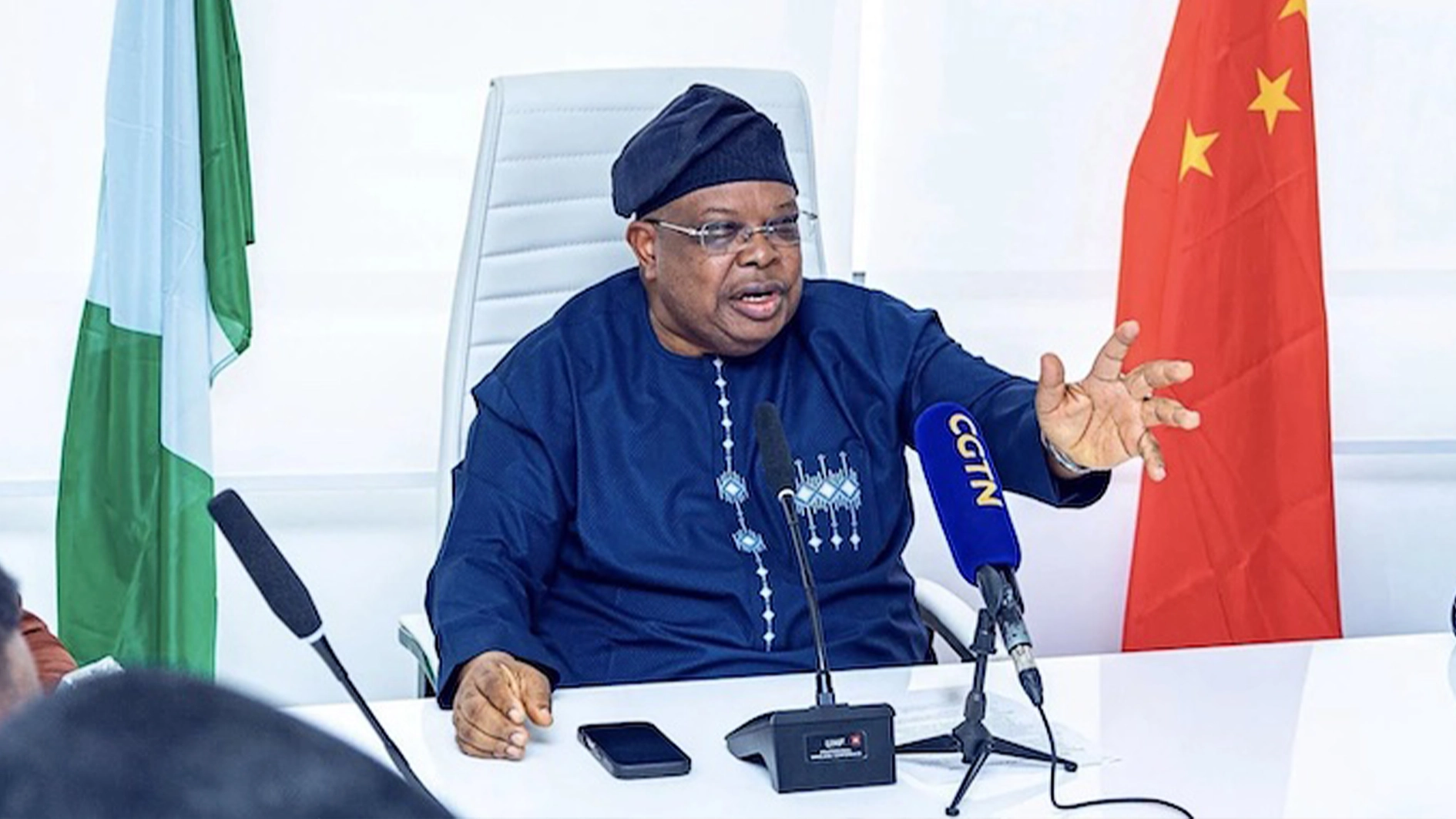
The promise by the new Minister of Power, Joseph Olasunkanmi Tegbe, to commence the stabilisation process of Nigeria’s electricity grid within 100 days appears to be an injection of fresh energy into a sector long associated with disappointment, waste and perpetual darkness. He made the bold promise as a ministerial nominee before the Senate screening committee. Whether he delivers on the promise will depend not on the strength of his oration, but on whether he can successfully surmount the many obstacles in the path of the country’s energy sector.
Tegbe entered his Senate screening with huge optimism. “My promise to this chamber and to Nigeria is that Nigerians will see visible improvement in the sector”, he declared, noting that while initial efforts to stabilise the national grid would begin within his first 100 days in office, deeper structural reforms in the sector could take significantly longer. It was a striking line in a country accustomed to cautious bureaucratic language and even more accustomed to broken promises.
However, Nigerians have become too familiar with ambitious declarations that evaporate once officials assume office. Confidence is not the same as deliverability. And Nigeria’s electricity sector has become a graveyard of broken bold promises. Every few years, a new minister, reformer, technocrat or presidential appointee arrives with ambitious promises about ending the nation’s electricity nightmare. Timelines are announced. Targets are unveiled. Nigerians are urged to be patient. Yet the darkness persists. The tragedy of Nigeria’s electricity sector is not the absence of promises. It is the graveyard of promises. Africa’s largest economy still struggles to generate and distribute electricity at levels many smaller nations surpassed long ago.
The question, therefore, is not whether Tegbe speaks well. It is whether he possesses the political courage, technical understanding and institutional independence required to confront the entrenched dysfunction that has crippled Nigeria’s power sector for decades.
Nigeria’s electricity crisis is no longer merely an infrastructure problem; it is a national tragedy. It undermines industrial growth, destroys small businesses, discourages investment, increases unemployment and reduces the quality of life for millions. Hospitals struggle to function. Students read under candlelight. Factories spend fortunes on diesel. Citizens who faithfully pay electricity bills still endure endless blackouts.
Yet this same Nigeria possesses abundant gas reserves, vast renewable energy potential and one of the largest electricity markets in Africa. The contradiction is both painful and scandalous. The electricity sector has become a complex web of political patronage, regulatory weakness, corruption, energy theft, poor infrastructure and financial insolvency. Entire businesses thrive because public electricity fails — from generator importers to diesel merchants and inverter dealers.

The ultimate solution requires a complete restructuring of how electricity is generated, transmitted, distributed and governed in the country.
The deeper problem in Nigeria’s electricity sector is systemic. Generation is constrained not only by capacity but by gas shortages in a country rich in reserves. Transmission is weak, under-invested and prone to collapse. Distribution companies are financially fragile, operationally inefficient and politically protected. Regulation is inconsistent. Tariffs are contested. Theft is widespread. Enforcement is selective. The result is a chain that fails at every link.
Any serious reformer will therefore encounter resistance—not only from institutional inertia, but from actors who benefit materially from the status quo. This is not unique to Nigeria, but it is particularly entrenched in sectors where failure has become profitable.
Against this backdrop, Tegbe’s 100-day pledge is not merely ambitious; it collides directly with a system that has historically resisted rapid correction. The problems in the sector are too deep, too layered and too embedded in fiscal and institutional structures to be transformed in three months. At best, 100 days offers not transformation but signalling: whether a minister understands the scale of the problem, and whether the machinery of state can be made to move with greater seriousness.
A reduction in grid instability, improved coordination among agencies, more transparent sector governance and early action on systemic leakages would constitute meaningful early gains. Anything more would be exceptional. Failure, however, would be immediately legible. Nigerians are not naïve about miracles; they are experienced in disappointment.
There is a deeper irony in the current moment. Even the Presidential Villa has reportedly turned to alternative power sources to insulate itself from grid unreliability. It is a symbolic admission that the national system no longer commands confidence at the highest levels of government.
Solar panels and inverters, increasingly visible across urban Nigeria, are pragmatic responses to state failure. But they are not substitutes for a functioning national electricity system. They represent adaptation, not resolution. And they deepen inequality: those who can afford private solutions exit the system, while the vast majority who cannot remain trapped in it. The risk is that dysfunction becomes normalised.
Three structural failures stand out. First is over-centralisation. A single national grid serving a vast and complex federation is inherently vulnerable. Repeated collapses are not anomalies; they are predictable outcomes. Decentralisation of generation and distribution, already enabled in principle by recent legislation, remains under-implemented. States with viable economic bases could play a far greater role in electricity provision than current arrangements allow. Second is the gas paradox. Nigeria’s vast reserves have not translated into a reliable domestic supply for power generation. Export incentives, infrastructure gaps and security challenges have combined to prioritise external markets over internal stability. Without addressing gas-to-power constraints, thermal generation will remain structurally limited.
Third is institutional weakness. Transmission infrastructure is underdeveloped. Distribution companies are inefficient and politically insulated. Regulatory enforcement is inconsistent. Contracts are frequently politicised. Policy continuity is weak across administrations. These are not technical flaws; they are governance failures.
Real reform would therefore require political alignment across multiple levels of government and a willingness to confront entrenched interests. First, decentralisation must move from policy aspiration to operational reality. State-level electricity markets should be allowed—and encouraged—to expand rapidly. Second, gas infrastructure must be treated as strategic national infrastructure, with security, investment and pricing frameworks aligned to domestic power needs.
Third, transmission requires urgent capital investment and professional insulation from political interference. Without a stable backbone, no increase in generation will translate into a reliable supply. Fourth, distribution companies must face stricter performance enforcement. Licence conditions must mean something. Chronic inefficiency cannot continue to be absorbed by consumers. Finally, governance must become predictable. Investors do not respond to rhetoric; they respond to stable rules.
There is a need to appreciate that electricity systems are slow to build and quick to fail. They require patience, discipline and continuity across political cycles—qualities Nigeria has historically struggled to sustain. This is why failure is so consequential. It is not simply that the lights go out. It is that systems designed to deliver development cease to function at scale.
Tegbe’s arrival, having been confirmed as minister, will add another name to a long list of ministers who have inherited this burden. Whether he becomes another custodian of managed decline or a catalyst for incremental change will depend less on rhetoric than on political backing and institutional resolve.
The question, ultimately, is not whether Joseph Tegbe can deliver stable electricity within a short time frame; it is whether Nigeria is finally prepared to build the system that makes light possible at all.

