 Follow Us on Google News


 Follow Us on Google Discover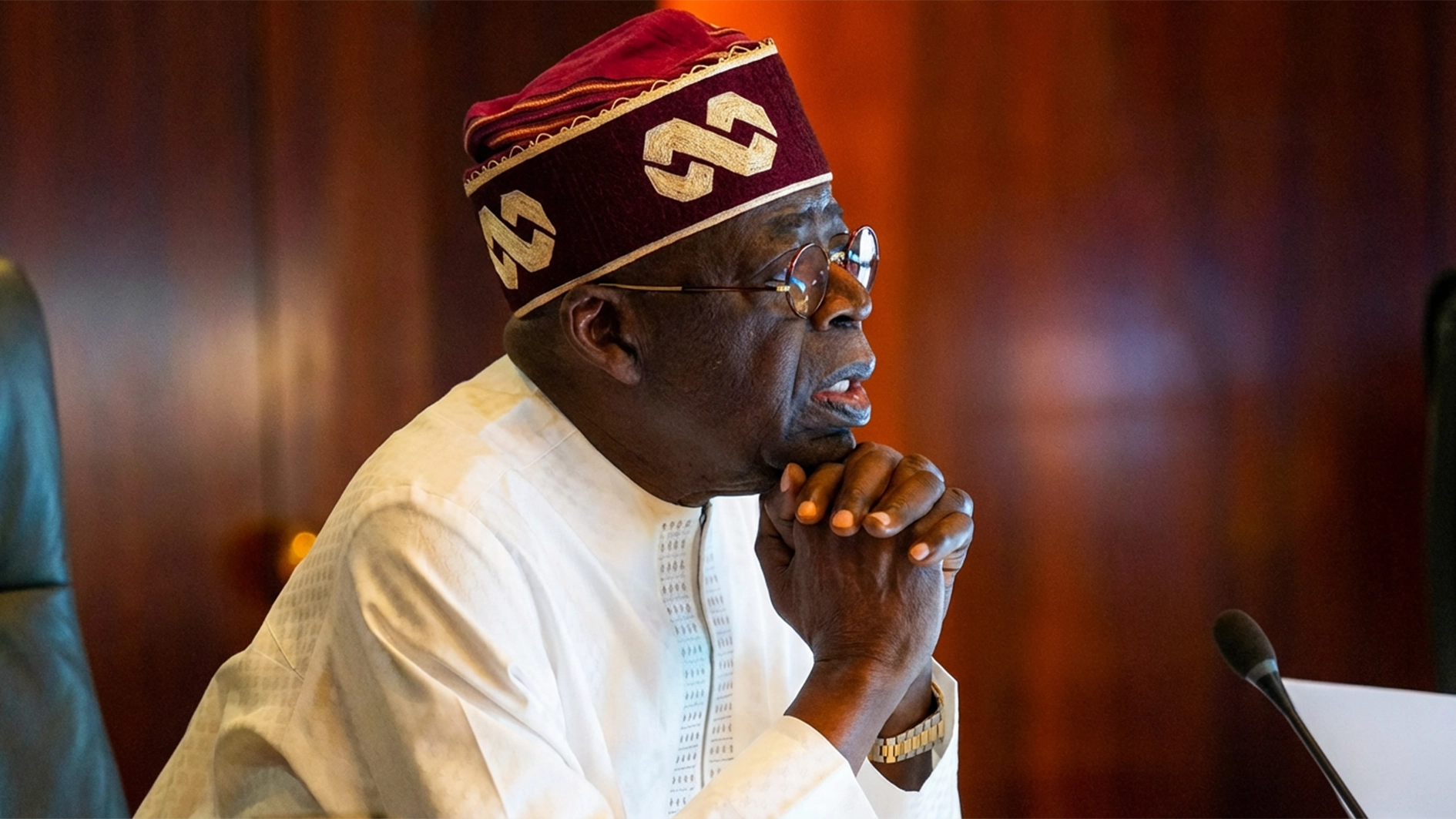
IN 1999, the three political parties at the time were formidable in their zones of influence, and they did fairly well, relative to capacities they manifested. But by the next election in 2003, which was conducted by civilians, the Alliance for Democracy (AD), lost five of the six states in its South-West stronghold. The All Peoples Party (APP), also lost some significant states. The survival of the opposition rests heavily on a president’s appetite.
The PDP wanted to rule forever, without exerting the same energies to deepen the structures of democracy beyond personalities and egos. They invested 16 years circulating resources and opportunities among themselves. They coveted the powers and influence democracy offered, but not the discipline and commitment to nurture its processes, including, managing political parties’ relations. Today, the PDP has been captured, but that has not stabilised the democratic journey.
Last week, President Tinubu hosted members of the National Working Committee of the All Progressives Congress (APC), and the leadership of the Inter-Party Advisory Council (I-PAC), to an inter-faith breaking of fast at the Presidential Villa. I-PAC is the umbrella body of registered political parties, for purposes of interacting with the Independent National Electoral Commission (INEC) and other stakeholders.
One curious thing about I-PAC is that its most active members are owners of second-tier fringe parties that do not make significant impact in elections. But they may offer themselves as a lobby group to persuade INEC to do one thing or the other, or be used to rally support for winners of contentious elections. I-PAC members are likely the first to congratulate winners of elections where their own candidates failed woefully, that is if they presented candidates at all. From experience since I-PAC became prominent, we do not see them challenge frontally policies that stifle opposition. Instead, they may be hired to play the role of spoiler against front row opposition parties.
Such were the leaders of opposition who gathered to listen to the President’s breaking of fast sermon on democracy, last Wednesday. President Tinubu assured them of his firm commitment towards sustaining democracy as a legacy, insisting that the unity and stability of the country rest on the pillars of good governance.
He said: “The Chairman of IPAC, Yusuf Dantalle, provoked some questions. I am glad we are all democrats. And we all subscribe to this democracy voluntarily, willingly, and we’ve been at it selflessly in the last 26 years.
“Some of us had been bruised struggling for it. We were detained, we protested, we had street demonstrations, we went into exile and all of that. We formed NADECO. I followed the leadership destiny that God has chosen for me. There’s no doubt about it. I am a die-hard democrat. I followed that belief wholeheartedly, committed to a united Nigeria, and that principle and the philosophy will live and die with me.
“There’s no threat from any democrat under my watch. The rule of law must prevail in any democracy. The majority will have their way, and the minority will have their say and their way. I must not stand in their way. That is the sweetness, the essence of democracy.”

Indeed, President Tinubu can boast of his democratic credentials. He was present when Nigerians decided it was time to end military rule and emplace democratic governance. He participated in the anti-June 12 struggles, when the winner, MKO Abiola, was denied victory in the June 12, 1993, presidential election.
After the annulment and the dissolution of the Senate, where Tinubu was a Senator at the time, he went underground, along with other notable Nigerians. He was not physically on ground to get bruised as he claimed, unless he meant vicarious and psychological bruises. But he is credited with providing a lot of support in resources.
Nobody can claim to suffer more bruises than MKO himself, his wife Kudirat and children, Pa. Abraham Adesanya, and others too numerous to mention, who are further bruised daily in the hands of operators of the democracy the martyrs fought and died for.
President Tinubu’s claim that himself and others have selflessly subscribed to democracy in the last 26 years is disputable. Citizens do not see evidence of selflessness on the part of any politician operating in this dispensation. Is it in the nepotistic appointment of allies and families into choice offices, who are transported into higher echelons of society, where they’re not touched by harsh economic policies of his government?
Is it in President Tinubu’s single-handed appropriation of the levers of political powers and economic influence in Lagos State, since 1999, that he considers to be selfless? He is the major beneficiary of democratic rule in the country, and should not claim selflessness.
Public service in Nigeria is no longer charity work and the era of selfless politics may have been interred with the likes of Lateef Jakandes, Ambrose Alis and Sam Mbakwes. Nigerians want fair distribution of resources not palliative rice that is shared only among government and party loyalists. Selflessness is not when leaders extort the poor to fund a profligate public service.
Let it be stated, that under this government, democracy has lost its ordinary meaning among the people. Citizens are not protected economically. The things the people could achieve with ease one decade ago are now beyond them. Cost of living is excruciating for 130 million citizens. Ordinary Nigerians are also not safe in their communities. Terrorists and bandits kill and kidnap citizens with ease. What was isolated madness a few years ago, is now normalised terror. President Tinubu should stop bragging about democracy if the system cannot guarantee shelter, food and safety, basic amenities of life, for average citizens.
What does the President mean by “there’s no threat from any democrat under my watch.” Did he mean to say that no democrat will be threatened under his watch, or that no democrat can threaten him? Whichever it is, democracy provides that nobody is threatened, especially the opposition. But truth be told, since 1999, the opposition has not faced the types of state-sponsored threats that we confront today.
The hurriedly signed 2026 amended Electoral Act is a threat to democracy in several respects. The Act left crucial aspects that needed amendment to foist an agenda. If president Tinubu wanted to leave a legacy of good governance and rule of law, as he lectured, he would have encouraged democratic freedom for parties, instead of working tirelessly to asphyxiate them. The plan is to lay mines to derail multi-party participation in 2027.
The electronic membership registration provided in the amended Act need not be mandatory and time-bound. While it is good to have a digitalised register, the timing is mischievous. The APC had envisaged the provision, apparently, and had commenced digital registration since early January, with an initial deadline of January 30, 2026, which was later extended to February 8, 2026, to accommodate defecting PDP governors. You cannot claim to be a die-hard democrat when all you do is to set traps and difficult conditions for the opposition.
The requirement for National Identification Number and Permanent Voter Card for parties’ internal primaries is also an intrusion into parties’ private affairs. The idea, as the law purports, is to prevent politicians from belonging to different parties at the same time. But those who are in the know say the clause is to prevent presidential aspirants who may want to defect if they fail to win presidential tickets after primaries.
If the idea is to sanitise the system, a better way is to insist unambiguously that politicians who defect from parties after winning elections must lose their seats. Otherwise, belonging to any political party before an election is a fundamental right. After winning an election, the ticket ought to belong to the winning party.
Party primaries used to be decided by direct, indirect and consensus methods. The idea was to let parties decide what method best fits their economy and mood. Now, the Act mandates direct primaries, where every registered member is expected to vote. Direct primaries are about mobilising greatest numbers and expending massive resources on the part of aspirants. The option of consensus might be easier for a party in government, where there is no challenger to an incumbent. A voice affirmation is enough to seal that.
Worse still, the amended Act is reported to have removed certificate forgery as a ground for filing election petitions. Section 138 of the amended Act 2026 states the conditions under which an election can be contested, but certificate forgery has been delisted. In a country where there are multiple cases of certificate forgeries, what message is President Tinubu sending to citizens when he hurriedly signed that law?
President Tinubu told the fringe opposition (I-PAC): “I am a registered voter. I am on the same platform as you. I’m going to stick to my platform. When it was against me years ago, I toed the line. I was in opposition without a threat to any human being except the military junta. I want democracy, and since democracy is back here, there’s a fundamental voluntariness that is enshrined, and I am extremely glad to listen to you.”
Perhaps, President Tinubu thinks that all Nigerians have frozen their senses. The Governor of Zamfara State, Dauda Lawal, alleged that the Federal Government excluded his state from over N500 billion palliative funds because he was not in the APC. He was smoked out of the PDP last week. What “fundamental voluntariness” is President Tinubu talking about?
The Governor of Oyo State, Seyi Makinde, lamented that because he is in the PDP, the (N30 billion) he got after the Bodija explosions, as relief package from the Federal Government, was far less than what other states in the South-West got without suffering any disaster.
It is not only by setting offices of opposition parties on fire and destroying their infrastructure that constitute threat. History will remind President Tinubu how he stood in the way of the opposition. But he has a chance to repent in this holy month. He should stop grandstanding.

