 Follow Us on Google News
 Follow Us on Google Discover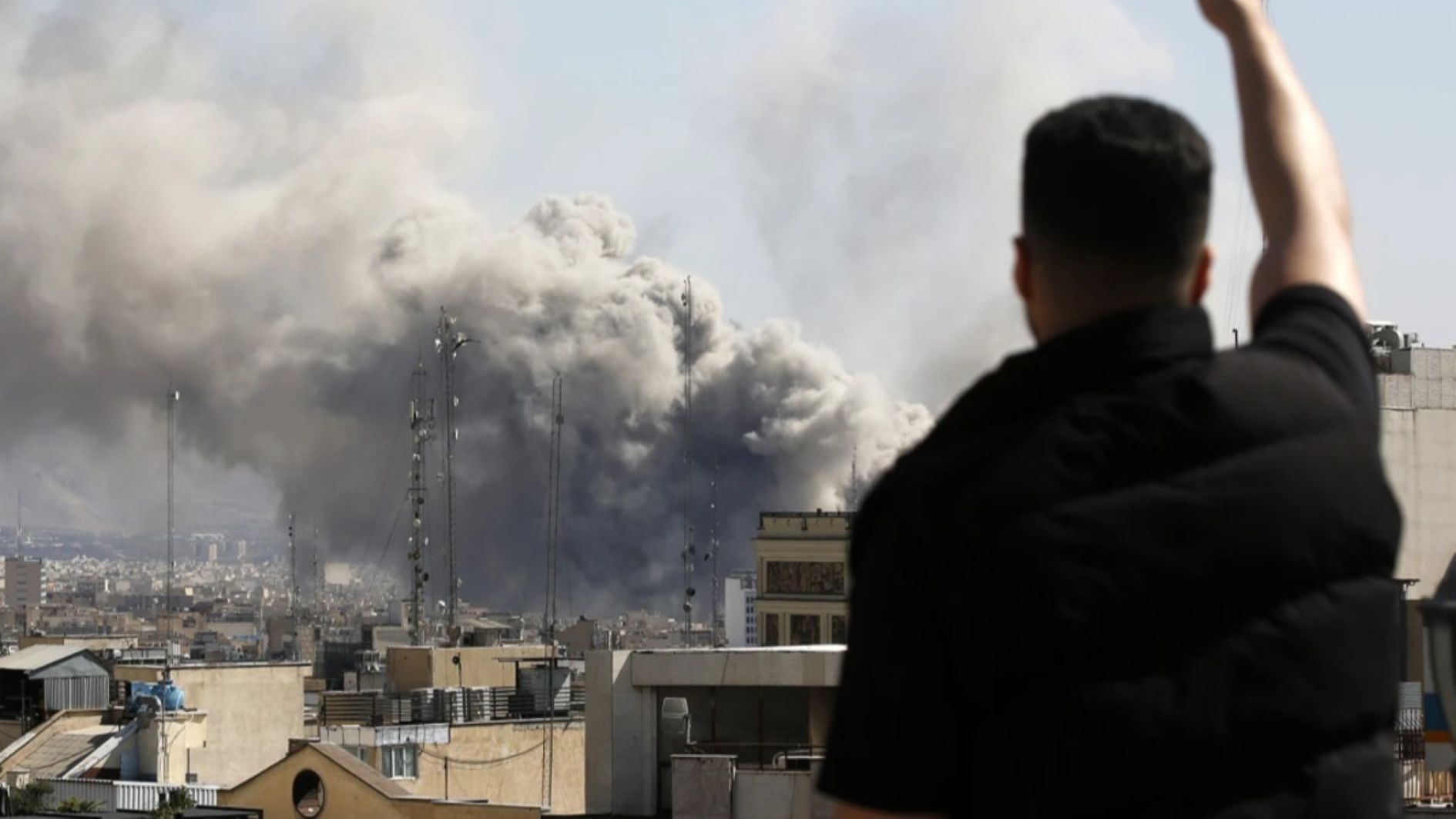
By Ige Asemudara
Continued from yesterday
Clearly, advanced economies like the UK and U.S. have mastered the art of converting the gains of war into strength while big European economies like Russia, Germany or France have learnt to easily rise from their ashes like phoenix. It is therefore not an accident that one is more concerned about many African nations especially Nigeria. It becomes more troubling as modern war now has far-reaching implications for both the actual actors in the theatre and the non-actors because of global interconnectivity.
Whilst non-actors may not suffer infrastructural destruction or manpower loss, they definitely suffer economic disruptions in no small measure. For example, the blockade of the Strait of Hormuz has brought untold hardship to so many nations not involved in the war between Iran, United States and Israel.
Pump price of petrol have gone all time high to about N1400 per litre in Nigeria while other countries also experienced hike because about 20 per cent of total global supply of petroleum passes through that Strait. By reason of geography and market dynamics, Nigeria’s oil does not pass through Hormuz yet events there dictate market behaviour of Nigeria’s oil.
Sadly, Nigeria has no demonstrable competitive advantage in any sector as to be able to sway any war effort or insulate its citizen or economy from the harsh effects of wars. Despite being the world’s 15th largest oil producer with production fluctuating between 1.5 and 1.7 million bpd and oil as the mainstay of the economy, Nigeria seems not to be strategically positioned to deploy its market strength to protect its people or negotiate any serious terms with other nations in case of an outbreak of war.

This is not the case with many European nations. It is interesting to note that before Iran declared Hormuz closed or made it impassable through military action, the maritime insurers and P&I clubs made that happen by withdrawing their covers for war risks. Ships would not sail without insurance cover and a large number of these insurance services are controlled from Europe.
So, without firing a shot, Europe could control a major issue that can swing the war effort here or there. European countries have high investments in shipping, marine insurance and other maritime businesses that their market strength could be deployed to dictate war dynamics.
Deliberately building a nation’s economic strength to give heft to its political stature including its military strength and its perception in diplomatic circles is at the core of sovereign resilience.Frederick Engels seemed to have inked that perspective when he wrote in Socialism: Utopian and Scientific that “the economic structure of society always forms the real basis, from which in the last analysis, the whole superstructure of legal and political institutions as well as of the religious, philosophical and other ideas of a given historical period is to be explained”.
Nigeria is not taken seriously because it has no economic strength and thus no political weight. For instance, shortly after Donald Trump designated Nigeria as a Country of Particular Concern, he threatened to enter Nigeria to fight the ISIS-linked terrorists which have badly intrigued Nigeria in the last decade. Before Nigeria’s government got its acts together, Americans began military operations in Nigeria. Yes, Nigerians might love the respite that came with such intervention but none would love the disregard for Nigeria’s sovereignty.
It is concerning that Nigeria may suffer hugely if these global crises snowball into a full blown World War III. With a population of about 240 million people, weak reserve, poor agricultural plan, poor investment, poor war technology and poor leadership, Nigeria seems to be a re-enactment of Russia of the 1st world war.
According to Orlando Figes, Russia had by far the highest population of any belligerent country. Although Russia had a high birth-rate, it was the first allied power to suffer manpower shortages. The population was too young to be mobilised. It had a very weak reserve. The top commanders were drawn from a narrow circle of aristocratic cavalrymen and courtiers with no experience. They conducted the war in the archaic 19th century pattern ignoring technology in 20th century warfare.
So, Nigeria must immediately begin to invest in agriculture and build a food reserve that can last for at least a decade ahead without a need to look abroad for food supplies. Business Day editorial of July 11, 2025 reports that “according to the Food and Agriculture Organisation (FAO), Nigeria records a meager yield of 0.9 tonnes per hectare for beans, compared with Egypt’s 2.1 and Ethiopia’s 4.2.
This yield gap is symptomatic of a larger malaise: a reliance on rain-fed agriculture, outdated practices, and unaffordable or unavailable inputs. In the first quarter of 2024, Nigeria imported N1.7 trillion worth of food, contributing to a total ofN2.79 trillion in food imports for the year to date. These figures, released by the National Bureau of Statistics (NBS), reveal a country still highly reliant on external food supplies despite possessing over 36.9 million hectares of cultivable land”.
Importation of food will worsen Nigeria’s economic position through foreign exchange distortions and makes the country vulnerable to a number of crises. It is sad that Nigeria imports even fish for food despite its limitless access to the sea.
With about 853 Kilometers coastline and a total water surface of about 14.99 million hectares which is about 15.9% of its total area, Nigeria should be self-sufficient in fish and aquatic supplies. Alas, it is not! Nigeria still imports up to 1.2 million metric tons of fish annually.
Steel production ought to have peaked by now but for corruption! Given her vast crude steel endowment, Nigeria should be a top player in the industry. Ajaokuta Steel Mill has an installed capacity of 3 million metric tons per annum and an initial first phase production capacity of 1.3 metric tons of steel per annum. Yet, it seems to be big for nothing.
For over forty years, the fund and manpower invested in the project seem wasted together with the 24, 000 hectares of land upon which the industry sits. It is the same malaise afflicting Itakpe Iron Ore Mine.
A reserve of 3 billion tons at 32% iron concentration is lying there prostrate. In our full glare, Delta Steel Company (DSC) died and its remnant was taken over by Premium Steel and Mines Limited (PSML). These companies should be providing support for our military, industrial and other metallurgical needs.
To be continued tomorrow.
Asemudara, a lawyer, is the founder of Mission Against Injustice in Nigeria (MAIN).

