 Follow Us on Google News
 Follow Us on Google Discover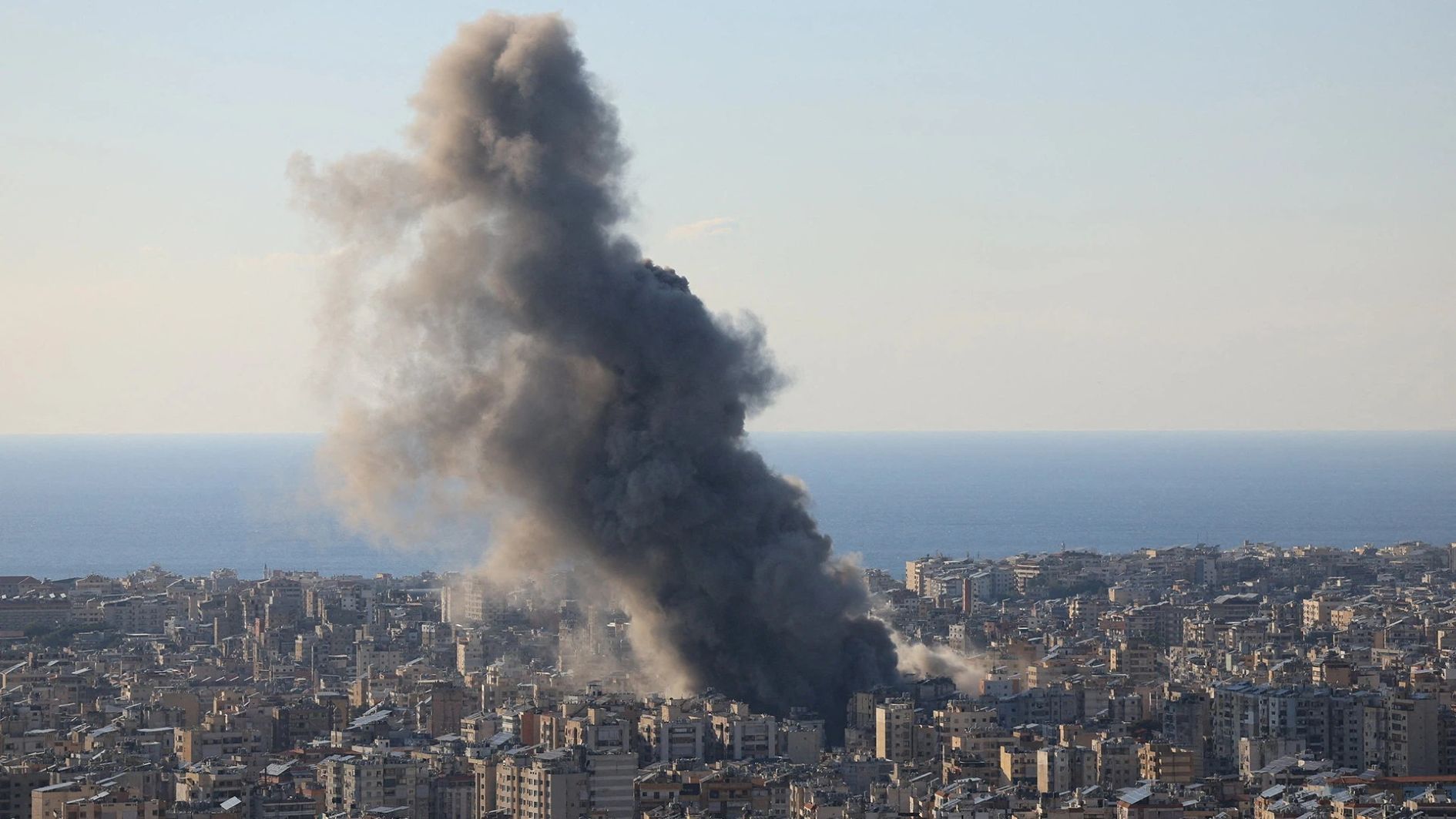
By Ige Asemudara
Nigeria should be on the same pedestal as China and India in steel production if we had ensured that Ajaokuta is healthy and fully a going concern. Today, war is more technologically driven than it was in 1918 and 1945 but steels are still the crude materials for missiles, guns and other arms and ammunitions. They are still used to construct warships, submarines, rail etc.
In short, there is no manufacturing company that does not make use of steel. Therefore, the Nigeria-UK 746 million pounds ($902 million) ports deal for the supply of steel to Nigeria is a self-indictment on Nigeria’s government. Nigeria only helped to boost the failing British steel industry and created thousands of jobs for Britons while further sinking our steel industry. We ought to learn from India who built its steel capacity that Tata Steel of India acquired Corus of Britain in a 6.2 billion pounds deal in 2007.
It is unfortunate that Nigeria’s role in the global energy supply is not just weak but below capacity. But for the 650, 000 bpd Dangote Refinery, our crude oil is unashamedly fully shipped abroad for refinement, only for Nigeria to buy them back as finished products. The three refineries have become moribund due only to corruption and poor leadership. With past earnings from petroleum, Nigeria ought to be able to refine at least, 1.5 million bpd locally but this is sadly not the case.
Apart from oil and gas where Nigeria is big in name but small in influence, the nation is practically not doing well in global energy sphere. For its 240 million populations, Nigeria generates only about 4000 megawatts of electricity from the national grid whereas; it needs up to 100, 000 megawatts for industrial and residential needs. Despite this electricity crisis, Nigeria is said to have an installed capacity of 803 MW for solar energy as of 2025. Meanwhile, the country has untapped potential capable of generating up to 210 GW if one per cent of suitable land is utilised. So, to position properly, Nigeria must begin to rework its energy policies and develop a roadmap to restoring sanity in this sphere by providing the needed energy to power and grow its industries and light up its homes.
It is plausible to predict that a combination of a vibrant steel industry and robust energy sector with sustainable generation and supply will give Nigeria’s economy a great leap especially when the wings of corruption are clipped and mouth of economic vipers are shut.

Nigeria has a large pool of vibrant youths; 70 per cent of the population. As of 17 December, 2025, Action Aid Nigeria reported that nearly 80 million young Nigerians, about 53 per cent of youths, are unemployed.
This is despite the very importance of labour as a factor of production and youths as the strength of every labour force. There is no political-economic principle that can grow a nation without its active population gainfully employed in production and distribution of goods and services.
Nigeria ought to invest in these youths especially in ICT skills. Sadly both UNICEF and Nigeria Bureau of Statistics agreed that only about seven per cent of Nigerian youths possess basic ICT skills. Many are online as we write whiling away time on Tiktok, Facebook, instagram and other unprofitable social media engagements including cursing and
“cruising”. Yes, Nigerian youths are largely smart and can be deployed into smart intellectual manpower. With investment in youthful energies, the gains that will come with FinTech, robotics, artificial intelligence or drone technology can only be imagined.
Nigeria needs to reduce its religious engagements and elevate its secularism in this era of destructive war campaigns made on the basis of religious sentiments rather than clear-cut economic or political ideologies.
Policies should be economic-driven and there must be a deliberate effort to wipe out insurgents and dangerous religious ideologues. Like it or not, America’s interest in the war in Middle East is purely economic. Russian war against Ukraine is not just about Ukraine’s political decision to join NATO or the EU.
Rather, it is more of Russia’s desire to control Ukraine’s critical minerals and rare earth elements like lithium, titanium, graphite, beryllium, coal and even oil and gas resources. Toeing the same path but with religious covering, Iran wants to intimidate all nations of the Middle East especially the GCC countries so that it can control economic dynamics in the region and possibly spring up as a world power.
In doing this, it built up military arsenal and deployed Islamic sentiments to rally support from home and elsewhere. If Iran war was religious-centric, it would never attack Saudi Arabia, the home of Islam or any Islamic country.
Nigeria must make only well-thought out political and economic decisions for the health of the polity at home and its economic influence abroad. Our meager resources are still being frittered while the purpose of Nigeria’s huge borrowings remains opaque.
Just on March 31, 2026, within four hours of request, Senate approved Tinubu’s borrowing to the tune of 6.9 billion dollars under the nebulous description of meeting government obligations. This takes Nigeria’s public debt to over N152 trillion (about US$94 billion).
Public debt under this regime rose by over 65 per cent. The saddest part of the approval is that Senate never debated it as expected of a working assembly. This questions accountability of the famed savings on the removed fuel subsidy.
So, as the world inches further into what seems to be a major war that may either involve the whole world or impact it, Nigeria needs to be quick in putting every facet of the economy together and be in-charge of its politics at home and in the global sphere.
Since war remains a continuation of politics by other means, Nigeria must bear in mind Harold Lasswell’s thesis of politics as being about “who gets what, when, how.”
Nigeria must deftly work out the “how” if it must have a place in the global political economy that will unfold after now and if it must save the country from either being undermined from within or run down by external powers.
Concluded.
Asemudara, a lawyer, is the founder of Mission Against Injustice in Nigeria (MAIN).

