 Follow Us on Google News
 Follow Us on Google Discover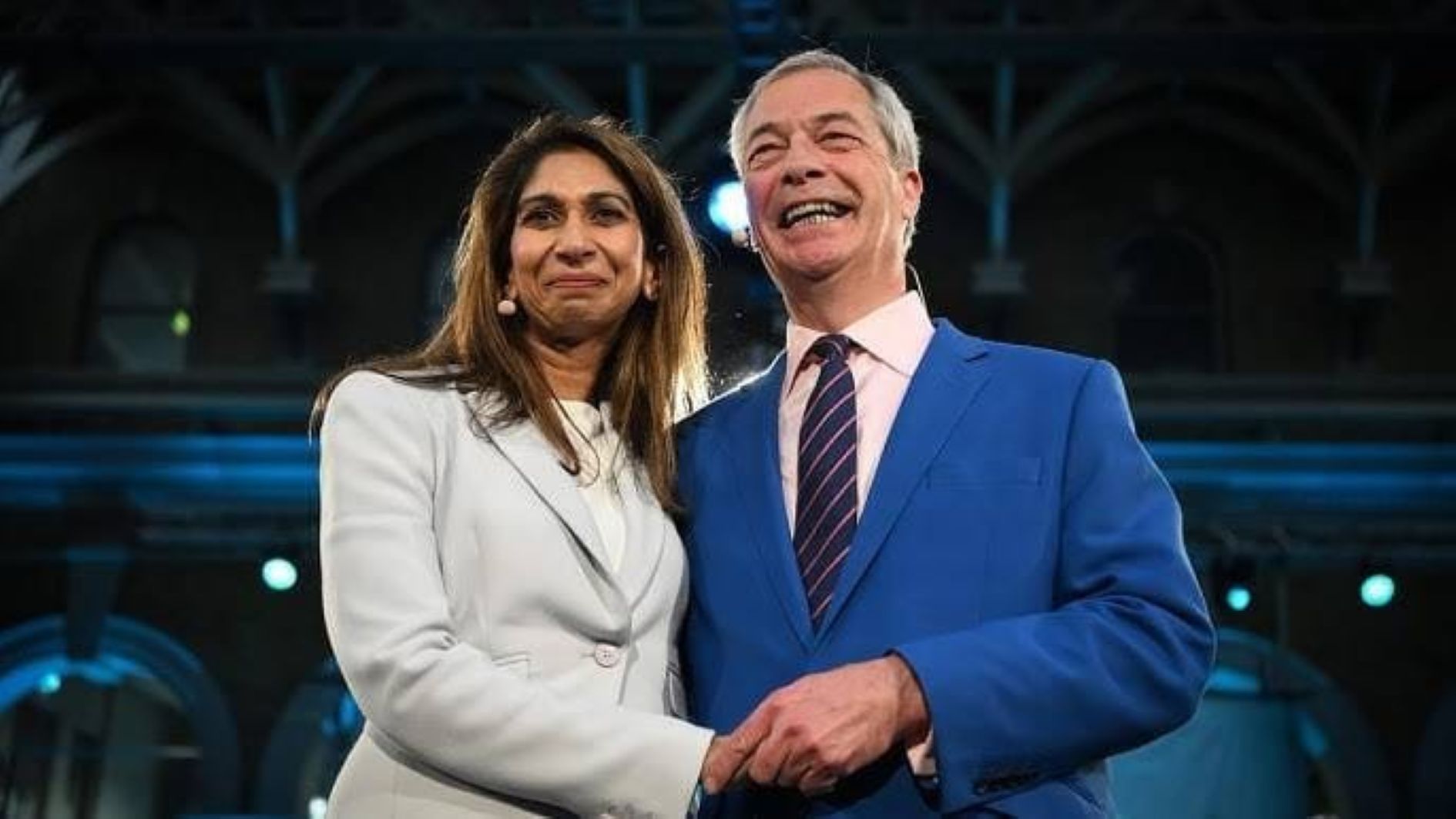
By Ken Bosire
First came Nigel Farage’s sneer: Britain “can’t pay, won’t pay” reparations.Then Suella Braverman went one astonishing step further. The former British Home Secretary, now in Farage’s Reform UK camp, suggested Britain’s former colonies should pay Britain.
In his twisted view, the victims of slavery and colonialism should thank the slave master’s empire. The colonised should settle the coloniser’s bill. Victims of plunder, torture and dispossession should with humility reach into their pockets and reward those who profited from their suffering. This is no longer resistance to reparations. It is history being stood on its head.
Farage, whose political star has ridden Britain’s hardening anti-migration mood, had dismissed the long campaign for reparatory justice with breathtaking finality: “Can’t pay, won’t pay.”
Then Braverman declared on X on July 3 that the British Empire “did so much good for the world”. Responding to Jamaica’s planned reparations petition, she argued that former colonies should repay Britain for the “considerable investment, effort and contribution” that laid the foundations for flourishing democracies.
There are statements that not only invite debate, but expose dangerous historical amnesia. This one was asinine. And Barbados Prime Minister Mia Mottley called it exactly that.

“I am not sure that you want me to reply to things that are asinine and certainly the notion that we should pay the United Kingdom for oppressing us, for enslaving us and for treating us as chattel,” she said. Her anger carries the weight of history.
For centuries, millions of Africans were uprooted, chained, shipped across oceans and sold as property. Families were ripped apart. Names and identities were erased. Human beings became entries in merchants’ ledgers — priced, insured and inherited. They were stolen people.
Nowhere is that tragedy more brutally concentrated than in the Caribbean. Africa suffered the original wound: the violent theft of its people and, later, colonial conquest. But Africans shipped to the Caribbean endured a double tragedy at the hands of the same imperial powers.

First came slavery. Then colonialism.They were transported as human cargo to build plantation economies through unpaid labour. After emancipation, their descendants remained under colonial rule, racial hierarchies and economies designed around European interests.
That explains why the reparations fire burns so fiercely in the Caribbean.
The demand is not new. Formerly enslaved people and their descendants have sought restitution for generations. But the modern Pan-African push acquired institutional muscle in the early 1990s.
In 1992, the Organisation of African Unity established a Group of Eminent Persons to pursue reparations. Its members included Kenyan scholar Ali Mazrui, South African singer and activist Miriam Makeba, Graça Machel and Nigerian historian Ade Ajayi.
The initiative was chaired by Nigerian businessman and politician Moshood Abiola. Then came the landmark 1993 Pan-African Conference on Reparations in Abuja.
The Abuja Proclamation declared that a “unique and unprecedented moral debt” was owed to African peoples for enslavement and colonisation. It demanded restitution of stolen cultural treasures, debt relief and a restructuring of unequal global relationships.
Africa had formally placed reparations on the continental agenda. But the Caribbean has since built perhaps the most organised and sustained government-led campaign for reparatory justice. In 2013, Caribbean Community leaders established the CARICOM Reparations Commission. Its Ten-Point Plan is not simply a demand for cheques. It seeks formal apologies, debt cancellation, health and education programmes, cultural restoration, technology transfer and psychological rehabilitation.
Under Mottley and other Caribbean leaders, that campaign has gathered urgency.
Why? Because the Caribbean landscape itself bears witness. Plantations, ports and colonial economies were constructed around extraction. African bodies were the machinery of production. When slavery was abolished, slave owners were compensated for the loss of what the law had classified as their “property”.
The enslaved received nothing. This was grave injustice: Those who owned human beings were paid for their loss. Those who had been owned walked away with scars. That historical obscenity sits at the heart of the reparations argument.
Africa, too, has reawakened. The African Union designated 2025 the year of “Justice for Africans and People of African Descent Through Reparations”.
Then, on March 25 this year, a Ghana-led resolution won 123 votes at the UN General Assembly, declaring the trafficking and racialised chattel enslavement of Africans the gravest crime against humanity and advancing the case for reparatory justice.
The campaign is no longer fringe activism. It has entered the chambers of international diplomacy. That is precisely why the rhetoric of Farage and Braverman is so dangerous.
The debate should not be whether there will be reparations but on the form: Direct compensation? Debt relief? Development financing? Return of stolen artefacts? Investment in education and health?
Those are serious questions. This is why attempts to rewrite oppression as benevolence is disturbing and insulting.
A railway built to move extracted resources to a colonial port was not necessarily charity. A school system designed to serve an empire cannot erase land alienation. Administrative structures do not cancel detention camps, forced labour and torture.
For instance, in Kenya, the Mau Mau freedom fighters endured detention and abuse during the colonial Emergency. Decades later, elderly survivors are still pursuing Britain through the courts. In 2013, Britain reached a £19.9 million settlement covering 5,228 Kenyan claimants. Then Foreign Secretary William Hague expressed sincere regret for the abuses and suffering. Britain did not collapse, but victims were recognised.
Germany has similarly recognised the genocide committed against the Herero and Nama in Namibia and sought forgiveness, although its €1.1 billion development arrangement remains contested.
Recognition is still a more civilised starting point than telling descendants of the oppressed to thank their oppressor. This is why Braverman’s intervention is more than bad taste. These are politicians aspiring to govern a country that presents itself as a citadel of democracy and human rights. Leaders should illuminate difficult history, not weaponise ignorance about it. To suggest former colonies owe Britain money for colonialism is not bravery. It is callousness dressed as political bravado.
Reparations are emotive because the wounds remain visible. Africa still grapples with borders drawn by European powers and economies shaped around extraction. Caribbean societies confront the economic, social and health legacies of plantation slavery and colonialism.
History did not end at independence. Its shadow entered the new republics. Nor is reparatory justice about marching into an English home and presenting a family with an ancestral invoice. It is about states and institutions confronting organised systems of exploitation whose benefits — and damage — crossed generations.
Civilised societies investigate historical wrongs. They acknowledge victims. They apologise. They negotiate repair. They do not tell the tortured to be grateful for the road leading to the detention camp.
Farage, Braverman and their choir should understand this: mocking reparations will not bury the campaign. It may radicalise it. The victims of slavery cannot speak. Most victims of colonial torture are gone. But their scars remain in families and nations.
The question is no longer whether history happened. It is whether those who inherited powerful democracies are courageous enough to face it. Anything less wounds history twice.
Bosire is a training and consulting Editor.

