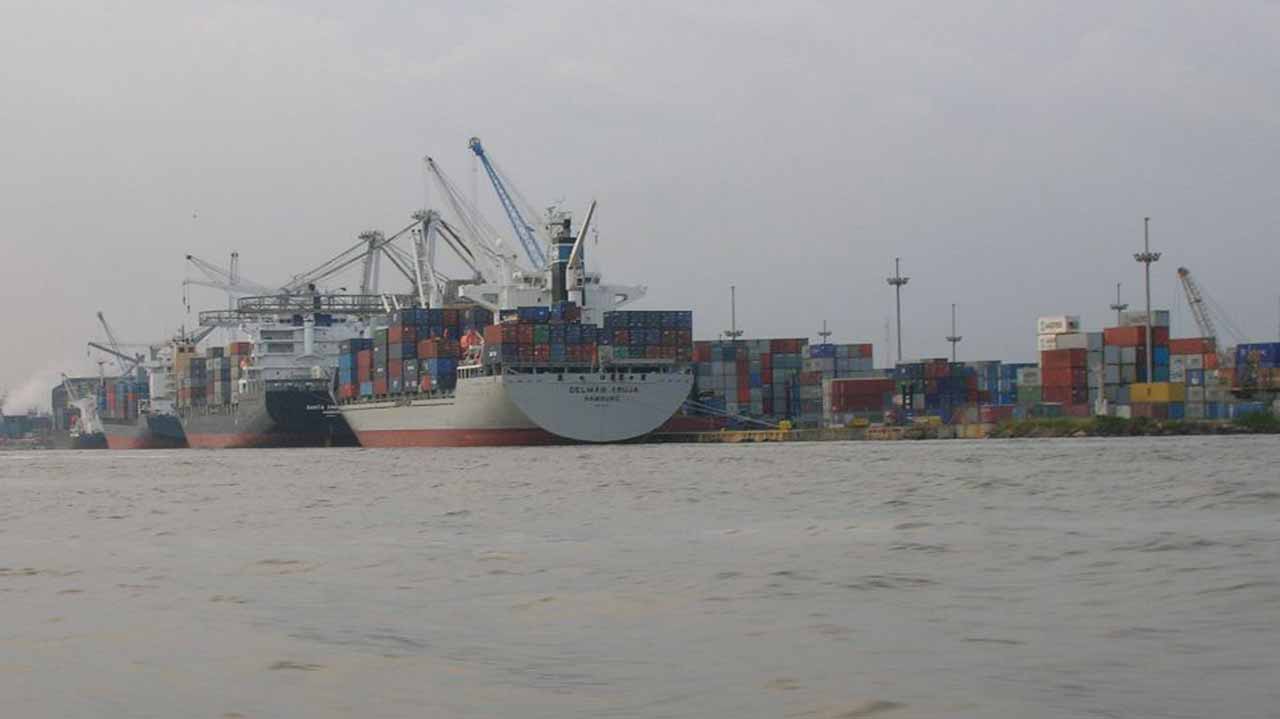
 The Nigerian Maritime Administration and Safety Agency (NIMASA), is the apex maritime regulatory agency in Nigeria. It came into being, following the merger by the Federal Government in 2001 of National Maritime Authority Joint Labour Industrial Council and the Office of the Government Inspector of Shipping. With the merger, the Agency became the sole body responsible for regulations relating to Nigerian shipping, maritime labour and coastal waters. The Agency also undertakes responsibility for maritime safety, security and the protection of the marine environment from ships and shipping activities.
NIMASA’s functions are derived from the provisions of three Acts of the Nigerian National Assembly. These three Acts are; NIMASA Act 2007, Nigerian Merchant Shipping Act (MSA) 2007, Inland and Coastal Shipping (Cabotage) Act 2003.
The NIMASA Act repealed the Shipping Policy Decree 1987 establishing the National Maritime Authority while the MSA 2007 repealed the Nigerian Merchant Shipping Act of 1962.
In order to have a proper perspective of the functions of the Agency, it will be necessary to examine the provisions contained in the three legal instruments highlighted above;
The broad objectives of the Agency as stated in section 1, NIMASA Act 2007 are, the promotion of the development of indigenous commercial shipping in international and coastal shipping trade. It is also to regulate and promote maritime safety, security and protection of the marine environment, including human element under maritime labour. While the functional component of maritime safety, security and marine pollution are copiously captured in the Merchant Shipping Act 2007, detailed provisions on coastal shipping are contained in the Cabotage Act 2003.
Essentially, NIMASA is expected to be the main driver for developing capacity for ship ownership, maritime infrastructure, such as ship building/shipyards, dry and floating docks, maritime training institutions, human capacity development (seafarers, ship managers, marine superintendents, shipbrokers, marine pilots etc).
NIMASA is also expected to create the enabling environment for ship owners to have access to carriage of both petroleum and dry cargoes.
The MSA 2007 repealed the MSA 1962 which was derived from the United Kingdom MSA 1894. Nigeria, as a member of International Maritime Organization (IMO), is expected to give full and complete effect to IMO Conventions and other international instruments on maritime, to which she is party. Consequently, the provisions of the MSA provide for the implementation and enforcement of international Conventions as they relate to maritime safety, security, protection of the marine environment and human element in shipping. These duties are also captured in Article 94 of United Nations Convention on the Law of the Sea (UNCLOS) 1982, under the following headings; Ship registration, Ship construction, equipment, Ship survey/inspection and certification, Training , examination and certification of seafarers, Marine casualty investigation, Marine environment protection, Search and rescue, Port State Control.
The Act Cabotage Act 2003 was put in place to restrict the use of foreign vessels in domestic trade in Nigeria, in order to promote the development of indigenous tonnage as well as establish the Cabotage Vessel Financing Fund (CVFF). The Act provides that for a vessel to operate in Nigerian coastal trade, it must be; built in Nigeria, registered in Nigeria, owned and manned by Nigerians. Additional provisions are however made to give waivers where it is impossible for the four cardinal objectives to be met.
It could not be argued that NIMASA is at present making its modest impact into the national economy relative to its potential. However, when the provisions of the Acts, the MSA and CABOTAGE inclusive, are faithfully implemented, the Agency will be a boost to indigenous shipping. The path to full implementation will include the articulation of all the core functions as enumerated in the three legislations and the exercise of the measures for enforcement.
Moving forward, a well articulated Corporate Plan, with realistic deliverables and target completion dates will have to be developed. This should include a gap analysis and personnel audit process, to determine the suitability of existing staff of the Agency for the functions they currently undertake. This is very essential in view of the diverse knowledge-based requirements in the specialized/technical departments (Maritime Safety, Marine Environment, Shipping, Cabotage and Maritime Labour).
A framework for implementation of the Plan should be put in place, to include training and re-training of personnel for an improved on-the-job efficiency.
Other measures are; promulgation of subsidiary regulations, development of appropriate staff Instructions, Guidelines and Reporting procedures.
In order to avoid policy flip flops as we see today due to peremptory changes in the leadership of the Agency, a Maritime Policy document and Strategy deriving from the National Transport Policy should be developed in collaboration with the Federal Ministry of Transport.
NIMASA generates its revenue from the three per cent Statutory levy on freight earned by foreign going vessels calling at Nigerian ports, two per cent surcharge on contracts performed by Cabotage vessels, half per cent of shore handling charges of terminal operators under maritime labour, Licensing, surveys, registration of ships, waiver fees and miscellaneous income. However, more than eighty per cent of the Agency’s revenue is derived from the three per cent levy, which unfortunately is dogged by sharp practices by some shipping Agents due to non-declaration and under declaration of ships and cargo respectively, to evade full payment.
To ensure the Agency is able to collect all conceivable revenue, the collection procedure should be overhauled and streamlined to block all leakages, additional ship information should also be obtained from Nigerian Ports Authority and Nigerian Customs Service. These should be supplemented by ship and cargo tracking intelligence and regular oversight from external auditors. There should be zero tolerance for corrupt practices.
Staff in the Shipping and Finance departments should be given additional training for evaluation of shipping documents and proper billing.
An aggressive debt recovery drive should be undertaken to recover all outstanding debts owed the Agency employing the legal mechanism.
Nigeria as a valued member of IMO, is expected to give full and complete effect to IMO Conventions and other international instruments which the country has ratified. This is to improve capacity of the country while at the same time contributing to the enhancement of global maritime safety, security and the protection of the marine environment.
In order to meet these objectives, all ratified IMO Conventions must be transformed into Nigerian laws and associated subsidiary regulations enacted for their implementation and enforcement. Meanwhile, suitably qualified Master Mariners, Marine Engineers and Naval Architects should be engaged as Surveyors. These surveyors should be given training under the platform of the Technical Cooperation Division of IMO as Flag and Port State Surveyors.
Ultimately, ship registration, surveys, marine pollution issues, Port State Control ISPS Code and other Safety Administration duties should be undertaken to the level of international best practices.
The IMO Member State Audit Scheme (IMSAS) was put in place to determine the capacity of members in the implementation of IMO instruments. Nigeria went through the audit under the Scheme in 2016 with mixed results. It is imperative that recommendations arising from the audit be addressed as timeously as possible.
NIMASA has enormous responsibility to the health of the maritime industry in Nigeria. The apparent comatose state of the industry currently dominated by foreigners will get the necessary fillip when policies are implemented for the interest of the nation. The right policies will lead more Nigerians to be able to acquire vessels for Cabotage and international trade, while more jobs will be created for the local economy. There will also be improved contribution to the Federation Account by NIMASA at this period of dwindling oil revenue.
An effective Maritime Safety Administration will improve the quality of Nigerian shipping and raise the profile of the country internationally, allowing her to play a major role among the comity of nations. The overall result will be more jobs for the people leading to improvement in wealth creation, living standards and poverty alleviation.
Olopoenia, a Captain and a Master Mariner, wrote vide [email protected]