 Follow Us on Google News
 Follow Us on Google Discover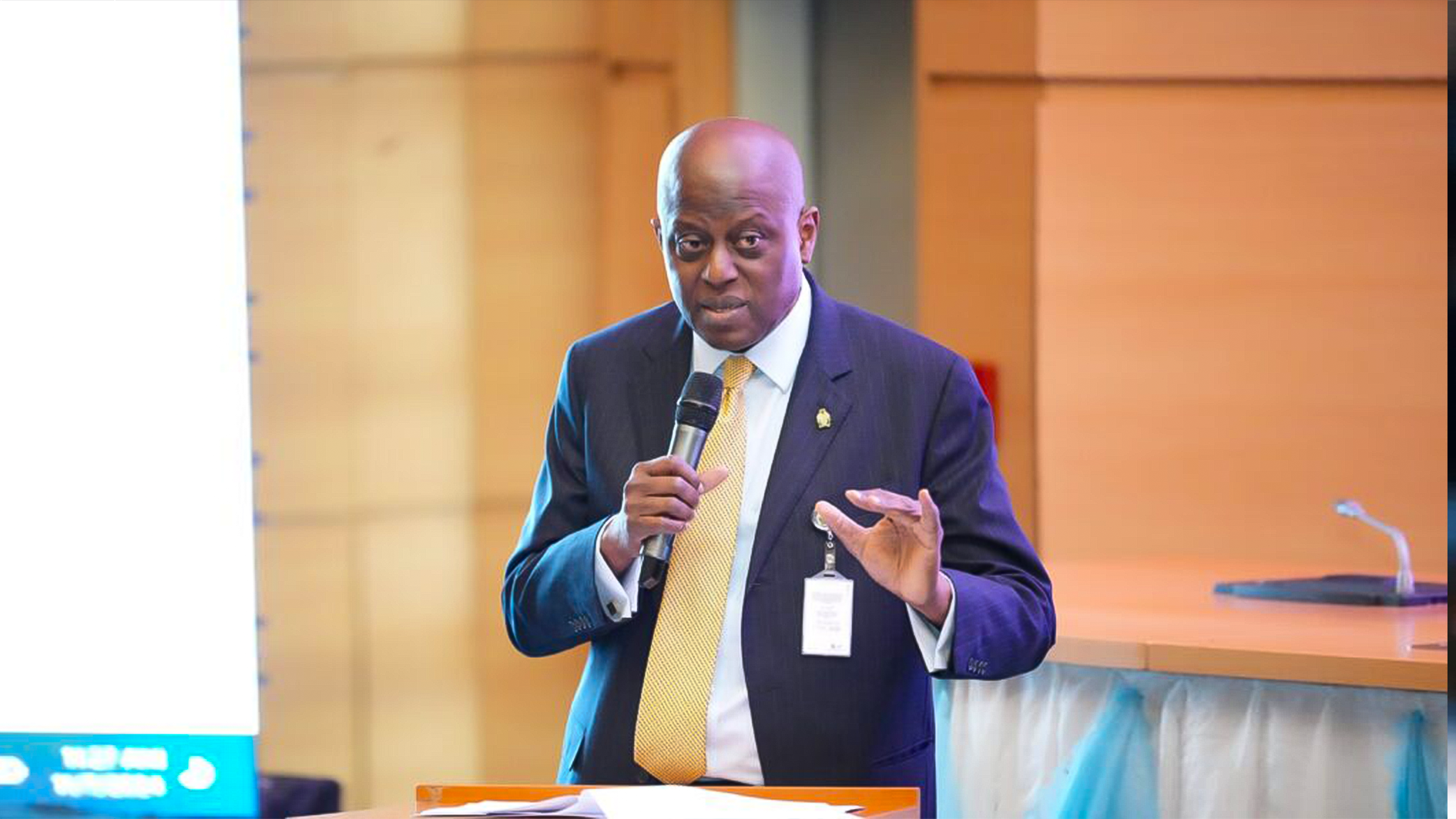
By Adaighofua Ojomaikre
On June 10, 2026, the Central Bank of Nigeria Governor, Olayemi Cardoso, (who assumed office on September 22, 2023) accepted the global Central Bank of the Year 2026 Award from the Central Banking Award Committee in London, UK. But the award is in fact a blindfold intended to make the leadership of the apex bank complacent and stay astray. It is a strategy to block further official moves at achieving a booming naira-based economy.
The recognition came after the CBN leadership had been in control and had rerun the rigmarole of making endless reforms to fix the economy for 33 months. Among the reasons that won the prize for the apex bank was because the CBN drove down inflation from 34.8 percent in 2024 to 15.1 per cent by early 2026. Needless to note, that level of inflation did not “ensure monetary and price stability” as stipulated by Section 2(a) of the CBN Act 2007.
On September 2, 2025, the Federal Government announced “Nigeria is not borrowing a dime from local banks. We have met our revenue target for this year, and we met it in August….The economy is stabilised. If non-oil revenue is doing well, then have no fear.” That claim is unlikely to happen under the current monetisation practices.
As bequeathed by the Federal Military Government (1975-79), the CBN uses artificial exchange rate to purchase directly both foreign exchange from crude oil export sales and other government foreign exchange inflows as its foreign exchange reserves while it credits the naira equivalent to the Federation Account and federal treasury respectively (foreign exchange repeated for the sake of clarity).
Forty-seven years on, the CBN print naira procedure has produced extremely harsh economic results with even significant negative effect on the rate of marriage among the youth. For the education of the three tiers of government and NASS (in its oversight role), let us take the May 2026 FAAC report as the teacher. A total of N2.3 trillion (amounts are at face value) was shared among Federation Account beneficiaries. Given N188.132 billion as 13 percent mineral derivation, we deduce oil export receipts amounted to N1.447 trillion. (Note as always that since 1975 oil export receipts have represented more than half of the total FAAC monthly distribution.)

A brief economic interpretation is as follows. First, far from being realised naira revenue from exported oil proceeds, the alleged N1.447 trillion was created by fiat based on artificial exchange rate contrary to Section 16 of the CBN Act. To comply with that section, there should be from time to time a single market-determined exchange rate arrived at by deposit money banks based on intermediation of total supply of forex seekimg entry into the naira legal tender economy and total demand of forex for approved economic use while the apex bank acts strictly only as bank of last resort.
Second, the alleged N1.447 trillion is an uncalled-for apex bank (a local bank) loan which is non-repayable. It breaches Section 38 of the CBN Act. By the same token, “other government foreign exchange inflows” (which CBN directly purchases) suffer a similar fate. Hence claims by FG last September that 2025 budget revenue target had been met by the end of August 2025 and that it would not borrow a dime from local banks both collapse. Third, the alleged N1.447 trillion represents arbitrary addition to money supply in the system.
The amount sets off a chain reaction of excess, liquidity, futile mop up of excess liquidity continuous depreciation of the naira, defence of the value of the naira usimg chunks of the wrongly withheld foreign exchange, high double digit inflation, high imterest rates, low growth rate 0f Gross Domestic Product, and so on.
The ever -declining value of the legal tender naira has brought about recapitalisation of businesses beginning with deposit money banks for the second time in 20 years. While the CBN Act and the 1999 Constitution recognise the naira currency as the legal tender, dollarisation waxes strong through multiple currency practice, domiciliary forex bank accounts without time limit. Nigerian banks in turn grant dollar-denominated loans to local businesses that prove difficult to be repaid.
To prevent such abuse, a focused central bank does not allow foreign exchange (a constituent of the external reserves of a country) to be held in personal or business or other bank accounts beyond a set short time limit after the receipt of foreign currency funds. Fourth, through the print naira procedure, more than half of the annual budgetary spending of the three tiers of government gets replaced with deficit funding. Such yearly massive deficit level is in excess of the safety volume of the Gross Domestic Product and it is responsible for the lack of monetary and price stability in the country in breach of Section 2(a) of the CBN Act.
Over time the deficits lead to a stunted economy and also intensify underdevelopment. And more or less in corroboration , after the IMF concluded 2026 Article IV Consultation with Nigeria on June 1, 2026 , it issued a report dated June 9, 2026, which practically summed up the achievement of the legacy print naira procedure during the period up to 2025. It reads in part “….Poverty reached 63 per cent (national poverty line) and 27 million Nigerians are estimated to have faced food insecurity in the fall of 2025.”
Now, the above scenario of unplanned deficits and rising poverty is the opposite of the expected long-term impact of robust export earnings on both fiscal spending and overall economic wellbeing. Yet strangely, one day after the IMF report the CBN was bestowed with the award as earlier noted. Just imagine the timing!
Even the global label of the award suggests that CBN outclassed, for example, the European Central Bank (which manages the euro currency), the People’s Bank of China (which manages renminbi currency), the Central Bank of the United Arab Emirates (Dirham currency) and the Central Bank of Saudi Arabia (Saudi Riyal currency}, to name but a few. But that is not plausible. With a friend and cheerleader of CBN like the Central Banking Committee of London, UK, Nigeria beware!
The fact is that the named central banks deploy the humongous export earnings of their respective countries to make their domestic currency-based economies develop and maintain advanced standard of living, deepen industrialisation and flourish luxuriantly. [A little history here: while the leading economies at the time evolved the now successful orthodox method of using export earnings in an economy over 1971-1979 following the abandonment of the Bretton Woods system of fixed exchange rates, the Federal Military Government (1975-79} settled for the print naira at artificial exchange rate procedure.]
Nonetheless, Nigeria, even though on a lesser scale than in each of the above countries, has long possessed the rudiments of a booming export-propelled naira-based economy. To wit, the preponderance of available resources for government budget financing comes from foreign earnings. The only requirement is to harness those resources for export-powered naira-based fast economic growth and development. Therefore Nigeria should exercise the sovereign right to switch to using the orthodox method. Such a sovereign move is not only unquestionable but also cost-free.
Accordingly following the next FAAC meeting, each of the 811 beneficiaries should receive a FAAC Note stating its share of FA export proceeds. Beneficiaries, when they deem fit, should approach deposit money banks of their choice to have their individual FAAC Notes exchanged wholly or in part to non-inflationary realised naira revenue for domestic budgetary spending.
The CBN Act mandates the apex bank to delegate banking transactions concerning government finances to deposit money banks for the national good. For clarity, naira funds obtained through DMBs do not cause inflation (or currency depreciation) because such funds do not constitute fresh addition to money supply. In case of last resort request by DMBs for funds from the apex bank, any addition to money supply would be minimal.
For completeness and the education of the National/State Revenue Service, any foreign exchange earnings generated by individual governments that is meant for domestic (naira) business such as foreign loans and gifts, which may not fall into the Federation Account should be similarly converted to naira revenue through DMBs after the Federal Government effects the switch, the DMB-operated naira/foreign currency market should be expected to take-off smoothly within the same month.
At that stage, the firm foundation for a thriving naira-based economy shall have been laid. To ensure the best practice management of the naira currency for national prosperity is a task that must be done.
Ojomaikre, economist and research analyst, retired from the Federal Civil Service in 1989. He wrote via:
[email protected]

