 Follow Us on Google News


 Follow Us on Google Discover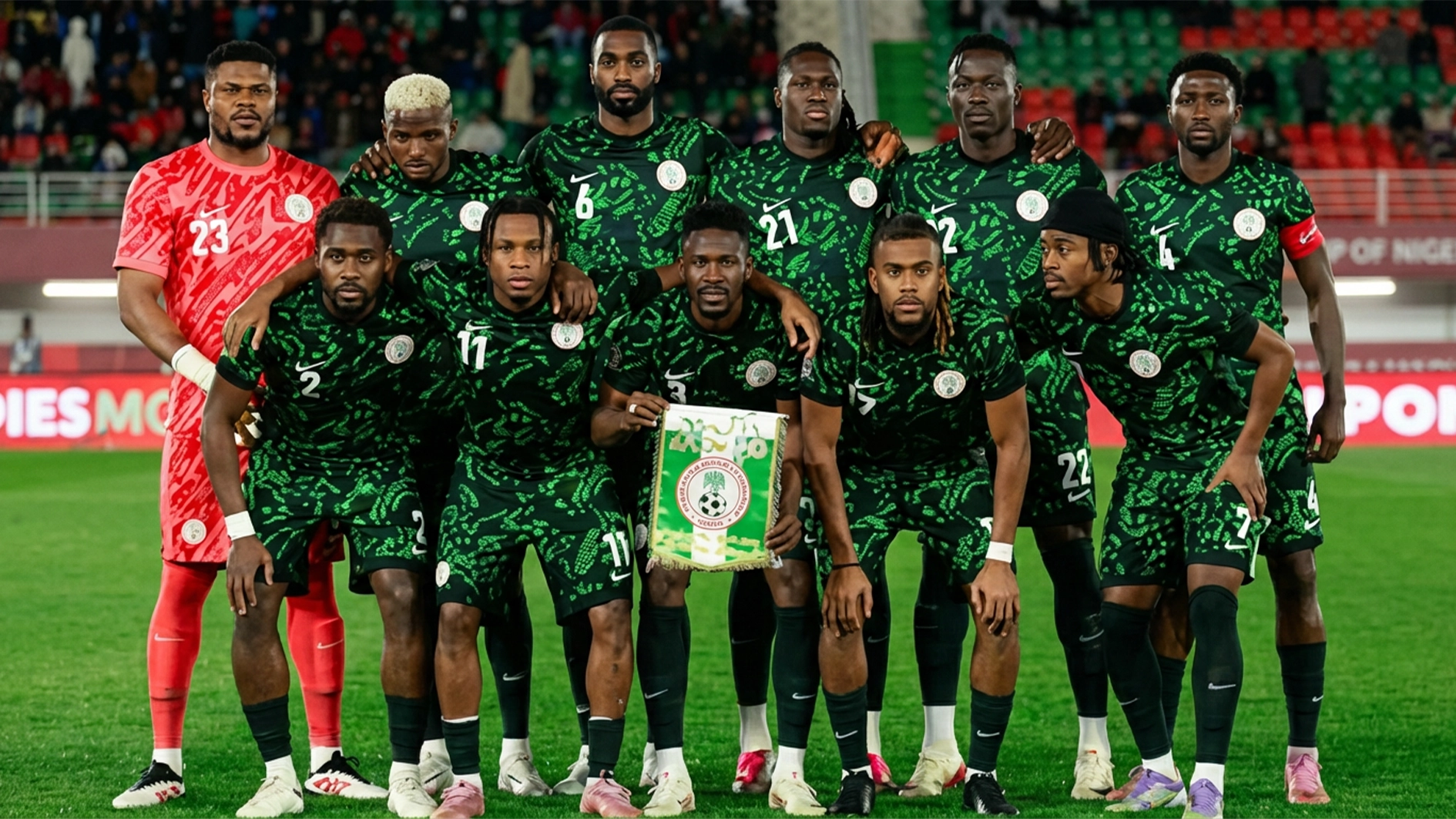
By Akin Olukiran
Congratulations to Spain for a well-deserved triumph, overcoming a formidable French side in the semi-final before defeating defending champions Argentina in a captivating final to lift the FIFA World Cup trophy. Their victory serves as a powerful reminder that sustained excellence in football is rarely accidental. It is the product of vision, investment, institutional stability and a relentless commitment to talent development.
Against this backdrop, Nigeria’s failure to qualify for two consecutive FIFA World Cups should not merely be regarded as a sporting disappointment. It ought to be treated as a national wake-up call. For a country of over 230 million people, blessed with one of the youngest populations on earth and endowed with an inexhaustible reservoir of athletic talent, such an outcome borders on the paradoxical.
Football occupies a unique position within the Nigerian psyche. It is perhaps the only institution capable of suspending our numerous divisions and uniting the nation in a shared emotional experience. Every weekend, millions of Nigerians passionately follow the English Premier League, the UEFA Champions League and other major competitions with an enthusiasm that often surpasses their interest in domestic football. Yet despite this profound national obsession, Nigeria finds itself watching the world’s greatest sporting spectacle from the sidelines.
The uncomfortable truth is that passion, however intense, is not a substitute for strategy. Nations do not achieve sporting greatness through sentimentality. They do so through meticulous planning, institutional discipline and long-term investment.
Indeed, one of the most striking ironies of recent World Cups has been the substantial number of players of Nigerian descent representing other nations. From England to the Netherlands, from Germany to Canada, Nigerian heritage has been visible across several elite squads. This phenomenon demonstrates that Nigeria’s challenge is not one of talent scarcity. Rather, it is one of talent identification, talent retention and talent management.

The contrast with Morocco could not be more illuminating.The extraordinary run of the Atlas Lions to the semi-finals of the 2022 FIFA World Cup was rightly celebrated across Africa. It represented the furthest progression by an African nation in the history of the tournament and offered a glimpse of what is possible when vision is married to execution.
Yet Morocco’s achievement was not a miracle. It was the culmination of a deliberate and carefully orchestrated national project.For years, Moroccan football authorities pursued a coherent strategy aimed at reconnecting with their diaspora. Talented young footballers born and raised in Europe were identified early and systematically engaged. Relationships were cultivated not merely with the players but also with their families. National identity was consciously nurtured. The message was simple yet powerful: Morocco wanted them, valued them and considered them integral to the country’s footballing future.
Simultaneously, substantial investments were made in football infrastructure, coaching development, youth academies and high-performance training facilities. The Mohammed VI Football Academy became a symbol of this strategic ambition, producing technically gifted and tactically sophisticated players capable of competing at the highest level.
When Morocco stunned the footballing world in Qatar, they were not beneficiaries of fortune. They were recipients of the dividends of foresight.Nigeria would do well to study this model.
History demonstrates that the country itself has previously enjoyed success when it embraced a long-term developmental philosophy. The celebrated generation that conquered Africa and won Olympic gold in Atlanta in 1996 did not emerge spontaneously. Many members of that squad had grown together through age-grade competitions, progressing from youth levels into the senior national team. They developed collective understanding, shared experiences and a winning culture, long before they became household names.
That generation was the product of a developmental ecosystem rather than an accidental collection of gifted individuals.Unfortunately, subsequent decades have been characterised by inconsistency. Youth development structures have often been neglected. Coaching standards have fluctuated. Administrative instability has become endemic. Long-term planning has frequently been sacrificed on the altar of short-term expediency.The consequence is a football ecosystem that too often relies upon individual brilliance to compensate for institutional deficiencies.
Yet there is no reason why Nigeria should not be setting far more ambitious objectives.Rather than focusing exclusively on the next qualification campaign, the government should establish a twelve-year football development blueprint spanning three World Cup cycles. The objective should be audacious yet achievable: positioning Nigeria to become the first African nation to win the FIFA World Cup by 2038.
Such an aspiration may appear ambitious today. However, history teaches us that transformative achievements are rarely realised by those who limit themselves to modest ambitions. Great nations, great organisations and great sporting institutions are often distinguished by their willingness to pursue seemingly impossible goals through disciplined execution.
The principles of project management offer a useful framework. Every successful project begins with a clearly defined destination. Once that destination is established, planners work backwards, identifying the milestones, resources and interventions necessary to achieve the desired outcome.The same methodology should guide Nigerian football.
If Nigeria intends to compete for the World Cup in 2038, then the process must begin immediately. The ten-year-olds and twelve-year-olds currently playing football in school fields and neighbourhood streets may constitute the core of that future squad. The question is whether the structures exist to discover them, nurture them and prepare them for elite competition.
This would require a comprehensive national talent identification programme extending into every state of the federation. It would necessitate world-class coaching education, robust youth leagues, sports science integration, modern performance analytics and sustained investment in football infrastructure. Equally important would be a strategic diaspora engagement programme aimed at ensuring that gifted young Nigerians abroad view representing Nigeria not merely as an option but as an honour.
Beyond technical considerations, Nigeria must also address the governance dimension. Sporting excellence flourishes in environments characterised by transparency, accountability and continuity. Frequent administrative upheavals, policy reversals and institutional instability undermine long-term progress. The most successful footballing nations are not necessarily those with the largest populations, they are often those with the most effective systems.
This is where the broader lesson transcends football itself.The Moroccan experience illustrates a fundamental principle of national development: strategic success is rarely accidental. Whether in sports, education, technology or economic transformation, nations rise when they embrace long-term thinking and align resources behind clearly articulated objectives.
Nigeria possesses advantages that many countries can only envy. It has an enormous population, extraordinary athletic talent, a vast and accomplished diaspora and an unparalleled passion for football. What remains elusive is the strategic coherence required to convert these advantages into sustained international success.
The dream of becoming the first African nation to lift the FIFA World Cup is neither fanciful nor unattainable. It simply requires the courage to think beyond election cycles, administrative tenures and immediate results. It demands a commitment to institution-building rather than personality-driven interventions.
Morocco has shown Africa what is possible. The challenge before Nigeria is whether it is prepared to learn the lesson.For if the journey to World Cup glory is indeed, a marathon rather than a sprint, then 2038 is closer than it appears. The foundations of that triumph will not be laid in the stadiums of the future. They must be laid today.
Olukiran is a social and political analyst and he wrote from London. He can be reached via:[email protected]

