 Follow Us on Google News


 Follow Us on Google Discover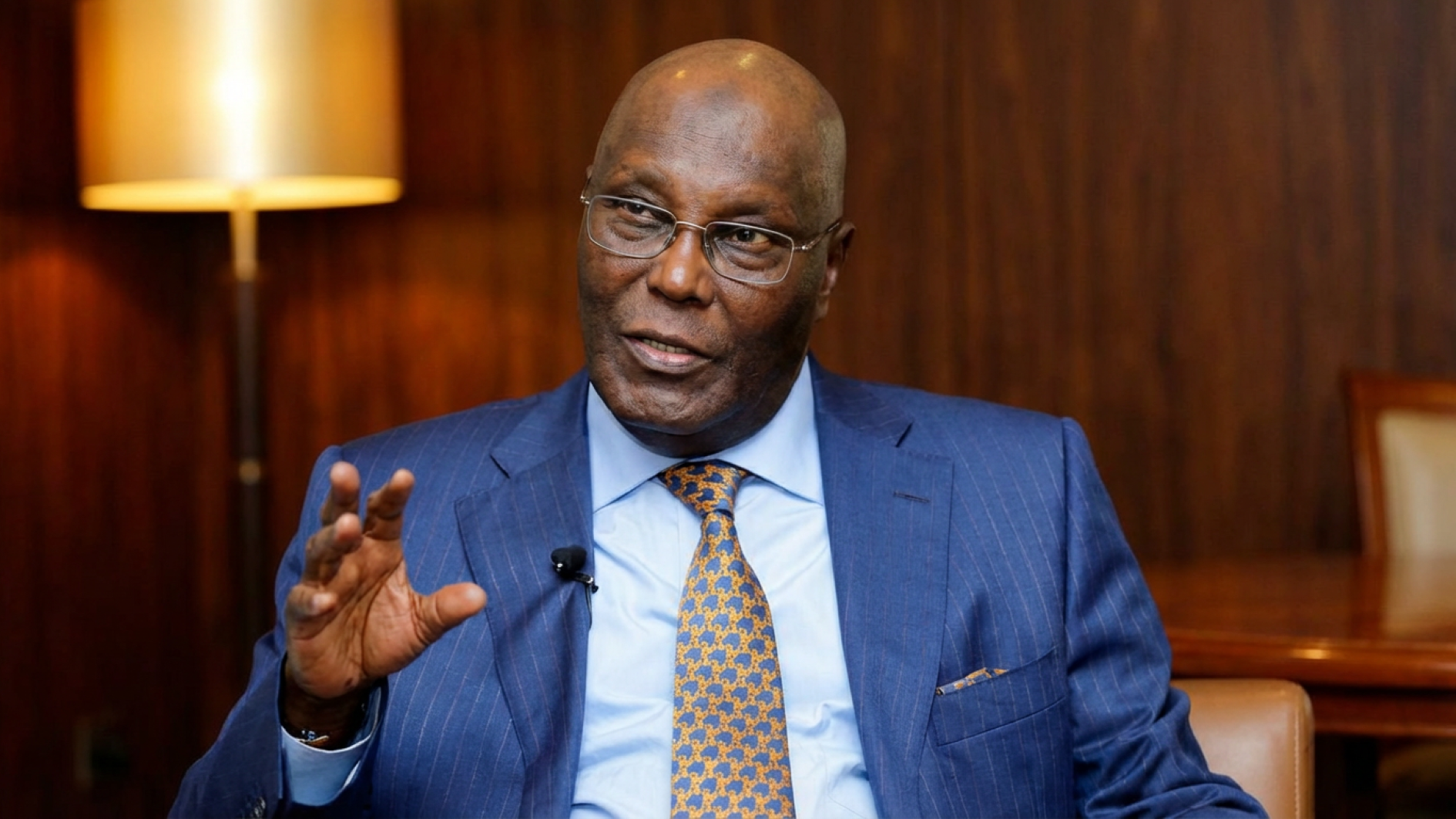
Love or loathe him, no politician has pursued Nigeria’s presidency with the consistency of former Vice President, Atiku Abubakar. Having secured the African Democratic Congress (ADC) ticket for 2027, he is set for another push for the office that has eluded him for decades. With President Bola Tinubu standing in his path, can Atiku still pull an upset? SEYE OLUMIDE writes.
For more than three decades, former Vice President Atiku Abubakar has remained one of the most enduring figures in Nigeria’s democratic journey. From the aborted transition programme of the 1990s to the unfolding political permutations ahead of the 2027 general election, Atiku has consistently stayed within striking distance of the presidency, surviving shifting alliances, party defections, internal betrayals and repeated electoral disappointments.
Having secured the presidential ticket of ADC after defeating former Rivers State governor Rotimi Amaechi and businessman Mohammed Hayatu-Deen, the Turaki Adamawa is once again in the race for Nigeria’s highest office.
Few politicians in Nigeria’s history have pursued the presidency with the consistency and determination displayed by Atiku, who served as running mate to former President Olusegun Obasanjo in 1999 and 2003, contested under the platform of the defunct Action Congress (AC) in 2007, sought the presidential ticket of the Peoples Democratic Party (PDP) in 2011, contested the All Progressives Congress (APC) primary in 2015, and flew the PDP flag in both the 2019 and 2023 elections.
Long before the current democratic dispensation, Atiku had already positioned himself among Nigeria’s leading political actors. In 1993, he contested the presidential ticket of the defunct Social Democratic Party (SDP) but lost to the late Chief M.K.O. Abiola, widely regarded as the winner of the annulled June 12 presidential election.
That loss did not diminish his national relevance. Rather, it marked the beginning of a long political journey that would eventually see him become vice president and later transform into one of the most persistent presidential aspirants in the country’s history.

As he prepares for another showdown with incumbent President Bola Tinubu in 2027, the central question remains whether Atiku can finally convert decades of ambition into electoral victory.
Opinions among Nigerians remain sharply divided. While supporters describe him as a resilient democrat who has paid his dues and possesses the experience required to steer the country through turbulent times, critics argue that his repeated presidential pursuits have become symbolic of a political generation unwilling to relinquish power to younger leaders.
Now flying the ADC flag after emerging from a tense coalition primary, Atiku’s latest presidential bid comes with enormous political baggage.
He must navigate growing agitation for power rotation within the South, unite a fragmented opposition, confront questions about his advancing age, and challenge an incumbent president who has steadily consolidated political influence across the country.
Indeed, Atiku’s presidential odyssey has become one of the longest in Nigeria’s democratic history, rivalled only by the late former President Muhammadu Buhari, whose persistence eventually paid off after multiple failed attempts.
Over the years, Atiku has contested under different political platforms, fought bruising primary battles and suffered defeats against some of Nigeria’s most formidable political heavyweights, including the late President Umaru Musa Yar’Adua, former President Goodluck Jonathan and former President Muhammadu Buhari.
Yet despite those setbacks, he has remained politically relevant through every major transition since the return to democracy in 1999.
Four parties, six major presidential attempts
Atiku’s latest 2027 bid under the ADC represents his sixth major presidential attempt and his fourth political platform since 2007.
His first major presidential outing came in 2007 following a dramatic fallout with then-President Obasanjo over succession politics and the controversial third-term agenda. The disagreement fractured one of Nigeria’s most influential political partnerships and ultimately forced Atiku out of the PDP.
Seeking a new platform, he joined the Action Congress and contested against the formidable PDP machinery.
The election eventually produced Yar’Adua as president, while Atiku finished a distant third with about 2.6 million votes behind Buhari and the PDP candidate.
The outcome exposed the limitations of challenging a dominant ruling party without a broad national coalition. It also revealed the weakness of Atiku’s new platform outside portions of the Northeast and Southwest.
Following Yar’Adua’s death, Atiku returned to the PDP ahead of the 2011 election, hoping to benefit from northern expectations that power should return to the region after the late president’s tenure was cut short.
However, Jonathan’s emergence dramatically altered the political equation. It was during the 2011 electoral cycle that zoning became one of the defining debates in Nigerian politics.
While many northern politicians insisted that power should revert to the North, a competing argument emerged that Jonathan should be allowed to complete the tenure initiated by the late Yar’Adua.
The sentiment generated substantial national sympathy for Jonathan and weakened Atiku’s succession strategy.
In the PDP presidential primary, Jonathan defeated Atiku convincingly, polling 2,736 votes to Atiku’s 805.
The result reflected not only the power of incumbency but also the widespread goodwill Jonathan enjoyed across large sections of the country.
By 2015, Atiku had again repositioned himself politically. This time, he joined the newly formed APC, a coalition that brought together several opposition tendencies determined to end the PDP’s sixteen-year dominance.
Alongside Tinubu, Buhari, and other opposition leaders, Atiku helped build what eventually became Nigeria’s first successful political merger. However, his presidential ambition once again encountered a major obstacle at the APC primary.
Buhari’s cult-like popularity across much of northern Nigeria overwhelmed every other aspirant.
The former military ruler secured 3,430 delegate votes, while Atiku finished behind both Buhari and former Kano State governor Rabiu Musa Kwankwaso. Although disappointed, Atiku remained within the APC until political differences once again pushed him back to the PDP.
The peak of Atiku’s presidential strength
Of all his presidential attempts, the 2019 election remains Atiku’s strongest outing in terms of national spread, political momentum and total votes.
Running under the PDP against incumbent President Buhari, Atiku campaigned vigorously on restructuring, economic liberalisation, job creation and national unity. His message resonated strongly in parts of the South-East, South-South and Middle Belt.
He won 17 states and the Federal Capital Territory, recording major victories in Adamawa, Taraba, Benue, Plateau, Delta, Rivers, Akwa Ibom, Abia, Ebonyi, Enugu, Anambra, Oyo, Osun, Ondo and Edo.
The election demonstrated Atiku’s strongest southern penetration since entering presidential politics.
For the first time, he appeared capable of building the broad national coalition required to challenge a sitting president.
Nevertheless, Buhari’s overwhelming dominance across the Northwest and sections of the Northeast proved decisive.
The APC also retained considerable support in the Southwest, largely due to Tinubu’s formidable political machinery. Although Atiku challenged the outcome at the Presidential Election Petition Tribunal, alleging widespread irregularities and insisting electronic server results favoured him, the courts dismissed his petition.
Despite the legal defeat, the 2019 election is his closest approach to the presidency.
The 2023 setback
If 2019 represented Atiku’s strongest performance, the 2023 election was perhaps his most serious setback.
Although he again secured the PDP ticket, the emergence of Peter Obi under the Labour Party fundamentally altered Nigeria’s electoral map.
Obi’s candidacy fractured the opposition base, particularly across the South-East and among urban voters who had largely supported Atiku in 2019.
The PDP also entered the election deeply divided following the G-5 governors’ rebellion led by former Rivers State governor Nyesom Wike.
One of the factors that tilted the contest against Atiku was the perception in some quarters that he did not respect the unwritten zoning understanding that many believed should have favoured the South after Buhari’s eight-year tenure.
That argument became particularly influential in the South-East and contributed significantly to Obi’s departure from the PDP. Beyond zoning, Atiku also faced criticism for failing to resolve disputes surrounding the PDP leadership structure.
Critics argued that once the presidential ticket went to the North, the party’s national chairmanship should have shifted to the South. Instead, Senator Iyorchia Ayu from the North-Central remained national chairman, fuelling resentment among key stakeholders.
The controversy deepened divisions within the party and weakened campaign coordination in strategic states. Ultimately, Tinubu won the presidency with 8.7 million votes, while Atiku finished second with nearly seven million, narrowly ahead of Obi.
Unlike in 2019, when Atiku enjoyed broad southern support, his victories in 2023 were largely concentrated in the Northwest and Northeast.
He lost all five South-East states to Obi and struggled to maintain dominance in key South-South states where internal PDP conflicts weakened party structures.
The election highlighted how dramatically Nigeria’s political landscape had changed within four years. Regions that once formed the backbone of Atiku’s coalition became vulnerable to new political forces, changing demographics and shifting voter sentiments.
ADC coalition and fresh zoning crisis
Atiku’s emergence as the ADC presidential candidate for 2027 has once again reopened difficult conversations around zoning, coalition stability and generational change.
While his victory over contenders such as Amaechi demonstrated his enduring influence among northern political elites and experienced delegates, it has also generated resistance within sections of the coalition.
Many southern politicians insist that power should remain in the South until 2031 in line with Nigeria’s informal rotational arrangement.
Their argument is simple: if Tinubu has completed only one term by 2027, another northerner should not immediately replace him. That debate threatens to become one of the biggest obstacles confronting Atiku’s ambition.
Beyond zoning, the ADC coalition itself remains a work in progress.
Managing competing ambitions, addressing post-primary grievances and maintaining unity among various political tendencies will be critical.
Responding to such concerns, ADC National Publicity Secretary Bolaji Abdullahi told The Guardian that mechanisms already exist within the party to address post-primary disputes.
According to him, Atiku’s solidarity visit to Amaechi shortly after the contest demonstrates the coalition’s commitment to internal reconciliation.
He also assured that the party would listen to and address all complaints arising from the primary process.
Perhaps the biggest question surrounding Atiku’s ambition is whether he can genuinely defeat President Tinubu. Despite repeated defeats, many still regard him as one of Nigeria’s most formidable opposition politicians because of his extensive political network, financial resources, deep northern structure and proven ability to negotiate alliances across party lines.
However, the obstacles before him remain enormous.
One challenge is the resistance to another northern presidency. Across the Southwest and sections of the South-South, many stakeholders insist Tinubu should complete two terms before power rotates again.
Another major factor is the Peter Obi question. Should Obi contest separately again or decline to participate fully in a united opposition coalition, anti-APC votes may once again fragment.
Tinubu also enters the contest as a powerful incumbent. Beyond controlling federal structures, he has steadily expanded his influence into parts of the South-South and Southeast through strategic alliances, defections and political partnerships.
With more than 30 governors either within the APC or maintaining cordial relations with the presidency, the incumbent enjoys a formidable political advantage.
The age factor may also shape the narrative. By 2027, Atiku will be 80 years old, prompting renewed debates about generational renewal in Nigerian politics. Legally, however, there is no constitutional barrier.
Section 131 of the 1999 Constitution, as amended, only prescribes a minimum age of 35 years for presidential candidates. There is no maximum age limit.
Divergent views
However, a chieftain of Ohanaeze, Goddy Uwazurike, and a former Imo State governorship aspirant, David Mbamara, disagree with the decision to field Atiku.
Uwazurike argued that Atiku’s numerous attempts should have encouraged him to assume the role of elder statesman and support a younger southern candidate.
According to him: “If this were done, Obi and co. wouldn’t have left ADC for NDC. The coalition, by now, would have been a threat to the APC, but let’s see how it goes in 2027.
There is still time for the opposition parties to align and forge a common front.”
Mbamara similarly argued that opposition politics since 2015 has often revolved around Atiku’s ambitions.
He maintained that the APC was strategic enough to nominate Buhari in 2015 and that offering the ticket to Atiku might have produced a different outcome.
According to him, similar controversies resurfaced in both 2019 and 2023. “I felt he ought to have stepped down for younger candidates and for the zoning principle in 2027 since the constitution did not bar him on age,” he said.
Critics also contend that Atiku’s repeated candidacies have slowed the emergence of younger leaders within opposition politics.
Offering a different perspective, APC chieftain Jamiu Ekungba said he has nothing against Atiku’s multiple attempts but questioned the substance of his current campaign.
“What he should tell Nigerians is what he intends to do differently from what President Tinubu has done or is doing. I don’t know if Atiku is coming to campaign on religion or ethnic sentiment in 2027,” he said.
But President of Yoruba Ronu Leadership Forum, Akin Malaolu, defended Atiku’s right to contest.
According to him, democracy is founded on the freedom to participate, and no constitutional provision limits the number of times a person can contest the presidency.
“If voters, party delegates or coalition partners continue to believe a candidate has something to offer, such a candidate remains entitled to present himself for consideration,” he argued.
Malaolu noted that political persistence is not unique to Atiku.
Across the world, several leaders sought the highest office multiple times before succeeding. He cited Abraham Lincoln and Buhari as examples of politicians whose persistence eventually paid off.
“Third, Atiku’s repeated presidential bids demonstrate consistency. Since leaving office in 2007, he has remained engaged in national debates on restructuring, economic reforms, federalism and private-sector-led development. His continued participation reflects a commitment to ideas he believes can improve Nigeria rather than mere personal ambition,” he added.
For Atiku to stand a realistic chance in 2027, he must reconstruct the broad national coalition that propelled him in 2019. He would need to recover substantial South-East votes, maintain dominance across significant parts of the Northwest, make fresh inroads into the Southwest beyond Osun State and neutralise APC strength in the North-Central.
The ADC coalition may remain competitive in states such as Kaduna, Kano, Bauchi, Adamawa, Sokoto, Katsina and Plateau, particularly if economic hardship and voter dissatisfaction deepen before the election.
Yet Tinubu is equally expected to fiercely defend his traditional strongholds in Lagos, Ogun, Oyo, Ondo, Ekiti and Kwara, while consolidating alliances across parts of the South-South and Southeast.
The Southwest remains particularly critical because Tinubu’s political machinery there has historically proven difficult for opposition parties to dismantle.
Ultimately, Atiku’s 2027 bid presents Nigerians with a familiar but consequential political question. After decades of contesting, surviving setbacks and remaining relevant, can persistence finally deliver him the presidency, or will Tinubu’s incumbency, zoning sentiments and changing electoral realities once again stand in his way?
The answer may not only determine Atiku’s political legacy but could also shape the future direction of opposition politics in Nigeria for years to come.
Quote:
Ultimately, Atiku’s 2027 bid presents Nigerians with a familiar but consequential political question. After decades of contesting, surviving setbacks and remaining relevant, can persistence finally deliver him the presidency, or will Tinubu’s incumbency, zoning sentiments and changing electoral realities once again stand in his way?

