 Follow Us on Google News



 Follow Us on Google Discover
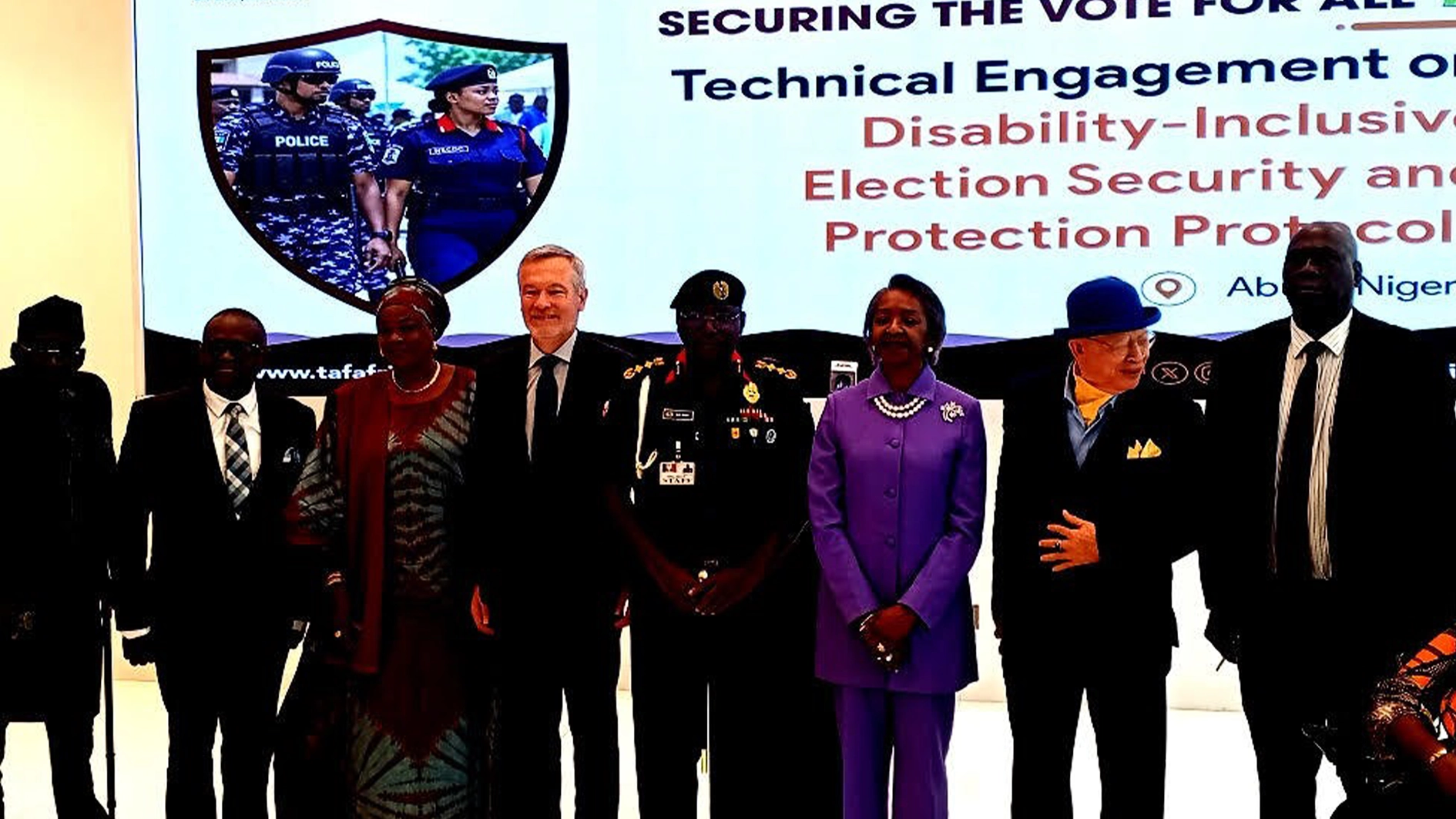
… as EU, TAF Africa demand inclusive security protocols
The Nigeria Security and Civil Defence Corps (NSCDC) and the Independent National Electoral Commission (INEC) have pledged to strengthen measures to protect persons with disabilities (PWDs) against intimidation, harassment and discrimination during the 2027 general elections.
The commitment came as disability rights advocates recounted alleged incidents of harassment and threats by security personnel during previous elections, raising concerns about the safety of voters with disabilities and accredited election observers.
At a high-level technical engagement on disability-inclusive electoral security organised by the Ambassador Jake Epelle led TAF Africa in Abuja on Thursday, stakeholders called for stronger coordination among security agencies, electoral authorities and disability rights organisations to ensure that persons with disabilities can exercise their voting rights safely, independently and with dignity.
The Commandant-General of the NSCDC, Prof. Ahmed Abubakar Audi, said the corps would adopt a zero-tolerance approach to the intimidation of voters with disabilities and strengthen its operational capacity to address the security challenges they face during elections.
Audi said the corps would review its training curriculum to ensure that officers and men understood disability inclusion and could respond appropriately to the needs of people with different disabilities.
He stressed that protecting persons with disabilities during elections was not an act of charity but a responsibility rooted in human dignity, social rights and equal participation in democratic governance.
The commandant-general identified three priority areas for the corps: zero tolerance for intimidation, accessible security arrangements and strengthened rapid-response mechanisms for electoral incidents.
On intimidation, he said the NSCDC would deploy appropriate personnel and intelligence measures to prevent political harassment and the deliberate targeting of voters with disabilities.
“No vulnerable citizen shall be intimidated at or exercising her franchise,” he declared.
On accessible security arrangements, Audi said officers would facilitate access to polling units and provide appropriate assistance to voters with visual, hearing and mobility impairments.
He added that such assistance must be provided with patience, professionalism and respect for the independence and dignity of every voter.
The NSCDC chief also promised to strengthen real-time reporting, referral and coordination mechanisms between relevant units of the corps and sister security agencies to ensure that complaints of intimidation and other electoral violations received prompt attention.
He directed officers and men to treat every voter with dignity and impartiality, provide priority assistance to those who required it and maintain zero tolerance for obstruction and intimidation.
“Our uniform represents the totality of the state. That authority must be exercised with restraint, fairness and, of course, accountability,” he said.
Audi urged participants to develop a practical framework with clearly defined responsibilities, reporting channels and implementation timelines to guide preparations for the 2027 general elections.
He said the success of the initiative would be determined not by the number of recommendations adopted at the meeting but by the protection delivered to persons with disabilities when they needed it most.
The commandant-general also underscored the importance of inter-agency collaboration, noting that no security institution could independently guarantee an inclusive electoral environment.
He said the NSCDC had a significant role in Nigeria’s security architecture, particularly in protecting critical national assets and infrastructure, and must work with the Nigeria Police Force and other relevant agencies to ensure safe and inclusive elections.

The INEC Chairman, Prof. Joash Amupitan, said the credibility of elections depended not merely on the conduct of voting but also on whether every eligible citizen could participate freely, safely and without discrimination.
Represented by INEC National Commissioner May Agbamuche-Mbu, Amupitan said an electoral process could not be considered genuinely inclusive if persons with disabilities and other vulnerable citizens faced intimidation, insecurity or barriers to exercising their voting rights.
He noted that the Constitution, the Electoral Act 2022, the Discrimination Against Persons with Disabilities (Prohibition) Act 2018 and Nigeria’s obligations under the United Nations Convention on the Rights of Persons with Disabilities provided a framework for protecting the rights and dignity of persons with disabilities.
According to him, INEC had continued to promote electoral inclusion through voter education, priority access and appropriate assistive measures, but these efforts could only succeed in an environment that was secure, accessible and responsive to voters’ needs.
He explained that voters with hearing impairments might require clear visual communication, those with visual impairments might need verbal directions, while persons with limited mobility might require unobstructed access to polling areas.
Amupitan argued that security personnel must understand these differences and provide appropriate assistance without compromising the independence, privacy or freedom of choice of voters.
He outlined five priorities for strengthening inclusive electoral security ahead of the 2027 elections. They include developing clear disability-inclusive security protocols; providing targeted training on disability rights and accessible communication; improving coordination among INEC, the NSCDC, the police and other security agencies; establishing accessible reporting channels for prompt responses to incidents; and sustaining engagement with organisations of persons with disabilities.
The INEC chairman urged stakeholders to translate their commitments into measurable actions, with clearly assigned institutional responsibilities and mechanisms for monitoring implementation before the elections.
He said preparations should begin well before polling day, with risk assessments identifying inaccessible entry points, congested approaches to polling units, potential security flashpoints and communication difficulties.
Amupitan also stressed that assistance provided to voters with disabilities must not compromise ballot secrecy, personal autonomy or freedom of choice.
He said INEC remained committed to working with security agencies, TAF Africa, disability rights organisations and development partners throughout the electoral cycle, from voter registration and political campaigns to polling, collation and the post-election period.
The European Union Ambassador to Nigeria, Gautier Mignot, also called for stronger cooperation among electoral authorities, security institutions, civil society organisations, disability rights groups and development partners to improve electoral security.
He said protecting persons with disabilities during elections was an essential expression of equal rights, human dignity and the rule of law, rather than a special privilege.
Mignot urged the NSCDC to integrate disability inclusion into security planning, personnel training, operational briefings, coordination mechanisms and emergency-response procedures.
He said preparations for the 2027 general elections offered an opportunity to strengthen inclusive electoral security before major election operations began.
The ambassador emphasised that sustainable progress required continuous institutional commitment, technical cooperation and the implementation of recommendations beyond the conference.
He also reiterated the importance of coordination between the NSCDC and the Nigeria Police Force, noting that their distinct but complementary responsibilities required effective information-sharing, preparedness and incident response.
According to him, security arrangements must cover the entire electoral cycle, including voter registration, political campaigns, rallies, party activities, polling and voting.
Meanwhile, disability rights advocates called for improved voter data, closer engagement with political parties and better protection for persons with disabilities participating in elections as voters and accredited observers.
Mike Gideon, who represented the national chairman of the Association of Persons with Disabilities, Abdullahi Usman, commended TAF Africa for organising the engagement but said more needed to be done to ensure that the specific needs of voters with disabilities were properly documented and addressed.
Gideon disclosed that some persons with disabilities were not correctly identified in INEC’s voter records, a situation he said could make it difficult for electoral and security authorities to plan appropriate assistance.

