 Follow Us on Google News


 Follow Us on Google Discover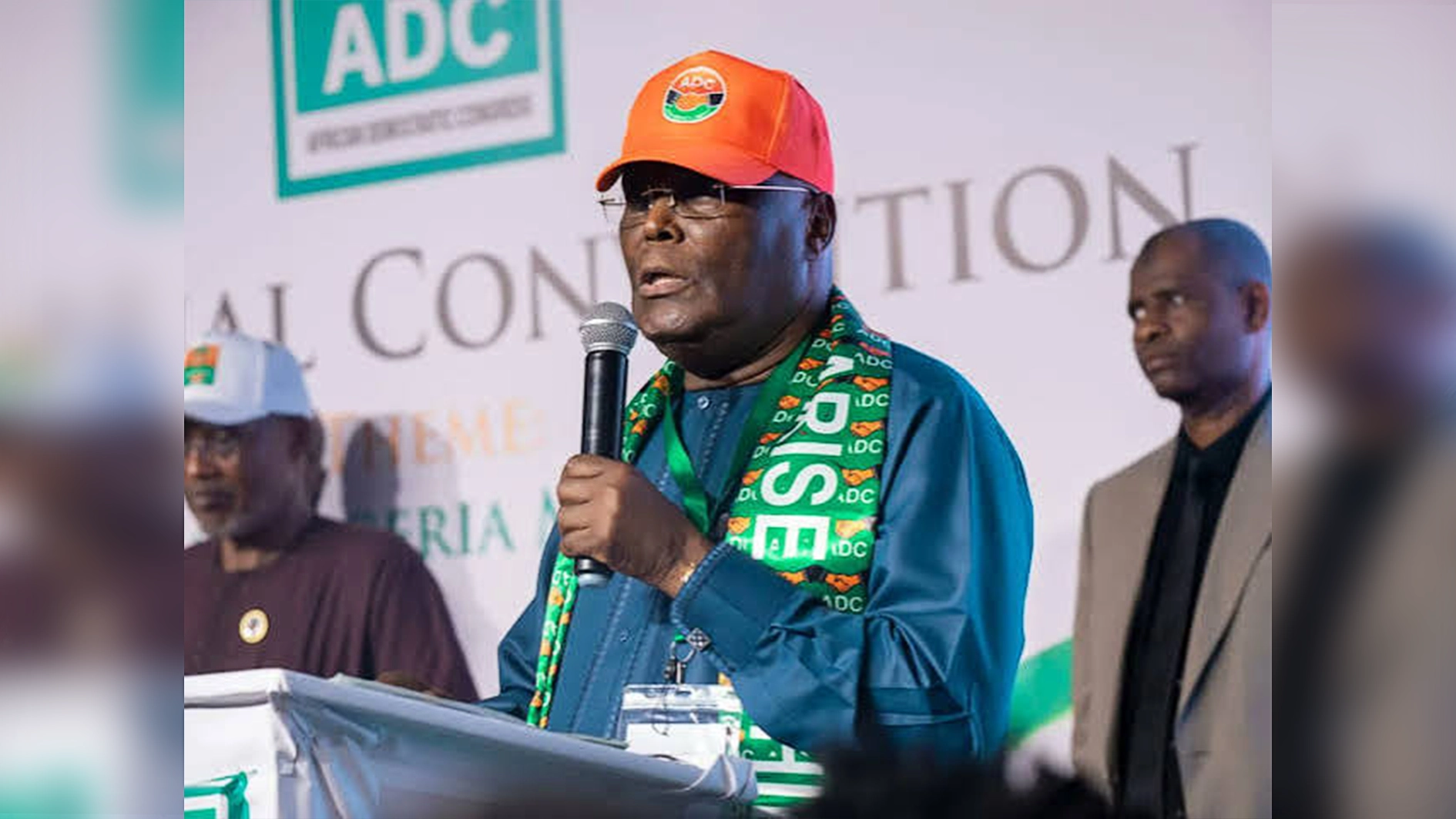
Lagos State All Progressives Congress (APC) spokesman, Seye Oladejo, has questioned the motivation behind former Vice President Atiku Abubakar’s 2027 presidential bid, saying his declaration that the election would be his “last attempt” raises questions about whether the contest is being driven by a national agenda or personal ambition.
Oladejo, in a statement, said while there was nothing wrong with ambition or contesting elections, Nigerians should scrutinise the circumstances surrounding Atiku’s latest bid, particularly his description of 2027 as his final opportunity to achieve his presidential ambition.
“There is nothing wrong with ambition. There is nothing wrong with contesting an election. But when a politician describes a particular election as his final opportunity to achieve a lifelong ambition, Nigerians are entitled to examine whether the campaign is being driven principally by a compelling national agenda or by the urgency of one man’s political endgame,” he said.
The APC spokesman also questioned Atiku’s decision to engage Kenneth Okonkwo as his 2027 campaign spokesperson, recalling Okonkwo’s previous criticisms of the former vice-president while serving as a spokesperson for Peter Obi’s Labour Party campaign in 2023. Oladejo said Okonkwo was entitled to change his political allegiance, but described the development as a significant turnaround that raised questions about the campaign’s communications strategy.
“Is the objective simply to communicate policy, or is it also to provide an aggressive reputational makeover for a candidate whose political history and previous presidential campaigns remain part of the public record?” he asked.
Oladejo also referred to Atiku’s reported engagement of a Washington-based lobbying firm, saying a United States Department of Justice filing reportedly indicated that the engagement included efforts to strengthen Atiku’s reputational standing among U.S. policymakers and counter narratives from the Nigerian government. He argued that the reported international lobbying effort, alongside the domestic political messaging, suggested considerable investment in managing Atiku’s political narrative.

“But image management cannot substitute for a record,” he said. “No amount of political cosmetics can erase history, and no communications strategy can permanently disguise contradictions in policy positions.”
On Atiku’s record as vice-president under former President Olusegun Obasanjo, Oladejo said the political controversies surrounding the 1999–2007 administration remained relevant to the 2027 presidential contest.
He said Atiku’s responsibilities included the National Council on Privatisation and economic policy, while his tenure was later overshadowed by a political rupture with Obasanjo. According to him, the former president’s account of the relationship in My Watch contained serious criticisms of his former deputy.
Oladejo, however, noted that Obasanjo’s claims were “allegations and assessments, not judicial findings”, but maintained that the controversies surrounding the Obasanjo-Atiku years could not simply be excluded from discussions about Atiku’s experience in government.
“The controversies surrounding Atiku’s stewardship of economic portfolios, the PTDF affair, privatisation and his eventual confrontation with his principal remain part of the historical record and deserve to be examined alongside his claims of experience and competence,” he said.
He also questioned Atiku’s position on petrol subsidy, recalling his 2023 position that the subsidy was unsustainable and his current declaration: “I will restore it!”
Oladejo said the issue required more than a campaign promise, arguing that Atiku should explain how such a policy would be funded and sustained.
“The critical question is not whether Nigerians want lower prices. Of course they do. The question is how the government will sustainably achieve those lower prices without recreating the fiscal leakages, distortions, smuggling incentives and opaque practices associated with the old subsidy regime,” he said.
He asked where the funds for the proposed subsidy would come from, how much government would spend, who would qualify, how long the intervention would last and how it would be protected from arbitrage and corruption.
He also asked how the policy would operate within the Petroleum Industry Act and what would happen if a temporary intervention later became politically difficult to remove.
“These are governance questions, not campaign questions,” Oladejo said.
The APC spokesman further argued that identifying economic hardship was different from presenting a sustainable solution, saying Atiku’s proposed return to subsidy required a clear explanation of its fiscal implications, implementation mechanism and long-term sustainability.
“A presidential campaign cannot run on nostalgia for cheaper petrol without explaining who will pay the bill,” he said.
Oladejo also criticised what he described as the Atiku campaign’s focus on President Bola Ahmed Tinubu, saying opposition parties had a legitimate responsibility to scrutinise the government but should also present clear alternatives.
“Nigerians deserve to know what Atiku intends to build—not merely what he intends to attack,” he said, listing the economy, security, industrialisation, education, healthcare, infrastructure and institutional reform among areas requiring specific proposals.
He further questioned whether Atiku’s movement from the Peoples Democratic Party (PDP) to the African Democratic Congress (ADC), where he now heads a ticket with former Rivers State governor and former transportation minister Rotimi Amaechi, represented a substantive change in political ideas.
“Changing political platforms does not automatically amount to changing political ideas,” Oladejo said, asking: “What has changed? What has been learnt? What is genuinely different?”
He said the 2027 election should not become a vehicle for one politician’s final presidential ambition, arguing that Nigerians should scrutinise the plans, records and proposed policies of those seeking the presidency.
“Atiku may call 2027 his last dance. But Nigeria cannot afford to make the election about one man’s final opportunity,” he said.
“The presidency of Nigeria is not a consolation prize for political longevity. It is not a lifetime achievement award. And the country’s economic and security challenges cannot be solved by slogans, image management or convenient policy reversals.”
Oladejo said the APC would defend its record and agenda before Nigerians, while opposition parties remained free to challenge the government.
“But Nigerians are equally free to ask hard questions,” he said, urging Atiku’s campaign to demonstrate what was different about its proposed national project.

