 Follow Us on Google News


 Follow Us on Google Discover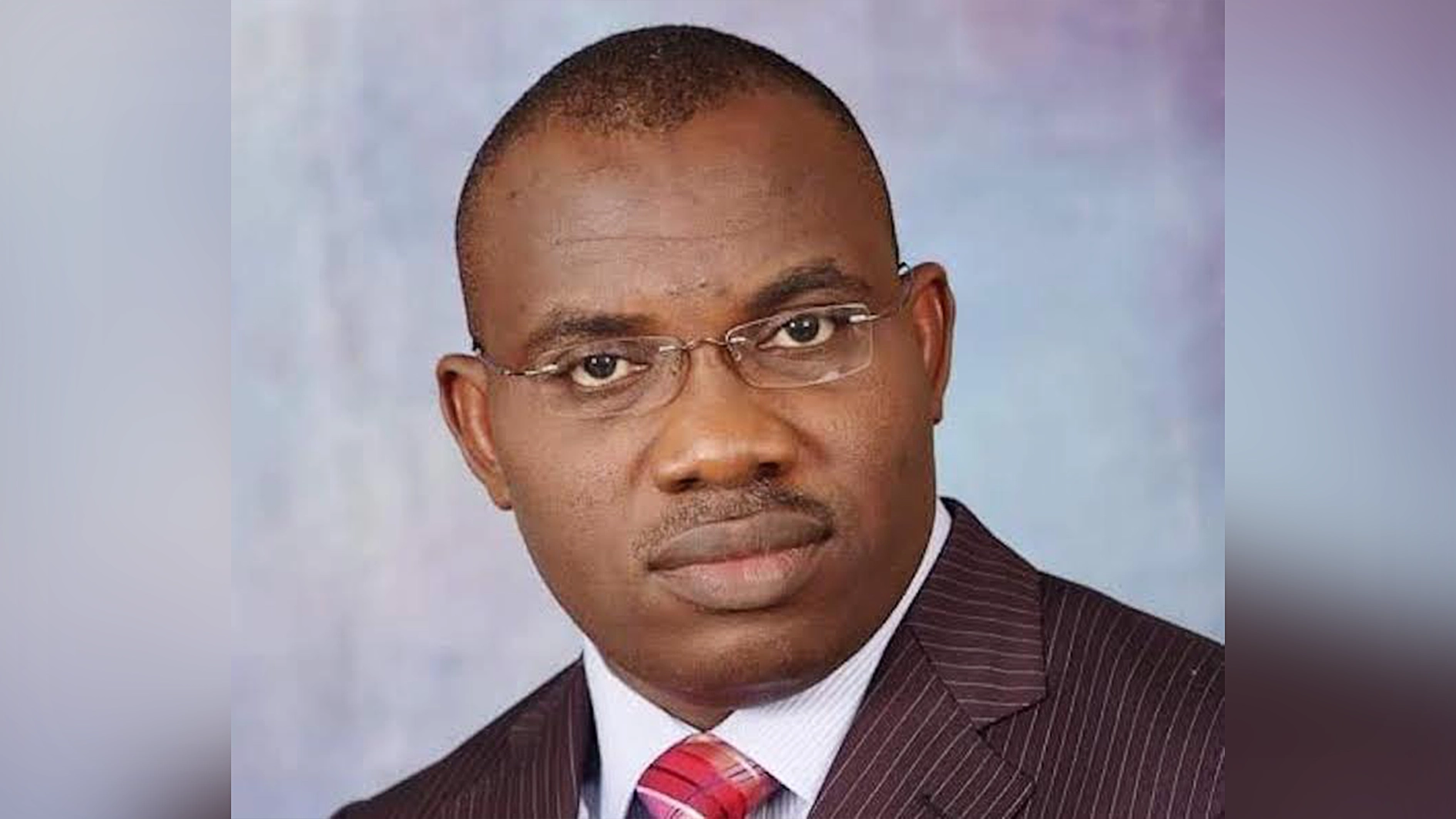
Professor of Geophysics and Nigeria Democratic Congress (NDC) candidate for Ebonyi Central Senatorial District in the 2027 election, Benard Ifeanyi Odoh, speaks with LEO SOBECHI on how candidate imposition and financial influence have undermined free and fair democratic processes in Nigeria. He also said deliberation on part-time legislature is a conversation Nigeria must continue to have with sincerity and objectivity.
Despite the controversies and complaints that trailed your emergence as the NDC candidate for Ebonyi Central Senatorial District, why did you choose to remain silent?
Let me be clear on this: politics is not about making the loudest noise, but about being adequately prepared for service.
Since the party primaries, I deliberately devoted my time to consulting widely with stakeholders, engaging community leaders, strengthening our grassroots structures and refining a legislative agenda that genuinely reflects the aspirations of the people of Ebonyi Central.
Because I see politics as a vocation, I also remained focused on my private business, which involves opening international markets for African businesses through technology-driven trade infrastructure.
That experience has reinforced my belief that the government should create opportunities for enterprise, innovation and wealth creation, rather than becoming an obstacle to productivity.
Most importantly, I have been listening. Leadership begins with listening to the people before speaking on their behalf. Every meaningful policy must originate from the genuine needs and aspirations of those we seek to serve.

The NDC took some flak over its National Assembly primary, which appeared to be a contest among political heavyweights. What experiences could you share with Nigerians?
It was indeed a high-stakes, competitive contest among distinguished aspirants, each with impressive credentials and genuine aspirations to serve. For me, the greatest lesson from that process was that integrity, consistency and credibility still matter in politics.
The delegates carefully assessed our records, vision and capacity to represent the people before making their decision. I must say that the contest ultimately strengthened our party rather than divided it.
Once the primaries ended, we all became members of one family, united by one collective responsibility: to provide credible leadership for our people.
Democracy flourishes when healthy competition gives way to unity and a common purpose.
Talking about democratic choices, how far did the process go to obviate the imposition of candidates, particularly the pressure through financial enticements during the primary?
My confidence in internal party democracy was significantly strengthened. There was considerable pressure from those who sought to undermine the competitiveness of the main election.
One of the greatest challenges confronting our political system is the culture of candidate imposition and undue financial influence. Whenever party leaders resist such pressures and allow transparent democratic processes to prevail, they strengthen not only their party but democracy itself.
I commend the leadership of the NDC for demonstrating courage, integrity and fairness throughout the exercise. I sincerely hope political leaders across Nigeria will embrace similar values. Democracy can only thrive when the will of the people prevails over the influence of money.
Voters in Ebonyi Central have varied perceptions of the incumbent Senator’s performance. What alternative pathway to effective and impactful representation are you presenting to them?
My campaign is not built on attacking individuals. Elections should be contests of ideas and vision, not insults. If elected, my priority will be to restore accessible, accountable and inclusive representation.
I intend to establish a fully functional Constituency Office that will remain open throughout my tenure, enabling constituents to engage directly with their Senator. Every year, I will publicly present a stewardship report detailing constituency projects, legislative activities, oversight engagements and the utilisation of public resources.
The people deserve to know how their mandate is being used. Beyond that, I will champion legislation that promotes education, youth employment, industrialisation, agriculture, technology, healthcare, infrastructure and entrepreneurship.
Representation must be measurable. A Senator should be visible, accessible and accountable to the people at all times.
Would you describe your candidacy and that of your APC counterpart, Senator Kenneth Eze, as that of an underdog or a giant killer?
I cannot speak for my opponents or speculate about how they perceive the contest. My focus is on earning the confidence of the people rather than seeking political validation through propaganda.
I believe the growing support for my candidacy is rooted in my record of public service. I had the privilege of serving Ebonyi State as Secretary to the State Government, where I stood firmly for policies that I believed would expand opportunities and improve the lives of our people.
When it became clear that I could no longer align with the policy direction of the administration, I made one of the most difficult decisions of my public life. I resigned, returned every government asset in my possession, including my officially assigned and duly paid vehicle, and left with my integrity intact.
I remain grateful to my former principal for the opportunity to serve the state. I hold no grudges against him or anyone else. Public leadership should not be driven by bitterness. Even when we disagree on policy or governance, we must respect one another.
My journey through academia, business and public leadership has also shaped my values. People know what I stand for: integrity, competence, accountability and service above personal interest. I believe these values explain the growing interest in my candidacy and reflect the desire of many citizens for principled leadership and genuine representation.
Your declaration that Ebonyi Central needs inclusive governance ruffled feathers. Was that an indictment or a policy proposition? What message were you trying to convey?
It was a policy proposition, not an indictment. Inclusive governance simply means that the government must belong to everyone. No community should feel excluded because of politics, and no young person should be denied opportunity because they lack political connections.
Women must have meaningful participation in governance, while persons living with disabilities deserve equal consideration. Traditional institutions, professionals, religious leaders and community organisations should also have opportunities to contribute to development.
Leadership should unite rather than divide. Our diversity should be a source of strength and collective progress, not a basis for political discrimination.
But a member of the ruling APC referred to a message from a private conversation with a politician in 2020, saying you were out to pull a cheap political stunt. How do you react to that?
I have always conducted myself with integrity in both public and private engagements. I have no interest in personal attacks or political distractions. The conversation became relevant only because false narratives were being promoted to misrepresent facts and mislead the public. Where issues of public interest are involved, truth should not become a victim of politics.
My focus remains on the future of Ebonyi Central and the enormous opportunities before our people.
How does that explain recent reports of perceived harassment, intimidation and threats against opposition politicians and their supporters by the ruling party in Ebonyi State? Are you and your supporters under any form of harassment or intimidation?
Democracy can only flourish when citizens are free to participate without fear, intimidation or violence. There have been reports of attacks on some members and supporters of the NDC by individuals believed to be supporters or officials of the APC. Such actions have no place in a democratic society and should be condemned by all, regardless of political affiliation.
We remain committed to a peaceful campaign, but we will not accept attacks, intimidation or harassment of our members and supporters. Political parties are competitors, not enemies, and elections should be contests of ideas, programmes and character.
I therefore call on all political actors, security agencies and relevant authorities to ensure that every party enjoys equal protection under the law. Our supporters have been urged to remain peaceful, law-abiding and focused. Ebonyi deserves politics anchored on civility, mutual respect and democratic values.
The call for a part-time legislature has continued to feature in Nigeria’s political discourse. As a Professor of Geophysics and lecturer, would you oppose or endorse a bill to that effect?
This is a conversation Nigeria must continue to have with sincerity and objectivity. As a nation, we must constantly examine how to improve governance while reducing its cost. Whether that should ultimately lead to a part-time legislature must emerge from broad constitutional dialogue and national consensus.
The 11th National Assembly must be prepared for robust debate and a comprehensive review of our political structure. It should be a parliament capable of restoring Nigerians’ confidence in responsive and responsible democratic representation. Whatever model is adopted must strengthen legislative oversight, preserve the independence of the National Assembly and ensure effective representation. The ultimate objective should be better governance and greater value for the Nigerian people.
Despite the fact that the governor of your state, Francis Ogbonna Nwifuru, still has about 10 months to round off his first term, how do you see the strident criticisms of alleged underperformance, project inconsistencies and mispricing?
The governor still has time to complete his first term, and ultimately, the people of Ebonyi State will be the judges of his administration. Like every government, there are areas where progress has been acknowledged and others where citizens believe more needs to be done.
Rather than assigning scores, I believe constructive engagement is more beneficial to the state. The government must remain open to criticism because accountability strengthens democracy and improves governance.
If elected senator, my responsibility will be to collaborate where necessary, provide effective legislative oversight and always place the interests of Ebonyi people above partisan considerations.
You were among the major contenders in the 2023 Ebonyi Governorship election. What transpired during that electoral cycle, and what are the possibilities that the subsequent governorship poll would not be a rehash of violent campaigns?
The 2023 governorship election remains one of the defining moments of my political journey. I contested on the platform of the All Progressives Grand Alliance (APGA), a party that, before the election, had virtually no political structure or significant electoral presence in Ebonyi State.
Together with thousands of committed supporters, we built a formidable political movement that inspired hope across the state. Our performance, particularly in Ebonyi Central, was historic. That movement produced a serving member of the House of Representatives and a member of the Ebonyi State House of Assembly on the APGA platform.
The campaign period, however, was one of the most difficult chapters of my life. There were several reported attempts on my life, while some of my aides and supporters tragically lost their lives. Their sacrifice remains deeply painful, and I continue to honour their memory.
Despite these challenges, we remained peaceful, courageous and committed to democracy. The experience reinforced my belief that political competition must never become a licence for violence or intimidation.
As 2027 approaches, I believe political leaders, parties, security agencies and citizens must work together to ensure that elections are peaceful and credible. Our people deserve an environment where voters can make their choices freely, without fear or inducement.
My message to the people of Ebonyi is therefore simple: let us choose hope over fear, competence over propaganda, integrity over inducement and unity over division.
For Ebonyi Central, I am seeking the support of the people for a vision anchored on accessible leadership, inclusive governance, accountable representation and sustainable economic development. The future of our state belongs to all of us, and every election provides an opportunity to shape the destiny of generations yet unborn.

