 Follow Us on Google News


 Follow Us on Google Discover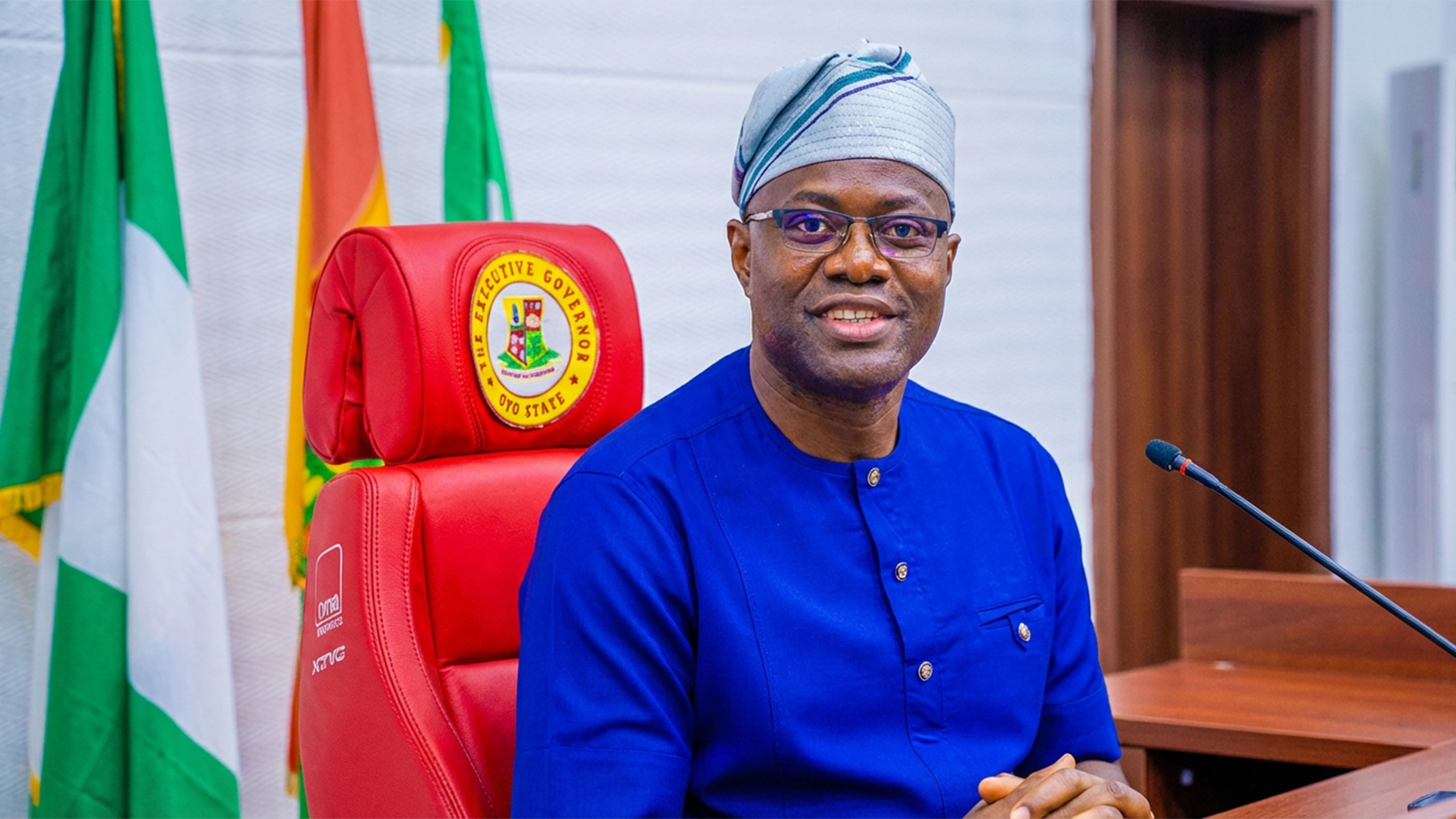
United by their belief that the political power-sharing principle, which ensures a North-South balance in the occupancy of the presidential office, should be sustained, Oyo State Governor, Seyi Makinde, and former Anambra State Governor, Peter Obi, have thrown their hats into the ring to challenge incumbent President Bola Ahmed Tinubu. Nigerians are keen to see how far both men can go in overcoming the pitfalls of late defections and platform changes in their quest to unseat the incumbent President, LEO SOBECHI reports.
“Wherever you go, we go.” Supporters of the outgoing Oyo State Governor, Seyi Makinde, and the Labour Party (LP) presidential candidate in the 2023 election, Peter Obi, echoed the same sentiment, though in different languages and styles, urging both men to take on President Bola Ahmed Tinubu in the 2027 presidential contest.
On May 3, 2026, Obi announced his departure from the opposition coalition platform, the African Democratic Congress (ADC). He disclosed that he was joining the Nigeria Democratic Congress (NDC) in line with his determination to appear on the presidential ballot in next year’s election.
Eleven days later, Makinde stood at the historic Mapo Hall in Ibadan to formally declare his intention to contest the presidency on the platform of the Allied Peoples Movement (APM).
From these developments, it is evident that the two presidential hopefuls share certain similarities. Both crossed over to relatively new political platforms to pursue their presidential ambitions. They also share the conviction that the presidency should remain in the South for another four years—a position that informed Makinde’s opposition to former Vice President Atiku Abubakar’s 2023 presidential bid under the Peoples Democratic Party (PDP) and Obi’s eventual departure from the ADC coalition.
However, the two politicians appear to be distinguished by the different strengths they bring to the contest. While Makinde, who is seeking the presidency at the twilight of his second and final term as governor, relies on his engineering and strategic planning skills, Obi, who is making a return to the presidential battlefield, has demonstrated his famed trading instincts, particularly in the way he outmanoeuvred his contemporaries within the ADC-led coalition.

Hurdles of confrontation
In their determination to expand their political reach, both Obi and Makinde had to navigate major confrontations within their former political homes—the ADC and PDP, respectively.
Having observed Atiku’s determination to once again challenge the principle of North-South power rotation, Obi, who had earlier left the PDP after serving as Atiku’s running mate in the 2019 presidential election, mounted a formidable challenge in the 2023 election on the platform of the Labour Party.
Perhaps because of that strong outing in 2023, Obi’s decision to join the ADC coalition appeared half-hearted from the outset, especially amid concerns that Atiku might seek the coalition’s presidential ticket.
As a businessman, Obi understood that profit is determined at the point of purchase, not at the point of sale. Consequently, while he remained physically present within the coalition, he was simultaneously exploring alternative platforms to actualise his presidential ambition.
Concerned by Atiku’s overwhelming influence and continued presidential aspirations within the ADC, the former LP candidate repeatedly assured supporters that he would be on the ballot in 2027. In making that promise, Obi did not overlook the reality that he would be confronting an incumbent President widely acknowledged for his political dexterity.
With his eyes fixed on the larger contest, the presidency itself, Obi appeared to conclude that avoiding a direct confrontation with Atiku within the ADC was the most strategic option.
Having helped elevate the ADC’s profile as the leading opposition platform against the ruling All Progressives Congress (APC), he chose participation in the main contest rather than a bruising internal battle for the party’s ticket.
Events surrounding the ADC presidential primary later vindicated Obi’s decision to abandon the coalition platform, leaving Atiku behind and opting instead for the relatively unknown and untested NDC.
While leading his supporters and the Obidient Movement into the NDC, Obi cited growing hostility, internal wrangling and toxic politics within the ADC as reasons for his departure.
According to him, leaving the ADC became inevitable due to a worsening political climate marked by internal crises, external interference, and growing hostility within party structures. Although he insisted that his decision was not driven by personal grievances, Obi lamented what he described as a pattern of internal divisions, legal disputes and infiltration by destabilising forces.
He recalled experiencing similar challenges in the Labour Party and noted that institutions expected to protect democratic values had increasingly become obstacles to democratic openness.
Defending Obi’s decision in a post on X, his aide, Valentine Obienyem, stated: “If he had stayed, ADC would not have made it onto the ballot. Now that he has left, all their problems will simply vanish. Obi reminds me of Aeschylus’ Seven Against Thebes—it is really all (the Federal Might of Tinubu) against one (Obi).”
Having joined the NDC and secured its presidential ticket, Obi has effectively embarked on a path similar to the one that gave him the Labour Party platform in 2023, from where he challenged Tinubu, Atiku and other contenders.
The remarkable difference this time is that the presidential candidate of the New Nigeria Peoples Party (NNPP) in 2023, Dr Rabiu Musa Kwankwaso, who finished fourth in that election, has joined forces with him on the NDC ticket.
Based on the arithmetic of the 2023 presidential election, the combined votes of Obi and Kwankwaso still fall short of Tinubu’s winning tally of 8,794,726 votes. However, the 2027 election is expected to answer two critical questions.
First, to what extent can the joint NDC ticket erode Tinubu’s support base in the North and translate that into an electoral victory?
Second, with Atiku likely to emerge as the ADC presidential candidate, can the Obi-Kwankwaso alliance secure northern support for continued power rotation to the South?
This question becomes particularly important considering the Kwankwasiyya movement’s proposition that the arrangement offers “two presidents for the price of one.” Will North-West voters embrace the prospect of a Kwankwaso presidency in 2031, or will they prefer to avoid the uncertainty of a potentially one-term Tinubu presidency?
On the other hand, the election will also reveal whether Kwankwaso, no longer running as the principal candidate, can replicate the 1,496,687 votes he secured in 2023. Similarly, it remains to be seen whether Obi can reproduce the 6,101,533 votes he garnered under the LP despite the influence of powerful APC figures in the South-East.
Reports indicate that Governor Hope Uzodimma and Works Minister David Umahi were informed that Tinubu’s electoral performance in the South-East could influence their future political prospects after the election.
Against this backdrop, while Kwankwaso and Atiku challenge Tinubu in the North-West, the President’s political machinery is expected to focus on containing Obi’s influence in the South-East.
In the final analysis, the movement of Obi and Atiku from their previous political platforms into new formations will significantly shape voter calculations and electoral projections ahead of 2027.
Who gets the West?
For a long time, it remained a matter of speculation. However, on the penultimate Thursday, when Governor Seyi Makinde mounted the podium at the historic Mapo Hall in Ibadan, speculation gave way to reality: Makinde is contesting the 2027 presidential election.
One striking aspect of his declaration was his use of political engineering to align a faction of the PDP with the Allied Peoples Movement (APM).
Before the Mapo Hall declaration, uncertainty over whether the PDP would field a presidential candidate in 2027 had become a major source of tension between Makinde and the Minister of the Federal Capital Territory (FCT), Nyesom Wike.
Both men were key members of the G5 governors who opposed Atiku’s 2023 presidential ambition on the grounds that it violated the zoning arrangement. While Wike was rewarded with a ministerial appointment and former governors Ifeanyi Ugwuanyi and Okezie Ikpeazu received ambassadorial nominations, Makinde remained in office to complete his second term as governor.
Three years later, Wike, Ugwuanyi and Ikpeazu have openly endorsed Tinubu’s re-election bid. Makinde, whose governorship tenure expires in 2027, has instead chosen to pursue the presidency, much like Wike attempted in 2023, partly to preserve and expand his political relevance.
However, Makinde’s presidential ambition has generated both controversy within the PDP and suspicion across the South-West.
As Makinde and Wike battled for control of the PDP structure, both eventually achieved their objectives. Wike successfully ensured that the PDP would not present a formidable challenger against Tinubu, while Makinde forged an alliance between his PDP faction and the APM to pursue his presidential aspiration.
For Makinde, the PDP-APM alliance presents a win-win situation. It provides a platform for his national political ambitions while potentially strengthening his ability to influence the emergence of his preferred successor in Oyo State.
Yet, even as his calculations for the Oyo governorship election appear strategically sound, critics have portrayed his presidential bid as political sabotage.
Across the South-West, there is growing speculation that the “Political Engineer” of Agodi is playing the role of a spoiler against President Tinubu’s re-election bid, much like the role associated with the late Chief Samuel Ladoke Akintola in Western Region politics.
Former Ogun State governor and APC chieftain, Olusegun Osoba, echoed this sentiment while addressing party supporters in Abeokuta.
He warned against complacency, saying: “Many people say we have no opponents, but that is a misleading narrative. The enemies are many. As we approach the next election, there is a strong gang-up against us. They are planning to field several candidates from our region in the South.
“Obi has emerged, former President Goodluck Jonathan is quietly waiting in the background, and Makinde has been grandstanding. All these appear to be attempts to divide votes from the South.”
Nonetheless, Osoba expressed confidence that Tinubu’s developmental projects across the South-West would earn him substantial electoral support in the region.
Meanwhile, during the signing of the Memorandum of Understanding between the PDP faction and APM, Makinde argued that democracy thrives on competition and multiple choices.
According to him, Nigeria has reached a point where the very foundations of democracy are under threat.
“We have witnessed continuous interference in the affairs of opposition parties with the aim of creating a one-party state. Without a multiparty system, there is no democracy,” he stated.
Explaining the rationale for opposition collaboration, Makinde accused the ruling party of attempting to silence dissenting voices.
“They calculated and concluded that the opposition cannot unite. But I am here to say they miscalculated. The opposition is not limited to political parties. It includes every Nigerian for whom the country is not working. The opposition parties remain committed to working together to provide an alternative.”
Coming only weeks after the Ibadan Declaration, which proposed a united opposition challenge against Tinubu, Makinde’s next political moves before January 2027 will determine whether he is remembered as a spoiler or as a principled democrat seeking to strengthen pluralism.
By invoking Ibadan’s history as a city of warriors, Makinde effectively framed the 2027 election as a battle fought at the ballot box rather than with bullets.
Although he described the PDP-APM alliance as the first major step towards fielding candidates at all levels, observers noted his suggestion that a broader coalition may eventually emerge.
Should such an alliance materialise, questions remain over whether it would involve micro-zoning the presidential ticket to the South-East or South-South, potentially favouring Obi or former President Goodluck Jonathan.
Where that leaves Makinde and Atiku could ultimately reveal the limits of opposition unity and the extent to which incumbency and South-West bloc votes can propel Tinubu either to victory or defeat.
The current southern electoral map favours the APC, which controls 13 state governments, while Abia, Anambra and Osun remain politically fluid, balancing elite support for the President against possible grassroots resistance.
Against this backdrop, Makinde’s appearance on the presidential ballot may ultimately prove more symbolic than transformative—serving primarily to preserve Oyo State’s opposition identity rather than triggering a major regional or national upset.

