 Follow Us on Google News
 Follow Us on Google Discover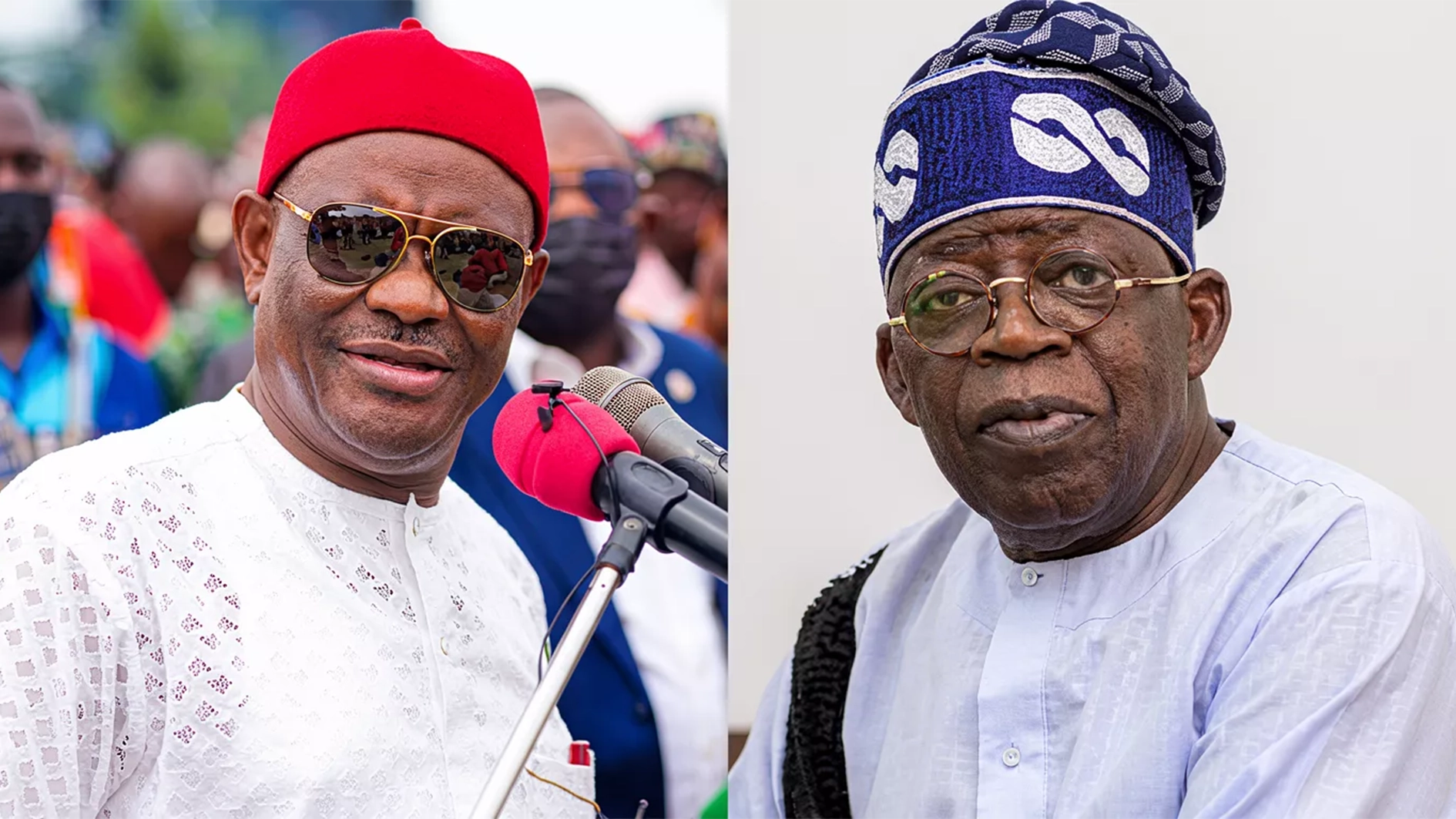
Last weekend’s local government election in the Federal Capital Territory (FCT), Abuja, revealed the strengths and weaknesses of both the ruling All Progressives Congress (APC) and opposition parties. It also mirrors the readiness of the umpire ahead of the 2027 polls, AZIMAZI MOMOH JIMOH reports.
The February 21, 2026, Area Council elections in the Federal Capital Territory have come and gone, but their political reverberations are only just beginning.
Though local in scope, the elections have assumed national significance, serving as an early rehearsal for the 2027 general elections.
The exercise exposed both the strengths and vulnerabilities of Nigeria’s democratic process, from institutional capacity and elite bargaining to voter psychology, technological deployment and opposition fragmentation.
At the centre of the post-election debate is the claim by former Vice-President Atiku Abubakar that “democracy is being suffocated.” His assertion, made in reaction to low voter turnout and the dominant victory of the Federal Government-led All Progressives Congress (APC), framed the election not merely as a local contest but as a referendum on the health of Nigeria’s democracy under President Bola Ahmed Tinubu.
Yet, the election tells a more layered story: one of institutional steadiness mixed with structural weaknesses; of peaceful polling overshadowed by voter apathy; of elite political engineering; and of an opposition still searching for coherence.

One of the most notable features of the election was its largely peaceful conduct across the six area councils, Abuja Municipal Area Council (AMAC), Bwari, Abaji, Kwali, Kuje and Gwagwalada.
Civil Society Organisation, Yiaga Africa, led by Samson Itodo, described the polls as calm and orderly. The FCT Police Command’s security deployment was visible yet restrained, helping maintain a controlled civic space.
In a country where elections have historically been marred by violence, the FCT council polls demonstrated that peaceful voting is achievable when security agencies act professionally and electoral officials coordinate effectively. If replicated nationwide in 2027, such security management could enhance public confidence.
However, peaceful voting alone does not guarantee democratic vibrancy. Participation levels matter — and here lies the central concern.
The Independent National Electoral Commission (INEC) reported that about 15 per cent of the 1.68 million registered voters participated, an improvement from 9.4 per cent in 2022, but still alarmingly low. In absolute terms, just over 239,000 voters cast ballots.
While INEC framed this as progress, critics argue that the numbers reflect deep disengagement.
A public affairs analyst, Dr Hadiza Lawal, told The Guardian that “low turnout in a capital city election is not just apathy; it is a signal. When citizens in the seat of power feel disconnected from local governance, it suggests a broader trust deficit that could echo into 2027.”
Urban AMAC recorded lower participation than more semi-urban councils like Bwari and Gwagwalada, a pattern consistent with the perception that grassroots governance has limited impact on urban voters’ daily concerns.
For 2027, the lesson is unmistakable: unless Nigerians believe their votes meaningfully shape outcomes, participation will remain tepid.
Beyond turnout, the FCT polls quietly tested INEC’s technological architecture, particularly the Bimodal Voter Accreditation System (BVAS) and the uploading of results to the INEC Result Viewing Portal (IReV).
Although no widespread technological breakdown was reported, observers noted delayed openings in parts of AMAC and confusion arising from polling unit splitting.
Another governance expert, Prof. Sani Garba, argued that Abuja offers INEC an infrastructural advantage. “If digital processes function smoothly in the FCT, where connectivity is stronger, it strengthens the commission’s credibility. But any glitches in the capital would magnify doubts ahead of a nationwide poll.”
INEC officials defended the commission’s logistics, explaining that polling unit splitting was intended to reduce congestion and that voters were notified via SMS and email. However, communication gaps generated confusion in some quarters.
For 2027, technology will likely be central to political narratives.
Former PDP National Vice Chairman (South-West), Eddy Olafeso, is not convinced. He said, though he did not witness the polls, anybody hoping to see INEC perform magic in 2027 is living in delusion.
He said opposition parties are expected to intensify demands for greater transparency in electronic transmission, while INEC’s backend capacity and contingency planning will face heightened scrutiny.
The APC’s victory in five of the six councils signals consolidation of power within the FCT. The party’s performance reflected incumbency advantage, visible infrastructure efforts and strategic withdrawals by opposition candidates.
The influence of FCT Minister, Nyesom Wike, loomed large. Though a member of the Peoples Democratic Party (PDP), Wike’s perceived alignment with APC-backed candidates altered the political terrain, particularly in AMAC and Bwari.
A member of the South-West PDP, Sanya Atofarati, told The Guardian that what Wike did with his faction of the party in the FCT council polls is a long game intended for 2027.
He, however, said the party would emerge from its present challenges and fully contest the next general polls.
Another PDP chieftain, Gbenga Hashim, described the poll results as proof that the party remains electorally relevant despite its lingering internal crisis.
Hashim insisted that the party remains structurally intact and competitive ahead of 2027. He argued that the PDP deserved to win in the other three, alleging that irregularities undermined its mandate.
“Even with the obvious challenges, the strength of the PDP was undeniable,” he said, pointing to the party’s gains in several councillorship seats across the FCT.
Hashim maintained that the polls signal the beginning of a broader revival for the PDP, expressing optimism that a stabilised and united party would pose a formidable challenge in 2027. “The PDP is not declining; it is rebuilding,” he added.
But President Tinubu attributed the APC’s success partly to governance strides in the territory, reinforcing the argument that performance legitimacy can shape voter behaviour.
A member of the Labour Party, Desmond Ayira, noted that if similar alignments and elite-level negotiations unfold ahead of 2027, especially across battleground states, they could redefine competitive dynamics.
Fragmentation of opposition
Perhaps the most consequential takeaway is the fragmentation of the opposition. Seventeen parties contested, but only four — APC, PDP, ADC and APGA — made a visible impact. The PDP secured only Gwagwalada.
Internal dissent within the PDP, particularly over candidate withdrawals, exposed organisational weakness. Ini Ememobong, speaking for a faction of the party’s National Working Committee, condemned what he described as “anti-democratic withdrawals,” warning that such precedents could undermine future electoral contests.
Akin Malaolu of the Yoruba Ronu Leadership Forum described the FCT outcome as “a case study for 2027,” cautioning that divided opposition forces may struggle to dislodge incumbents in a high-stakes presidential race.
He said without coalition-building, candidate harmonisation and strategic zoning, vote splitting could again dilute anti-incumbent sentiment in 2027.
Reports of vote buying, though not pervasive, underscored a persistent threat to electoral integrity. In an era of economic hardship, monetised politics remains potent.
“Peace without credibility is fragile,” said Dr Lawal. “If voters perceive that money rather than mandate determines outcomes, democratic legitimacy weakens incrementally.”
Security arrangements were widely praised, but scaling the FCT model nationally presents logistical challenges. Abuja’s contained geography differs markedly from volatile or hard-to-reach regions elsewhere.
Ultimately, the broader significance of the FCT elections lies in what they foreshadow.
They demonstrate that Nigeria can conduct peaceful polls under professional security oversight. They also reveal fragile participation, elite-driven political recalibrations, administrative gaps and unresolved questions about technological robustness.
Atiku’s warning about democratic suffocation may carry partisan undertones, yet the structural signals — low turnout, fragmented opposition and incremental erosion of trust — warrant sober reflection.
As 2027 approaches, INEC’s performance, the credibility of electronic processes, the cohesion of opposition forces and the narrative of governance performance will converge into a defining democratic test.
The FCT polls were local in scale but national in implication — a rehearsal whose lessons, if ignored, may echo loudly in Nigeria’s next general elections.
Lawal further observes that perception often outweighs technical explanations. “Even minor glitches can be amplified in a highly polarised environment. If the FCT elections are seen as credible, INEC gains momentum heading into 2027. If not, opposition narratives about systemic bias will deepen.”
However, former National Chairman of the ADC, Ralph Nwosu, said the ADC won the six chairmanship seats but was robbed.
He said the party is reviewing its strategy following what happened on Saturday. “I can bet you what happened on Saturday in Abuja will not repeat itself in the coming Osun and Ekiti gubernatorial polls, not to talk of 2027.”

