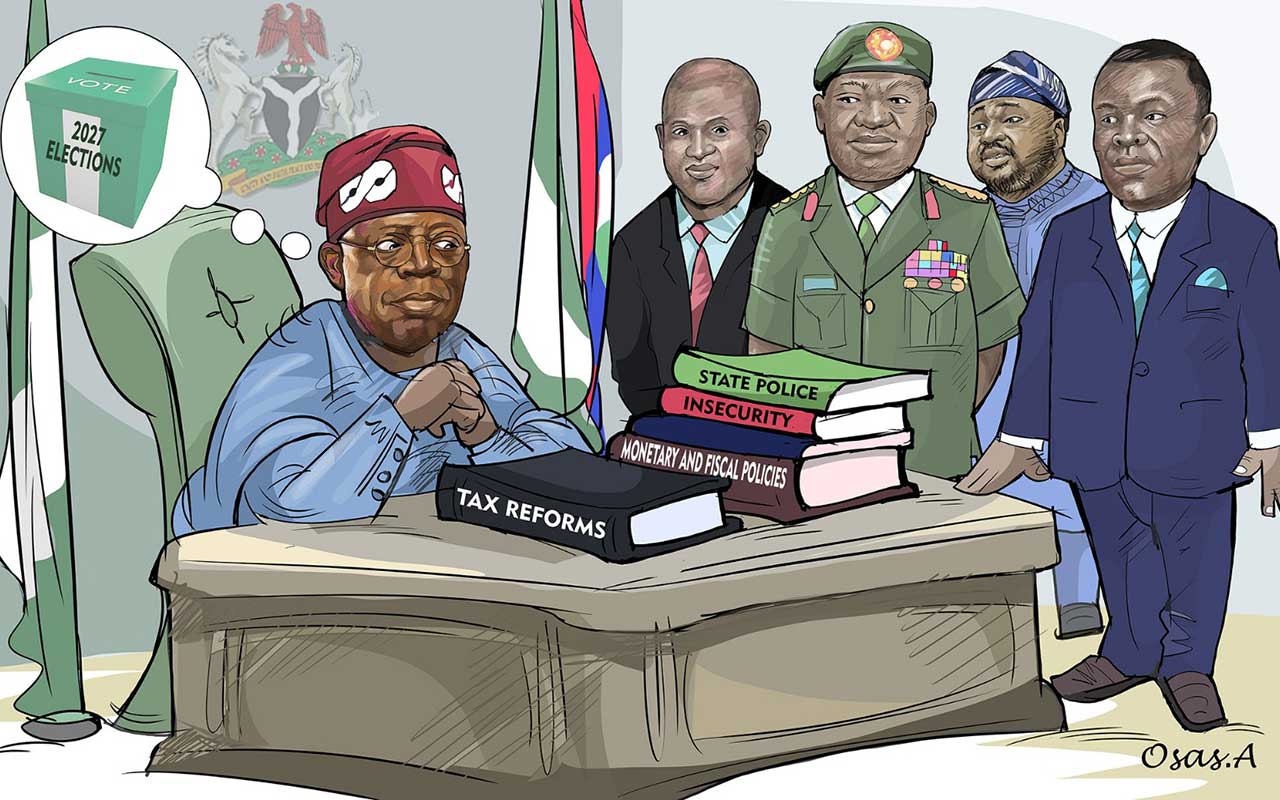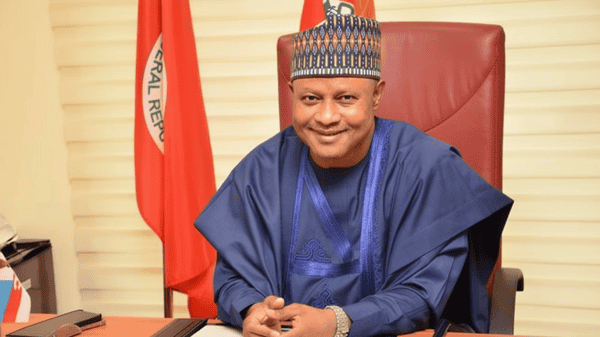
Power brokers across major political parties are pulling strategic levers to turn Kaduna State into a fierce battleground ahead of the 2027 presidential and gubernatorial elections, as shifting alliances and power plays intensify, SAXONE AKHAINE reports.
In Kaduna State, 2027 will be marked by the strengths of power brokers, particularly the incumbent governor, Senator Uba Sani, his predecessors, Senator Ahmed Makarfi and Nasir el-Rufai, as well as the impact of insecurity in the state.
The issue of security, which has always influenced voter turnout, would occupy the central theme of electioneering in the so-called Centre of Learning. For now, it is believed that how the Uba Sani-led administration manages lingering banditry, rural displacement and public confidence will weigh heavily on whether continuity is framed as stability or stagnation.
The next factor is the configuration of political actors and elite coalitions. Kaduna politics has rarely been driven by party labels alone; rather, it revolves around influential individuals capable of mobilising ethnic, religious and regional networks.
As 2027 approaches, attention is shifting to who aligns with whom, which blocks fracture, and whether former power centres, particularly those outside Government House, can still command relevance in a post–Nasir el-Rufai era.
Then, there is the influence of the supremacy battle among the five frontline political parties. While the ruling All Progressives Congress (APC) seeks to consolidate control amid internal recalibrations, the opposition Peoples Democratic Party (PDP) is struggling to reinvent itself as a credible alternative.
Complicating the traditional two-party contest is the growing profile of the African Democratic Congress (ADC), which hopes to capitalise on elite discontent and voter fatigue with established platforms.
Together, security performance, elite realignments and party manoeuvring will define not just the outcome of the next general election, but the broader struggle for political supremacy in Kaduna State.
Collapsing elite consensus
Kaduna’s political atmosphere is increasingly shaped by one disruptive development: the collapse of elite consensus following a wave of post-2023 defections, most notably the exit of former governor Nasir el-Rufai from the APC.
While the ruling party has recorded high-profile defections, including former governor Mukhtar Ramalan Yero, Senator Shehu Sani and several federal lawmakers, these gains mask a deeper structural problem. The APC’s numerical expansion has coincided with a loss of internal cohesion, triggered most dramatically by el-Rufai’s departure. His exit did not merely weaken the party; it fractured the political architecture that produced the Uba Sani succession.
Repositioned from party leader to external disruptor, el-Rufai now looms as a wildcard, capable of mobilising old networks, shaping elite sentiment and encouraging quiet dissent within the APC. His presence outside the ruling structure raises the prospect of proxy battles, elite sabotage and cross-party alliances rather than a smooth incumbency-driven transition.
Smaller parties, particularly the ADC, are already feeding on this instability, attracting politicians alienated by APC dominance and PDP decline. In 2026, Kaduna politics is unlikely to resemble a conventional party contest.
Instead, the 2027 governorship race is shaping up as a referendum on power, loyalty and unfinished political business, with el-Rufai emerging as the state’s most unpredictable variable.
APC’s firm grip and its limits
Despite emerging tensions, the APC remains the single most consequential force likely to shape Kaduna politics over the next year. Since taking control of the state in 2015, the party has entrenched itself across the executive, legislature and local governments, while benefiting from alignment with the Federal Government.
Governor Uba Sani, who assumed office in 2023, has prioritised political stabilisation and broad-based outreach. His governing style marks a clear departure from the confrontational, reform-heavy posture of his predecessor.
Through dialogue, reconciliation and engagement with traditional rulers, religious leaders and former opponents, the governor has reduced open hostility and encouraged defections from opposition parties.
The Commissioner for Internal Security and Home Affairs, Dr Suleiman Shuiabu, has argued that the administration’s inclusive approach has helped reposition Kaduna as a space of renewed ethnic and religious cooperation. According to him, the strategy has strengthened the APC’s numerical advantage and reinforced perceptions of political inevitability.
Yet dominance brings its own risks. As 2027 approaches, internal ambitions, succession calculations and competition for access to power may test APC cohesion more severely than opposition pressure. Managing internal contradictions, rather than defeating external rivals, could prove the ruling party’s most delicate challenge.
Struggling PDP
Despite its current struggles, the PDP remains the most recognisable opposition platform in Kaduna. The party retains historical roots and pockets of support, particularly in parts of Southern Kaduna and among voters dissatisfied with APC governance during the el-Rufai years.
However, the PDP enters the 2026–27 cycle on its back foot. Prolonged national leadership crises, unresolved factional disputes and steady defections have weakened its organisational capacity. In Kaduna, the party lacks momentum, funding and a coherent message capable of mobilising voters against an incumbent government projecting calm and stability.
Still, Kaduna’s political history suggests that opposition forces can rebound if public discontent deepens. The PDP’s relevance in 2027 will depend on its ability to resolve internal contradictions early, rebuild grassroots structures and articulate a credible alternative vision of governance. Without these, its influence may be confined to shaping narratives rather than seriously contesting power.
Other parties, including the New Nigeria Peoples Party (NNPP), are expected to play marginal roles. While the NNPP commands significant followership in Kano, it lacks the organisational depth and ideological resonance to compete meaningfully in Kaduna. Such parties may matter as vehicles for protest votes or elite bargaining, but absent a broad coalition or charismatic local leadership, they are unlikely to determine the outcome.
Beyond party structures
Kaduna politics is shaped as much by actors outside formal party hierarchies as by party machinery itself. At the centre is Governor Sani, whose political survival strategy rests on security improvements, economic relief and inclusive governance. His handling of insecurity, long the state’s most sensitive challenge, will remain a key barometer of public confidence, as will his response to cost-of-living pressures.
Traditional rulers and religious leaders continue to wield quiet but decisive influence. In moments of political tension, their interventions often shape public mood and voter behaviour, particularly in rural communities.
Youth and urban voters are also an increasingly important force. In Kaduna metropolis, Zaria and Kafanchan, political loyalty is now driven more by employment prospects, education, transport, security and living costs than by party history. Low turnout or protest voting among this demographic could alter established calculations.
Federal actors remain another silent factor. Kaduna’s strategic importance in the North-West ensures that national party leaders and power brokers will play behind-the-scenes roles in managing disputes and aligning interests ahead of the 2027 elections.
el-Rufai versus residual influencers
No discussion of Kaduna politics is complete without reference to el-Rufai, whose eight-year tenure reshaped the state’s political and administrative landscape. Though out of office, he retains national visibility, a loyal ideological following and influence within elite circles.
The key question is whether he can still pose a decisive challenge to his successor. Direct confrontation appears unlikely. el-Rufai no longer controls state structures, and his combative style alienated key constituencies during his time in office. By contrast, Governor Sani’s conciliatory posture has softened political tensions and expanded his support base.
Analysts suggest that el-Rufai, now aligned with the ADC, may prioritise national relevance, ensuring his party performs strongly in presidential contests, rather than openly undermining the incumbent governor. Any overt attempt to destabilise the state government could prove counterproductive, given the current balance of power.
For now, Kaduna politics is defined less by open rivalry than by strategic positioning. The APC remains dominant, the PDP struggles for relevance, and smaller parties hover on the fringes. Governance performance, security outcomes and economic realities are likely to weigh more heavily on voter choice than personality clashes alone.
ADC challenge
Nonetheless, by defecting to the fledgling opposition coalition of ADC, former governor el-Rufai altered the political conversation. Once regarded as a fringe party with limited northern presence, the ADC has gained new visibility and strategic relevance in Kaduna.
el-Rufai brings more than name recognition. His influence extends to elite networks, technocrats, youth groups, and sections of the urban middle class. By joining the ADC, he has lent credibility to a party that was previously struggling for relevance in the state.
Still, elite appeal does not automatically translate into electoral success. The APC retains deep grassroots networks across Kaduna’s 23 local government areas and enjoys the advantages of incumbency at both state and federal levels. For the ADC, the challenge lies in converting elite enthusiasm into mass mobilisation, particularly in rural areas where elections are often decided.
Coalition politics may therefore prove decisive. The ADC’s prospects improve significantly if it emerges as the nucleus of a broader opposition alliance. Kaduna’s history suggests that fragmented opposition efforts often strengthen the ruling party, while credible coalitions can disrupt established dominance.
Meanwhile, Organising Secretary of ADC in Kaduna, Ibrahim Musa, said, it will not be difficult for the party to unseat the incumbent governor since he was installed by his former boss.
He stated that el-Rufai’s determination to unseat Governor Sani in 2027 was not driven by hatred or personal ambition, but rather based on the fact that the incumbent governor had failed to perform.
According to him, “el-Rufai installed him in 2023, and it won’t be difficult to get him out.”
He noted there was nothing extraordinary about Kaduna politics other than the people want someone who can perform.”
In a swift response, the Kaduna State Secretary of the APC, Yahaya Pate, dismissed suggestions that any opposition party could unseat the incumbent governor.
According to him, Governor Sani is unstoppable ahead of the 2027 governorship election, stressing that the APC in Kaduna is fully prepared to face any opposition, given what he described as the strong performance of the current administration.
“Governor Sani has made a significant imprint in education, health, social infrastructure and other critical sectors. He has tackled insecurity head-on, prioritised peace-building and united the diverse people of the state. Today, there is peace across Kaduna, and development has reached every part of the state,” Pate said.
The APC secretary also dismissed insinuations that former governor Nasir el-Rufai would wield any influence capable of overturning the outcome of the 2027 election in favour of an African Democratic Congress (ADC) candidate.
“We are not disturbed by the rantings of el-Rufai and his ADC cronies. We are confident of winning the 2027 elections,” he added.
Why Kaduna matters nationally
Kaduna, which has the second-largest voting population in the North-West after Kano, remains a key electoral prize for any party in control at the federal level.
The outcome of the 2023 presidential election underscored Kaduna’s evolution into a fiercely contested battleground. Contrary to expectations of APC dominance, PDP candidate Atiku Abubakar won the state, polling about 554,360 votes. President Bola Tinubu of the APC followed with roughly 399,293 votes, while Labour Party candidate Peter Obi recorded about 294,494 votes.
Beyond raw numbers, the geographic spread of votes was revealing. The PDP cut into areas traditionally considered APC-leaning, while the Labour Party recorded strong performances in urban and semi-urban councils.
The result signalled growing voter disaffection with established parties and confirmed that Kaduna is no longer a safe stronghold for any single platform.
Looking ahead to 2027, this fragmentation has heightened political manoeuvring. President Tinubu, seeking re-election, will need Kaduna’s support and is likely to work closely with Governor Sani. el-Rufai, now a major factor within the ADC, could tilt towards whichever opposition presidential candidate emerges as most viable in the contest for the state’s votes.
Ultimately, Kaduna’s importance lies not just in its electoral numbers but in its symbolism. It reflects the broader northern electorate, politically alert, socially complex and increasingly issue-driven.
While continuity currently appears the most plausible outcome, the final verdict will depend on how effectively political actors respond to everyday concerns and whether emerging pressures upset the prevailing balance before 2027.