 Follow Us on Google News


 Follow Us on Google Discover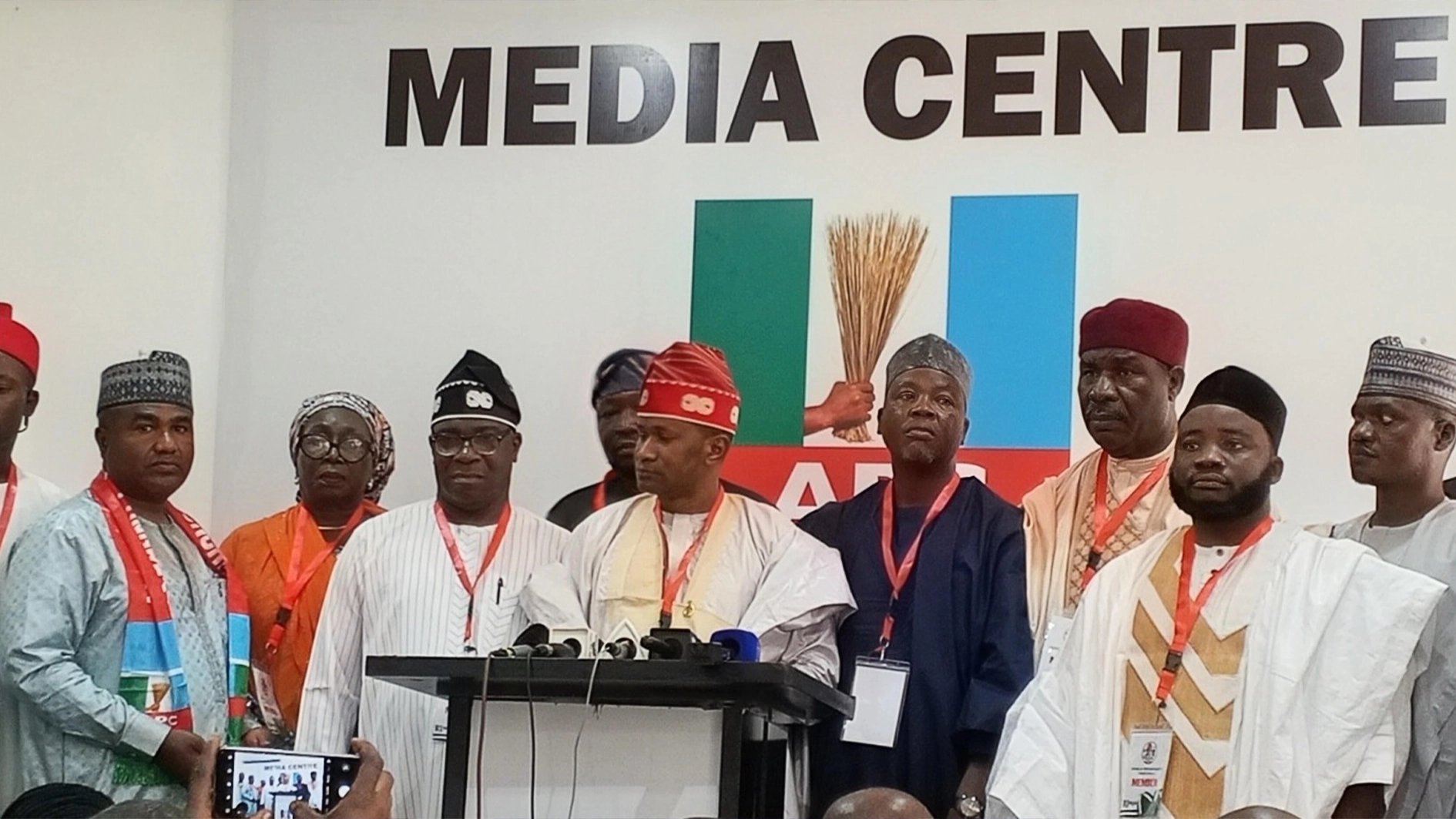
A forum of aspirants seeking election to the House of Representatives on the platform of the All Progressives Congress (APC) has defended President Bola Tinubu’s economic reforms, insisting that the policies will ultimately deliver jobs, investment and business opportunities despite the hardship Nigerians are currently experiencing.
The aspirants urged Nigerians to exercise patience with the administration, arguing that the removal of petrol subsidy and other economic measures were necessary to address longstanding structural problems and establish a foundation for sustainable growth.
Speaking during a visit to the APC national secretariat in Abuja, where they met with the party’s National Chairman, Nentawe Yilwatda, one of the aspirants likened the administration’s reform agenda to laying the foundation of a building, warning that meaningful development would be difficult without first addressing underlying weaknesses.
The aspirant, an engineer with a master’s degree in cost engineering, said the administration had taken difficult decisions to confront economic challenges inherited from previous governments.
“Every structure needs a foundation. When you build a structure without a foundation, consider it failing. There is a possibility of building collapse,” he said.
He argued that the removal of petrol subsidy was a significant turning point in the management of the economy, maintaining that the government needed time to consolidate its policies and translate them into tangible benefits for Nigerians.
“The structure now, we are still at the foundation level. All the other people failed to do the foundation properly. Mr President took the bullets. He said, ‘I’m going to do it,’ and he is doing it,” he said.

According to him, the reforms would eventually create employment opportunities, stimulate investment and expand business activities as the economy becomes more stable.
He acknowledged, however, that the cost of living had risen sharply, citing the declining purchasing power of the naira as an indication of the pressure on households.
“I can remember three or four years back, if I go to the market with N200,000, I can fill up my boot. But now, it is going to be inside one small leather,” he said.
The aspirant nevertheless urged Nigerians not to abandon the reform process because of its immediate consequences, arguing that the country needed to address the structural problems affecting its economic development.
He cited his foundation’s experience with university students as an example of the impact of government interventions, saying that while it previously paid school fees for about 500 students annually, it supported only 30 students this year because many others had benefited from the government’s student loan scheme.
He said the development illustrated how targeted government programmes could ease financial pressures on families and improve access to education.
The aspirants’ intervention comes as the ruling party seeks to defend Tinubu’s economic policies and convince voters that the administration’s reforms will translate into better living conditions ahead of the 2027 general elections.
Receiving the delegation, Yilwatda urged the aspirants to remain committed to the APC despite disappointments arising from previous electoral contests, assuring them that the party had opportunities for members willing to work towards its success.
The national chairman drew on his experience of contesting the Plateau State governorship election and losing his subsequent court challenge, saying he remained committed to the party despite the outcome.
He said his continued loyalty eventually led to his appointment as a minister before Tinubu asked him to take up the responsibility of leading the APC.
“There are spaces for people, but there are time constraints also. Everybody plays his role, and destiny has space for everybody,” he said.
Yilwatda encouraged the aspirants to learn from their electoral experiences and continue working with the party, stressing that political setbacks should not prevent them from pursuing their ambitions.
He also defended Tinubu’s performance, citing road construction, gas infrastructure, education initiatives and other projects as evidence of the administration’s efforts to stimulate economic activity.
The chairman listed several ongoing and completed road projects across the country, including routes linking Abuja, Kaduna, Kano, Maiduguri, Jos and other parts of the North, as well as infrastructure projects in the South-East and South-South.
He also highlighted the Ajaokuta-Kaduna-Kano gas pipeline, arguing that the project would support electricity generation, industrial development, fertiliser production and the expansion of compressed natural gas infrastructure.
According to him, the administration’s investments in critical infrastructure were designed to improve connectivity, support businesses and strengthen Nigeria’s position in regional trade.
Yilwatda further defended the government’s student loan scheme, arguing that the monthly upkeep allowance of N20,000 available to eligible students could make a meaningful difference to beneficiaries from low-income households.
He cited the example of a student who reportedly saved part of her monthly allowance to purchase a second-hand refrigerator and establish a small business selling iced fish to fellow students.
The initiative, he said, demonstrated how financial assistance could help students meet immediate needs while creating opportunities for entrepreneurship.
The APC chairman urged the aspirants to help translate the party’s organisational strength into electoral success, particularly at the polling-unit level, where votes would ultimately determine the outcome of the 2027 general elections.
He claimed that the party had more than 261,000 executive members across its structures, arguing that its nationwide presence and numerical strength gave it an advantage over opposition parties.
Yilwatda also described the APC as an inclusive political platform that accommodates members regardless of their religion, ethnicity, gender, age or educational background.
He welcomed politicians who had defected from opposition parties and urged them to work with existing party structures to strengthen the ruling party ahead of the next general elections.
The chairman expressed confidence in Tinubu’s re-election prospects, arguing that the administration’s record on infrastructure, economic reforms and institutional development justified another term.
However, the administration faces the challenge of demonstrating that its economic policies can deliver measurable improvements in household incomes, employment and the cost of living as Nigerians continue to grapple with rising prices.
For the APC aspirants, the argument is that the current economic difficulties should be considered alongside the government’s longer-term objectives of building a more productive economy, creating jobs and expanding opportunities for businesses and citizens.

