 Follow Us on Google News
 Follow Us on Google Discover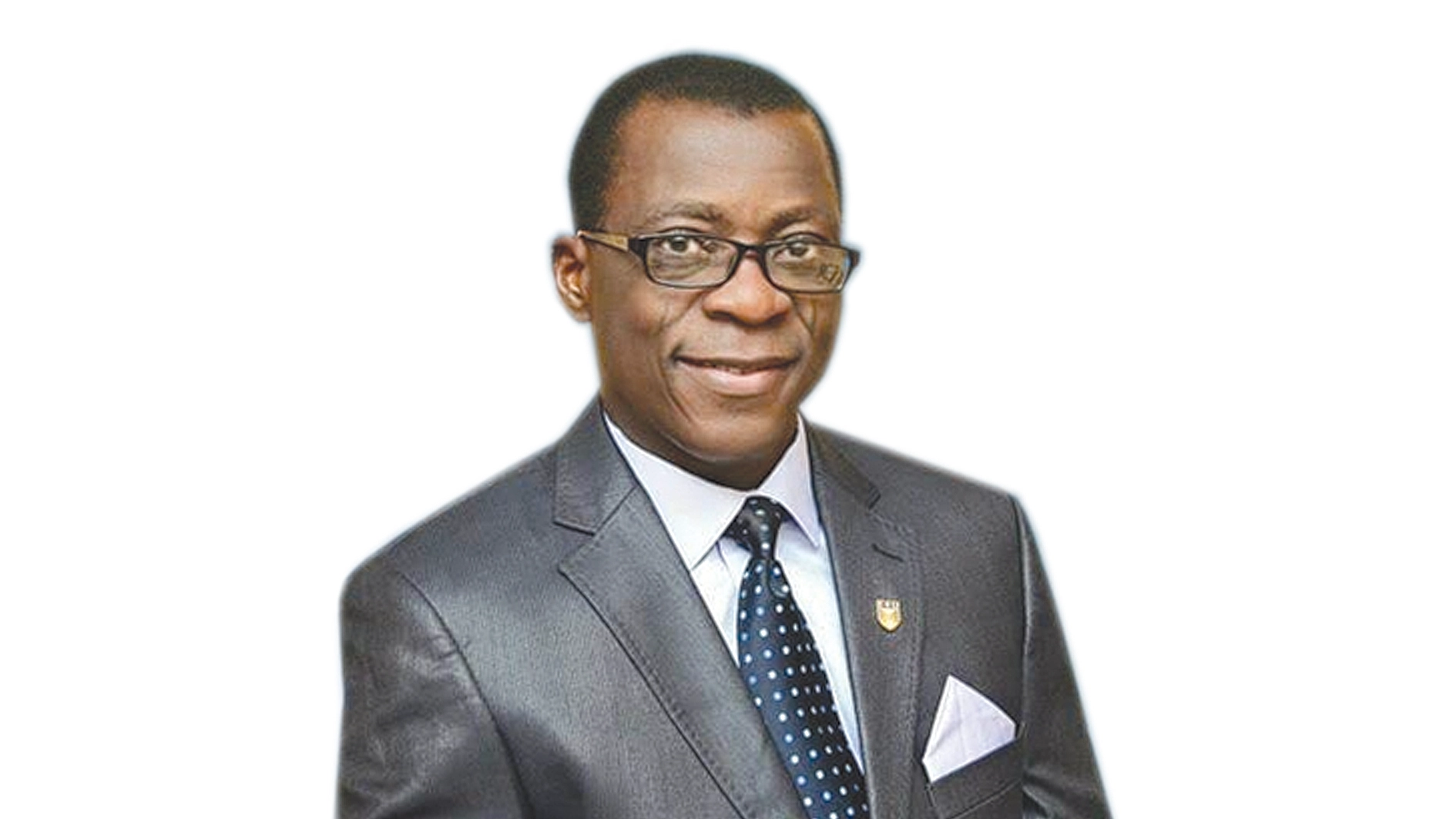
A security scholar at the University of Ibadan, Professor Oyesoji Aremu, in this interview with ROTIMI AGBOLUAJE, examines the issues of state police and the forthcoming gubernatorial election in Osun State, in relation to security concerns. Of the latter, he said the parties have a mutual responsibility to de-escalate tension towards a credible poll.
As Osun prepares for another governorship election, what are the major security threats that should concern the people, political parties and security agencies?
The last off-cycle governorship election in Osun, coming ahead of the national elections scheduled for January 2027, has generated concerns following incidents of politically motivated violence in some parts of the state.
The major security concern is the potential threat to the safety of lives and property if these developments are not properly managed. The situation is becoming more worrying because of the tense political atmosphere in the state.
These emerging threats could overstretch the security measures that will be deployed by the security services. Therefore, all stakeholders, particularly political actors, must make conscious efforts to de-escalate tensions.
The actions and statements of non-political actors should also promote peace and harmony rather than aggravate the situation. The responsibility for ensuring a peaceful election does not rest with security agencies alone; political parties, candidates, their supporters and other stakeholders all have important roles to play.

How critical are intelligence gathering and early warning in preventing election-related violence, particularly in the final days before voting?
Intelligence gathering and early warning are vital, but they should begin weeks before an important election, rather than only a few days before the poll. This is particularly important in an off-cycle election and in an environment where political campaigns are not sufficiently issue-based. If intelligence and early-warning mechanisms are activated only in the final days, they may come too late to prevent some incidents.
There must first be conscious efforts to identify and address political actions and inactions that could precipitate violence in the days leading to the election. Secondly, security agencies, particularly the police and the Department of State Services, must be more proactive around identified flashpoints while maintaining surveillance in other areas that could become vulnerable to violence.
What should security agencies do differently during the Osun election to guarantee the safety of voters while maintaining political neutrality?
Security agencies do not necessarily need a completely different approach. Rather, they need to raise their professional standards and demonstrate the level of professionalism expected of institutions responsible for protecting lives and property. The police, in particular, must ensure that their conduct commands public confidence and approval. They should avoid actions that could generate electoral discontent or create perceptions of bias.
There have been allegations and counterclaims concerning the conduct of security personnel during political activities. Such allegations should be treated as warning signs requiring careful attention from the relevant security authorities. The objective should be to provide a secure environment in which every voter can exercise their franchise without intimidation, harassment or fear.
Beyond election day, how should security agencies manage vote collation, result declaration and possible post-election disputes?
Election-day activities are very important to the overall integrity of the electoral process, but security agencies must also pay close attention to what happens afterwards.
Security must cover the entire process, including voting, the movement of electoral materials, vote collation, and the announcement of results. Security agencies must also closely monitor the behaviour of politicians and their supporters after the results are declared.
The period immediately after an election can be particularly sensitive, especially where the outcome is disputed. Security agencies should, therefore, anticipate possible reactions and deploy appropriately without compromising neutrality.
The debate over state police has intensified. From a security perspective, would state police significantly improve Nigeria’s capacity to tackle insecurity?
Absolutely. It is long overdue. Nigeria has delayed taking the bold step of establishing a subnational policing structure for almost 60 years, since the unification of the police in 1966. Ideally, the country should have retained regional police structures, which could have evolved into state police.
If that had happened, Nigeria might have moved beyond some of the current arguments centred on the fear of political oppression and funding. Given the country’s persistent security challenges, including insurgency, kidnapping, abduction and banditry, state policing could contribute significantly to addressing these problems if properly structured and implemented.
The administration of President Bola Ahmed Tinubu should be commended for taking steps in that direction.
What specific security challenges could state police address more effectively than the current centralised policing structure?
The major advantage would be in community and neighbourhood security. A state policing system would be more operationally rooted in local communities and could, therefore, provide a more proactive response to emerging security threats. This does not mean that the present policing structure is incapable of addressing these challenges, but a properly designed subnational system could improve responsiveness.
However, state police should not be presented as an immediate solution to every security problem. There would still be challenges, which the country would have to address carefully.
That said, the ongoing constitutional amendment process concerning state police is welcome. I believe the State Houses of Assembly should also support the process once it gets to them.
One of the strongest arguments against state police is the fear that governors could use it to intimidate political opponents. How can Nigeria prevent such abuse?
That concern has always been the major argument against subnational policing. It was also one of the considerations behind the decision of the military administration of late General Aguiyi Ironsi to unify the various police agencies in 1966. But the question is: with the present Nigeria Police Force, are we not already dealing with a form of governmental control at the national level?
Nigeria would have outgrown this fear if the regional and state policing structures had been allowed to develop from the First Republic. Countries such as India and Pakistan, as well as some European countries, have experienced abuses involving subnational police agencies.
The issue, therefore, should not simply be whether state police can be abused, but how to prevent and punish such abuses. Constitutional amendments must provide strong institutional safeguards. The National Assembly should establish a framework to check abuses by political actors at the state level.
State policing should, therefore, not merely be placed on the Concurrent Legislative List; there must also be institutional checks through which abuses can be challenged and, where necessary, overridden in the national interest.
Could state police strengthen election security, or could it make electoral violence and political intimidation worse?
State police can strengthen election security, but they should not have exclusive responsibility for electoral security during elections. There must be operational balancing. Federal police personnel should take the operational lead in ensuring a level playing field in elections, particularly at the state and national levels.
This would reduce the likelihood that state police are influenced by political actors and provide an additional layer of neutrality and accountability.
If Nigeria establishes state police, what safeguards and institutional structure would be necessary to make it professional, independent and accountable?
The first requirement is a clear constitutional provision establishing the leadership, organisational structure and responsibilities of state police. This should be followed by a detailed operational framework.
The leadership structure should be hierarchical, similar to what exists at the federal level. However, while the federal police is headed by an Inspector General of Police, state police could be headed by a Chief Commissioner of Police (CCP), followed by a Deputy Chief Commissioner of Police (DCCP) and an Assistant Chief Commissioner of Police (ACCP), among others. This would help distinguish the structure from political commissioners at the state level. It is similar, in some respects, to arrangements found in countries such as Australia.
There should also be clear distinctions between national and state crimes to prevent operational conflicts between federal and state police forces.
The respective juridical responsibilities should be clearly defined in the Constitution. Where there are operational overlaps, the federal police should have overriding operational responsibility.
Each state police force should also be supervised by a State Police Commission, preferably chaired by a retired senior police officer or an academic with relevant experience.
The amendment of Section 214 of the 1999 Constitution should, therefore, be comprehensive. The Police Act 2020 would also need to be amended to accommodate the state police structure while strengthening existing community-based policing mechanisms, including the Constabulary Police system.
What are the most urgent reforms Nigeria needs to build a policing system capable of addressing kidnapping, banditry, cultism and other emerging threats?
The Osun governorship election should be treated separately from the broader question of policing reform in Nigeria. For national security, Nigeria needs a multilevel policing model in which intelligence is sourced directly from communities, as is done in countries such as the United States and the United Kingdom.
We are not fully there yet, but there is already a foundation for such a system. The Nigeria Police Act 2020, particularly Part XIII, Sections 105 to 112, provides for the Constabulary Police system.
What we need is to make all security agencies, including the armed forces and other paramilitary organisations, more effective in their policing and intelligence functions.
When these structures function properly, border security will be strengthened, profiling will become more effective, intelligence sharing will improve, and response times will be reduced. It will also reduce excessive reliance on kinetic approaches to security.
Members of the public must be encouraged to report suspicious activities. The principle should be: if you see something, say something and do something appropriate.
More importantly, Nigeria needs a coordinated national policing structure. There should also be an Office of Adviser on State Police Affairs in the Presidency to coordinate and provide policy direction on the development of state policing in the country.

