
 Get Guardian on Google
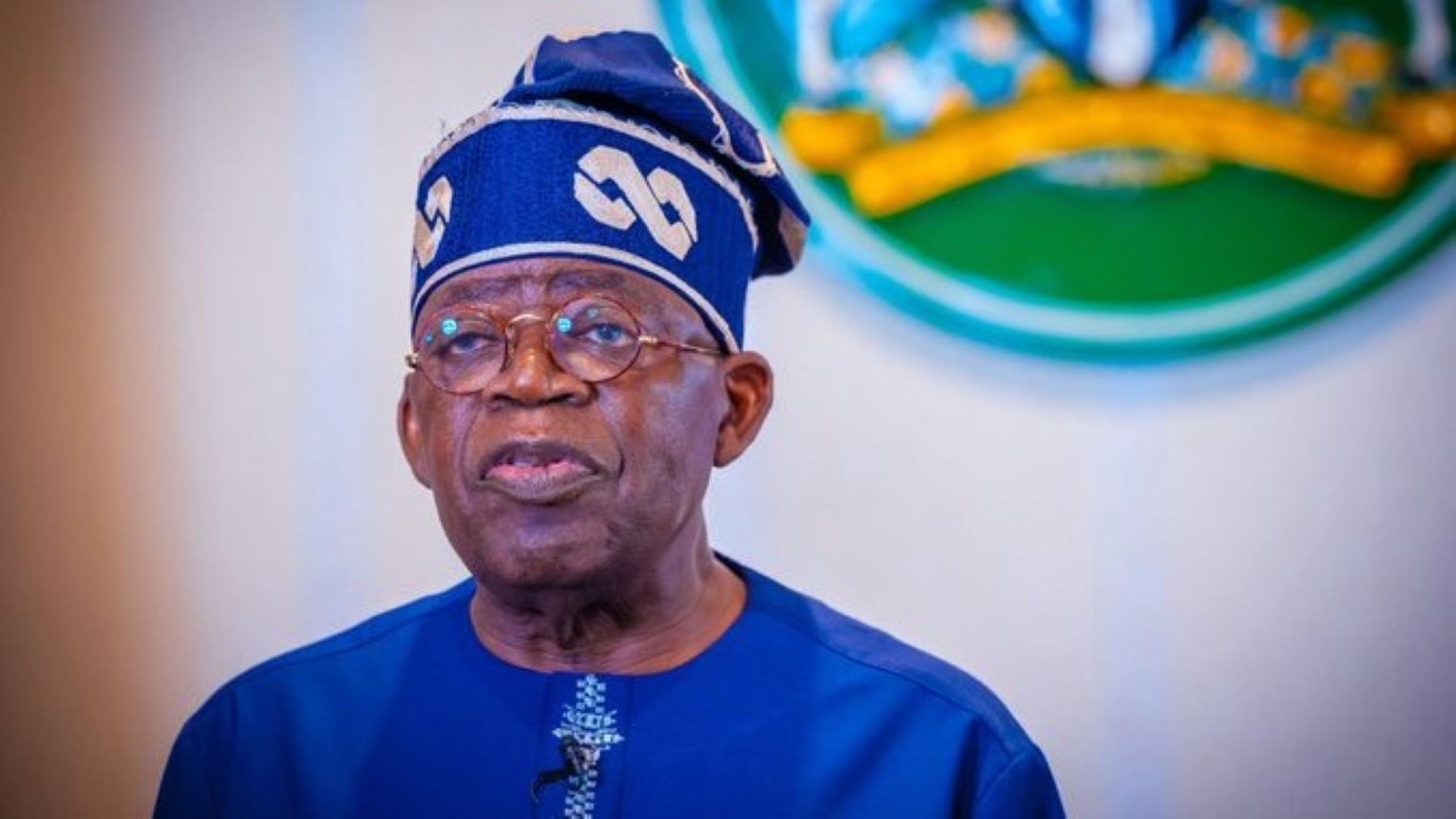
Since Nigeria’s return to democracy in 1999, only former President Goodluck Jonathan has failed to secure re-election while in office. His predecessor, Olusegun Obasanjo, and successor, Muhammadu Buhari, successfully leveraged incumbency to win second terms in 2003 and 2019, respectively. Whether President Bola Tinubu can replicate that feat in 2027 will largely depend on how voters weigh his administration’s record against the economic hardships facing the country, SEYE OLUMIDE reports.
As President Bola Tinubu consolidates his political influence ahead of the 2027 general election, with opposition governors and prominent politicians defecting to the ruling All Progressives Congress (APC), the party’s expanding national reach is raising questions about the extent to which control of government translates into electoral advantage.
The president’s access to federal resources, political appointments, state structures and an expanding network of political allies could strengthen his re-election prospects. Yet, Nigeria’s democratic experience shows that incumbency alone cannot guarantee victory. Economic hardship, insecurity, public dissatisfaction, party divisions and opposition mobilisation have, at different times, weakened the electoral prospects of sitting governments.
For Tinubu, therefore, the 2027 election will test not only the strength of the APC’s political machinery but also the administration’s ability to convert its institutional advantages into popular support. The central question is whether Nigerians consider his performance sufficient to earn him another four years.
Jonathan’s defeat and the limits of incumbency
Jonathan’s defeat in 2015 offers perhaps the most significant lesson for Tinubu. The Peoples Democratic Party (PDP), which had controlled the Federal Government since 1999, enjoyed considerable political influence across the states and the National Assembly. Yet, its dominance and access to federal power could not prevent the emergence of a formidable opposition coalition.
The Jonathan administration faced growing dissatisfaction over insecurity, particularly the Boko Haram insurgency and the abduction of 276 schoolgirls from Chibok, Borno State, in April 2014. Corruption allegations and declining confidence in the government’s capacity to address national challenges further weakened its standing.
The PDP’s internal crisis compounded the problem, culminating in the defection of five governors and other influential politicians to the newly formed APC. Their departure weakened the ruling party’s structures, particularly in the North, while strengthening the opposition’s organisational reach.
The APC’s ability to unite previously competing political interests behind Muhammadu Buhari provided a credible alternative capable of challenging the PDP nationally. The election demonstrated that an incumbent’s control of government could be overwhelmed when public dissatisfaction coincided with party fragmentation and a united opposition.
The vulnerability of incumbency is also evident in state elections. In 2003, five of the six Alliance for Democracy (AD) governors in the South-West lost their re-election bids to the PDP. They were Lam Adesina of Oyo, Bisi Akande of Osun, Olusegun Osoba of Ogun, Niyi Adebayo of Ekiti and Adebayo Adefarati of Ondo. Only Lagos Governor Bola Tinubu survived.
Other sitting governors who lost re-election include Ikedi Ohakim of Imo in 2011, Kayode Fayemi of Ekiti in 2014, Idris Wada of Kogi in 2015, Mohammed Abubakar of Bauchi and Jibrilla Bindow of Adamawa in 2019, as well as Gboyega Oyetola of Osun in 2022. Oyetola lost to Ademola Adeleke, who polled 403,371 votes against his 375,027.
These precedents reinforce the argument that political power provides an advantage but cannot substitute for public acceptance.
Against this background, the APC’s expanding presence across the country is an important factor in Tinubu’s re-election calculations. Governors command considerable influence through their relationships with local government chairmen, legislators, party executives, community leaders and grassroots organisations. Their defection to the ruling party could strengthen its mobilisation capacity and improve the president’s electoral reach.
However, whether these political structures can automatically deliver votes remains debatable.
A former spokesman of the Pan Niger Delta Forum (PANDEF), Ken Robinson, believes incumbency, financial resources and political structures will give Tinubu a considerable advantage over his challengers.
He argues that the president’s access to federal and state resources, along with support from governors and local government structures, places him in a stronger position than his opponents.
“Whether we like it or not, the power of incumbency is a factor in Nigerian elections, particularly presidential contests. Since the return to democratic rule in 1999, the only time an incumbent President seeking re-election lost to the opposition was in 2015, when Goodluck Jonathan was defeated,” he said.
Robinson, who expects the contest to be largely between Tinubu and former Vice President Atiku Abubakar, however, believes regional voting patterns will remain decisive. He argues that Atiku could struggle to secure sufficient support in the South-South and South-West.
Performance, hardship and the incumbency question
For Oluwole Aguda, a former gubernatorial contestant in Kogi State and election expert, the widely held notion of the power of incumbency is overstated.
He argues that holding public office merely provides opportunities that could strengthen or weaken a politician’s electoral standing, depending on performance and the ability to sustain public confidence.
“The power of incumbency is simply a political myth in my opinion. There is no power in incumbency per se; it is simply leverage naturally provided by an office, which may be used to advantage or disadvantage,” he said.
Aguda identified political appointments, control of resources and fiscal discretion as some of the advantages available to an incumbent but maintained that these do not automatically translate into electoral victory.
His argument places the administration’s performance at the centre of Tinubu’s re-election calculations.
The removal of petrol subsidies and the foreign exchange reforms introduced by the president remain major sources of public debate. While the administration argues that the measures are necessary to correct structural weaknesses, improve government revenue and establish a more sustainable economy, millions of Nigerians continue to contend with rising food, transportation, housing, healthcare and education costs.
For households struggling with the cost of living, the assessment of the reforms will be less about their stated economic objectives than whether they have translated into improved living conditions, better incomes and greater economic security.
Security will also be an important consideration. Persistent banditry, kidnapping and insurgency, particularly in parts of the North-West and North-East, continue to threaten livelihoods and public confidence. The administration’s ability to improve security before the election could significantly influence voters’ assessment of its performance.
A security expert and Director-General of the Institute for Police and Security Policy Research, Dr Charles Omole, describes incumbency as the single biggest advantage in Nigerian politics. He argues that Tinubu’s control of government resources, political structures and security institutions places him in a stronger position ahead of the election.
Omole, however, cautions that these advantages do not guarantee victory, citing Jonathan’s defeat as evidence that economic hardship and public dissatisfaction could overturn an incumbent’s political calculations.
“Incumbency gives you a head start. Performance and the character to respect the referee determine whether you finish first,” he said.
He identified the rising cost of living, poverty and insecurity as critical factors that could undermine Tinubu’s re-election prospects, arguing that voters’ economic experiences would ultimately matter more than political mobilisation.
On the opposition’s preparedness, Omole said its fragmentation, weak grassroots organisation and competing presidential ambitions currently make it difficult to present a formidable challenge to the APC.
He argued that a successful opposition coalition requires more than prominent politicians defecting from the ruling party. It must have nationwide electoral structures, credible policy alternatives and the willingness of presidential aspirants to support a common candidate.
Omole also warned against the use of state institutions for partisan purposes, identifying public distrust of INEC and the police, insecurity and reported obstacles to collecting Permanent Voter Cards and conducting campaigns as issues requiring transparent responses.
Despite these concerns, he projects Tinubu as the favourite to win in 2027, largely because of the APC’s national political spread and the absence of a united opposition platform.
“I don’t think the APC needs to manipulate the election to win. No single opposition party appears to have a comparable national spread of popular support to the APC,” he said.
He nevertheless warned that the emergence of a united opposition with a single presidential candidate could significantly alter the political calculations.
The APC national chairman, Nentawe Yilwatda, has also sought to place the administration’s achievements above the advantages of incumbency.
Yilwatda acknowledged that incumbency is an electoral advantage recognised worldwide but insisted that Tinubu’s re-election would depend more on the administration’s performance and ongoing reforms.
“Power of incumbency is used all over the world as one of the ingredients that favour an incumbent. But in this case, apart from being an incumbent, the achievements also speak for him. I think the achievements will play a major role, especially the reforms,” he said.
He cited the proposed state police legislation, which he said had received the endorsement of all 36 state governments and was awaiting presidential assent, as evidence of the administration’s commitment to institutional reforms.
The APC chairman also acknowledged that economic hardship remained a major concern, although he argued that the government needed to communicate its achievements more effectively.
His position reflects the ruling party’s attempt to present the 2027 election as a referendum on Tinubu’s policies rather than merely a contest over access to political power.
Opposition unity and electoral credibility
The other major variable is the opposition’s ability to overcome internal divisions and build a coalition capable of challenging the APC.
In the 2023 presidential election, Tinubu secured 8,794,726 votes against Atiku’s 6,984,520 and Peter Obi’s 6,101,533. The distribution of votes among the leading candidates demonstrated the existence of substantial opposition constituencies but also exposed the difficulty of coordinating their political interests behind a common candidate.
With Atiku associated with the African Democratic Congress (ADC) and Obi leading the Nigeria Democratic Congress (NDC), the opposition faces the challenge of reconciling presidential ambitions, regional interests and competing party structures.
The planned November 23 summit involving the ADC, NDC, PDP, APM, PRP and SDP, where the parties are expected to consider a Covenant for Democratic Renewal and a framework for cooperation, represents another attempt to build a common front. Whether the initiative will produce a workable electoral arrangement remains uncertain.
The 2015 experience demonstrates the potential of opposition unity. However, assembling political parties around a common desire to displace an incumbent is not the same as agreeing on a presidential candidate, regional balance and the distribution of political influence.
The North will be particularly important. Although the APC has expanded its presence in the region, governors’ support cannot be taken as a guarantee of votes. Political calculations in Kano, Kaduna, Plateau, Adamawa, Zamfara and other states will be influenced by local alliances, security, economic conditions and the strength of opposition networks.
The question of regional power rotation could also influence voting patterns, particularly arguments over whether presidential power should remain in the South after Buhari’s eight years in office.
Beyond the contest for political structures, the credibility of the electoral process is emerging as another contentious issue.
The ADC Presidential Campaign Council has dismissed claims that Tinubu’s incumbency and expanding political influence will guarantee his re-election, accusing the APC of allegedly using security agencies and the judiciary to intimidate opposition parties and weaken their political activities.
In a statement signed by its Director of Media and Publicity, Kola Ologbondiyan, the council alleged that opposition members and supporters had been subjected to attacks and intimidation in several states, including Delta, Kaduna, Kogi, Katsina, Kebbi, Lagos and Sokoto.
It also raised concerns about the neutrality of security agencies and the Independent National Electoral Commission (INEC), alleging that elements within the institutions were being used to advance the ruling party’s interests. These claims remain allegations by the opposition and require independent verification.
The ADC-PCC insisted that neither political intimidation nor the alleged manipulation of democratic institutions would prevent Nigerians from rejecting the president at the polls.
“Tinubu is not preparing for an election. He is preparing for a coronation,” Ologbondiyan said.
Ultimately, Tinubu’s re-election prospects will depend on the interaction of these competing forces: the reach of the APC’s political structures, the president’s access to public resources, the cohesion of the ruling party, the credibility of the opposition and, above all, voters’ assessment of the administration’s performance.
Nigeria’s democratic history offers no guarantee that an incumbent will prevail simply because he controls the machinery of government. Jonathan’s defeat in 2015 demonstrated how economic dissatisfaction, insecurity, party divisions and opposition unity can overturn established political power. For Tinubu, the challenge in 2027 will be to ensure that the advantages of incumbency are matched by a record that convinces voters to renew his mandate.