 Follow Us on Google News


 Follow Us on Google Discover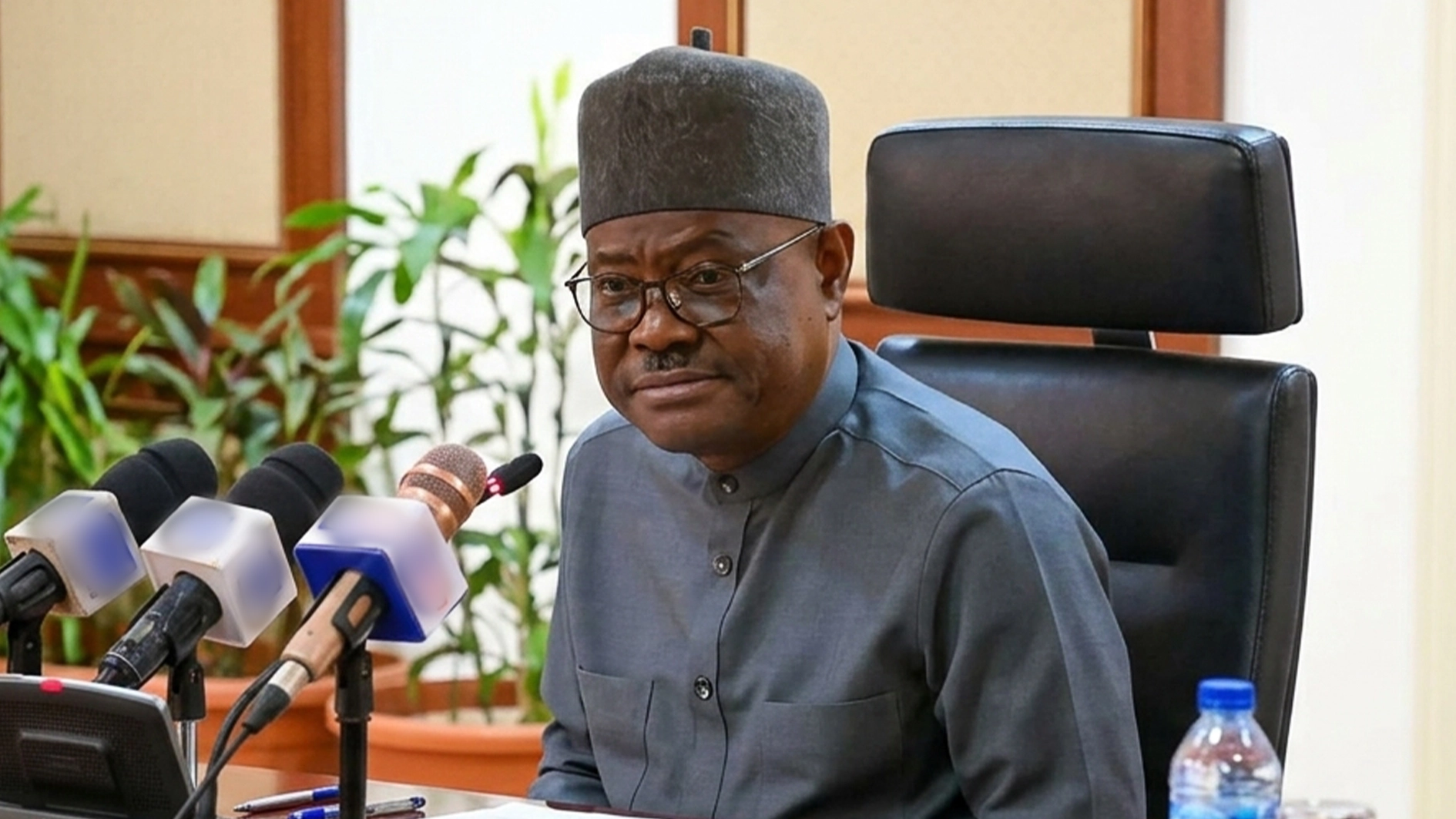
The Peoples Democratic Party (PDP), once Nigeria’s dominant political machine, is heading into the 2027 elections weakened by factionalisation, defections and the dispersal of its leaders across rival platforms. The crisis raises concerns about the opposition’s capacity to compete against an experienced incumbent, as well as the choices available to the electorate, SEYE OLUMIDE writes.
The protracted crisis rocking the Peoples Democratic Party (PDP), once Nigeria’s ruling party and now a major opposition platform, is deepening divisions ahead of the 2027 elections, raising fresh concerns about the political alternatives and choices available to voters.
Upon Nigeria’s return to democratic governance in 1999, the opposition seldom approached a major election as a united front. It was that fragmentation that propelled the merger of otherwise fringe political platforms into the current ruling All Progressives Congress (APC) in 2013.
In the lead-up to the 2027 general election, however, the opposition has once again splintered. And the main culprit is the former ruling PDP that the APC merger defeated in 2015, after 16 years of bestriding the nation’s polity like a colossus.
Now, as the leading name among the opposition parties, the PDP’s present predicament goes beyond an internal leadership squabble. It tends towards indiscipline and an apparent lack of clear structural hierarchy. Having lost some influential leaders in its fold, including lawmakers and state governors, the PDP’s traditional role as the main vehicle for opposition political expression has become increasingly uncertain.
The emergence of two rival PDP factions, each claiming control of the party, has further weakened its structure, with prolonged court battles over leadership and party control adding another layer of uncertainty to an already fractured opposition.

The movement of former PDP politicians into different parties perhaps best illustrates the depth of the crisis. Former Vice President Atiku Abubakar, who flew the PDP presidential flag in 2023, is now associated with the African Democratic Congress (ADC), while former Rivers State governor Rotimi Amaechi is also part of the emerging opposition realignment.
Oyo State Governor Seyi Makinde, one of the most prominent figures who remained in the PDP after the 2023 election, is now the presidential candidate of the Allied Peoples Movement (APM). Rabiu Kwankwaso, another former PDP presidential candidate, has also pursued his political ambition outside the party.
Peter Obi, who left the PDP before the 2023 election and contested under the Labour Party, has since moved to the Nigeria Democratic Congress (NDC).
The significance is not simply that prominent individuals have changed parties. It is that politicians who could have formed the nucleus of a formidable opposition coalition within the PDP are now pursuing separate political vehicles. That fragmentation has consequences for the electorate.
For years, the PDP provided the principal platform for Nigerians seeking an alternative to the ruling party. In 2019 and 2023, despite its weaknesses, it remained one of the two major national political forces. But in 2027, voters dissatisfied with the APC may have to choose among several opposition platforms rather than rally behind one dominant challenger.
The result could be a dispersal of opposition votes, making it more difficult for dissatisfaction with the government to translate into an electoral change of power.
No matter how anybody wants to explain the PDP’s loss of stature, its greatest loss does not consist in the departure of stalwart politicians, but in the gradual erosion of the structural strength that has left it rickety and rustic.
Check the numbers: At the inauguration of the 10th National Assembly in 2023, the party had 36 senators and 66 members of the House of Representatives. By March 2026, its representation had fallen to 14 senators and 17 members of the House.
In Nigeria’s highly personalised political system, a lawmaker is often more than a legislator. Senators and members of the House have networks of supporters, political associates and ward-level influence. Their movement can therefore weaken a party far beyond the number of seats lost.
The continuing migration of lawmakers from the PDP to the APC, ADC and other platforms consequently represents an erosion of political infrastructure.
The PDP once possessed a broad organisational pyramid stretching from governors and legislators to local government chairmen, councillors, ward executives and polling-unit agents. That machinery enabled it to mobilise voters and remain active between elections. Much of that advantage has been weakened.
This is why the PDP’s challenge cannot be reduced to the struggle over its national chairmanship or control of its factions. The deeper question is whether it still possesses the institutional capacity to function as a truly national opposition party.
The role of former Rivers State governor Nyesom Wike adds another dimension to the PDP’s predicament.
Wike remains a PDP member but is serving in President Bola Tinubu’s administration and has openly supported the President. His political position has become one of the clearest illustrations of the fluidity of party loyalty in Nigeria.
Supporters may regard such political manoeuvring as pragmatism or the pursuit of political relevance. Critics, however, see it as evidence of the weakness of party discipline and ideological commitment.
Whatever interpretation is adopted, the Wike phenomenon raises an important question: what does it mean to belong to an opposition party when a prominent member is simultaneously working with the ruling administration?
The answer exposes one of the fundamental weaknesses of Nigerian party politics. Membership often appears to be driven less by ideology or a clearly defined programme than by political calculations, personal ambition, access to power and the prospect of electoral advantage.
What happened to party ideology?
THE PDP crisis has therefore exposed a problem that extends beyond the party itself: the absence of strong ideological distinctions among Nigeria’s political parties.
Politicians move from one party to another without necessarily changing their political philosophy. A politician can contest on the PDP platform, move to the APC, return to the PDP, and subsequently join another opposition platform without voters being presented with a substantially different ideological position.
The movement of Atiku, Amaechi, Makinde, Kwankwaso, Obi and numerous lawmakers across different platforms illustrates this fluidity.
The question is not whether politicians have the right to change parties. They do. The democratic concern is whether voters are being offered competing political programmes or merely competing personalities.
When political parties become vehicles for individual ambition, their structures become vulnerable to defections. A party without a compelling ideology or institutional identity can lose its members as soon as political calculations change. This also explains why the PDP’s present crisis has become an opposition crisis.
A functioning democracy requires more than periodic elections. It requires credible competition, a strong opposition, institutional checks and the possibility that voters can remove those in power.
The weakening of the PDP therefore has implications far beyond the party.
If the opposition remains divided among the ADC, NDC, APM, SDP, Labour Party and other platforms, while the APC continues to attract politicians from rival parties, Nigeria could enter 2027 with a highly unbalanced political environment.
For voters, the danger is a political environment in which choices are increasingly determined by personalities, regional interests and alliances rather than clearly differentiated programmes.
Former South-West Vice National Chairman of the PDP, Eddy Olafeso, believes the crisis confronting the PDP and the wider opposition could have serious consequences for democracy.
He acknowledged the party’s setbacks but argued that democracy would survive because Nigerians had yet to find a better alternative to democratic governance.
However, he warned that the fragmentation of the opposition could leave voters with fewer meaningful choices.
“The disadvantage to the electorate is that if the ruling party’s game succeeds, relying on all these conspiracies and the suffering they are inflicting, the people may not have a choice,” he said.
Olafeso warned that the absence of effective opposition could create conditions for one-party dominance, with the attendant danger of excessive concentration of political power.
His concern reflects a broader democratic principle: opposition parties are not merely vehicles for seeking government appointments. They are essential to scrutiny, accountability and the peaceful transfer of power.
PDP chieftain, Diran Odeyemi, argues that the party should not be written off because of its present difficulties.
He pointed out that some prominent politicians, including Atiku, had previously left the party and later returned, stressing that the PDP had survived earlier crises.
“As a political party, our belief is that there is no harm in falling. You don’t write yourself off each time you fall. The PDP has remained a party that can come back strongly,” he said.
Odeyemi said those remaining in the party should regard themselves as its builders, adding that the immediate objective was to maintain its political presence in 2027 before embarking on a rebuilding process.
“Going into this election, it is just about registering our presence and maintaining our presence. The PDP will come back after 2027,” he said.
But rebuilding will require more than reconciliation among factions. The party must restore its grassroots organisation, attract new political leaders, retain experienced politicians, and, most importantly, give Nigerians a reason to identify with it beyond its role as an alternative to the APC.
That is also the challenge facing the emerging opposition platforms.
If ADC, APM, NDC and others simply become new vehicles for politicians who have left the PDP, they may reproduce the same weaknesses rather than create a stronger opposition culture.
For Nigeria, therefore, the real issue in 2027 is not whether the PDP survives as a registered political party. Its name and logo are likely to remain.
The bigger question is whether Nigeria can develop opposition parties strong enough to offer credible alternatives, articulate competing policies and give voters a meaningful choice.
The PDP’s decline has exposed how fragile Nigeria’s political parties remain when personalities are stronger than institutions and political ambition is stronger than ideology.
The 2027 election may consequently become a defining test not only for the PDP but for Nigeria’s democracy itself: whether political competition will produce stronger institutions and clearer choices, or whether the country’s parties will continue to revolve around personalities, defections and the pursuit of power.
For the electorate, the ultimate issue is simple. Democracy is meaningful only when voters have credible choices.

