In recent months, the Federal Ministry of Science and Technology has floated an ambitious idea to promote bamboo as a mainstream construction material for affordable housing in Nigeria. While the suggestion sounds like a novelty, stakeholders are wondering how prepared the ministry is to engineer the plants into durable, low-cost, and climate-friendly housing solutions, VICTOR GBONEGUN reports.
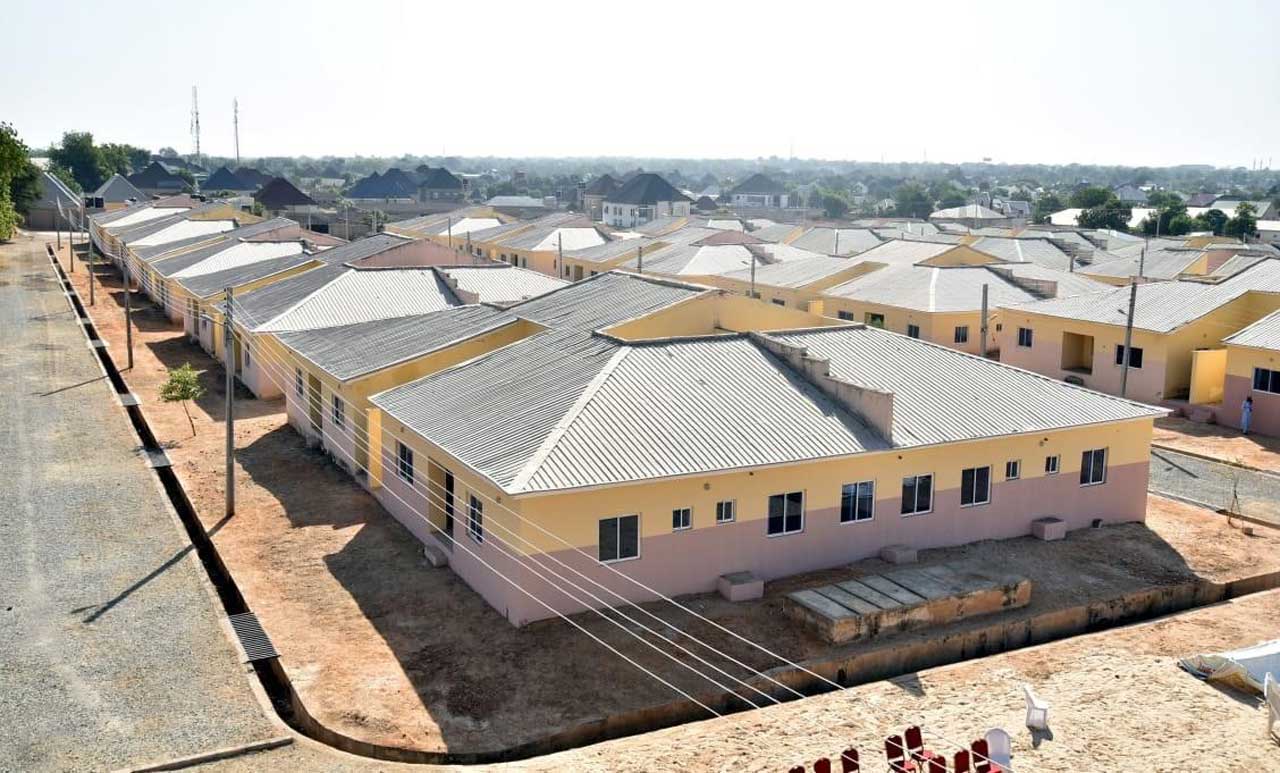
The fresh move by the Federal Government to bridge the estimated over 22 million housing deficits through the building of affordable and durable smart houses for low and medium-income earners using bamboo plants has reignited concerns around developing a policy that will enforce quality and standards in design.
The Permanent Secretary, Federal Ministry of Innovation, Science and Technology, Mrs Esuabana Asanye, who spoke at a one-day Capacity Building Workshop on the Relevance of Bamboo for Climate-Smart Housing Construction: Integrating Nigerian Building Road Research Institute (NBRRI) Technologies in Reducing Carbon Footprint, in Abuja, said adopting only bamboo plants for smart houses in Nigeria will not only promote environmental sustainability, but also ensure that the construction process aligns with principles of adaptability,
The government said bamboo, with other proven technologies, can provide a scalable solution to the housing needs of Nigeria’s growing population without exploitation of the environment.
Housing is unarguably a massive challenge across Nigerian cities, as the government and private sector have not done enough since independence to meet rising demand. Many of the existing supplies are overpriced, with a two-bedroom flat priced between N62 million and N180 million. Also, the price of a studio apartment as well as a bedroom ranges from N20 million to N42 million.
Rapid urbanisation, high construction costs, dependence on imported materials and poor infrastructure, poverty and unaffordable mortgages, lack of access to land, and systemic corruption have limited the growth of the sector. The unending mass migration to cities in search of jobs and better living conditions contributes to homelessness, with figures from locations like Lagos revealing that at least 600,000 people migrate to the city yearly without a plan of returning.
Many Nigerians have resorted to self-help by living in slums, and with a high rate of homelessness, some sleep under bridges and live in uncompleted buildings in cities and towns. It is reported that about 70 per cent of Nigerians live in informal settlements.
Prices of essential building materials in Nigeria, such as cement, granite, sharp and soft sand, roofing sheets, nails, wood, planks, iron rods and others have hit the roof, thereby worsening the housing sector’s woes with many housing projects abandoned.
The abundance of bamboo in some developing countries, particularly in Nigeria and other developed parts of the world, has triggered its widespread use as a construction material in major construction sites.
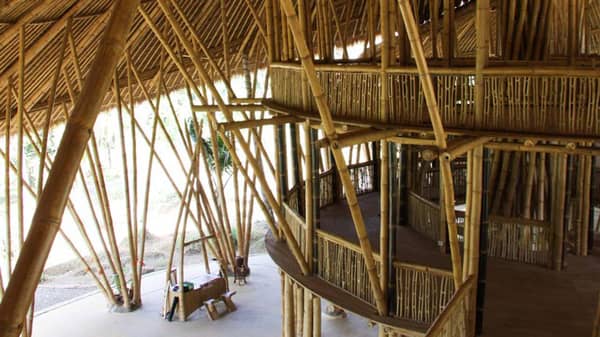
The Guardian gathered that bamboo grows abundantly across Nigeria, especially in the South-East, South-South and Middle Belt. Unlike hardwoods that take decades to mature, bamboo reaches harvestable strength within three to five years. That speed of regeneration makes it one of the fastest renewable building resources on the planet. When properly treated, bamboo can rival timber in strength and durability, while costing far less than steel or concrete.
Globally, experts have demonstrated its viability. The International Network for Bamboo and Rattan (INBAR) have documented modern engineered bamboo products, such as laminated beams, panels, and plybamboo that meet structural standards for low-rise buildings.
In countries like Colombia and Costa Rica, entire neighbourhoods have been built using Guadua bamboo, a species prized for construction. Indonesia has showcased bamboo in schools and community centres, while the Philippines has piloted social housing using prefabricated bamboo panels. Even China and India, both heavyweight economies, are investing in research and building codes for bamboo structures.
In Africa, adoption is still at a modest scale. Ethiopia, Ghana, and Kenya have run feasibility studies and small demonstration projects, but Nigeria has yet to take bold steps. This creates an opportunity for the Ministry of Science and Technology to place the country among early movers on the continent.
Over the years, bamboo has become popular in Nigeria for scaffolding in the construction sector. The Guardian learnt that 81 per cent of contractors use bamboo or timber scaffolding with a potential reusability rate of two to three times. The material is used for various construction purposes such as foundations, floors, walls and ceilings, doors, windows, trusses, and roofing in places like China, Japan, Brazil and in building makeshift houses in some villages in Nigeria’s local councils.
The Guardian learnt that in China, walls, floors, doors, windows, ceilings, furniture, and furnishings are made of processed, treated, and finished bamboo, but they are expensive due to the treatment and processing that go into them.
However, there have never been any set technical requirements for the design, construction and use of bamboo for scaffolds in Nigeria. Nigerian artisans mostly erect scaffolds based on “rules of thumb” that have no formal safety guidelines, and in most cases, major accidents at construction sites consist of falls of workers and materials from such working platforms.
Stakeholders remain cautious about the use of bamboo as a durable and sustainable housing solution for low-income Nigerians, despite its growing global reputation as a green building material. Concerns stem from doubts about its ability to compete with conventional options, such as brick-and-mortar, treated wood, and container housing, which are already being deployed in Nigerian cities. Many argue that bamboo is better suited for temporary structures and demonstration projects than for large-scale and long-term housing.
Experts point to several challenges. First, there is a need for a robust framework to support bamboo housing, from ensuring a steady supply of mature bamboo to addressing technical issues such as insect and fungal attacks that reduce its lifespan. Bamboo is not yet covered in Nigeria’s building codes, making structural approvals difficult. Limited expertise in bamboo construction techniques also hampers scalability.
Meanwhile, concrete continues to dominate due to its entrenched supply chains, predictable costs, and widespread acceptance among developers, insurers, and regulators.
A former President of the Nigerian Institution of Structural Engineers (NIStrucTE), Dr Victor Oyenuga, stressed that government efforts must prioritise strong, fully matured bamboo rather than premature varieties.
He argued that large-scale adoption would require dedicated bamboo plantations to avoid scarcity and rising prices.
According to him, clarity is also needed on how bamboo would be deployed. Historically, bamboo was used to reinforce walls, but modern applications require more testing.
“Somebody will have to sit down and look at how we treat bamboo like we treat woods. What will be the cost compared to traditional housing? What will be the width of each of the slides? These factors are still pending and require further testing. If possible, a prototype should be developed to evaluate cost and determine whether bamboo will be used alone or mixed with other materials,” Oyenuga said.
He also called for public enlightenment programmes if the government intends to promote bamboo housing.
A former President of the Nigerian Institute of Building (NIOB), Kunle Awobodu, noted that while the initiative is encouraging, Nigeria has a history of failing to implement alternative construction technologies.
He cited stabilised clay blocks, once touted as a breakthrough, which never moved beyond experimental stages.
“It is so painful to some of us to see that the building system we have been practising for a long time, bricks and mortar, is still what we are holding onto. People have been dreaming of alternative building materials that can be sourced locally, but we have not seen appreciable outcomes,” he said.
Awobodu added that bamboo, though widely used in rural communities, raises serious questions about sustainability. Large plantations would be required, and the crop does not grow on all types of land. Beyond that, comparisons must be made between bamboo and conventional reinforcement bars in terms of strength and load-bearing capacity. “Imagine now we fell the timbers in forests but are not replacing them. These are the challenges we are having,” he warned.
For a former President of the Nigerian Institute of Architects (NIA), Festus Adibe, public perception is another major barrier. Many Nigerians view bamboo as a throwback to rural or outdated architectural styles. He, however, argued that bamboo can be modernised.
“People think we are going back to the former housing type or architecture adopted by our forefathers. No, it doesn’t follow. Bamboo can be used as reinforcement now. The same bamboo used for scaffolding can be split and applied in modern buildings without affecting aesthetics,” he said.
Adibe emphasised that architects are still researching to refine bamboo’s use in contemporary housing. “It’s not about taking us back to the olden days. It is about using a modern scientific approach so that the building remains structurally sound and appealing. People worry that bamboo houses will collapse, but that is why more research and prototypes are needed,” he added.
Offering a more optimistic perspective, Professor of Architecture, Erekpitan Ola-Adisa, described bamboo as a cost-effective and sustainable material that could help tackle Nigeria’s twin housing and environmental crises. She noted that bamboo grows faster than timber, sequesters large amounts of carbon, and can be harvested sustainably. But for bamboo to be mainstreamed, cultural, technical, and regulatory barriers must be overcome.
Through policies, research, and education, Ola-Adisa said, Nigeria could harness bamboo’s potential to redefine its architectural identity. “Bamboo offers a sustainable, cost-effective solution, but its adoption demands overcoming cultural, regulatory, and technical challenges. With strategic effort, it can deliver resilient, eco-conscious built environments,” she said.
She recommended showcasing architecturally significant bamboo projects through journals and exhibitions, positioning leading architects as advocates, and integrating bamboo studies into architectural curricula to inspire innovative design.
Hosting workshops on bamboo joinery and structural systems, she added, would help build expertise.
Ola-Adisa also urged the use of cultural narratives to improve acceptance. By embedding bamboo into vernacular architectural expressions, promoting its low-carbon footprint to eco-conscious designers, and involving local artisans in bamboo projects, she argued, Nigeria could reposition bamboo as a modern, affordable, and environmentally friendly building option.