 Follow Us on Google News
 Follow Us on Google Discover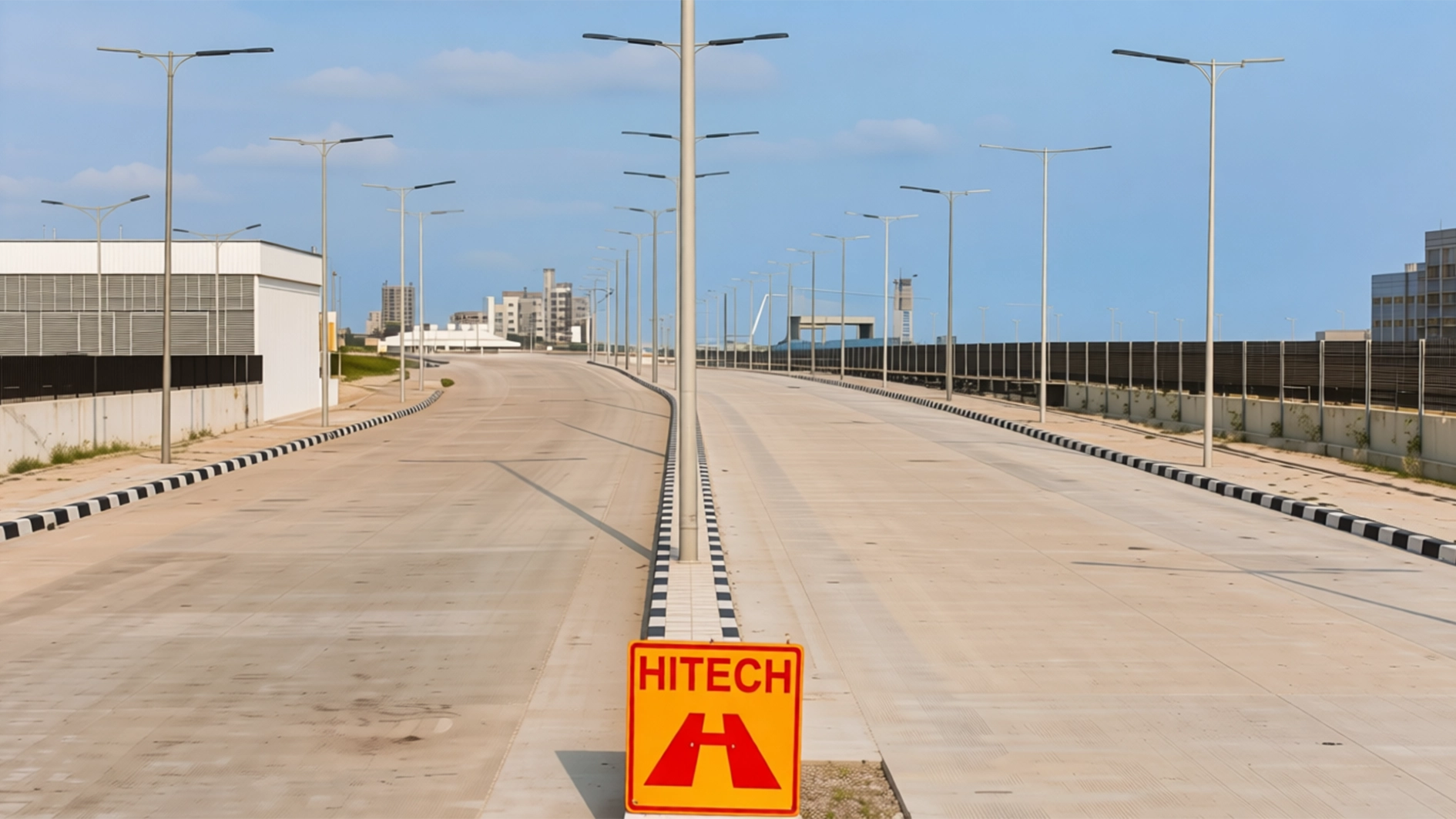
Urban planners have called on the Federal Government to develop a comprehensive coastal corridor development plan to guide growth along the Lagos-Calabar Coastal Highway project and establish a Coastal Communities Development Corporation.
The experts said while the road infrastructure is important for Nigeria’s economic connectivity and regional development, it must be supported by a statutory framework that protects coastal ecosystems, creates employment opportunities and ensures inclusive development for communities along the route.
They spoke at the Dr Femi Olomola Lecture titled: “The Lagos-Calabar Coastal Highway: Balancing National Development, Environmental Concerns and Socio-Economic Opportunities,” organised in Lagos by the Nigerian Institute of Town Planners (NITP), Lagos Chapter, in partnership with the Association of Town Planning Consultants of Nigeria (ATOPCON), Lagos Chapter.
Leading the call, Professor of Geography and Co-Director, Centre for Housing and Sustainable Development, University of Lagos, Peter Elias, said the proposed coastal corridor plan should provide direction for land use, economic hubs, conservation areas, housing, public access, drainage systems, transport interchanges and climate-risk zones across affected communities.
Elias described the project as an intervention in one of Nigeria’s most environmentally sensitive and socio-economically contested landscapes, the coastal zone.
He said the approximately 700-kilometre corridor linking Lagos to the eastern seaboard through Ogun, Ondo, Delta/Edo, Rivers/Bayelsa, Akwa Ibom and Cross River states presents opportunities for improved connectivity, port logistics, industrial expansion, coastal tourism, fisheries, blue economy development and regional market integration.

According to him, the highway presents both opportunities and risks, noting that while it could strengthen logistics, open new economic opportunities, connect coastal markets and reduce spatial isolation, poor planning could worsen environmental and social challenges.
“Urban expansion has already fragmented ecological assets, reduced forests and wetlands, increased developed land and intensified pressure on drainage and coastal systems. Climate risks are rising. Coastal communities face the possibility of displacement, livelihood disruption and loss of access.
“If the project is governed narrowly as a road, it may accelerate environmental degradation and social injustice,” Elias said.
He stressed that infrastructure development should not be avoided but delivered through improved planning approaches, adding that the Lagos-Calabar Coastal Highway should be treated as a resilient coastal development corridor.
“It should connect ports, industries, markets and communities while protecting forests, wetlands, waterways and livelihoods. It should be designed for future climate risks, not only present traffic needs,” he said.
Elias added that affected communities should be considered partners in value creation rather than obstacles to development.
He advocated a Strategic Environmental and Social Assessment for the entire corridor rather than separate assessments for individual sections, saying it should consider cumulative impacts, biodiversity, hydrology, climate risks, social displacement, cultural heritage, livelihoods, gender impacts and long-term land-use changes.
Chairman, NITP Lagos Chapter, Oladele Akindele, said the biennial lecture provides a platform for intellectual engagement, professional reflection and exchange of ideas on issues affecting the growth of the profession and national development.
He said the event also preserves the legacy of late Olomola by promoting values of excellence, innovation and selfless service.
In his keynote address, the Oniru of Iru-land, HRM Oba Abdulwasiu Lawal, commended the Federal Government for pursuing the ambitious project, which he noted had remained on the drawing board for nearly three decades.
Lawal said the highway is expected to stimulate economic activities, unlock opportunities and boost real estate values and investments along the corridor and beyond. However, he warned that coastal communities remain vulnerable to ocean surges and other ecological pressures.
He also supported the establishment of a Coastal Communities Development Corporation or similar institutional framework to focus on the welfare, environmental protection and socio-economic development of communities along the route.
According to him, such a body would ensure sustained attention to the needs of coastal communities and maximise the benefits of the strategic national asset.
The Lagos ATOPCON Chairman, Bello Akinwale, described Olomola, a former president of both NITP and ATOPCON, as an icon whose contributions extended beyond physical planning and consultancy.
He said Olomola represented integrity, foresight, service and commitment to sustainable urban development. Akinwale added that Olomola’s work demonstrated that economic opportunities, environmental protection and social considerations must be pursued together.
The President of ATOPCON, Hakeem Badejo, and the President of NITP, Dr Chime Ogbonna, represented by a Director in the Lagos Ministry of Physical Planning and Urban Development, Kunle Salami, expressed optimism that physical development is gaining momentum in Nigeria.

