 Follow Us on Google News


 Follow Us on Google Discover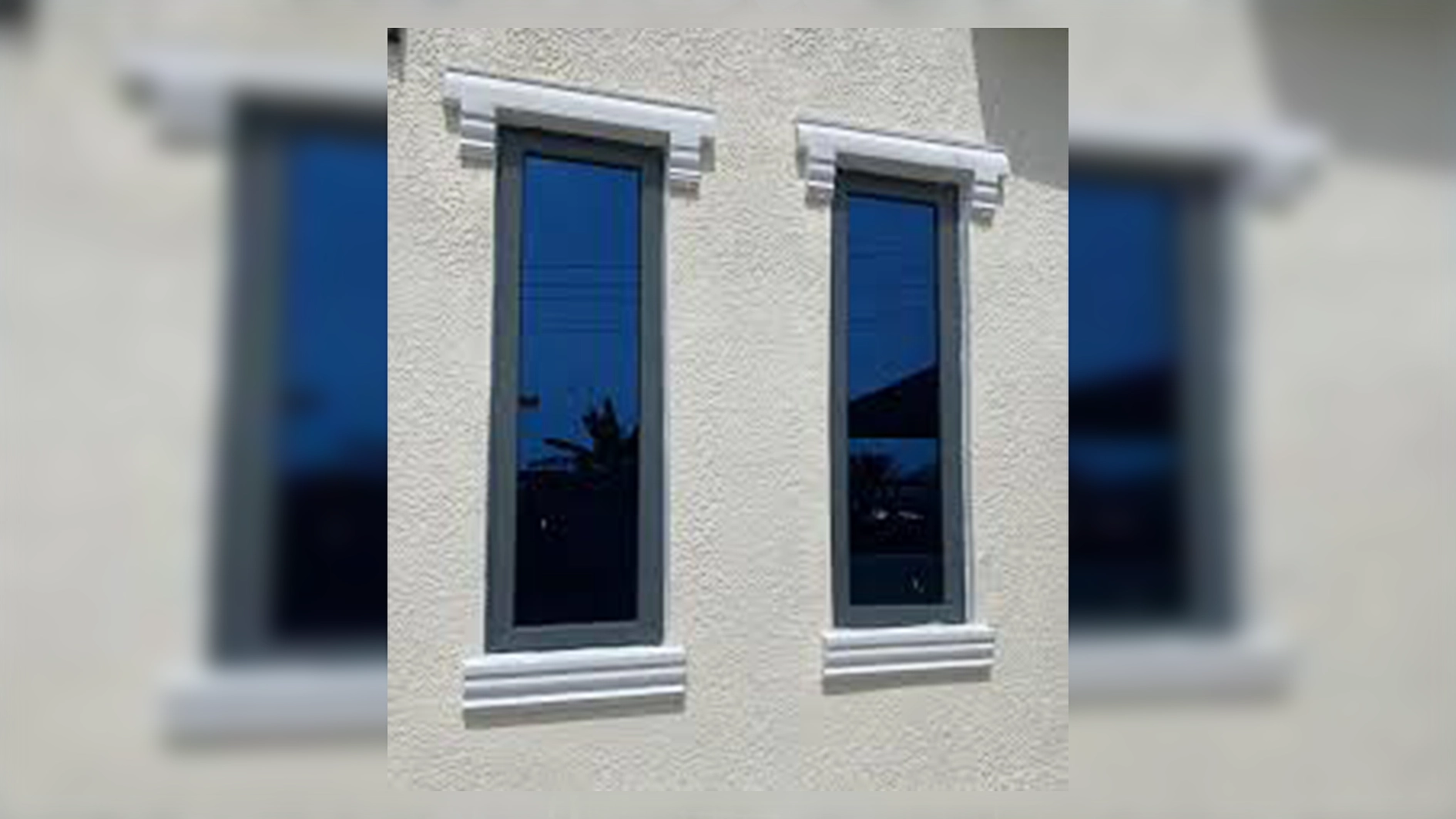
Despite the prevalence of warmer climatic conditions in cities and rural locations averaging between 30 and 40 degrees Celsius, architectural home design is fast tilting towards slimmer windows in new buildings as a form of aesthetic adoption rather than functionality. Experts argue that the trend has come to stay, but many renters are concerned that insufficient natural ventilation is limiting comforts in homes and increasing energy costs, VICTOR GBONEGUN reports.
In many Nigerian cities, a quiet architectural shift is unfolding across skylines in Lagos, Abuja, Kano, Port Harcourt, Enugu and others, as new residential apartments rise with noticeably smaller windows.
In estates that promise “modern luxury living,” glass openings are shrinking, and sometimes reduced to narrow vertical slits or modest square frames punched into concrete walls. For a country blessed with abundant sunlight and long warm seasons, the trend raises questions about why developers are opting for such designs despite the harsh tropical climate.
Economics and construction cost pressures
Industry experts say the answer lies in a mix of economics, security concerns and changing design tastes. In urban centres where burglary remains a concern, smaller windows are viewed as a practical deterrent. They are harder to access and easier to fortify with reinforced frames and grilles.
Developers also point to cost savings. Glass, aluminium frames and fittings significantly affect construction budgets, particularly in mid-market and mass housing schemes where margins are tight.
Nigeria’s tropical climate brings intense solar radiation. Large, unshaded windows facing west or south-west can turn living rooms into heat traps by midday. Smaller openings may reduce direct solar gain and, by extension, indoor temperatures, at least in theory. For developers catering to buyers who rely heavily on air-conditioning, this trade-off appears acceptable.

Climate, heat gain and energy efficiency
However, architects warn that reducing window size without holistic design thinking creates new problems. Natural light is often the first casualty. Interiors that once relied on daylight now depend more on artificial lighting, increasing electricity consumption at a time when power supply remains inconsistent. More critically, airflow suffers.
Cross ventilation, the passive movement of air from one side of a building to another, depends less on window size and more on placement. Openings on opposite or adjacent walls, combined with clear air paths and differences in height, allow warm air to escape while cooler air enters. Smaller windows, especially when placed on only one façade of an apartment block, often undermine this natural cooling strategy.
In many new urban developments, units share walls on multiple sides, already limiting air movement. Reducing window dimensions further restricts air exchange, potentially worsening indoor air quality and thermal discomfort, particularly for residents who cannot afford round-the-clock air-conditioning.
Comparatively, other tropical regions have approached the issue differently.
Global lessons in tropical design
In countries like Singapore and Malaysia, architects often combine generous window openings with deep overhangs, balconies and shading devices. The strategy is not to shrink the window but to shield it from harsh sun while preserving airflow and daylight. High ceilings and ventilation grilles above doors further encourage passive cooling.
In colder climates such as Scandinavia, smaller windows are common, but for different reasons. There, the priority is heat retention, supported by thick insulation and mechanical ventilation systems that manage air exchange efficiently. Window reduction forms part of a broader environmental performance strategy, not an isolated design decision.
Japan offers another model, where urban homes often feature modestly sized windows due to density and privacy concerns, but designers compensate with sliding panels, ventilated screens and carefully planned airflow channels. The lesson is clear: window size alone does not determine comfort. Orientation, shading, ceiling height, wall insulation and ventilation planning are equally important.
Back home, some Nigerian architects argue that the trend reflects a market increasingly driven by aesthetics and short-term cost considerations rather than climatic responsiveness. Sleek, boxy façades popular in contemporary estates prioritise visual uniformity over environmental performance.
Yet there are ways to reconcile security, cost and climate sensitivity. Strategically positioned openings on opposite walls, high-level vents that allow hot air to escape, protected balconies and operable louvres can improve airflow without compromising safety. Security grilles and reinforced glazing can address burglary concerns while maintaining adequate window proportions.
A recent city survey by The Guardian revealed that out of every 50 new homes developed in densely populated areas of Lagos and Abuja, at least 35 feature slimmer windows. In the housing sector, the minimum recommended window size is around 1.2m by 1.2m for a habitable room and 600mm by 600mm for toilets, in line with building regulations and thermal performance standards. Generally, the wider the window, the greater the potential for improved ventilation.
Professional architects emphasise that natural ventilation depends on several variables, not just window size. Windows must face the prevailing wind direction; if they do not, there will be little or no airflow into the building during hot weather conditions.
Managing Partner of Sowunmi Williams and Associates, Mr Sowunmi Williams, explained that the principle of natural ventilation requires a window to face the windward side for air intake, with another opening positioned for exhaust so that used air can exit. He noted that in recent times, architects have increasingly used small windows as façade elements for aesthetic appeal rather than functionality.
“From a green or sustainability perspective, what matters is the window-to-wall ratio, the proportion of window area to the total façade area, because this affects the energy efficiency of a space,” he said.
In line with EDGE (Energy Design for Greater Efficiency) standards, a 30 per cent window-to-wall ratio can optimise heat gain or heat loss within a space. Research indicates that significant heat enters a building through windows rather than walls. The larger the window area, the greater the potential for heat gain or loss if not properly shaded or insulated.
According to Williams, the critical question is whether the small windows currently being adopted meet the 30 per cent benchmark, stressing the need to balance natural ventilation with heat control.
“In very dense urban landscapes where surrounding buildings absorb and radiate heat, a 30 per cent wall ratio may not be effective because site conditions already influence heat gain or loss. In such cases, higher or wider windows may be necessary to allow airflow. There is a need to strike a balance,” he said.
Williams added that the acceptable window size is largely determined by site microclimate.
“If a building faces the ocean with no surrounding structures, there will be strong airflow, and smaller windows may help moderate wind pressure. But in a dense urban neighbourhood where buildings create wind shadows, natural airflow is limited, and larger windows may be required.
“In highly dense parts of Lagos Mainland, for example, a wall-to-window ratio of about 50 per cent may be more appropriate. In mid-to-low-density areas like Lekki, smaller windows may suffice. It depends on the local climate and surrounding development.”
He also dismissed the notion that smaller windows automatically improve security, emphasising that weak burglary proofing poses a risk regardless of size.
“The height of the window edge also affects ventilation. Higher openings allow air to circulate through the upper part of the room. Window width, height and sill level all influence airflow in habitable spaces. Considering our warm tropical climate, developers in densely populated urban centres should prioritise natural, climate-responsive design,” he said.
Founder of Casting Crown Company, Dr Gbolahan Oyelakin, similarly observed that the choice of slim windows in many new developments is driven more by aesthetics than functionality.
He noted that such designs often lead residents to spend more on cooling and mechanical ventilation, rather than harnessing natural lighting and airflow, an important consideration in a tropical environment where passive design could significantly improve comfort and reduce energy costs.
Oyelakin, who is also a member of the Nigerian Institute of Architects (NIA), pointed out that slim windows, a reversal of traditional design principles, do not necessarily prevent insecurity in homes, contrary to claims in some quarters.
He stressed the need for stakeholders to embrace sustainable building practices aimed at reducing the environmental impact of structures through energy efficiency, the use of sustainable materials and water conservation.
According to him, such strategies should include maximising natural light, using eco-friendly materials, reducing construction waste, optimising building orientation and integrating renewable energy sources into projects.
Another member of the National Executive Council of the NIA, Mr Adeleke Nadi, argued that slim windows have become a global trend, with many homeowners adapting to a culture of keeping windows closed.
“When people adopt such designs, they often create smaller units with smaller windows to balance the effects of hot weather,” Nadi said. “Instead of one large window, you may have four smaller ones. It is simply a trend that is happening now.”

