 Follow Us on Google News



 Follow Us on Google Discover
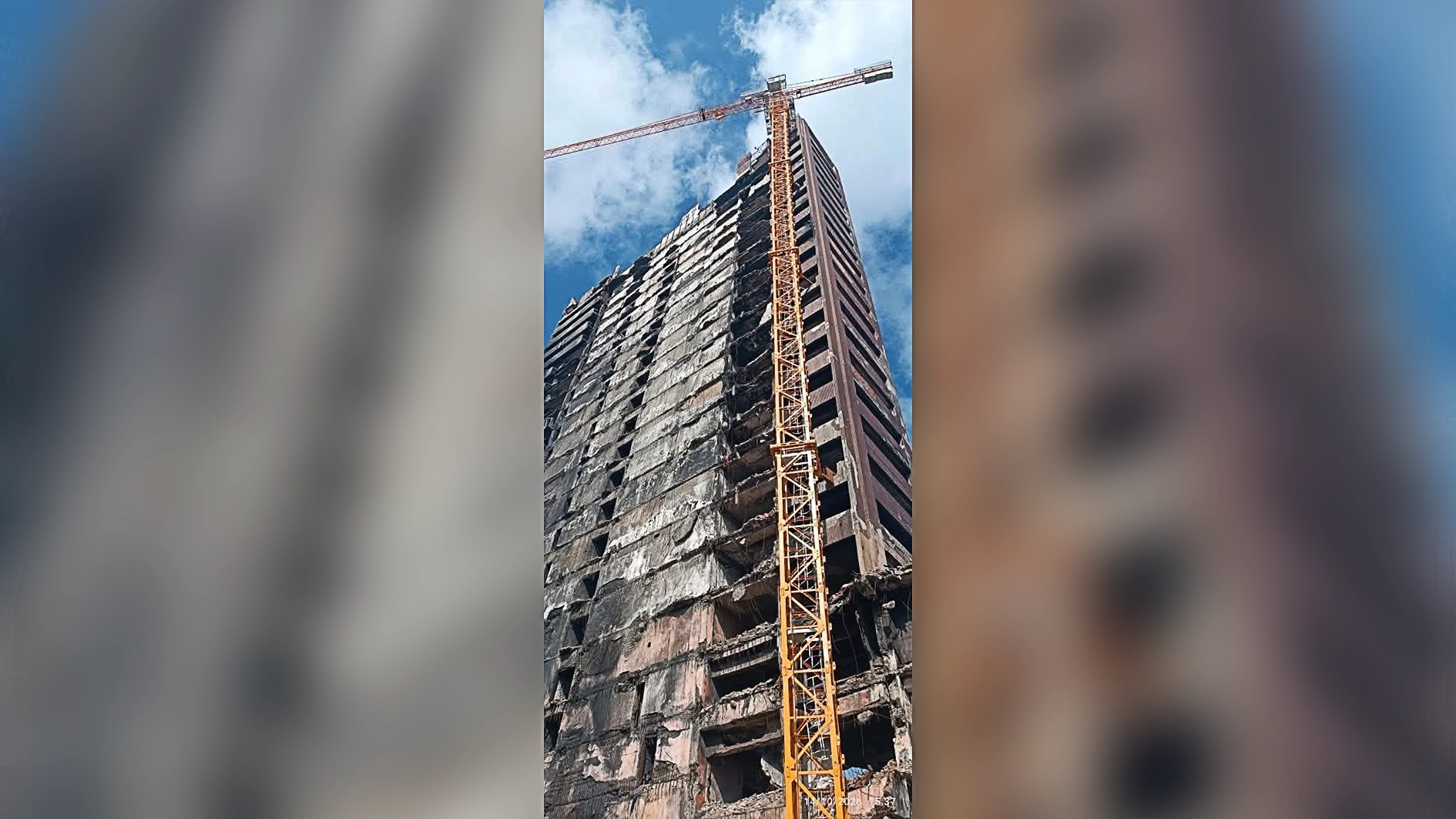
With commercial property lending rates reportedly ranging from 23 to 38 per cent, developers face higher borrowing costs, while contractors struggle with working capital, delayed payments and shrinking profit. Industry experts say these pressures are making projects less viable, contributing to reduced development activity and pushing some contractors to decline jobs or rely on clients’ funds and personal resources, CHINEDUM UWAEGBULAM reports.
Nigeria’s commercial real estate and construction sectors face mounting financial pressure as high borrowing costs, rising building material prices, exchange-rate volatility, and weakening purchasing power complicate development and investment decisions.
Developers reliant on bank loans are reconsidering investments, delaying projects, and exploring alternative funding sources, while construction firms struggle with working capital constraints, shrinking profit margins, and delayed payments. The consequences threaten project delivery, investment returns and the supply of office complexes, shopping malls, hotels and industrial facilities.
With commercial lending rates reportedly ranging from 23 to 46 per cent yearly, the cost of credit is eroding projected returns on property investments. Developers should decide whether to accept expensive loans, inject additional equity or postpone projects until financing conditions improve.
The Central Bank of Nigeria’s monetary policy rate stood at 23 per cent following its September 2026 policy decision. Its money market indicators for August 2026 put the prime lending rate at 17.86 per cent and the maximum lending rate at 29.20 per cent.
These figures reflect broader banking conditions rather than the specific rates available to every developer, whose borrowing costs depend on creditworthiness, collateral, loan tenor and transaction charges.

The implications for project economics are substantial. A developer borrowing N1 billion at an annual interest rate of 27 per cent would incur N270 million in interest over a year if the principal remained outstanding. At 30 per cent, the interest bill would rise to N300 million, excluding principal repayments and other charges. Such costs can undermine a project’s viability, particularly when construction expenses rise unexpectedly, or completed properties take longer to sell or lease.
The pressure is compounded by construction inflation. Fortren & Company reportedly estimated that construction costs in Nigeria increased by 20 per cent between December 2025 and May 2026, driven by higher building material and energy prices. Cement prices in several markets were reported at between N11,500 and N15,000 per 50kg bag in 2026, compared with approximately N7,500 in late 2025.
Reported outstanding bank credit to real estate rose from N792.708 billion at the end of 2025 to N814.996 billion in the first quarter of 2026. Although the figures indicate substantial bank exposure to the sector, they do not establish how many projects have been delayed or abandoned because of high interest rates.
Industry experts have identified real estate investment trusts, joint ventures and public-private partnerships among financing models used in property development. These arrangements could diversify funding, particularly for commercial properties capable of generating predictable rental income. However, capital-market financing requires transparent governance, credible cash-flow projections, reliable valuations and investor confidence.
They argued that the challenge is not simply whether developers and contractors can obtain loans, but whether they can secure finance on terms that allow projects to remain viable. More affordable long-term capital, reliable payment systems and better control of construction costs will be essential to sustaining investment and project delivery.
Without these, developers may continue to defer investments, contractors may decline projects, and the resulting costs could be passed on to businesses, tenants and property buyers.
Former President of the Nigerian Institute of Quantity Surveyors (NIQS), Segun Ajanlekoko, told The Guardian that expensive financing and rising building material prices had significantly increased commercial property development costs, contributing to weak patronage from domestic buyers.
He linked the relatively low volume of commercial building development to high interest rates on funding sourced largely from commercial banks. According to him, using expensive short-term financing for long-term property investments creates a mismatch that undermines project viability and ultimately transfers additional costs to consumers.
“You cannot use high short-term funding to achieve a feasible and viable product without passing it on to the poor consumers,” he said.
Ajanlekoko advised developers to prioritise cost-effective designs, avoiding unnecessarily elaborate specifications that do not serve the needs of their target markets or improve project returns. Simpler designs and, where appropriate, fast-track construction methods using components assembled quickly on site could shorten delivery periods and reduce exposure to financing charges.
He also recommended procuring essential building materials upfront where financially feasible, while considering storage costs and the risk of tying down working capital. Appointing quantity surveyors early in the development process, he said, would enable developers to prepare reliable cost plans, assess design options, establish budgets and monitor expenditure before overruns become difficult to control.
Ajanlekoko called for a specialised bank to provide long-term construction and property development loans at single-digit interest rates. Such an institution, he argued, could align repayment schedules with development timelines and improve the viability of projects requiring substantial initial capital.
The financing squeeze is also affecting construction firms, whose cash-flow problems are often intensified by delayed payments from clients. Contractors must pay workers, purchase materials and maintain equipment while waiting for certified invoices to be settled. Where payments are delayed, firms may have to borrow at commercial rates to finance work already completed.
Chief Executive Officer of NISH Affordable Housing Limited, Dr Yemi Adelakun, described the situation as a “deadly triangle” involving high borrowing costs, rising material prices and delayed payments.
He said expensive loans had become increasingly inaccessible or unattractive to contractors, while material price increases rendered previously submitted quotations unviable. Delayed payments further tied down funds needed to procure materials, pay workers and sustain ongoing projects.
“The effects of these anomalies are negative working capital, cost overruns and delayed or abandoned projects,” Adelakun said.
According to him, bank loans now account for only between five and 10 per cent of project financing among the construction operations he described, compared with 30 to 40 per cent in 2020. He attributed the decline to high default rates, tighter lending conditions and contractors’ reluctance to borrow at prevailing rates.
The situation creates a difficult choice for contractors bidding for projects. Passing additional costs to clients could make their bids uncompetitive, while absorbing them reduces profit margins and leaves firms vulnerable to further price increases.
Adelakun said some contractors were declining contracts because of uncertainty over material costs, payment schedules and already narrow margins. Projects were increasingly being financed through clients’ funds and contractors’ personal resources rather than bank borrowing.
To manage the pressure, he identified mobilisation advances, escrow arrangements, supplier credit, equipment leasing, joint ventures and invoice financing as alternatives. Invoice financing allows firms to raise funds against receivables, subject to the quality of the invoices and the client’s creditworthiness. Equipment leasing can reduce upfront capital requirements, although its total cost must be weighed against purchasing.
Adelakun also advocated a more structured approach to project cash flow, including placing substantial upfront payments in escrow and purchasing materials in bulk when prices ease.
Under his proposed milestone-based escrow arrangement, payments would be released in stages: 30 per cent at foundation level, another 30 per cent at roofing and the remaining 40 per cent at finishing, subject to verification of completed work. He argued that the arrangement could improve accountability and ensure funds are released in line with construction progress.
He urged contractors to reconsider fixed-price contracts in an environment of volatile material costs. Without suitable price-adjustment clauses, firms risk being locked into rates that no longer cover delivery costs. Changes to government procurement procedures, payment terms and bank lending practices, he said, would help contractors remain operational and competitive.
For property developers, the response increasingly involves reducing dependence on commercial bank debt and mobilising capital through equity, joint ventures, instalment payment plans and other arrangements.
Chief Executive Officer of Propertygate Development and Investment Limited, Mr Adetokunbo Ajayi, said commercial property lending rates ranged from 23 to 38 per cent annually and could be higher, depending on the transaction.
Although the high-interest environment had not directly affected his company’s development operations because it did not currently rely on commercial bank debt, Ajayi said it continued to constrain the company’s expansion plans and had wider implications for the sector.
He estimated that financing costs for developers relying on bank loans could account for between 25 and 38 per cent or more of gross development cost. He added that rising capital costs were changing investment thresholds, with projects that previously targeted returns of 22 to 25 per cent now requiring yields approaching 40 per cent or higher to compensate for financing expenses.
“High interest rates render long-term bank debt unsuitable for property development finance,” Ajayi said, noting that developers were increasingly exploring alternative funding sources.
These include developer-client instalment plans, corporate bonds, equity injections, joint ventures, off-plan sales and unitisation or fractional investment structures. Such mechanisms can spread funding requirements among investors or help developers mobilise money before projects are completed, but they require credible valuations, transparent governance and clear arrangements for managing risk.
Ajayi advised developers who need bank financing to limit its use largely to short-term bridge loans or late-stage completion facilities rather than funding entire development cycles with expensive commercial debt. He said Propertygate had completed projects through strict risk controls and macroeconomic feasibility assessments conducted before construction, with virtually all its developments carrying little or no external debt.
However, avoiding bank loans does not eliminate the wider effects of high borrowing costs. Expensive credit can discourage potential buyers and investors, increase the returns demanded by equity providers and constrain developers’ ability to expand.
Ajayi called for greater government investment in infrastructure, arguing that developers often have to provide roads and other municipal infrastructure because of inadequate public provision, adding to their capital requirements.
He also advocated tax reforms to attract investment into rental-yielding real estate and changes to National Pension Commission guidelines to enable Pension Fund Administrators to allocate more capital directly to primary real estate development bonds and structured property funds.
Improved land titling, faster planning approvals and lower development-related charges, he added, would also support investment.

