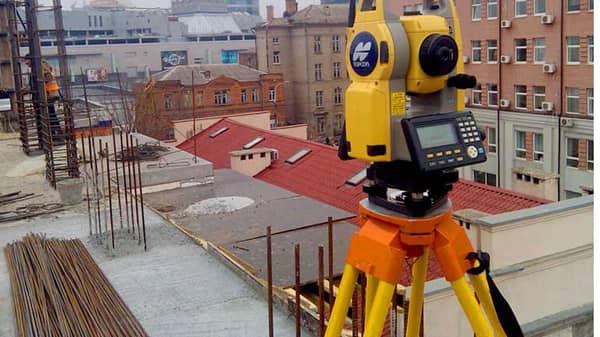
The Association of Private Practising Surveyors of Nigeria (APPSN), FCT Branch, has urged practitioners to deepen their expertise in cadastral systems and adopt modern digital tools to enhance land administration and improve service delivery across the country.
Chairman of the branch, Emmanuel Omuya, said the association has, over the years, prioritised capacity building, professional standards and stronger collaboration with public agencies, which was essential for advancing competence in Geographic Information Systems (GIS), digital cadastral mapping and other modern surveying technologies.
He explained that the association is committed to promoting innovation, exchanging ideas and implementing practical measures to redefine professional frontiers while balancing technological adoption, ethical practice and the protection of property rights.
“We have developed a workable scale of fees for practitioners as well as advocated clear guidelines on the roles of private practitioners in cadastral surveys, particularly as-built surveys and dispute resolution,” Omuya said.
“APPSN will continue to promote best practices, ethics and quality assurance among members. This will translate into improved client service and faster land transactions. Active technical discussions will strengthen our profession, enhance the electoral process, and advance land administration across Nigeria.”
A past president of the Surveyors Council of Nigeria (SURCON), Clement Nwabichie, urged surveyors to work closely with the Nigerian Institution of Surveyors (NIS) to reclaim their leadership position in surveying and geospatial information systems.
Nwabichie stressed the need for professionals to develop indigenous software solutions for the next generation, lamenting that many surveyors abandon ethical principles soon after obtaining their registration.
He noted that professionals who fail to update their skills struggle to align with modern practices, leaving them unable to defend the profession or maintain professional standards.
“They often leave behind a trail of damage to the profession’s image. Illiteracy can be addressed by revisiting and sustaining the compulsory requirement at both state and national levels,” he said.