• We Need To Focus On Addressing Root Cause Of Gender-Based Violence, Insists Obiagbaoso-Udegbunam
• National Assembly Should Strengthen Oversight On VAPP Law Implementation, EU Envoy Demands
Tomorrow is the 16th day of activism against gender-based violence. The last 15 days have been devoted to campaigns aimed at reawakening the consciousness on need to end violence that are gender-based. IJEOMA THOMAS-ODIA and OWEDE AGBAJILEKE report that inadequate funding of frontline agencies implementing the Violence Against Persons Prohibition (VAPP) Act, lack of political will by the National Assembly to strengthen its oversight of the law and a culture of silence by victims are worsening an already bad situation.
Rebecca Obianuju (not real name) is happily married to her childhood friend who doubles as leader of a fast-growing religious sect. Although all seems rosy for the mother of four and her nearly two decades of marriage, unbeknownst to many, she is victim of sexual and gender-based violence as her ‘gentleman’ husband turns her into a punching bag at home for inexplicable reasons. For fear of backlash and stigmatisation, she maintains a dignified silence and would rather die in the union than become a divorcee.
Obianuju is not alone. She represents the several thousands of unreported cases of sexual and gender-based violence (SGBV) in Nigeria. In Africa’s most populous black nation, a ‘culture of silence’ is one of the main factors contributing to the prevalence of gender and sexual based violence. This stems from a combination of traditional beliefs and cultural norms that perpetuate the notion that victims of such acts should not speak out about their experiences; a development often reinforced by the fear of retaliation or stigmatisation from the community, just like Obianuju.
Every year, the international campaign, which commenced on November 25 —the International Day for the Elimination of Violence against Women — and ends tomorrow, December 10 (Human Rights Day), focuses on a specific theme and this year’s is “UNITE! Invest to prevent violence against women and girls.”
The campaign calls on citizens to show how much they care about ending violence against women and girls by sharing the actions they are taking to create a world free from violence towards women. This year’s campaign also calls on governments worldwide to share how they are investing in gender-based violence prevention.
Data collated on SGBV from the National Situation Room/Dashboard housed by the Federal Ministry of Women Affairs revealed that from August 19, 2020 to November 23, 2023, a total number of 28,428 were reported, with an abysmal 448 convictions across the country (representing 1.6 per cent).
While official records are grossly inadequate in offering insights into the prevalence of sexual violence across the country, observers however, noted that delayed justice is also contributing to the surge in gender-based violence cases.
Global facts on sexual and gender-based violence (SGBV) revealed that an estimated 736 million women — almost one in three — have been subjected to intimate partner violence, non-partner sexual violence, or both at least once in their life (30 per cent of women aged 15 and older).
This figure does not include sexual harassment. Globally, 6 per cent of women report being subjected to sexual violence from someone other than their husband or partner. However, the true prevalence of non-partner sexual violence is likely to be much higher, considering the particular stigma related to this form of violence.
At a parliamentary summit in Abuja to mark the 16 Days of Activism Against Gender-Based Violence, stakeholders tasked the National Assembly to strengthen oversight of the Violence Against Persons Prohibition (VAPP) Act 2015 and called for adequate funding for frontline agencies implementing the VAPP Act.
Themed ‘Funding and Oversight for VAPP Implementation: a Parliamentary Response to Gender-Based Violence’, the event was organised by the European Union-funded Rule of Law and Anti-Corruption (RoLAC Phase II) Programme of International Institute for Democracy and Electoral Assistance in collaboration with the United Nations Development Programme (UNDP) under the EU-UN Spotlight Initiative.
Delivering her lecture at the parliamentary summit, former United Nations Special Rapporteur on Trafficking persons in Africa, Professor Joy Ezeilo, SAN submitted that violence against women and girls is a human rights violation, stressing that the immediate and long-term physical, sexual, and mental consequences for women and girls can be devastating, including death.
The Professor of Public Law and erstwhile Commissioner for Gender and Social Development in Enugu State is concerned that cases of gender-based violence (GBV) in the country are astronomically alarming since the COVID-19 pandemic.
She identified various forms of GBV in the country to include rape (including incest/child sexual abuse); wife battery/spousal beatings; Female Genital Mutilation or Female Circumcision; trafficking in persons (abduction, especially of women and girls for sexual and labour exploitation): acid attack or with other harmful substance; female body mutilation for ritual purposes; forced and child marriage.
Others are denial of inheritance rights or share from the assets of deceased father or husband/economic abuse or forced economic dependence; harmful widowhood/mourning practices; child abuse and neglect; child sexual abuse and exploitation; emotional abuse; abandonment of wife or children without means of subsistence; sexual slavery- dedication to shrine among others.
EU Ambassador to Nigeria and ECOWAS, Samuela Isopi, lamented the lack of budgetary provision for the implementation of the VAPP law has not only created additional burden for mandated institutions tasked with implementing the VAPP Act/Law but also allowed victims of SGBV to be further traumatised.
“I would like to make an urgent appeal to the National Assembly here to strengthen oversight on the implementation of the VAPP law so that survivors can access the services they need or ensure the effective prosecution of offenders. A challenge is the funding of line Ministries, Department and Agencies (MDAs) responsible for the provision of SGBV services.
“Dedicated budgetary allocation is needed to create more sexual assault referral centres and more shelters to provide safe havens for victims in immediate danger of harm or death. We also need more medical facilities that are sensitive to the needs of vulnerable survivors. There is no budgetary provision for the implementation of the VAPP law,” the envoy appealed.
Recent data revealed there are 41 Sexual Assault Referral Centres (SARCs) in Nigeria across 21 states and the Federal Capital Territory, which provide free medical, counseling and support services to survivors of sexual violence.
Established with funding from the RoLAC Programme, SARCs are located in Sokoto, Kebbi, Zamfara, Niger, Kaduna, Kano, Jigawa, Yobe, Borno, Adamawa, Kwara, Ekiti, Lagos, Edo, Anambra, Enugu, Cross River, Ogun and Akwa Ibom.
In his intervention, Deputy Speaker of the House of Representatives, Rt. Hon. Benjamin Kalu, expressed concern over the 28,428 cases of GBV since 2020.
The Presiding Officer said lawmakers have a crucial role to play in championing the cause of women and girls, advocating for comprehensive legislative frameworks that address the multifaceted challenges posed by gender-based violence.
While expressing delight that 35 states and the Federal Capital Territory (FCT) have so far domesticated the Act to curb incessant cases of violence across states, the participants drawn from federal and state lawmakers, civil society organisations, law-enforcement agencies and development partners, harped on the need for the National Assembly to strength its oversight and ensure adequate funding of frontline agencies implementing the Act like the National Agency for the Prohibition and Trafficking in Persons (NAPTIP), National Human Rights Commission, among others.
Also in his submission, Head of Programme, Nigeria RoLAC II, International Institute for Democracy and Electoral Assistance, Danladi Plang, said the objective of the summit was to sensitise and bring to the knowledge of parliamentarians, the persistent issues that continue to limit access to justice and support services for survivors of Gender-based Violence (GBV) in Nigeria, update parliamentarians on the progress achieved so far in the GBV response sector and recommend actions that must be taken to enhance and sustain progress, including the establishment of a parliamentary mechanism for VAPP implementation monitoring and sensitise parliamentarians to the critical role they play in ensuring appropriate allocation of funding and resources for implementation of the law.
In their separate submissions, the Lead Director, Centre for Social Justice, Eze Onyekpere and Executive Director, Sustainable Gender Action Initiative, Mufuliat Fijabi, tasked the National Assembly to revisit the five rejected gender bills, including those not accorded presidential assent.
Isopi said the first step to breaking a culture of silence is having functional SARCs where survivors of sexual violence receive assistance to seek justice.
Her words: “There is still so much stigma around gender-based violence not only in Nigeria but everywhere in the world. And this is the first fundamental step. And that’s why all these services are important because survivors need to have the feeling that their voices are heard, that they are protected. So, the first step is to have a physical place where a survivor can receive psychosocial assistance, medical assistance and some support to pursue perpetrators.
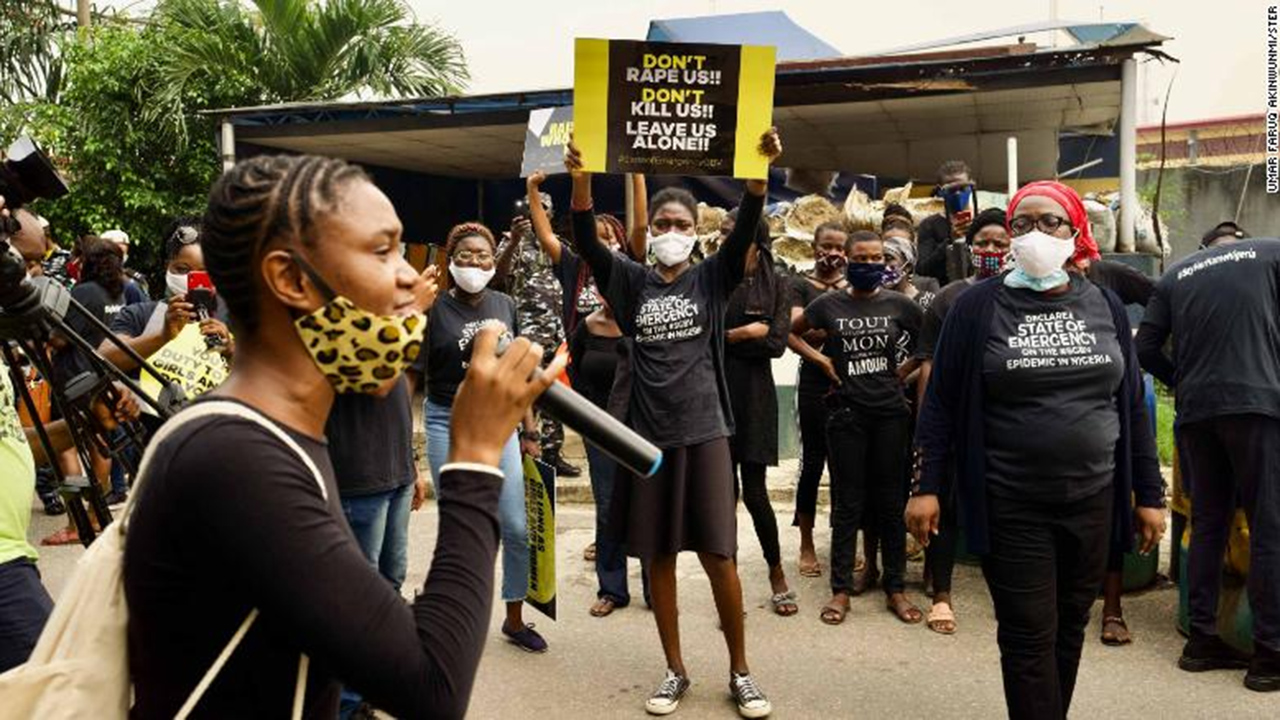
“That’s the basis for breaking the silence. Otherwise victims will not feel safe and will not feel empowered for them to speak about it.
“And it is important that we continue to speak about gender-based violence and not only on the 25th of November every year or during the 16 Days of Activism. We need to create a movement not only in Nigeria but all over the world.”
Founder and Executive Director, HEIR Women Development and HEIR Women Hub, Anuli Aniebo, said one of the root causes of gender-based violence is poverty. “For me, this year, poverty is quite high, because studies have shown that poverty is at least one of the causes that exacerbates issues within family units. There have also been studies that have shown the link between poverty and gender-based violence, where in a society such as ours, power is given to the person who can provide or power is manipulated by the person who can provide.”
Emphasising the importance of bringing boys and men into GBV conversations, Aniebo said, “for a long time, I have advocated that whilst it’s great for girls and women to gather around and discuss girls and women issues, I really do think not everyone is present in the room discussing it. The men and the boys are usually absent. But now, one of the things I’m seeing so far is that some men are being invited to have conversations around activism, regarding gender-based violence. That’s what I see as ‘Unite’.”
With the trending video of a young boy who went on with pride about how he raped a young girl, shows lack of awareness, information and education for both the boy and girl in that situation. “There are so many things we need to be unearthing, we need to excavate so many conversations around policing of bodies. When a body is being raped or sexually harassed, or gender-based violence has happened, who are the people who have the authority to police these bodies? For the boy and the girl, what kind of education is still happening?
“It is great to have women come in and have a conversation, but the aftermath of supporting them is huge. We are still bound by the culture of silence and validation because our bodies are policed. Not all of us are going to speak up, the institutions of empowerment, how functional are they?”
Aniebo noted that power, structures and institutions have a greater role to play, as gender-based violence still exists in such spaces. “It’s financial violence, where it is that women go to seek for SME funding and they are marginalised. There’s GBV where women go to places of employment and they are sexually harassed. There’s GBV where women go to the market and they are harassed. There are so many things that are happening across different structures of power, that now need to be dismantled, by empowering women and girls,” she said.
While stressing that marginalisation of women and girls is almost a global phenomenon, Aniebo acknowledged the need for providing them mental health support and therapy.
“We need on ground therapy for everyone, both men and women, boys and girls. Actual therapy. We need to increase the support to get licensed experienced therapist and clinical psychologists in the space of gender-based violence, because, while we are preventing and responding, who is caring for those who have gone through it.”
Founder of Dorothy Njemanze Foundation (DNF), Dorothy Njemanze, noted that as a first responder to sexual and gender-based violence survivors, and one who is on the frontline of prevention activities, she lives the life of suffering the inadequate investment in prevention of violence against women and girls. “Through the DNF Survival Support Centre, and the DNF Safe Space which is a shelter, I know real time that we don’t have enough investment in sexual and gender-based violence prevention and response in Nigeria,” she said.
While noting that it requires collective effort to fight violence against women and girls, she said Nigeria has a lot of legislation that amplifies the privileges of people to enjoy their human rights, including women and girls and also penalise people that deny women and girls from enjoying their rights.
According to Njemanze, “Nigeria needs to be more proactive in ensuring that the content of its legislation, and legal framework that exists are really enjoyed by everybody, by prioritising gender responsive budgeting, which will ensure that all aspects of resources needed for the smooth implementation of the legal frameworks is carried out.”
The humanitarian said, “Nigeria is the first country to be found guilty by a law court of Gender Based Violence in the Dorothy Njemanze and three others vs the Federal Republic of Nigeria case. Since 2017, government has not paid the damages awarded the victims. This tells me real time where the mind of the government is. Paying lip service has not done any good, and it is taking lives daily.
“I look forward to a government being more responsible and responsive, and to give women a voice and empower them. Also, Corporate Social Responsibility needs to increase in funding issues around prevention and response to sexual and gender-based violence. We can’t keep responding to sexual and gender-based violence from a tokenism perspective, because these things are human rights; they are not favours that are done by people. When a child is raped, it’s the duty of society to protect the child. You’re not doing the child a favour by protecting the child from further harm and so, the tokenism perspectives that are applied to prevention and response to sexual and gender-based violence needs to stop immediately.”
Founder and Executive Director at Women’s Rights and Health Project (WRAHP), Bose Ironsi, noted that the year has been marked by both challenges and opportunities in the fight for gender equality in Nigeria. “What stands out for me is the growing recognition of the importance of addressing gender disparities, amplified by global movements advocating for women’s rights which WRAHP is actively working in, so far, there is increased awareness and discussions surrounding gender-based violence, economic empowerment for women, and the need for more inclusive policies.
“Nigeria should particularly focus on implementing and strengthening existing frameworks for gender equality. The law is in place but does it bite? Are people aware of the laws? Is the law properly implemented? Are the laws enforced like they should? These are questions that need to be answered and intentionally put into strategies. Effective enforcement of laws protecting women and girls, enhancing access to education and healthcare, economic empowerment programmes, and promoting women’s participation in decision-making at all levels should be ensured.”
While there have been commendable efforts locally, regionally, nationally and globally to promote and empower women, the investment Ironsi said it hasn’t been proportional to the scale of the challenge. There’s still a considerable gap in investment when it comes to addressing the multifaceted issues facing women and girls.
“We need increased investment in grassroots initiatives that directly impact the lives of women and girls, especially in marginalised communities, to ensure that no one is left behind in the pursuit of gender equality.”
Project Director at Vision Spring Initiatives, Ngozi Nwosu-Juba, commended the call for all sectors to invest and support the financing to end to all forms of GBV.
According to the lady, governments are realising the importance of finance in tackling Gender based violence hence they should accelerate efforts to ensure women are empowered with finances to stand and challenge injustice.
Nwosu-Juba said a global study on women working in the technology sector found that 44 per cent of women founders had experienced some form of harassment at work in 2020, with 41 per cent of women experienced sexual harassment.
Her words: “Women have been exposed to cyber bullying and media attacks. Weak enforcement of existing laws such as the VAPP law, discriminatory social norms, denial of ownership of properties continue to affect women’s ability to challenge abuse and injustices. Government and its agencies should formulate laws to reverse many years of injustice women have faced, laws and policies must be implemented especially those on women’s economic empowerment.”
According to Social justice advocate and founder, Initiative for Women and Girls Right Advancement (IWOGRA), Nkechi Obiagbaoso-Udegbunam, “every year for so many decades, efforts have been put to address issues around violence against women and girls; hence, there is increased awareness as more people are lending their voices to campaign for an end. We should, therefore, focus on the domestication of laws that protect women from all forms of violation, exploitation and discrimination.
“Nigeria is good at gratifying series of laws, but the issue of domestication continues to be a problem. So, laws should be domesticated and incorporated into state laws. After that is done, there’s need to ensure that these laws are implemented and not just kept in the shelves for life so perpetrators will be punished, and this will serve as a deterrent to others. The law should be enacted and implemented as it covers all issues around gender-based violence, and should be very much effective.
“We need to focus on addressing the root cause of gender-based violence. When we continue to cut a tree branch, but you don’t uproot, the tree will grow again. The only way we can address this issue is by addressing the root causes of gender-based violence. Let’s go back to the old times, our cultures and norms and beliefs, identify those laws that are oppressive and demeaning to the rights of women and girls, and start to call for a change. At community levels, let’s focus on addressing those laws, identifying those community by-laws that are harmful to the lives of women, and call for reviews and repeals of those laws.
“There is a need for the government to be intentional, not because everyone is doing it, but because they know within them that it is an issue that calls for redress, so, I would say that, the investment that has been done so far has not really empowered women, and given them their voices. If you look at the political space, how many women leaders do we have? How many women are occupying leadership positions in Nigeria? If much investment has not been done to give women leadership positions, if much has not been done to pass the gender and equal opportunity bill, we can’t say much investment has been done in the lives of women. It’s only when you make women leaders the you can say you have given women their voices.”
The rights activist and lawyer added that SGBV campaign should not be limited to the 16 days. “Let’s take action on a daily basis and when we do this everyday and it becomes a part of us, and we continue to say no to violence against women and girls, we will see that it will become a serious issue, and the government will see that the women are taking it serious, and no longer wait for special moments.”